2025
The World Beyond Your Head – Matthew Crawford (2016)
“Crawford investigates the intense focus of ice hockey players and short-order chefs, the quasi-autistic behavior of gambling addicts, the familiar hassles of daily life, and the deep, slow craft of building pipe organs. He shows that our current crisis of attention is only superficially the result of digital technology, and becomes more comprehensible when understood as the coming to fruition of certain assumptions at the root of Western culture that are profoundly at odds with human nature.”
(in progress)
Caring: A Feminine Approach to Ethics and Moral Education – Nel Noddings (2003)
“Noddings’s discussion is wide-ranging, as she considers whether organizations, which operate at a remove from the caring relationship, can truly be called ethical. She discusses the extent to which we may truly care for plants, animals, or ideas. Finally, she proposes a realignment of education to encourage and reward not just rationality and trained intelligence, but also enhanced sensitivity in moral matters.”
(in progress)
Warbreaker – Brandon Sanderson (2010)
“In the world of Warbreaker, each person is born endowed with the power of one Breath – which can be sold and collected by others… To Vivenna and Siri, princesses of Idris, the abuse of Breath and the claim of the Returned to be gods are repugnant blasphemy. But with one princess wed to the God King of their nation’s enemies in a bid for peace, the other finds she must rely on Breath-using mercenaries to try to rescue her sister from her monstrous husband.”
(4/10)
Stages of Faith – James Fowler (1995)
“Building on the contributions of such key thinkers as Piaget, Erikson, and Kohlberg, Fowler draws on a wide range of scholarship, literature, and firsthand research to present expertly and engagingly the six stages that emerge in working out the meaning of our lives–from the intuitive, imitative faith of childhood through conventional and then more independent faith to the universalizing, self-transcending faith of full maturity.”
(in progress)
Strom Thurmond and the Politics of Southern Change – Nadine Cohodas (1993)
“The author’s solid analysis of Southern political culture and especially how even old Dixiecrats like Thurmond have accommodated to the new era, contributes to our understanding of the nation’s most difficult domestic issue.” – The Detroit Free Press
8/10
The Poisonwood Bible – Barbara Kingsolver (2005)
“The Poisonwood Bible established Barbara Kingsolver, recipient of the National Book Foundation’s Medal for Distinguished Contribution to American Letters, as one of the most thoughtful and daring of modern writers. Taking its place alongside the classic works of postcolonial literature, it is a suspenseful epic of one family’s tragic undoing and remarkable reconstruction over the course of three decades in Africa..”
9/10
Cobalt Red – Siddharth Kara (2023)
“An unflinching investigation reveals the human rights abuses behind the Congo’s cobalt mining operation―and the moral implications that affect us all. Cobalt Red is the searing, first-ever exposé of the immense toll taken on the people and environment of the Democratic Republic of the Congo by cobalt mining, as told through the testimonies of the Congolese people themselves.”
9/10
History of the Donner Party. a Tragedy of the Sierra – C.F. McGlashan (1880)
“[this book] is a significant historical account of the ill-fated 1846-47 wagon train that became trapped in the Sierra Nevada mountains, leading to starvation and cannibalism…McGlashan interviewed survivors, knew the route, and gathered extensive correspondence from those who experienced the tragedy…it remains an important primary source for understanding this infamous episode in American westward expansion.”
6/10

The Righteous Mind: Why Good People Are Divided by Politics and Religion – Jonathan Haidt (2013)
“Drawing on his twenty-five years of groundbreaking research on moral psychology, Jonathan Haidt shows how moral judgments arise not from reason but from gut feelings. He shows why liberals, conservatives, and libertarians have such different intuitions about right and wrong, and he shows why each side is actually right about many of its central concerns.”
8/10
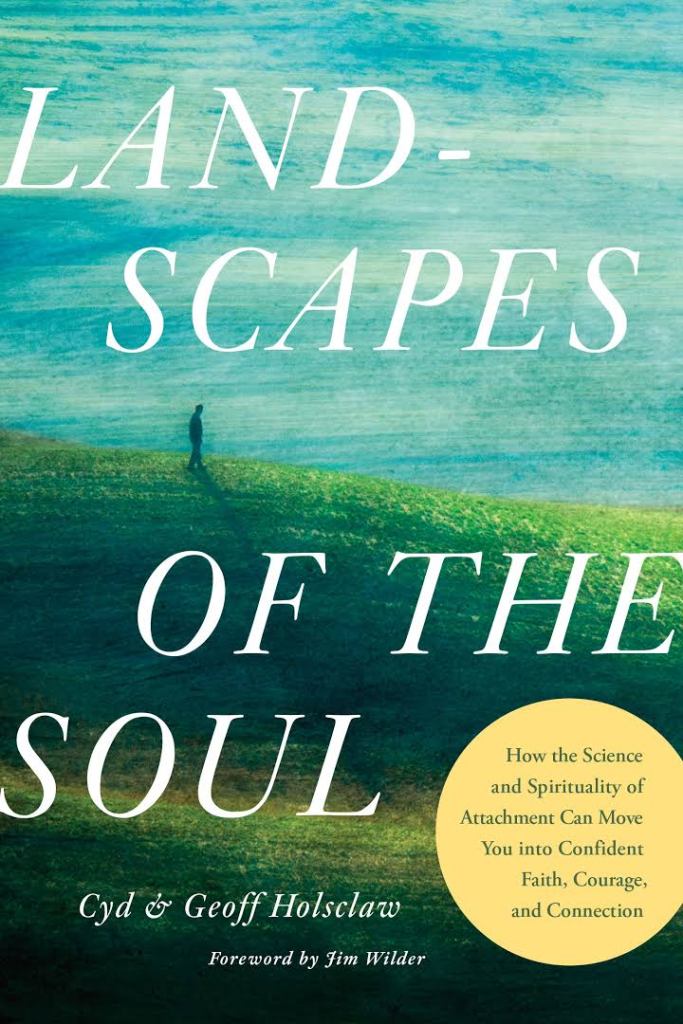
Landscapes of the Soul: How the Science and Spirituality of Attachment Can Move You into Confident Faith, Courage, and Connection – Cyd & Geoff Holsclaw (2025)
“You aren’t meant to live in the anxiety of a jungle, the desolation of a desert, or the chaos of a war zone. God designed you to live in joy and peace in relationship with Him, as if you are in a pasture, under the protective care of the Good Shepherd.”
7/10

A Piece of Cake – Cupcake Brown (2007)
“Orphaned by the death of her mother and left in the hands of a sadistic foster parent, young Cupcake Brown learned to survive by turning tricks, downing hard liquor, and ingesting every drug she could find while hitchhiking up and down the California coast. She stumbled into gangbanging, drug dealing, hustling, prostitution, theft, and, eventually, the best scam of all: a series of 9-to-5 jobs.”
(did not finish)
War is a Force that Gives Us Meaning – Chris Hedges (2014)
“Chris Hedges of The New York Times has seen war up close — in the Balkans, the Middle East, and Central America — and he has been troubled by what he has seen: friends, enemies, colleagues, and strangers intoxicated and even addicted to war’s heady brew. In War Is a Force That Gives Us Meaning, he tackles the ugly truths about humanity’s love affair with war, offering a sophisticated, nuanced, intelligent meditation on the subject…”
6/10
Julius Caesar – Shakespeare (circa 1599)
“Shakespeare may have written Julius Caesar as the first of his plays to be performed at the Globe, in 1599. For it, he turned to a key event in Roman history: Caesar’s death at the hands of friends and fellow politicians. Renaissance writers disagreed over the assassination, seeing Brutus, a leading conspirator, as either hero or villain. Shakespeare’s play keeps this debate alive.”
7/10
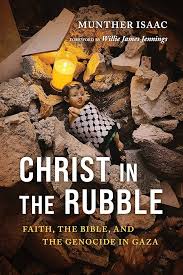
Christ in the Rubble: Faith, the Bible, and the Genocide in Gaza – Munther Isaac (2025)
“Writing from Bethlehem with close-up knowledge of conditions on the ground, and rooted in a commitment to nonviolence and just peace, Isaac urges readers to recognize that support for Zionism’s genocidal project entails a failure to bring a properly Christian theological criticism to bear upon colonialism, racism, and empire. He calls on Christians to repent of their complicity in the destruction of the Palestinian people. And he challenges them to realign their beliefs and actions with Christ—who can be found not among perpetrators of violence, but with victims buried under the rubble of war.”
8/10
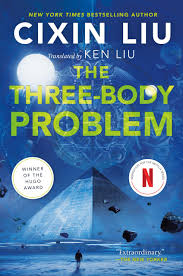
The Three Body Problem – Cixin Liu (2016)
“Set against the backdrop of China’s Cultural Revolution, a secret military project sends signals into space to establish contact with aliens. An alien civilization on the brink of destruction captures the signal and plans to invade Earth. Meanwhile, on Earth, different camps start forming, planning to either welcome the superior beings and help them take over a world seen as corrupt, or to fight against the invasion.”
6/10
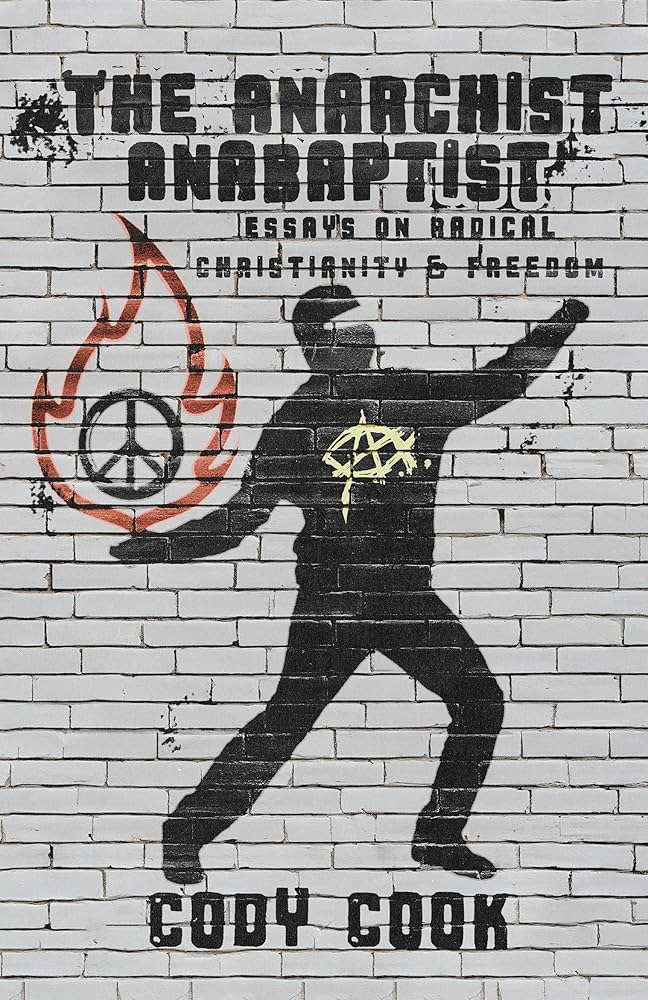
The Anarchist Anabaptist – Cody Cook (2025)
“Apparent tensions between Anabaptism and libertarianism, such as pacifism versus the Non-Aggression Principle and the community of goods versus free market capitalism, are also discussed and resolved in a way that demonstrates how Christianity complements libertarian ideals.”
6/10

The Death of Ivan Ilyich – Leo Tolstoy (1886)
“The story follows the life and eventual death of Ivan Ilyich, a high-ranking judge who becomes ill and grapples with his own mortality. As Ivan’s health deteriorates, he begins to question the meaning of his life and reflect on the choices he has made. Through his introspective journey, Ivan comes to realize the emptiness of his materialistic existence and the importance of living authentically.
8/10

The End of Memory: Remembering Rightly in a Violent World – Miroslav Volf (2006)
“Volf’s personal stories of persecution offer a compelling backdrop for his search for theological resources to make memories a wellspring of healing rather than a source of deepening pain and animosity. Controversial, thoughtful, and incisively reasoned, The End of Memory begins a conversation hard to ignore.”
6/10
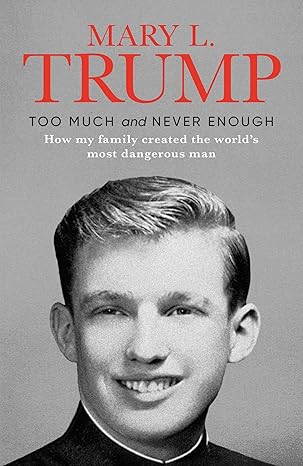
Too Much and Never Enough: How My Family Created the World’s Most Dangerous Man – Mary L. Trump (2020)
“Mary Trump spent much of her childhood in her grandparents’ large, imposing house in the heart of Queens, New York, where Donald and his four siblings grew up. She describes a nightmare of traumas, destructive relationships, and a tragic combination of neglect and abuse. She explains how specific events and general family patterns created the damaged man who currently occupies the Oval Office.”
7/10
Healing What’s Within: Coming Home to Yourself and to God When You’re Wounded, Weary, and Wandering – Chuck DeGroat (2024)
“If you’re like many of us, you carry a weight of buried pain. Despite looking put together on the outside, you feel secretly fractured within…It doesn’t have to be this way. In Healing What’s Within, therapist and professor Chuck DeGroat invites you on a compassionate journey inward to return and retune to the life God created you to live.”
6/10
2024
The Making of a Therapist – Louis Cozolino (2004)
“Cozolino provides a unique look inside the mind and heart of an experienced therapist. Readers will find an exciting and privileged window into the experience of the therapist who, like themselves, is just starting out. In addition, The Making of a Therapist contains the practical advice, common-sense wisdom, and self-disclosure that practicing professionals have found to be the most helpful during their own training..”
7/10
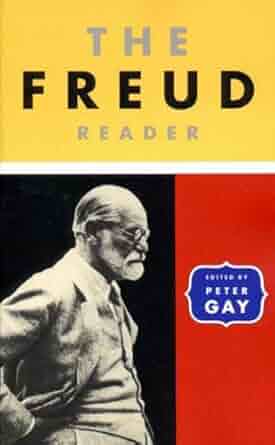
The Freud Reader – Sigmund Freud/Peter Gay (1995)
“What to read from the vast output of Sigmund Freud has long been a puzzle. Freudian thought permeates virtually every aspect of twentieth-century life; to understand Freud is to explore not only his scientific papers―on the psycho-sexual theory of human development, his theory of the mind, and the basic techniques of psychoanalysis―but also his vivid writings on art, literature, religion, politics, and culture..”
7/10

My Grandmother’s Hands: Racialized Trauma and the Pathway to Mending Our Hearts and Bodies – Resmaa Menakem (2017)
“In this groundbreaking book, therapist Resmaa Menakem examines the damage caused by racism in America from the perspective of trauma and body-centered psychology.”
7/10
Celebration of Discipline – Richard Foster (1998)
“Hailed by many as the best modern book on Christian spirituality, Celebration of Discipline has helped more than one million seekers discover a richer spiritual life infused with joy, peace, and a deeper understanding of God. Celebration of Discipline explores the ‘classic disciplines,’ or central spiritual practices, of the Christian faith.”
6/10
The Memory of Old Jack – Wendell Berry (1999)
“The story tells of the most searing moments of Old Jack’s life, particularly his debt to his sister Nancy and her husband Ben Feltner, Old Jack’s model of what an honorable manhood and strength might be.”
6/10
A Change of Heart: A Personal and Theological Memoir – Thomas Oden (2014)
“Oden’s enthusiasms for pacifism, ecumenism and the interface between theology and psychotherapy were ambushed by varied shapes of reality…This fascinating memoir walks us through not only his personal history but some of the most memorable chapters in twentieth-century theology.”
5/10
The Way of the Heart: The Spirituality of the Desert Fathers and Mothers – Henri Nouwen (2009)
“Interweaving the solitude, silence, and prayer of the fifth-century Egyptian Desert Fathers and Mothers with our contemporary search for an authentic spirituality, The Way of the Heart not only leads us to a fuller encounter with God, but to a more creative ministry with our fellow human beings.
10/10

Memories, Dreams, Reflection – Carl Jung (1989)
“In the spring of 1957, when he was eighty-one years old, Carl Gustav Jung undertook the telling of his life story. Memories, Dreams, Reflections is that book, composed of conversations with his colleague and friend Aniela Jaffé, as well as chapters written in his own hand, and other materials.”
6/10
The Sex Talk You Never Got – Sam Jolman (2024)
“In our sex-saturated world, it might seem surprising that men need more talk about sex. But the reality is that sexuality is one of the most neglected aspects of men’s lives. From the woefully inadequate sex talks many young men receive from parents (little more than an anatomy lesson or a purity lecture, if anything at all) to cultural messages that unhelpfully weave both shame and permissiveness into men’s understanding of their own sexuality and masculinity, too many boys and men experience sexual desire as an area of struggle, confusion, and brokenness.
2/10
Freud’s Patients: A Book of Lives – Mikkel Borch-Jacobsen (2021)
“Everyone knows the characters described by Freud in his case histories: “Dora,” the “Rat Man,” the “Wolf Man.” But what do we know of the people, the lives behind these famous pseudonyms: Ida Bauer, Ernst Lanzer, Sergius Pankejeff? . . . In total, thirty-eight lives tell us as much about Freud’s clinical practice as his celebrated case studies, revealing a darker and more complex Freud than is usually portrayed: the doctor as his patients, their friends, and their families saw him.
6/10
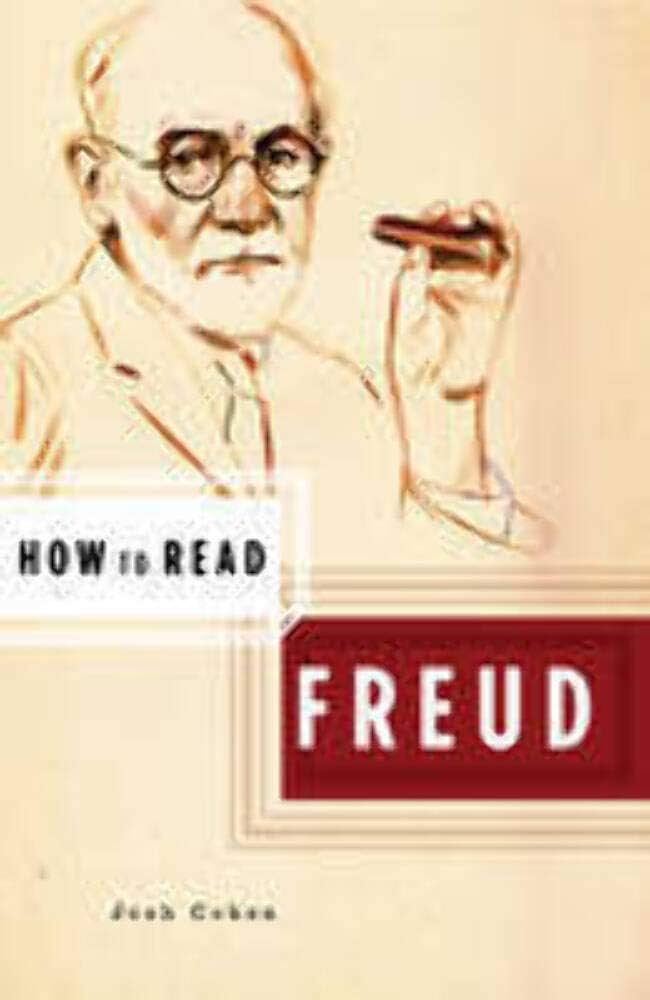
How to Read Freud – Josh Cohen (2014)
“By reading short extracts from across Freud’s work, addressing the neuroses, the unconscious, words, death and (of course) sex, How to Read Freud brings out the paradoxical core of psychoanalytic thinking: that our innermost truths only ever manifest themselves as distortions. Read attentively, our dreams, errors, jokes and symptoms – in short, our everyday lives – reveal us as masters of disguise, as unrecognizable to ourselves as to others.”
7/10

DSM-5-TR Insanely Simplified: Unlocking the Spectrums within DSM-5-TR and ICD-10 – Steven Buser (2022)
“DSM-5-TR Insanely Simplified fosters quick mastery of the most important concepts introduced in DSM-5 and continued in DSM-5-TR, while offering an entirely new way of looking at mental health along a continuum. This new approach goes beyond simply “labeling” clients with various diagnoses, but rather places them along spectrums that range from normal to problematic symptoms.”
9/10
Unapologetic: Why, Despite Everything, Christianity Can Still Make Surprising Emotional Sense – Francis Spufford (2014)
“Unapologetic is a book for believers who are fed up with being patronized, for non-believers curious about how faith can possibly work in the twenty-first century, and for anyone who feels there is something indefinably wrong, literalistic, anti-imaginative and intolerant about the way the atheist case is now being made.”
8/10
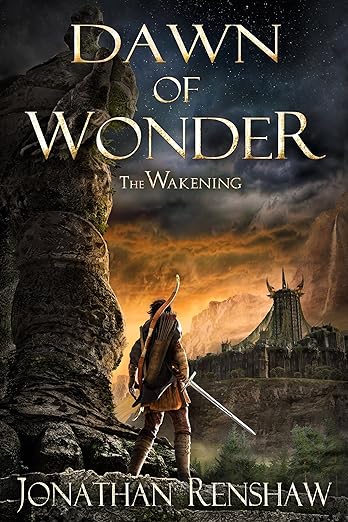
Dawn of Wonder: The Wakening – Jonathan Renshaw (2015)
“When a high-ranking officer gallops into the quiet Mistyvales, he brings a warning that shakes the countryfolk to their roots. But for Aedan, a scruffy young adventurer with veins full of fire and a head full of ideas, this officer is not what he seems. The events that follow propel Aedan on a journey that only the foolhardy or desperate would risk, leading him to the gates of the nation’s royal academy – a whole world of secrets in itself.”
7/10

Nonviolent Communication – Marshall Rosenberg (1999)
If “violent” means acting in ways that result in hurt or harm, then much of how we communicate—judging others, bullying, having racial bias, blaming, finger pointing, discriminating, speaking without listening, criticizing others or ourselves, name-calling, reacting when angry, using political rhetoric, being defensive or judging who’s “good/bad” or what’s “right/wrong” with people—could indeed be called “violent communication.”
10/10

How Far to the Promised Land – Esau McCaulley (2023)
“How Far to the Promised Land is a thrilling and tender epic about being Black in America. It’s a book that questions our too-simple narratives about poverty and upward mobility; a book in which the people normally written out of the American Dream are given voice.”
6.5/10
The Myth of Normal – Gabor Maté (2022)
“Maté brings his perspective to the great untangling of common myths about what makes us sick, connects the dots between the maladies of individuals and the declining soundness of society—and offers a compassionate guide for health and healing.”
9/10

Creating Healing Circles – Chris Burris (2022)
People are meant to discover, heal, and grow in community, yet the mental health field has moved increasingly toward an individual psychotherapy model. For many helping professionals, the art of running support and therapeutic groups has been underdeveloped and remains a daunting and often overwhelming prospect. This book is designed for helping professionals officially trained in the Internal Family Systems model as a resource in utilizing the concepts, ideas, and protocols from the IFS model in group experiences.
3/10

The One Straw Revolution – Masanobu Fukuoka (1975)
“Trained as a scientist, Fukuoka rejected both modern agribusiness and centuries of agricultural practice, deciding instead that the best forms of cultivation mirror nature’s own laws. Over the next three decades he perfected his so-called “do-nothing” technique: commonsense, sustainable practices that all but eliminate the use of pesticides, fertilizer, tillage, and perhaps most significantly, wasteful effort.”
7/10
2023
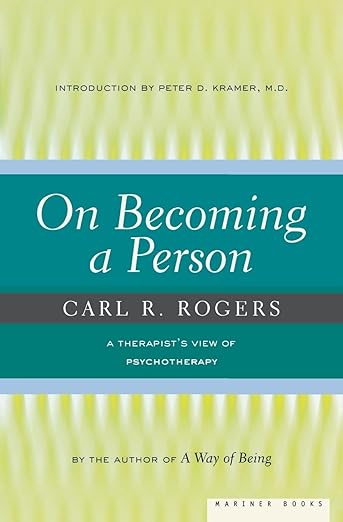
On Becoming A Person: A Therapist’s View of Psychotherapy – Carl Rodgers (1961)
“Carl Rogers, founder of the humanistic psychology movement, revolutionized psychotherapy with his concept of ‘client-centered therapy.’ His influence has spanned decades, but that influence has become so much a part of mainstream psychology that the ingenious nature of his work has almost been forgotten. New discoveries in the field of psychopharmacology, especially that of the antidepressant Prozac, have spawned a quick-fix drug revolution that has obscured the psychotherapeutic relationship. As the pendulum slowly swings back toward an appreciation of the therapeutic encounter, Dr. Rogers’s ‘client-centered therapy’ becomes particularly timely and important.”
8/10

Waking the Tiger – Peter Levine (1997)
“Waking the Tiger offers a new and hopeful vision of trauma. It views the human animal as a unique being, endowed with an instinctual capacity. It asks and answers an intriguing question: why are animals in the wild, though threatened routinely, rarely traumatized? By understanding the dynamics that make wild animals virtually immune to traumatic symptoms, the mystery of human trauma is revealed.”
9/10
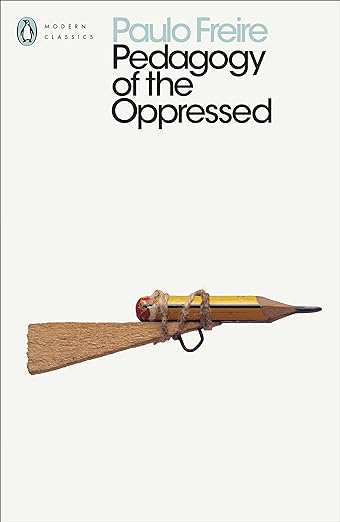
Pedagogy of the Oppressed – Paulo Freire (1968)
“Pedagogy of the Oppressed is one of the foundational texts in the field of critical pedagogy, which attempts to help students question and challenge domination, and the beliefs and practices that dominate. First published in Portuguese in 1968, Pedagogy of the Oppressed was translated and published in English in 1970.”
9/10
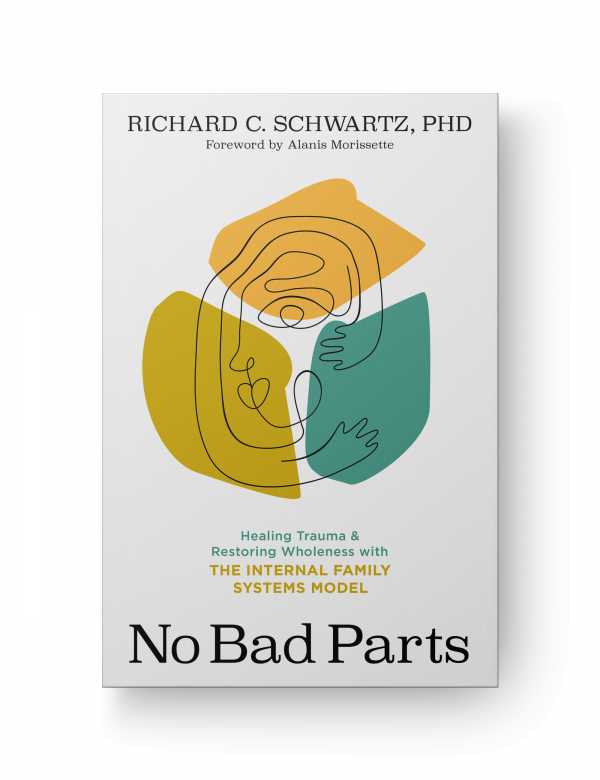
No Bad Parts – Richard Schwartz (2021)
“We’ve been taught to believe we have a single identity, and to feel fear or shame when we can’t control the inner voices that don’t match the ideal of who we think we should be. Schwartz…challenges this “mono-mind” theory. “All of us are born with many sub-minds―or parts,” says Dr. Schwartz. “These parts are not imaginary or symbolic. They are individuals who exist as an internal family within us―and the key to health and happiness is to honor, understand, and love every part.”
10/10
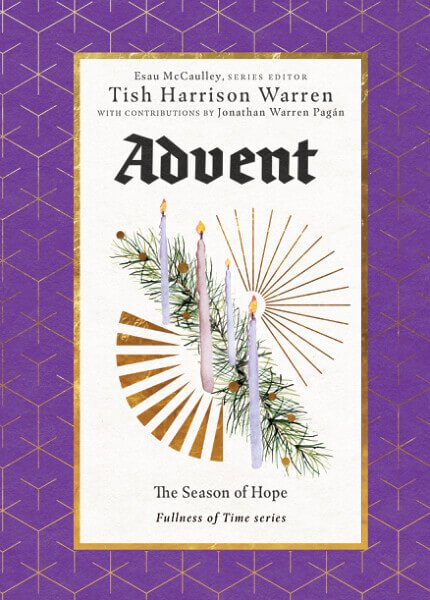
Advent – Tish Harrison Warren (2023)
“We tend to think of Advent as the season of anticipation before Christmas―and while it is that, it’s also much more. Throughout its history, the church has observed Advent as a preparation not only for the first coming of Christ in his incarnation but also for his second coming at the last day. It’s also about a third coming: the coming of Christ to meet us in our present moment, to make us holy by his Word and Sacrament.”
6/10
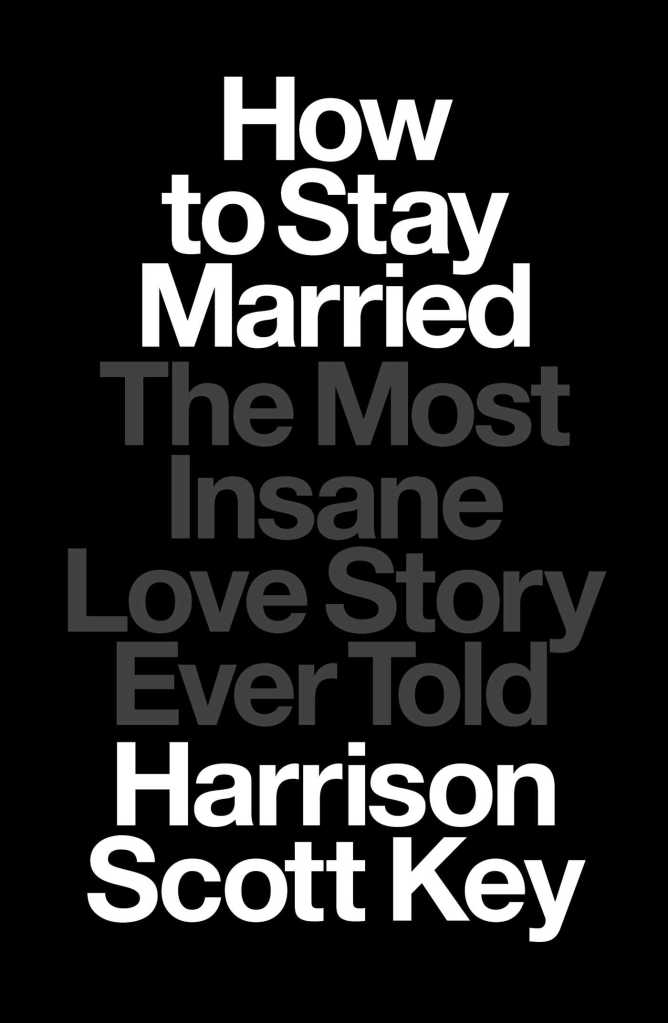
How to Stay Married: The Most Insane Love Story Ever Told -Harrison Scott Key (2023)
“Harrison Scott Key, winner of the Thurber Prize for American Humor, tells the shocking, “shot through with sharp humor” (The Washington Post), spiritually profound story of his journey through hell and back when infidelity threatens his marriage.”
10/10

The Rape of Nanking – Iris Chang (2012)
“The New York Times bestselling account of one of history’s most brutal—and forgotten—massacres, when the Japanese army destroyed China’s capital city on the eve of World War II, “piecing together the abundant eyewitness reports into an undeniable tapestry of horror”. (Adam Hochschild, Salon)”
8/10

The Inner Voice of Love – Henri Nouwen (1999)
“This is Henri Nouwen’s secret journal. It was written during the most difficult period of his life, when he suddenly lost his self-esteem, his energy to live and work, his sense of being loved—even his hope in God. Although he experienced excruciating anguish and despair, he was still able to keep a journal in which he wrote a daily spiritual imperative to himself that emerged from his conversations with friends and supporters.”
6/10
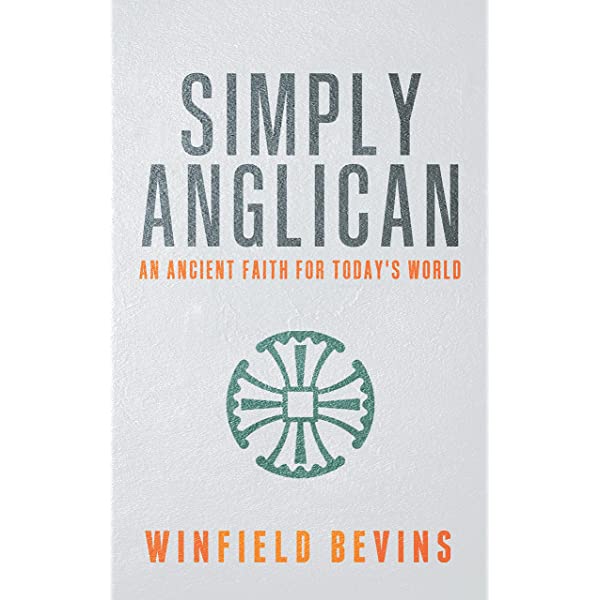
Simply Anglican – Winfield Bevins (2020)
“Far from being a faith of the past, Anglicanism presents a rich spiritual tradition that has matured into a worldwide movement of Christians on every continent. The Anglican tradition offers a refreshing alternative to our postmodern world by helping us reconnect to the historic Christian faith in a way that speaks to our present age.”
7/10
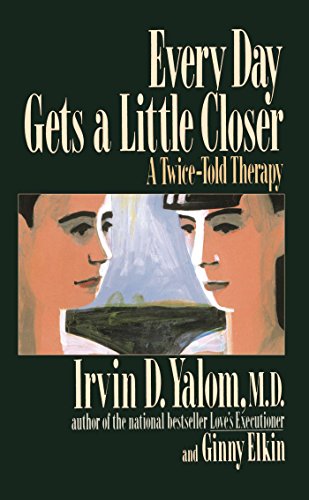
Every Day Gets a Little Closer – Irvin Yalom (1991)
“Ginny Elkin was a troubled young and talented writer whom the psychiatric world had labeled as “schizoid.” After trying a variety of therapies, she entered into private treatment with Dr. Irvin Yalom at Stanford University. As part of their work together, they agreed to write separate journals of each of their sessions. Every Day Gets a Little Closer is the product of that arrangement, in which they alternately relate their descriptions and feelings about their therapeutic relationship.”
7.5/10

Changing Our Mind – David Gushee (2014)
“Every generation has its hot-button issue,” writes David P. Gushee, “For us, it’s the LGBT issue.” In Changing Our Mind, Gushee takes the reader along his personal and theological journey as he changes his mind about gay, lesbian, bisexual and transgender inclusion in the Church. “For decades now, David Gushee has earned the reputation as America’s leading evangelical ethicist. In this book, he admits that he has been wrong on the LGBT issue.” writes Brian D. McLaren, author and theologian.”
8/10
2022
Brainstorm – Daniel Siegel (2014)
“Siegel illuminates how brain development impacts teenagers’ behavior and relationships. Drawing on important new research in the field of interpersonal neurobiology, he explores exciting ways in which understanding how the teenage brain functions can help parents make what is in fact an incredibly positive period of growth, change, and experimentation in their children’s lives less lonely and distressing on both sides of the generational divide.”
5/10

Scattered Minds – Gabor Maté (1999)
“Whereas other books on the subject describe the condition as inherited, Dr. Maté believes that our social and emotional environments play a key role in both the cause of and cure for this condition. In Scattered Minds, he describes the painful realities of ADD and its effect on children as well as on career and social paths in adults.”
7/10

Inpatient Group Psychotherapy – Irvin Yalom (1983)
“This essential book for front-line clinicians offers new ways of conceptualizing the techniques of group therapy for use on acute wards. Yalom makes a strong case for the efficacy of group therapy on all acute wards. He discusses how to structure the session and the kind of support that should be offered. The emphasis is on the here-and-now. He then presents two models of groups: one for the higher functioning and one for the more regressed psychotic patients.”
7/10

In the Realm of Hungry Ghosts – Gabor Maté (2010)
“Based on Gabor Maté’s two decades of experience as a medical doctor and his groundbreaking work with people with addiction on Vancouver’s skid row, this #1 international bestseller radically re-envisions a much misunderstood condition by taking a compassionate approach to substance abuse and addiction recovery.”
9/10

The Master and His Emissary – Iain McGilchrist (2019)
“Why is the brain divided? The difference between right and left hemispheres has been puzzled over for centuries. Drawing upon a vast body of brain research, the renowned psychiatrist, author, and thinker Iain McGilchrist reveals that the difference between the two sides is profound—two whole, coherent, but incompatible ways of experiencing the world. The detail-oriented left hemisphere prefers mechanisms to living things and is inclined to self-interest, while the right hemisphere has greater breadth, flexibility, and generosity.”
9/10

The Naked Anabaptist – Stuart Murray (2015)
“Anabaptist Christians have been around for almost 500 years. But what does Anabaptism look like when not clothed in Mennonite or Amish traditions? Writing from Great Britain, Stuart Murray peels back the layers to reveal the core components of Anabaptism and what they mean for faith in his context and ours.”
8/10
The Perennial Philosophy – Aldous Huxley (1945)
“With great wit and stunning intellect—drawing on a diverse array of faiths, including Zen Buddhism, Hinduism, Taoism, Christian mysticism, and Islam—Huxley examines the spiritual beliefs of various religious traditions and explains how they are united by a common human yearning to experience the divine. The Perennial Philosophy includes selections from Meister Eckhart, Rumi, and Lao Tzu, as well as the Bhagavad Gita, Tibetan Book of the Dead, Diamond Sutra, and Upanishads, among many others.”
4/10
Bread in the Wilderness – Thomas Merton (1953)
“Bread in the Wilderness sets forth Merton’s belief that “the Psalms acquire, for those who know how to enter into them, a surprising depth, a marvelous and inexhaustible actuality. They are bread, miraculously provided by Christ, to feed those who have followed Him into the wilderness.” Merton’s goal in this moving book is to help the reader enter into the Psalms…”
5/10
East of Eden – John Steinbeck (1952)
“In his journal, Nobel Prize winner John Steinbeck called East of Eden “the first book,” and indeed it has the primordial power and simplicity of myth. Set in the rich farmland of California’s Salinas Valley, this sprawling and often brutal novel follows the intertwined destinies of two families—the Trasks and the Hamiltons—whose generations helplessly reenact the fall of Adam and Eve and the poisonous rivalry of Cain and Abel.”
6/10
Attachment and Loss Volume One – John Bowlby (1969)
“This first volume of John Bowlby’s Attachment and Loss series examines the nature of the child’s ties to the mother. Beginning with a discussion of instinctive behavior, its causation, functioning, and ontogeny, Bowlby proceeds to a theoretical formulation of attachment behaviorhow it develops, how it is maintained, what functions it fulfills.”
4/10
Jung: A Very Short Introduction – Anthony Stevens (2001)
“Anthony Stevens one of Britain’s foremost Jungian analysts clearly explains the basic concepts of Jungian psychology: the collective unconscious, complex, archetype, shadow, persona, anima, animus, and the individualization of the Self. A small masterpiece of insight and concision, this volume offers a clear portrait of one of the twentieth century’s most important and controversial thinkers.”
8/10
The Way of Chuang Tzu – Thomas Merton (1965)
“Working from existing translations, Thomas Merton composed a series of his own versions of the classic sayings of Chuang Tzu, the most spiritual of Chinese philosophers. Chuang Tzu, who wrote in the fourth and third centuries B.C., is the chief authentic historical spokesperson for Taoism and its founder Lao Tzu (a legendary character known largely through Chuang Tzu’s writings).”
4/10
The Road – Cormac McCarthy (2006)
“A father and his son walk alone through burned America. Nothing moves in the ravaged landscape save the ash on the wind. It is cold enough to crack stones, and when the snow falls it is gray. The sky is dark. Their destination is the coast, although they don’t know what, if anything, awaits them there.”
10/10
 javen.bear.