
etiology – the study of causation or origination
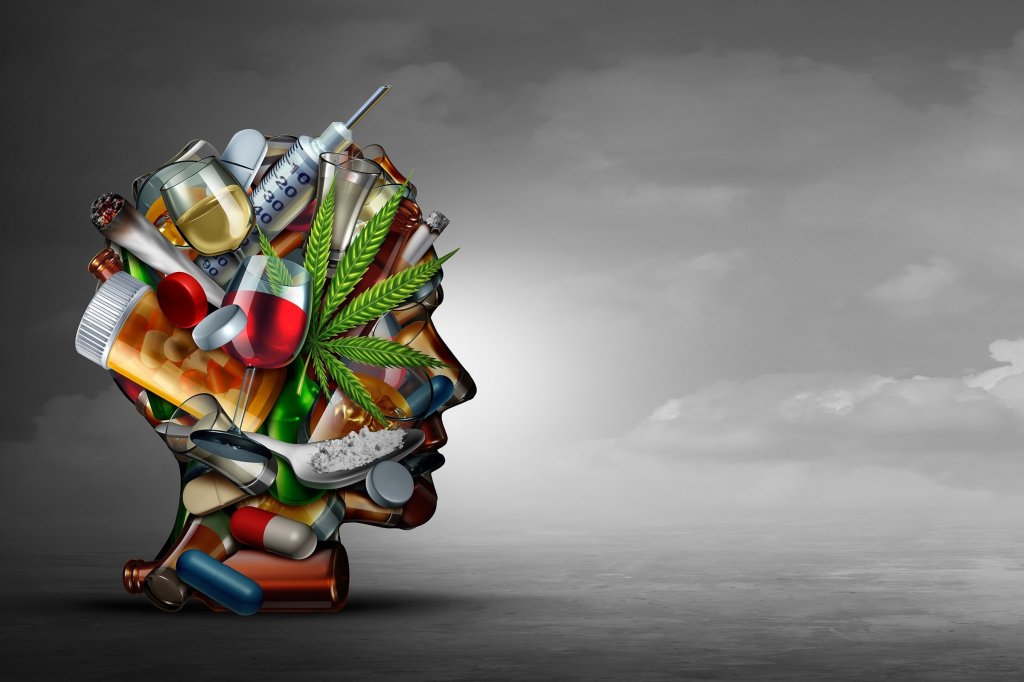
This paper was written as coursework for GCU’s CNL-527: Principles of Psychopharmacology
Etiology of Addiction
This paper will explore the etiology of addiction and provide insight into different models which explain addiction development. The interplay between nature and nurture which often presents as genetics vs. environment is noteworthy in this discussion. Relevant research related to the disease and psychosocial models will be discussed. Ultimately, the environment in which the brain develops and the psychosocial model of addiction have been undervalued – a finding which this paper will present as a hopeful conclusion.
History and Evolution of Addiction Theory
The concept of addiction has been long observed, but the definition is debated. The word addiction was altogether removed from four consecutive editions the APA’s Diagnostic and Statistical Manual of Mental Disorders from 1980 to 2000. With so many and varying meanings, “it was considered a layman’s rather than a scientific term, pejorative, stigmatizing, and too difficult to define” (Rosenthal & Faris, 2019, p. 437). The debate about the etiology of addiction has often been centered on whether addictive behavior is a voluntary choice) or an involuntary disease and whether the addicted person is a criminal or a patient with an illness (ibid.). This unfortunate dichotomy misses the importance of how these components interplay, and more importantly, neglects the importance of the nurturing environment.
Evolution of the Term
Around the 300 BCE, the Roman term addictus referred to the person who is given a judgement by the official in charge, the praetor urbanus. This pronouncement was a “binding spell…thought to embody the power of Jupiter” (ibid., p. 439). Moving into the 1600s, many Christian writers used the term addict “to discuss the danger of misguided attachments” such as witchcraft and magic (ibid., p. 443). Here, addiction itself is not a negative thing; the term was generally used in a positive manner, unless the object of attachment is misguided. One might addict herself to poetry reading in the sense of a habit or pursuit.

Early Modern Psychology Period
In 1804, the paradigm began to shift. Thomas Trotter published An Essay, Medical, Philosophical, and Chemical, on Drunkenness and Its Effects on the Human Body, and it became “generally accepted that heavy and persistent alcohol consumption was itself a disease in its own right, or at least a key symptom of some underlying disease” (Porter, 1988 as cited in Haldipur, 2018). In 1965, the American Medical Association “recognized alcoholism as a disease and declared it to be a medical disorder” (Bhatt, 2023). During this time, addiction was thought to stem from a personality disorder (ibid.).
Contemporary Views
More recently, change in definition over an eight-year span by the American Society of Addiction Medicine (ASAM) demonstrates some of the new insight researchers are gaining into the importance of environment on the development of addiction. In 2011, ASAM’s definition of addiction declared it “a primary, chronic disease of brain reward, motivation, memory and related circuitry. Dysfunction in these circuits leads to characteristic biological, psychological, social and spiritual manifestations…. (ibid.)” However, the 2019 definition reads, “Addiction is a treatable, chronic medical disease involving complex interactions among brain circuits, genetics, the environment, and an individual’s life experiences… (ibid.).” According to Bhatt, “It is clear that the 8-year gap in these definitions left room for experts to more thoroughly recognize the impact that environment and a person’s life experiences has on addiction” (ibid.).
Current Trends and Debates in Research
The War on Drugs, started by Richard Nixon and then championed by Ronald and Nancy Reagan, has cemented a victim-blaming mentality into the American psyche. The clinical world is moving further and further away from that paradigm. Movement away from moralistic judgement is overdue, however there is real risk of oversimplification if a purely disease model becomes primary (Gerra, et al., 2021). According to Hall et al., “Considerable scientific value exists in the research into the neurobiology and genetics of addiction, but this research does not justify the simplified [disease model] that dominates discourse about addiction in the USA and, increasingly, elsewhere” (Hall et al., 2015).

In the wake of the just say no campaign, the fields of psychotherapy and medicine are dominated by two overarching explanations for the development of addiction: the disease model of addiction and the psychosocial model. In 2020, a study surveying 1438 treatment providers found that American providers supported a disease model significantly more than their UK and Australian counterparts. It was also noted that personal experience with addiction and involvement with 12-step programs was linked to a support for the disease model as was older age (Barnett, et al., 2020).
Overview of Disease Model
According to the disease model, genetic and biological factors play the largest role in determining whether addiction will develop. The National Institute on Drug Abuse claims “genetic vulnerability accounts for about half of an individual’s risk for developing a SUD, which makes individuals 10 times more likely to develop a SUD if they have a first degree relative with a SUD” (Green et al., 2021 p. 1097). Vulnerability is said to be linked to neurochemistry as well as dopamine receptor density. “Individuals with fewer dopamine receptors are likely to experience the physiological rewards of a substance more strongly than those with sufficient dopamine receptor” (ibid.).
The National Institute on Drug Abuse has championed the disease model since 1997 when director Alan Leshner published a report arguing addiction was a “chronic, relapsing, brain disease” (Hall et al., 2015). Genetic research involving twins as well as animal studies in which drugs are self-administered are also cited as evidence for the disease model. Alcoholics Anonymous is an organization with lay-led recovery groups around the world which also champions the disease model and view addiction as a disease which can only be held at bay, never recovered from.
Overview of Psychosocial Model
In contrast with the disease model, the psychosocial model places a much stronger emphasis on the nurturing environment in which the developing brain’s reward pathways are developed as well as the environment in which the individual finds themselves when they use drugs. Brains which develop in chaotic environments are neurologically different in important ways than those nurtured in safe, secure environments. The psychosocial model views genetics as basic organizers which set the schedule of development (Maté, 2010, p. 189). “The expression of genetic potential is, for the most part, contingent on the environment” writes Gabor Maté, and this view is supported by the work of Dr. Jaak Panksepp author of the landmark work Affective Neuroscience.

Dr. Gabor Maté, author of In the Realm of Hungry Ghosts
Circuitry in Very Young Brains
Opiate circuitry development in young brains as well as the infant’s attachment to caregiver are both fundamental to understanding how and why addiction develops (Maté, 2010; Gerra 2021). The infant brain has billions of neurons in excess of what will be required by the child, so pruning has to happen as a part of what has been called neural Darwinism (Maté, 2010). The key factor in the development of key circuits (opioid circuitry of attachment reward, regulatory centers, dopamine circuitry) is the emotional environment (ibid.). And the dominant factor in this critical aspect of development is the nurturing adults, the caregivers. This is why attachment and the emotional experience of the infant are so tightly connected to the neurochemistry of the brain. This is the same brain which will later be at a much greater or much lesser risk for addiction depending on the environment in which it was nurtured.
Studies show links between a person having close relatives who abuse drugs and the likelihood that they will do the same. However, what is often not discussed is the environment in which the person was nurtured. It turns out that persons whose caregivers had substance use disorders may not be as likely to develop secure attachments. The three environmental conditions needed for optimal development are “nutrition, physical security, and consistent emotional nurturing” (ibid., p. 193). A study done at the University of Washington compared the brain wave patterns of infants whose mothers were suffering from post-partum depression with those whose mothers were in good spirits. Distinct differences were noted in the infants’ frontal lobes which is where the “centers for self-regulation and emotion are located” (Dawson & Fischer, n.d. as cited in ibid., p. 195).

Vietnam War Remission Rates
If the disease and genetic models alone could account for addiction, one would expect exposure to a drug to lead to addiction. This was one of the driving narratives of the War on Drugs (ibid.). In the Vietnam War (1960s and 1970s), many American soldiers became heavy users of barbiturates and/or amphetamines along with heroin. 20 percent of those returning “met the criteria for the diagnoses of addiction while they were in Southeast Asia, whereas before they were shipped overseas fewer than 1 percent had been opiate addicts” (ibid., p. 142). However, after returning home, the remission rate was an incredible 95 percent. This does not seem to support a model suggesting once an addict, always an addict, and instead seems to support the importance of environment in the development of addiction.
Early Major Traumas Correlated to Addiction
Potentially traumatic life events are “negative situations that have the potential to cause an extraordinary amount of stress to an individual, overwhelming their ability to cope and leaving them in fear of death annihilation, or insanity” (Levin, 2021). In a study of 4,025 people who had experienced direct exposure to potentially traumatic events, “direct exposure was most highly associated with SUDs and behavioral addictions, being two times more prevalent among those exposed compared to the nonexposed” (ibid., p. 118). Those who experience sexual assault were 2.1 times as likely to have a substance use disorder. (ibid.).
Connection as the Healing Answer
It could be that substance abuse is an attempt to fill the users void of social connections. Bruce Alexander conducted a famous experiment termed Rat Park in which he raised the important question about the environment in which laboratory animals were being studied. He found that when placed in a larger, more comfortable, scenic, and socially connected environment, “morphine held little attraction…even after these rats were forced to consume morphine for weeks, to the point where they would develop distressing physical withdrawal symptoms if they didn’t use it” (Maté, 2010, p. 145-146). Alexander noted, “Nothing that we tried instilled a strong appetite for morphine” for the rats in this environment (ibid.). That the prerequisite for addiction may be a void of social connection often filled with substance abuse is a promising line of inquiry. Author Johann Hari sums up his research into addiction by saying “The opposite of addiction is not sobriety…it’s connection” (TED, 2015).

Conclusions and Implications for the Counseling Profession
While there is still much debate, the psychosocial model is the most compelling model of addiction development. With this etiology in view, the work of clinical counseling is paramount in recovery. Rather than being treated medically as specimens with diseases, clients should be viewed as wounded persons who are starving for the connection and nurture they never received. Clinicians should practice empathy, give support, and seek to help their clients understand how to reconnect with themselves and their surroundings in order to heal. This is not only a more compelling explanation etiologically, it is also a much more hopeful message for those with addiction. Rather than beset by a disease or cursed with faulty genetics, people can heal if they are nurtured and placed in environments where they can connect to themselves and others.
This paper has explored the etiology of addiction through the lens of two dominant theoretical frameworks: the disease model and the psychosocial model. The clinical field has moved away from a moral failure view and perhaps too far in the direction of a disease model. Current trends in research suggest a psychosocial model of addiction development is the best supported view. Future research should investigate treatment protocols operating from this more hopeful paradigm in which social connection and attention to the nurturing environment are explored and prioritized.
References
Barnett, A., O’Brien, K., Hall, W., & Carter, A. (2020). Support for the psychosocial, disease and brain disease models of addiction: A survey of treatment providers’ attitudes in Australia, the UK, and U.S. Journal of Substance Abuse Treatment, 115. https://lopes.idm.oclc.org/login?url=https://search.ebscohost.com/login.aspx?direct=true&db=edselp&AN=S0740547219305616&site=eds-live&scope=site&custid=s8333196&groupid=main&profile=eds1
Bhatt, A. (2023, February 10). Definitions of addiction: Historical views versus today’s views. Addiction Center. https://www.addictioncenter.com/community/definitions-addiction-historical-views-versus-todays-views/
Gerra, M. L., Gerra, M. C., Tadonio, L., Pellegrini, P., Marchesi, C., Mattfeld, E., Gerra, G., & Ossola, P. (2021). Early parent-child interactions and substance use disorder: An attachment perspective on a biopsychosocial entanglement. Neuroscience and Biobehavioral Reviews, 131, 560–580. https://lopes.idm.oclc.org/login?url=https://search.ebscohost.com/login.aspx?direct=true&db=edselp&AN=S0149763421004401&site=eds-live&scope=site&custid=s8333196&groupid=main&profile=eds1
Green, K. E., Blue, J. R., & Natal, S. N. (2021). An Integrated Model of Nature and Nurture Factors that Contribute to Addiction and Recovery. Substance Use & Misuse, 56(8), 1095–1107. https://lopes.idm.oclc.org/login?url=https://search.ebscohost.com/login.aspx?direct=true&db=a9h&AN=150888473&site=eds-live&scope=site&custid=s8333196&groupid=main&profile=eds1
Haldipur, C. (2018). Addiction: A brief history of an idea. Psychological Medicine, 48(8), 1395-1396. doi:10.1017/S0033291718000314
Hall, W., Carter, A., & Forlini, C. (2015). The brain disease model of addiction: is it supported by the evidence and has it delivered on its promises? Lancet Psychiatry. 2 105-10. 10.1016/S2215-0366(14)00126-6
Levin, Y., Lev Bar-Or, R., Forer, R., Vaserman, M., Kor, A., & Lev-Ran, S. (2021). The association between type of trauma, level of exposure and addiction. Addictive Behaviors, 118. https://lopes.idm.oclc.org/login?url=https://search.ebscohost.com/login.aspx?direct=true&db=psyh&AN=2021-33253-001&site=eds-live&scope=site&custid=s8333196&groupid=main&profile=eds1
Maté, G. (2010). In the realm of hungry ghosts: Close encounters with addiction. North Atlantic Books.
Rosenthal, R. J., & Faris, S. B. (2019). The etymology and early history of ‘addiction.’ Addiction Research & Theory, 27(5), 437–449. https://doi-org.lopes.idm.oclc.org/10.1080/16066359.2018.1543412
TED. (2015, July 9). Everything you think you know about addiction is wrong | Johann Hari [Video]. YouTube.com. https://www.youtube.com/watch?v=PY9DcIMGxMs
 javen.bear.