
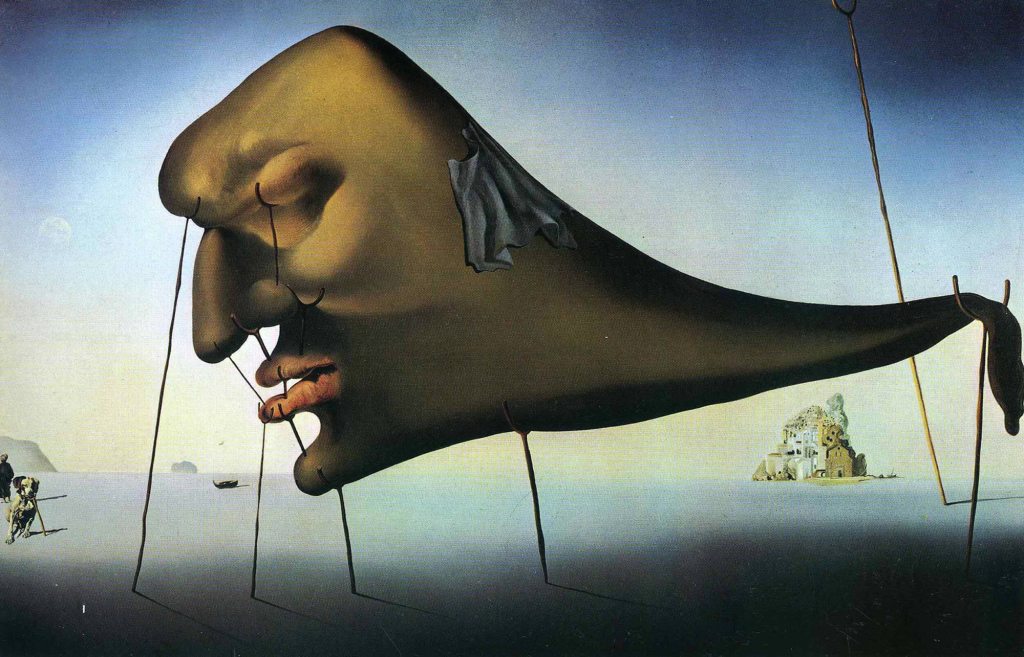
For as long as I can remember, I’ve had a real distaste for people who are arrogant and overly self-confident, or whom I perceive that way. It’s partly because I dislike and fear bullies and partly because most of my life I’ve felt quite the opposite: self-doubt, insecurity, a bit shy and afraid of looking dumb.
It’s also because in my church and middle school environment we were taught that bragging, boasting, and being arrogant were really bad. As my best friend and I liked to joke, “I am extremely proud of my humility!” So the combination of a subculture and personality bent toward disliking arrogance means I’m always suspicious of people who seem a bit too big, too sure, too cocky. And I doubt this will change for me anytime soon, but I think it’s really fascinating how we talk about these people.

I’ve said so many times – that guy has a big ego. So many times I’ve heard someone described as needing an ego-check. That person thinks too much of themself – someone needs to take them down a peg. While relatable, I think it’s the wrong way to think about it. What if the opposite is actually the case? That person who has a “big ego” and needs attention and affirmation and is always taking center stage to be impressive – do they actually have a big ego? Maybe it’s actually the case they have a very small, underdeveloped ego and they’re compensating.

The Ego: “It’s what the person is aware of when they think about themselves and what they usually try to project toward others.” (simply psychology)
Sigmund Freud came up with the idea of the id, ego, and superego. It’s one of his most enduring contributions to psychology. Freud gets a really bad rap inside and outside the classroom which is unfortunate in my opinion. He did his work in the mid and late 1800s. He got a lot wrong, but he got a heck of lot right too which is now taken for granted as common knowledge.
According to Simply Psychology,
“According to Freudians, some abnormal upbringing…can result in a weak and fragile ego, whose ability to contain the id’s desires is limited” (ibid.). Folks with a healthy ego, who have a strong sense of who they are, folks who aren’t disconnected from themselves, don’t require the extra affirmation and constant adulation needed by a small ego. So maybe the saying should go the other way around: wow, that person must have small view of himself to seek so much external love. Viewed this way, it is a lack, rather than a surplus, of self love which leads to the behavior.
I’ve also been reading Chuck DeGroat’s book When Narcissim Comes to Church.

“Narcissim is born in the soil of shame and self-contempt, not healthy self-love…the false self isn’t an adult. It’s a child, stuck in adolescence, perpetually replaying outdated ways of getting its needs met in its present, adult body. Like Narcissus, it looks and looks, only to become more isolated, more turned in on itself. It may love the image it has created, but it has no real capacity to love itself” (DeGroat, p. 30).
DeGroat does some work on re-shaping our conception of the story of Narcissus from which we derive the term narcissism. He points out that while this story is often told to make an example of the danger of love of self, it’s actually quite the opposite. “While often told as a tale of excessive self-love, it is precisely self-love Narcissus was lacking” (ibid., p. 28). It’s a subtle but crucially important point, one that many brought up like I was to run from any talk of self-love/care/affection will likely bristle at. It is the image of himself ( a false sense of who he was) which was reflected in the pool and held his gaze. For people who love and care for themselves well, this image does not hold tantalizing power. DeGroat quotes Terrence Real
People often think of Narcissus as the symbol of excessive self-regard, but in fact, he exemplifies the opposite…Narcissus did not suffer from an overabundance of self-love, but rather from its deficiency…if Narcissus had possessed real self-love, he would have been able to leave his fascination. The curse of Narcissus is immobilization, not out of love for himself, but out of dependency upon his image.
Terrance Real as cited in When Narcissism comes to Church (DeGroat, 2020)

This is such a critical insight. It is one which I believe most evangelicals are trained to overlook. I have a friend who likes to jokingly quote Dave Ramsey when you ask him how he’s doing: better than I deserve – I deserve death! This idea that we are bad, depraved, morally bankrupt people who are only valuable once we pray a prayer to Jesus who THEN makes us something else is powerful, and harmful. It leads to little tropes like the JOY song: joy must be, Jesus first, myself last, and others in-between. DeGroat writes, “Healthy self-love would have motivated him to befriend every wounded part of himself. Self-contempt motivated him to search in vain for what he thought he needed to live, only to die from a neglect of what he really needed” (ibid., p. 29).
When I began coursework for the counseling program I’m in, we had assignments in which we had to detail plans for caring for ourselves as therapists to avoid burning out. As I did those assignments and listened to my classmates talk about the importance of caring for oneself, I realized how foreign the concept was to me. It’s a task in which I have so far to go and much work to do. In part two I want to explore how our concept of God may either reinforce or rebut this notion of our badness and the importance of self-love and self-care.
It is time to reconsider what it means to receive the love of God and the goodness of God’s image at our core.
 javen.bear.