
On this Christmas evening, I am reflecting a bit on the church. Anyone who’s read much of anything I’ve written may now sigh at the inevitable forthcoming gloom, surly observations, vexation etc. But no! It is Christmas, and this is more cheerful.
My last article was about the roles and nature of the pastor and the psychotherapist. It occurs to me that while the two are in many ways similar, which I highlighted, there are key pieces I said nothing about. First, the church body, the congregation! This togetherness is a probably a much more powerful healing agent than the pastor sitting in an office across from a troubled congregant. Much of the point of being a pastor is in the facilitation of a collective. This is not so much the case with the psychotherapist. With the exception of group work, the psychotherapist does not have a congregational context within which to view and work with the individual. The pastor does. A second important difference is the length of the relationship. Most counseling clients are seen for something like 6 -20 sessions. I’ve known some of my childhood pastors for 15 years.
It is remarkable that a group of more or less likeminded folk gathers together in the same place each week to sing, be taught, speak with, see one another, and perform various other rituals such as communion, confession, and prayer. I would like to name and reflect some of the key ways I’ve experienced joy and healing through the gathered church.
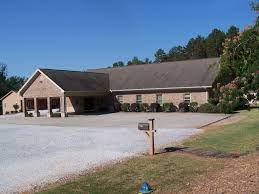
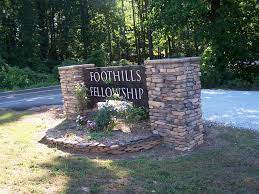
*The church pictured above I attended until age 10, and the one below from then until I got married.
The Singing
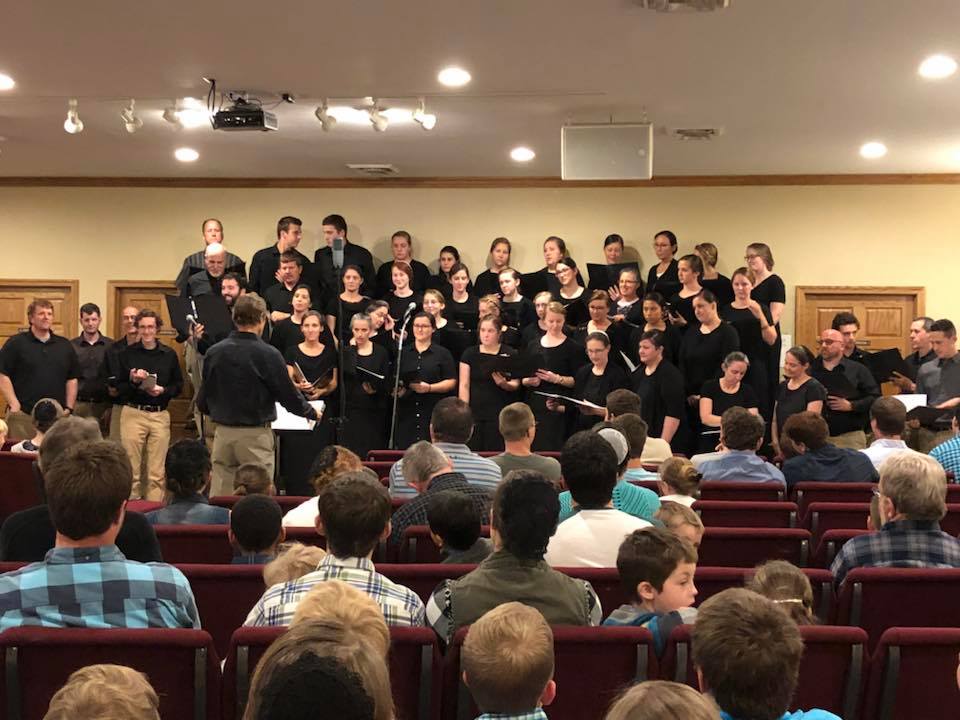
I grew up in a conservative Mennonite church, and congregational singing was always a part of our services. This way of singing emphasizes harmony. So each person who is able is expected to sing one of four parts (bass, tenor, alto, soprano – or in my case just the lead melody since harmony never really clicked for me). This singing gets almost every person in the room on their feet and using their body to perform a joint expression of song. It’s very interactive and not much like the contemporary worship service which is more a listening exercise in which you cannot hear anyone except those on stage. And in which case you may not even be able to see those next to you.
In our church the lights stayed up, and the volume was an expression of the congregants. So you heard, seen, felt, and joined the whole group there in the room. I still cannot sing harmony parts except for a few random songs, but the singing was a good, collective experience of expression.
The Eating
My church only practiced communion taking a few times a year, technically. But for many years, we ate a meal together once a month on Sunday evening. Looking back, this eating in the gym seems more like the Lord’s supper than the somber sipping of grape juice we did in the fellowship hall. It was always a lovely time. Every family brought something – meatballs, salads, sandwiches, roll-up pinwheels, more sandwiches, deviled eggs, lasagna. Usually the first letter of your last name dictated whether you brought a main or a dessert. You never knew you you might sit across from or whose afternoon creation you’d find on your styrofoam plate. It was a sacred time set apart to share a meal, talk, laugh, and generally shake off the seriousness of our often melancholy spirituality. This eating together was a great joy for me.
The Playing
In my childhood, Sunday was the definitive social day. Everyone was there, and we went to church twice most Sundays. Not until late in high school did I have a significant amount of non-church friends. There would be a sermon and Sunday school to get through, but then we would get what we came for. I have core memories of playing after church. Football in the gym, on a concrete floor and using a volleyball. Prisoner’s base. Knockout. And one rather strange game called Runaway. In this game everyone grouped under the carport while one kid would flee into the darkness (evening services only). Then the group would go wandering through the parking lot, field, and woods to find them. Once found, the round had only begun, and it wasn’t over until they were physically dragged back to the carport. Bigger kids could sometimes break free and fend off the inevitable dragging for quite some time.
We did all kinds of stuff – I wonder if kids still do these things. We threw sticks at each other in the dark, spied on people, kicked field goals through the hoop’s roof supports, and just generally got sweaty until we had to go home. I loved the play I got to do at church.
The Teaching
When I took Bible classes in college, I was a bit surprised to notice that very rarely was a scripture read or cited that I didn’t recognize. I think there were two reasons. First, my dad read us stories before bed from a large, red Bible. Second, our church never had child care. From the time I could discern spoken words I was hearing sermons on scriptures every Sunday. The value here, I think, was largely in the vocabulary and repetition of the content. I learned the names of Bible characters, theological terms, scriptural storylines, and the order of the books of the Bible. On Sunday mornings Sunday school was geared more to our age level and was more interactive.
Through sermons I was shown a distinct way of hearing and applying scripture taught fairly consistently through hundreds of sermons. I’m pretty confident that at age 14 I could tell you where the church stood on any major theological issue. It’s a way I would (and continue to) come to grapple with and question, but this helped me understand how scripture could be used to form and perpetuate a way of life. I have benefited from the teaching in church.
The Serving
The church context where I grew up presented a unique opportunity to serve. Pretty much everything in a Mennonite church is done in-house. From members literally building the building, grading the parking lot, setting up A/V, cutting the grass, cleaning the sanctuary, running the church library, to even choosing from the congregation someone to be the pastor(s). Everything was done in house. And this means there is always a way to serve, at least there way for me as a young man.
I ran the microphone to raised hands for testimony, set up tables and chairs, showed up on work days (some of them anyway), swept the gym, learned how to run the sound board, and even led singing a few times. There were Sunday school skits performed for the congregation and Christmas plays to participate in. One of the great honors of my high school experience was being asked to share a paper I’d written for a class on a Sunday morning and being affirmed as a writer. I’ve since the re-read the paper, and it wasn’t particularly stunning, but they sure made me feel good. Figuring out what you’re gifted in and what you’re terrible at is one of the hardest parts of being a teenager. I’m thankful to have been able to navigate that in a place that encouraged me to service of many kinds.
Conclusion
There is probably no thing in my life which I have more mixed feelings about than the church where I grew up. There is so much I’m going to great lengths to make sure my daughter never experiences. And there is so much that I’ll be saddened if she misses out on. What I’ve described are just a fraction of the joy, good times, and blessing that came through my church family growing up. It’s where I found a solid mentor, my best friend, and my wife.
As a psychotherapist in training, I look back and see so much of what our society is starving for that was overflowing in my church: shared movement, eating together, free and safe play, instruction in a way of life, and a connection point where you could show up, plug in, and serve.
These are things therapists can encourage and promote or point out when they’re missing. But it’s pastors with their congregations who can make the space for people to experience a gathered community as a healing encounter. I’ve written at length, and will continue to, about where the church is unhelpful, incoherent, and damaging. And I do so (hopefully) out of the conviction that the church is an essential part of a healthy, meaningful existence for so many people. I’m deeply grateful for the gifts imparted to me through the local church – gifts we need now more than ever.
 javen.bear.