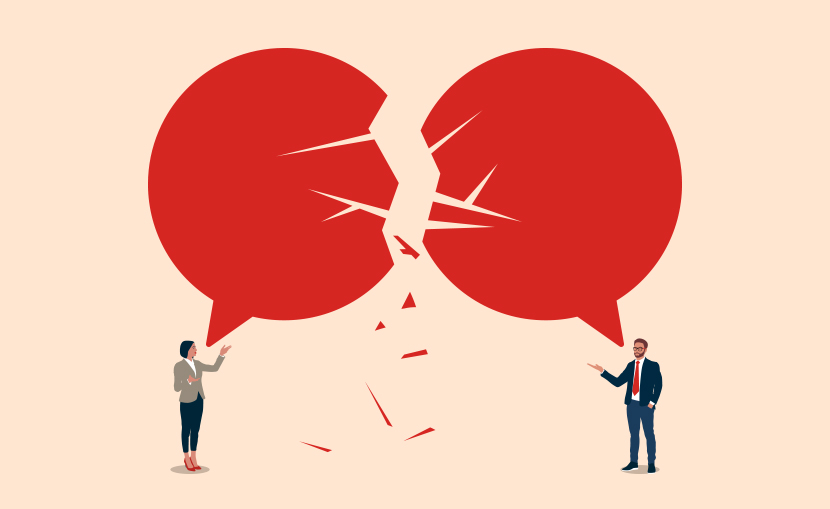
“There’s only two things that human beings are ever saying: please and thank you.”
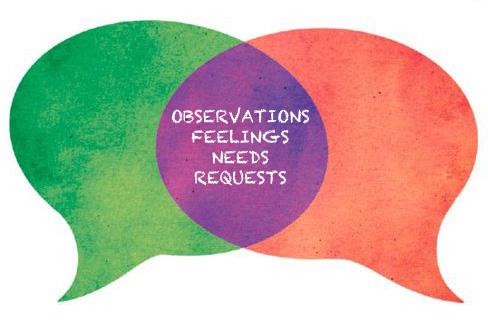
That line is from Marshall Rosenberg in one of his trainings on nonviolent communication. I have become very interested in his method, and I decided I would try to review here what I learned from reading his book. In this method of speaking and living, there are 4 components: observations, feelings, needs, requests. And there is a process for communicating with these 4 pieces:
- Observing: the concrete actions we observe that affect our well-being
- Feeling: how we feel in relation to what we observe
- Needing: The needs, values, desires, etc. that create our feelings
- Requesting: The concrete actions we request in order to enrich our lives.
The first thing I’ll say is that i have found this to be hard! One of the central tenets of the Anabaptist/Mennonite faith I was raised in is non-violence. Reading this work caused me to realize just how shot through with violence my life is, from actions and speech to perceptions of myself and others.

Observations
“The first component of NVC entails the separation of observation from evaluation” (p. 26). To observe means to state what we witness without “mixing in any evaluation.” A key piece of this is remaining within our own perspective and not assuming the view, thoughts, feelings, ect. of others. This is so hard, but I’ve really noticed how it changes the way I relate to people in conversation. Marshall gives the following example of a sentence which mixes evaluation in: Janice works too much. This is not an observation but a judgement. An observation might look like: Janice has worked past 5 p.m. each day this week. I’ve really noticed as well how often I put “positive” judgement in my statements. For instance, “You did a really good job on the painting!” This sort of statement still moves me, the speaker, into a position of judgement above the other person and their effort with the authority to say whether it was good or not.
The reader might wonder, so who cares then? Why shouldn’t I make judgments if they are positive? If our relationships to others (and our children) is built on something stronger than positive evaluations, I think we have a much better chance at genuine connection. Marshall writes, “When we combine observation with evaluation, others are apt to hear criticism and resist what we are saying” (p. 32). One way to observe without judgment is to connect our observations to our feelings.
Feelings
I’ve noticed we quite often begin sentences with “I feel like…” For instance, I feel like those colors don’t match or I feel that this restaurant would have good food. While there are certainly feelings involved in these statements – we aren’t stating feelings at all. These are beliefs, thoughts, opinions, etc. NVC helps us to look beneath thinking into feeling. A good rule of thumb is that anytime the word “that” comes after “I feel,” an opinion rather than a feeling is being shared. While it is popular in many circles to lament how touchy-feely our society is or how everyone is always concerned about their emotions these days – I think exactly the opposite is true.
We are not trained to know or express what we’re feeling. We are in fact trained as children to produce behavior based on what we think other people want from us. We learn how to gain positive feedback from teachers, parents, and friends by performing the actions that they want – we are not taught to honor what we’re feeling. This is a fundamentally disconnected way of being that produces adults who act out of overwhelm from feelings they don’t know how to express or communicate and who live to solicit feel-good reactions from other people.
Marshall writes, “In NVC, we distinguish between words that express actual feelings and those that describe what we think we are” (p. 42). He gives these examples:
Description of what we think we are: “I feel inadequate as a guitar player.” Similarly, when we talk about how others are feeling or doing, we aren’t really expressing our own feelings. For instance, “I feel ignored” and “I feel unimportant” – these aren’t feelings I have, but rather it is my interpretation of other peoples’ actions or feelings toward me. Descriptions of what we think about other people also aren’t feelings: “I feel like you’re being an idiot.” An expression of actual feelings would be: “I feel disappointed in myself as a guitar player.” or “I feel impatient…” or “I feel frustrated…” “I’m angry.” “I am feeling grateful for your hard work.” “I’m feeling worried as I listen to you speak.”
A key concept of NVC is that no one but me is responsible for my feelings. And no one can make me feel anything. Marshall writes, “what others say and do may be the stimulus, but never the cause, of our feelings. We see that our feelings result from how we choose to receive what others say and do, as well as from our particular needs and expectations in that moment” (p. 49). He goes on to describe 4 options we have when we hear negative messages, such as someone saying “you’re the most selfish person I’ve ever met.”
Option 1: Blame myself. Here we accept the other person’s judgment and might say something like, “Oh, I’m so sorry! I should’ve been more sensitive!”
Option 2: Blame the other person. Here we reject the judgment and blame the other person by saying something like, “You have no right to say that! I am always considering your needs” (p. 50).
Option 3: Sense our own feelings. A reply could sound like, “When I hear you say that I am the most self-centered person you’ve ever met, I feel hurt, because I need some recognition of my efforts to be considerate towards you” (p. 50).
Option 4: Sense the other person’s feelings. A reply in this vein could sound like, “Are you feeling hurt because you need more consideration for your preferences?”

Needs
The claim that needs are universal, that they are common to each of us, is my favorite insight from non-violent communication. According to NVC, needs are what gives rise to feelings. Marshall writes, “If a wife says, you’ve been working late every night this week; you love your work more than you love me, she is saying that her need for intimacy is not being met” (pp. 52-53). However, it may be rare that we (and others) actually state our needs; often, they are encoded in our complaining or judgements. I find it a real comfort to know that even those people whom I understand the least, with whom I am very uncomfortable, have the same needs I do underneath their feelings. They just don’t know how to get them met. The sorts of needs we all have are things like: autonomy, integrity, celebration, play, emotional safety, respect, trust, connection, air, food, rest, appreciation, etc.
I really resonate with Marshall’s observations that many of us have not been taught now to express our own needs or how to ask for others to help meet those needs. Stating my needs can be really hard at times. It’s a lot easier to sulk, be short with someone, or just be quiet than to figure out what I’m feeling > what need is behind it > and ask if the other person would be willing to meet that need.
In taking responsibility for our own needs, Marshall notes 3 stages, and I must note that I find myself quite at the beginning here. First, emotional slavery. In this first stage we believe that we are responsible for other people’s needs – we feel responsible when others aren’t happy. We haven’t learned to differentiate their needs from our own. We take on the responsibility and blame for others’ discomfort. Second, the obnoxious stage. Here, we have become aware that there are very high costs for taking on the feelings and pain of others, and so we can be quite offputting in our effort to remain free from the burden of responsibility. We may also express our needs in ways which are rigid and don’t help others to connect with what we need. Third, emotional liberation. “We respond to the needs of others out of compassion, never out of fear, guilt, or shame. Our actions are therefore fulfilling to us, as well as to those who receive our efforts” (p. 60). We are able to take on full responsibility for our own needs and to communicate them clearly while also being “equally concerned that the needs of others are fulfilled” (p. 60).
Requests
The final component of NVC is making requests. In the event that our needs are not being met, Marshall writes, we first observe, then we state our feelings and need, and finally, we make a request. A key here is to use positive, rather than negative, language. That is – don’t say what you don’t want someone to do; say what you do want. And when we make a request in NVC, it is specific and concrete rather than vague and ambiguous. “Often, the use of vague and abstract language can mask oppressive interpersonal games.”
Maybe the most important thing to differentiate in this fourth piece of NVC, is requests vs. demands. Requests let the other person know what we are feeling and needing and what action we would like. Demands happen when consequences will result if the other person doesn’t do what we ask. This can be tricky because the past is very important. If in the past we have guilt tripped, blamed, or otherwise punished those around us for not doing what we wanted them to, then it is likely they will hear a demand in any request we make. Marshall writes, “to tell if it’s a demand or a request, observe what the speaker does if the request is not complied with” (p. 79). And when the listener hears a demand, they are left with only two options: submit to the demand or rebel against it. In a true request, we are able to extend empathy and compassion even when the other person doesn’t comply.

“My belief is that, whenever we same something to another person, we are requesting something in return. It may simply be an empathetic connection – a verbal or nonverbal acknowledgement…Or we may be requesting honesty: we wish to know the listener’s honest reaction to our words. Or we may be requesting an action that we hope would fulfill our needs. The clearer we are on what we want back from the other person, the more likely it is that our needs will be met.” (p. 74)
In listening to interviews with Marshall and watching his trainings on YouTube, it is clear he viewed NVC as the best way to communicate and that everyone would be better off using it. I’ve been giving that a lot of thought. I think NVC’s primary tenet is that needs, which it sees as intrinsic to each person and universal, produce feelings. And connection to those feelings as well as explicit communication about them are the best way through life and relationships.
On a podcast episode, I recently heard Danny Cohen, a nonviolent communication expert, refer to this method as a societal update. That is, sort of an evolutionary movement in communication which advances those who adopt it, though society on the whole is rather behind it. I’ve been weighing whether NVC is for everyone in their current time and place. I think the answer is no, sort of. I think our mode and method of communication produce the reality in which we participate, and NVC works to produce a reality in which feelings and needs are elevated to importance, named, and shared.
I’m not exactly sure what I’m meaning yet. It’s not just a matter of going up on the triangle of needs – one could argue it’s easier or more effective to satisfy basic physical needs when we’re communicating with NVC. But I think it has more to do with the elevation of emotional reality. I think this is a fairly recent phenomenon. NVC produces and maintains a milieu in which emotional needs and states are primary and explicit. It seems to me that, without training or a rule of life, very often emotional reality is not explicitly primary when physical needs are going unmet or threatened by scarcity.

I recently visited Tony, my mechanic, who runs a great shop staffed mostly by himself and a few other older gentlemen. One of the first things Tony said to me on my last visit was “Get your foot off the f@&%in’ chair!” And after very helpfully performing an $80 inspection on a vehicle I was thinking of purchasing, he the performed a touching act of care and generosity when he didn’t charge me at all. In delivering that gift, the last thing he said as I moved to pay was, “Ahhh get the f^$% outta here!” Because I know Tony a bit, I was able to easily receive the messages underneath his language which I heard as
- Hey, I know you well enough to joke with you – and also, I have a need for order and cleanliness, and would you please take your foot off of the office chair?
- I can see you are trying to make a hard decision about purchasing this car. I feel grateful to be a part of this decision, and I would like you to know that I support you as friend and won’t be charging you today.
I think Tony could really benefit from learning NVC, no doubt. And I hope he does. However, it would also create a new reality for him, a new dynamic for his co-workers. I’m not sure he would like the feel of it to be honest. So, in keeping with the first tenet of the NVC process [observation without moralistic judgment], I can observe that Tony might benefit from NVC, but I don’t blame him for employing a very sharp and profanity laced speech. For me, it is very important that my speech makes room to explore my own feelings and needs in a way that others can connect with – and also that it helps others be comfortable doing the same. So Tony’s way of speaking wouldn’t serve me very well.
If it is true that NVC is an “update,” then as we move “forward” (which I’m still debating about…) our emotions become a more explicitly acknowledged piece of our reality. Some people go through their entire lives and very rarely stop to examine or connect with what they are feeling. I would contend though that feelings are still a really vital part of their life. People who refuse to discuss their feelings still feel anger, pain, shame, guilt, etc. They still have the needs that produce those feelings. Whether or not you talk about them has little to do with their presence. I would compare it do my home’s attic. Until recently I’d never got up there and crawled around. It was hot, dark, and very hard to navigate. But whether I ever took time to look or not, the insulation up there (or lack thereof) really affects our home’s temperature. I think crawling into the attic is necessary to advance in my ability to maintain my home. I think explicit acknowledgement of feelings and needs are necessary to grow in my relationships.

I’m not prepared to say NVC is “better” than Tony’s method or anyone else’s. But NVC does contribute to the creation of a world which aligns with my values. I also think this is the kind of world being envisioned in scripture and Christian teaching which I also value. The question is: does your communication produce a reality you want to inhabit – a world where you want to live? If the answer is no (I don’t like how my communication works and what it creates), then it may be time to explore a new way of being and communicating.
I love the idea that all anyone is ever saying is please or thank you. I want to learn to listen for the please, the needs and feelings and pain encoded into even the most harsh words of judgement and complaining I hear. And I want to be able to lean deeper into the celebration and thank you that others are extending to me in all their wonderful ways.
 javen.bear.
This was very interesting to read, thank you for sharing!
LikeLiked by 1 person
I *feel* grateful that you enjoyed it. I just re-read it, and wow, what a grammatical nightmare that was. (now cleaner, hopefully)
LikeLike