
Two Memories
I’m fascinated by black light. When you turn off the everyday overhead light sources and turn on an ultraviolet, you see things you had know idea were there.
In my senior year of college, I was recording a weekly podcast with my best friend. I was taking a theology class called Critical Issues, and it covered three debated topics: the historical Adam, women in ministry, and homosexuality in the church. Since our podcast content was basically whatever we were paying attention to that week, we began discussing homosexuality in the church, and I began writing about it as we went. Our listenership was rather small. Occasionally, we’d boost engagement with a giveaway or a friend would comment they’d found an episode interesting. When we began discussing issues of sexuality, that changed rather quickly. People listened, many with deep concern.
The memory I have is this: I’m standing in my basement apartment and sending my parents a text before going to church on Sunday morning. I’m telling them that despite the horrific blowback we were getting – being called a heretic and a threat to the church, being sat down at a diner and begged to steer away from this issue – I was basically a good kid. Maybe a bit of a disgrace to them among the church folk, but still a Christian, still trying my best out here. Looking back, it’s a bit perplexing: the conversations we were having on the podcast were simply working to explain different views – we hadn’t even taken a position. It was still too much apparently. The span of those four episodes were one of the most anxiety ridden times of my life to that point. People got really worked up. I got really scared. I remember phoning a friend in Phoenix and telling him how disheartening it all was.

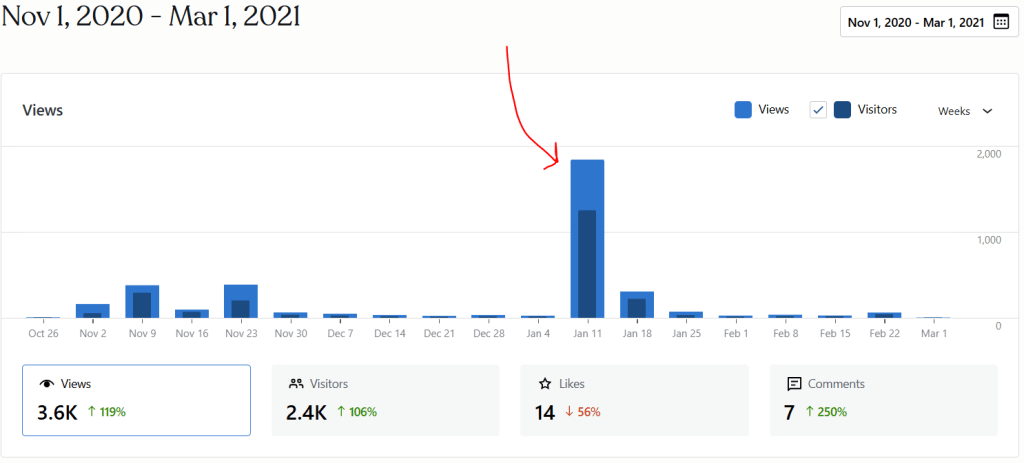
Memory number two: I’m sitting on a plane which will soon be in the air to Ohio. It’s January 2021, about a week after Trump lost the election and his supporters broke into the capitol in D.C. I have spent many hours over the course of several days working on a piece called “Three Lies We Believed” which outlines some ways Evangelicals had been deceived by Donald Trump. Fairly cognizant that this piece would generate some backlash but confident it was important to write anyway, I hit “publish” and vow not to check Facebook or anything else until our trip is over.
Like our podcast episodes, my writing generally floats into the void without much fanfare. A typical piece such as this one will be clicked on between 20 and 200 times. On our layover during the return trip I check in – readership is looking quite different. Within a few days, it’s been viewed over 1,200 times (more than 1,800 now). Strangers reach out to me. I’m lambasted by Facebook warriors from my church and local community coming to defend Trump as well as encouraged by others who appreciated the piece. Fearing the backlash, a friend who helped me write the piece chooses to keep their name off it.
Black Light
My current work is counseling. A prevalent fear for those of us who are beginning as therapists is what if I say the wrong thing in a session? What if I miss something really important? To this, seasoned therapists reply, don’t worry about it – if it’s really important, it will come back up with the client soon enough.
I’ve been writing on this site about many different things in the form of 196 posts for more than 8 years. For me, this has functioned as a sort of black light which I’ve shined over topics as varied as communication, theology, politics, gender and sexuality, addiction, the death penalty, therapy, brain science, the church, giving to the poor, work, and more. And this “black light” has revealed a certain invisible energy living inside of some of these things, an energy that keeps coming up. The hottest issues are sexuality and politics. But that’s no great revelation – a Thanksgiving get-together could have told you that! But why? Why would someone take the time to sit me down and beg me to stop writing and talking about sexuality and politics? Why would more than a thousand people read something I wrote about Trump?

Identity (who are we?)
I contend that both issues, sexuality/gender and politics, are largely about identity. If identity is at the core of these issues, then it makes sense why people get so fierce so fast when they come up. You’re not just talking about Biden or Trump or Kamala – you’re not just talking about being gay or straight or bi. No. You’re tapping into some of the deepest, most sensitive parts of those listening. You’re probing around in emotionally charged issues and likely triggering a lot of energy around wounds and confusion carried from the past.
In Evangelical spaces, the boundary line drawn to determine who is “in” and who is “outside” is usually extremely important. When churches split, sometimes over seemingly ridiculous disagreements, they’re working out what it means to be “in” – who will we accept and defend as our own, and who is “other.” The power of this is in the benefits and protection you get from being “in,” and there’s a certain purity necessary to achieve this. I think this is confusing for folks who’ve never been inside these circles. They say things like why do you have to hate gay people so much – can’t you just accept their existence even though you disagree? For so many, to do that would violate the purity of the group. It would alter the identity and shake them to their core. So it’s much better to never even have a serious conversation about the issues. This was well summarized by a member of a small group I attended who said with a smile: if they don’t like how we do things, they can just head on down the road.
Who Is God?
When we did the podcast episodes, we explored some of the various ways of reading key biblical texts on homosexuality. Turns out there are several ways of reading them. But to acknowledge that (that each passage can be read to mean different things) is a terrifying reality for many. There is a deep comfort in the concrete certainty that the way your denomination/group reads the Bible is the singularly correct way. I think it must be really scary for those convinced of this to consider there are actually many way to read most passages, and that scripture isn’t crystal clear, nor was it meant to be.
If you entertain the idea that there may be different ways to read a passage of scripture, you open yourself to a version of reality in which God might have to be ok with folks coming to different conclusions in good faith. If you are 100% convinced God is in the business of damning to hell those who don’t read the Bible the way you do, then it becomes pretty confounding when you hear about four, count them four, ways of reading a single passage. I mean shoot, how could you even be sure you’re not the one being damned to hell? The odds are now more like 25%.
And ultimately, what you may be forced to consider is a God who isn’t quite as hell-bent on damning. I think for a whole lot of folks, there is a certain comfort taken in knowing that those outside the camp will burn for eternity, punished in all the ways imaginable. If you are used to a church and society which is governed by clear rules to keep the right people in and the wrong people out, it’s very disorienting to consider a supreme being who doesn’t operate the same way. And maybe if you are “pastored” (or parented) in this punitive way, where you do what I say or you get disciplined, it will be very hard to imagine that God could be different.
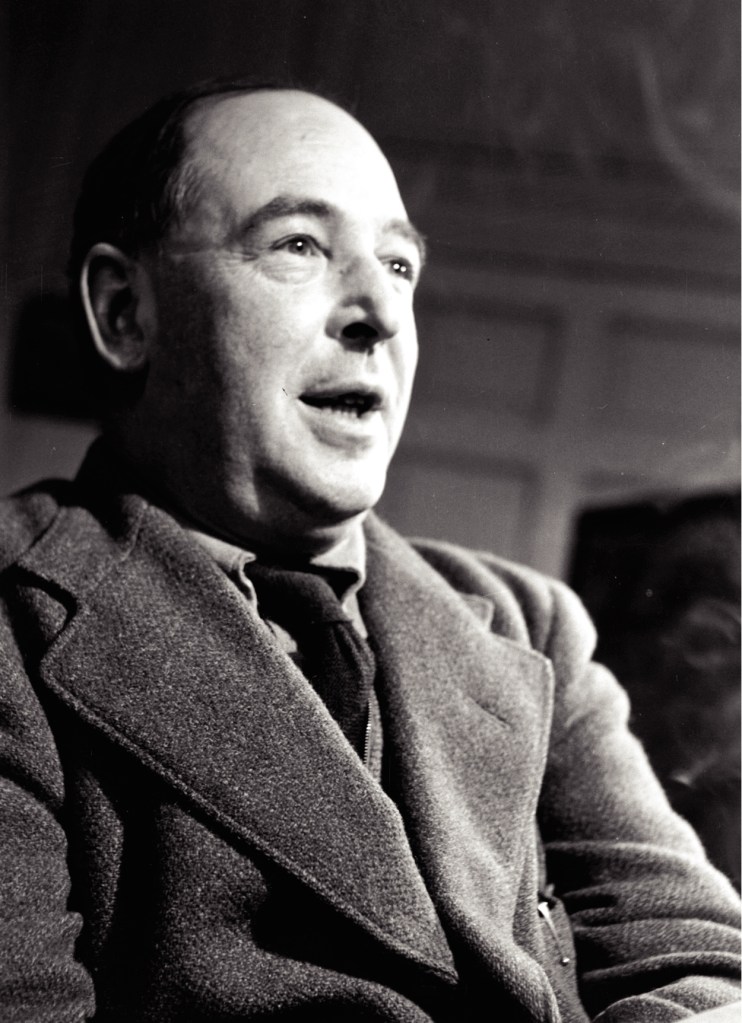
“My idea of God is not a divine idea. It has to be shattered time after time. And God will do the shattering.” – C.S. Lewis
Underneath
I don’t suppose that most people who are clickety-clacking on their Facebook keyboards or boiling in silent rage at Thanksgiving are very conscious of the above mentioned dynamics. They probably are not saying to themselves well, if I begin to consider this perspective, my view of my own identity and concept of God may become fuzzier. No. But this probably is what’s happening unconsciously. There is a realization, at some level, that this is freaking dangerous – and I if were to accept any part of this, it would shake me to the core. I would no longer be able to make sense of the world in the same way. My categories for who is “us” and who is “them” wouldn’t work anymore. And possibly, I would no longer be “in.” And maybe even God would hate me.
So I want to try to keep this all in mind when I’m talking or writing about such topics as sexuality and politics. I am in fact asking people to confront with me the fundamental pieces of their identity. And I’m possibly even asking them to re-evaluate their concept of God. These are not easy things to do – though I believe they are some of the most crucial, worthwhile and God-loving things we may take part in.
 javen.bear.