This piece will briefly overview the concept of re-enactments and then discuss how a concept of God could be understood in light of this phenomenon.
It is often perplexing to watch those around us place themselves repeatedly back into the same circumstances which have wounded them. And when we have the insight, so watch ourselves as well. For example: a girl who repeatedly finds herself in romantic relationships where she is mistreated. Or a man who seems to somehow move from job to job always fired or failing in predictable and seemingly preventable ways. Why do we tend to move towards situations where we will fail or be hurt in the ways that seem obvious and foreseeable to those around us?
One explanation is that we are creating re-enactments. We are unconsciously setting up a situation in which we will be in the same position as the one where we have been hurt. The man who was never accepted by his father finds himself in jobs where he will not live up to the employers’ expectations. A woman finds herself attracted to men who will use and leave her so that she is re-experiencing the way her own mother abused and abandoned her. The obvious question is why!? Why don’t we learn? If we’ve been hurt in this situation before, why do we return over and over? And not just “return” but often seem to go to great lengths to find these dynamics again. I don’t pretend to know, and certainly not everyone is the same. Still, two explanations that seem helpful in understanding re-enactments are:
1. Imprinting
If we are imprinted as children to know “love” as something that is violent and painful through parent figures use their authority in violent ways, then it may be that we seek out violent authorities later on as it feels familiar. In this way, the imprint of the trauma creates an attraction to a painful circumstance as it will resonate with our earliest experiences of being cared for. The man who was physically abused as a child may feel at home in a church where the leadership is overbearing and authoritarian. It’s painful, but it feels like “home.” He has learned that this is the shape of love, and he moves towards those shapes throughout life without realizing it.
2. Reworking
Another explanation for the question of why we so often set up re-enactments is that we are trying to achieve mastery over something which has hurt us, trying for a new result. A man who never connected with his mother as a child due to her coldness finds himself attracted to a romantic partner who will treat him the same way. Some parts of us seem to believe that if we can just get another chance and try harder this time, we’ll be able to resolve the disconnection and pain of our childhood. So the goal is to find a new “mother” and this time to figure out to get her to love. And in doing so to heal the pain of this rejected child. This man may unconsciously set up this re-enactment over and over, relationship and relationship hoping to rework the pain and resolve it. This often does not work, to say the least.
When we set it down in words, it seems obvious enough, silly even. But we all do this. In some ways I think it’s accurate to say that we often continue re-enacting unresolved pain for as long as remain unaware of it. This is the perspective of Freudian and psychodynamic theories, and I think it’s quite a helpful way of seeing. The goal then of therapy is to bring these unconscious processes and tendencies to our awareness so that we can choose to make new, better choices, and heal.
So what does any of this have to do with faith or God?
Re-enactment and Faith
It has been occurring to me, slowly, for quite some time that our concept of God is deeply tied to our experience of our parents and caregivers. And this is true totally regardless of whether we want it to be or not – you don’t get to just “forget” or easily move past your earliest concepts. I think our faith, our view of how the world is set up, is inextricably linked to our experience of that world in early childhood. The earliest picture we were handed of how good/bad, nice/mean, dependable/unpredictable, kind/malicious, plentiful/scarce, merciful/vengeful, fair/arbitrary, accepting/judgmental, the universe and its players are is a picture we carry with us for a long long time.
1. Faith as Imprint
If we are raised by parents who used physical punishment (e.g. we got hit when we behaved badly), it is not a stretch to believe that God is the sort of force who would also cause physical harm as a response to bad behavior. If the physical punishment we got as children was harsh, as in getting hit by an angry parent or getting left alone by a parent who was very angry and used isolation as a punishment (emotional or spatial), it’s not a stretch then to think about a God who would do the that to people who disobey him. If we were young and experienced those whose responsibility it was to take care of us as harsh and quick to punish, it makes sense to me that we’d be set up to believe that version of God when it’s presented to us.
My examples here are somewhat drastic. Personally, I remember being in worship services which were performed very differently than how I was raised and feeling extremely disconnected and out of place. It’s hard to describe how odd it felt – one was in California at a conference and the other at Toccoa Falls College during a chapel. I had been given an image of a worship service which was pretty consistent from childhood on. Trying to participate in a setting with different sounds, size, motions, and vibe felt really really strange. It took a while before I got to a place where I could recognize it as a legitimate way of connecting to God. I had been imprinted with a very different expectation, not better or worse, just different. Seeing God approached and presented differently felt foreign and unwelcoming.
2. Faith as Reworking
Faith as a reworking of trauma could look many ways. One would be a woman who experiences neglect and disconnection from her mother to a high degree as an infant and young child. For this little girl, nothing she does is ever enough, no matter how loud she cries or how good she tries to behave. She does what nearly all children do, and she assumes the reason for her mother’s absence and neglect is the fault of her as the child. This is a way of hoping: if I’m the problem, if there’s something wrong with me that makes me unlovable, then I could someday fix that and Mother would love me. The other option is despair: Mother, my only chance at survival and my whole world as a child, is wounded and unfit to parent. There is something wrong in her which is why she doesn’t care for me. Children pretty much always choose option number one – there’s something wrong with me.

I must tell you
That I should really like to think there’s something wrong with me —
Because, if there isn’t, then there’s something wrong
With the world itself — and that’s much more frightening!
That would be terrible.
So, I’d rather believe there’s something wrong with me, that could be put right.
– T.S. Elliot (The Cocktail Party)
Children do not come out of childhood with great self-esteem and confidence because they realized their parents were the problem. Quite the opposite. They come out hating themselves and “acting out” the pain they believe is their own fault. For the child for whom this is the reality, what would it look like to get back into this situation again, this time with God, to try and rework the trauma to achieve a different outcome? Presumably, you would be drawn to a version of the most important person in the universe, this time “God” not “Mom” who is distant, vindictive, and who does not love you the way you are. This way, like the child, you will be able to believe the reason God hates you is your failure (your sins) and that by overcoming your sin you might one day feel the love of God.
Like Mother, who hit you when you didn’t do what she wanted and then locked you into a dark room, this God is one you believe will physically torment you in the darkness of hell if you do not say you are sorry for your misbehavior. It’s important to remember here that I am not arguing for any particular picture of God – I am wondering how the pictures we choose for God might be attempts to figure out our earliest life experiences.

What the woman has set up here by choosing a picture of God who has the emotional acumen and relational logic of her mother is a very clever way to try and rework the trauma of that early experience. Will it work? That’s a very hard question since we don’t know that happens in the afterlife. But will it work in this life? It seems fair to say it will work about as well as it worked for the child to try and earn her mother’s love by purging her bad behaviors. For that child, it’s clear she will only get a real emotional connection if her mother changes. For the woman it seems the same. She will only get a real connection if her God changes. And God doesn’t change – though certainly her picture of God could.
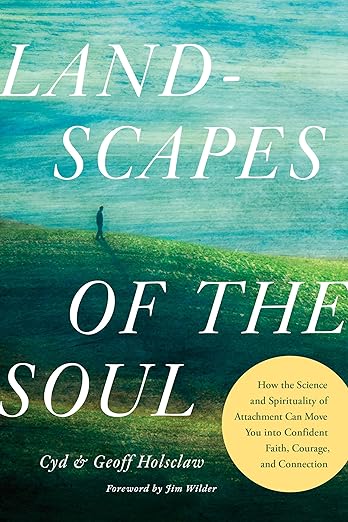
“We see the world through our own attachment strategies. What one person calls safe, another calls a threat. Where one person sees connection, someone else feels the need to protect. As we saw in the landscape chapters, we all approach God, and consequently our faith and church communities, from particular defaults. Those defaults are at play every time we approach God in prayer, sit down to read the Bible, set foot in a worship service, or participate in Christian community.” (Landscapes of the Soul“)
I want to conclude with a nod to a book which has just come out from Geoff and Cyd Holsclaw called Landscapes of the Soul. In it they explore how early experiences inform our faith from an attachment-focused perspective. I am about halfway through, and I really appreciate the pictures they carefully build of faith in the anxious jungle, the avoidant desert, the chaotic war zone, and the peaceful pasture. They argue that there are advantages and disadvantages to each of the first three “places,” and that they each produce a different vision of God and how to relate to God.

Whether we take a psychodynamic perspective which focuses on re-enactments or a more attachment focused perspective, it’s important to recognize that we do not come to faith as blank slates. We do not step into the study of scripture, relationship with God, or life in the church as scientists who have built a picture of God though facts. We were all children. We have all been wounded and had to figure out how to survive and keep going. I believe an authentic faith is one that acknowledges and embraces this truth about ourselves and others. I also believe that God is not surprised when our faith uses these lenses of struggle and survival and builds pictures of God that look like our early experiences. I believe God wants to love us like a good mother and a good father. We make God in our own images as a way of figuring out how to make our way in this world, and God loves us still.
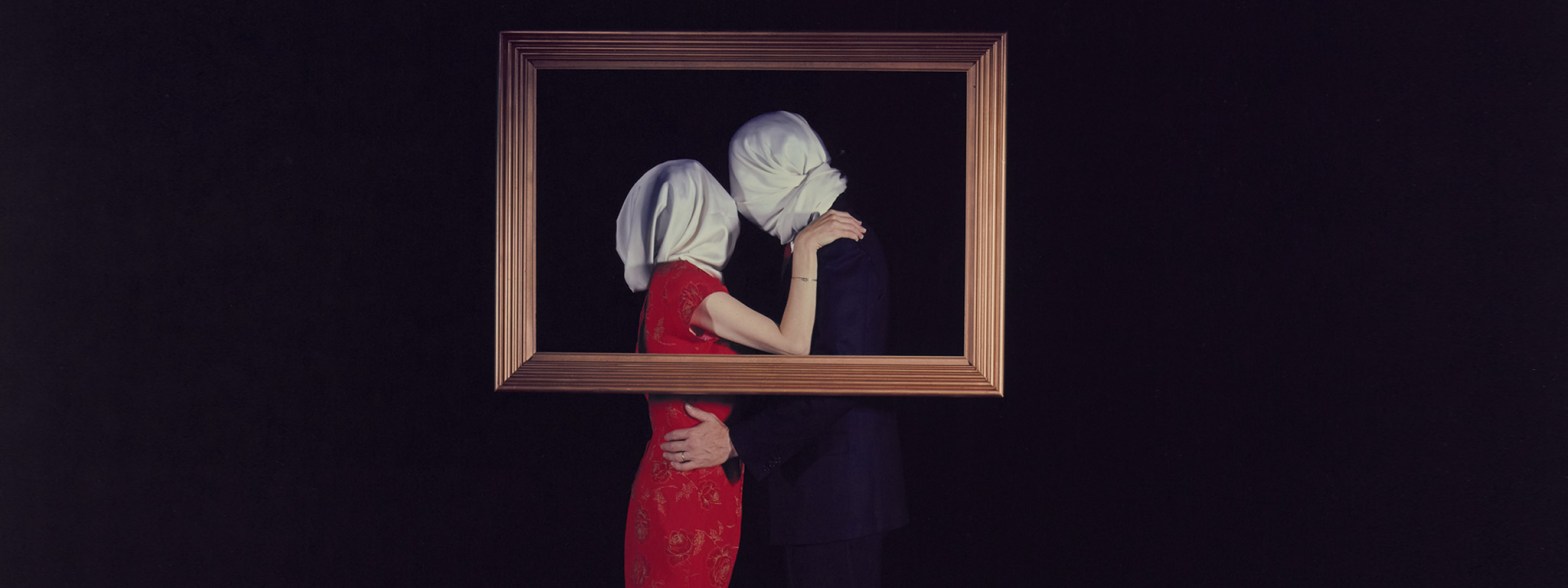
cover image source: https://www.getty.edu/visit/cal/events/ev_2398.html
 javen.bear.