In the last strip on the month we see Jimothy touting an old argument which holds that since men were created first, they are more important than women. Beth shows how the logic doesn’t really hold up if you carry it through the rest of the creation narrative.
The creation narrative of Genesis 1 has humankind being created last, a sort of grand finale in God’s creative work. God says creation is good, and then humankind is very good. There is significance and meaning in the order of events – humankind being created last is a sort of stamp on their specialness (in this story man and woman are created at the same time). In Genesis 2 (the second of the two creation accounts) it’s interesting to note that Adam is made first and then Eve. If we use the framework of the first account, it would imply that the woman is the finale of creation since she is made last. I don’t know that’s what the author is implying, but it is interesting to consider.
This article was printed on paper and sent via snail mail to our mail-club subscribers in March. If you want to get fun mail with stories and other great stuff in your mailbox each month, click the red button!
At 14, I was on a rabbit hunt. Rabbit hunts mostly consist of alternately charging through briar patches to get to where the dogs have “jumped” the rabbit and waiting for the rabbit to come back. The Lord God programmed rabbits to make large circles when being chased. I was sitting in a dirt road during what must’ve been an epic circle. While the other hunters had some concept of where they were, I did not. I sat there until Dad came and got me.
At 16, I had my first vehicle and no smartphone. As a regular companion and navigator, I had my best friend whose total lack of spatial awareness rivaled my own. I recall making our way home from youth group and passing a sign welcoming us to a neighboring state.
At 17, this friend and I went turkey hunting on a property he’d only visited a few times. The hunt was fine until it was time to find the truck. We walked for miles, many miles. We called people with smartphones, tried to describe landmarks and road names. We toted our shotguns down a busy highway and tried not to look malicious, just hopelessly lost.
At 19, I lived in rural Oregon. Still pre-smartphone, there was a Tom-Tom GPS in my car. That thing was very hit or miss. I recall one dark night driving over a railroad track miles from home and thinking, “I have absolutely no idea where I am.” This happened quite often. In a letter to a friend at the time I remarked that I was finding that being lost was something I was getting better at. I had little choice in getting lost, but there was an art to being lost. After it happens so many times, I wrote, you begin to feel a peace with it, an acceptance. Hmm, yep, I see that I’m lost again. This is familiar.
At 20, I was living back in my hometown, doing community college and working as a barista. I had no idea how to do either. I remember calling the cafe from my car one morning to explain I would be late for my shift. I’d taken a wrong turn on the route I drove almost everyday.
At 23, we moved to Phoenix. By this time I had Google Maps in my hand. Phoenix is just a grid of straight line streets, butI still managed to miss a lot of turns. Before I started my job, Aleisha drove me to the building, gently explaining where to enter and exit the freeway to get to work.
I think all of this is why I chose psychotherapy as a job. It means daily appointments with folks who are, in some way, lost. And it is not my job to give them directions – thank God. I get paid to be lost with them for an hour. You tell the doctor your issues, and she says, “Yep, it’s your left ventricular cartaroid seizing up.” Here’s what it does, here’s why it ain’t working, and here’s how we fix it. You tell a therapist your issues, and they say, “Hmm, yep, you seem lost.” See, I can do that! I have years of experience and a graduate degree in being lost. It took me until my senior year of college to decide on this profession, but in retrospect, taking a while to find the path seems a bit fitting.
We’ve just moved to Savannah, GA. I don’t know where anything is in Savannah, GA. And as I drive across the city, making large winding circles like a hunted rabbit, some may think I’m wasting time, wasting gas. I prefer to think of it as honing my craft.
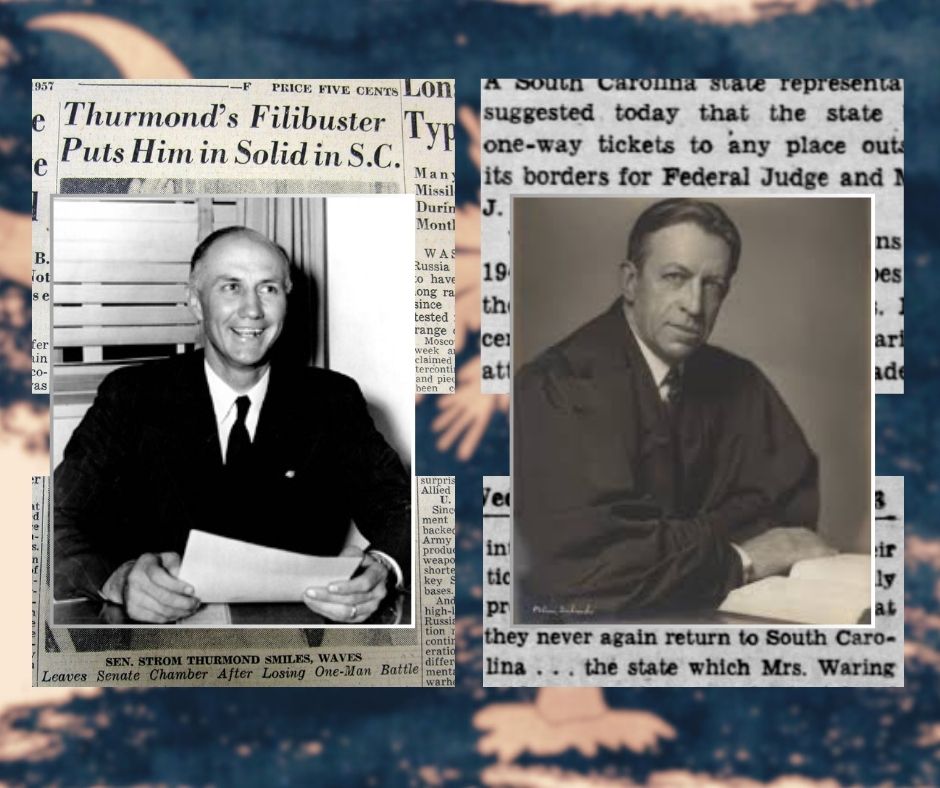
This essay looks at three figures from the 1940s, Strom Thurmond and Julius Waring. It examines both the culture and tradition of the south from this era and the stance of these two figures within it. Further, this essay will consider how white supremacist tactics have operated and evolved. Finally, it will argue a gestalt perspective is needed in understanding the white supremacist ideology of Thurmond as well as that of the contemporary MAGA movementand conclude that “One day everyone will have always been against this.”
Strom Thurmond
James Strom Thurmond was born in Edgefield, South Carolina in 1902. His father was a lawyer, and his family was wealthy. Strom began attending Clemson University in 1918, the same year its founder, Benjamin Tillman, died. (Tillman hall is named for him on the campus). As a young boy, Strom often visited Ben Tillman’s farm, and Tillman did much to shape both the political and social landscape which Strom would come of age in. Tillman was the new governor of South Carolina in 1890 when he declared at his inauguration, “The whites have absolute control of state government, and we intend at any and all hazards to retain it” (Cohodes, 1994).
Tillman advocated for lynching during his second term as governor. In 1895, as member of the United States Senate, he engineered a re-writing of the state constitution which forbade race mixing of blacks and whites in schools. It also creatively kept blacks from voting through poll taxes, residency requirements, the “understanding clause,” and the requirement of voters to have never committed specific crimes which were “perceived to be most commonly committed by blacks” (1994).
At 26, Strom Thurmond’s first political endeavor was election to country superintendent. From there, he would go on to practice law and become a state senator representing Edgefield in 1933. After serving in WWII, Thurmond won election as a state judge. In 1946, he was elected the governor of South Carolina. After a losing presidential run, he went on to become a representative in the United States senate where he would serve from 1954 until 2003, forty seven years, the longest senate tenure in US history.
Thurmond was governor in 1948. The culture and tradition of South Carolina in 1948 was segregation. President Harry Truman and the federal government began to push the southern states harder and harder on the issue of civil rights. This was complicated by the fact that Truman was a Democrat, as were all the southern states. When Thurmond ran for president in 1948, his first speech as a presidential candidate was in Birmingham. Strom gave a blistering ode to the culture and tradition to thunderous applause in which he declared
“There’s not enough troops in the army to force the southern people to break down segregation and admit the Negro race into our theatres, into our swimming pools, into our homes, and into our churches.” (1994)
This was a deeply engrained way of life for white southerners. To state it with enthusiasm as Strom did was politically powerful. Strom Thurmond never considered himself a racist. Much later in his life, when asked about his presidential campaign, he said, “Some of them got in their mind that I was just a racist. Well, honestly in my heart, I’ve never been a racist” (1994).
Out beyond what was or was not in his own personal heart was a whole southern way of life which was built on the idea that black and white folks were not equals. In a 1948 article in the Courier-Journal, John Ed Pearce wrote of Thurmond that he “is not the classic race-hater…he is a man deeply troubled by threat of social change that would destroy a way of life to which he is accustomed, and raise into a position of legal equality a people he has been reared to regard as inferior” (as cited in Cohodas, 1994).
The next part is especially poignant.
“He is torn, as the majority of Southerners are, between a desire to be a decent Christian man, and an inner resistance on a racial system that is, in itself, un-Christian” (ibid).
Judge Julius Waring
In the story of Strom Thurmond and the culture of white supremacy, there is a character who stands apart. This is a judge named Julius Watties Waring. Waring grows up in the same area and region of the country. He is marinated in the segregation, inequality, and whites-only drinking fountains just like Thurmond. And as a judge, his rulings on the bench are, for a while, in keeping with the logic of southern culture and tradition.
Waring begins his law practice in 1902 after graduating with honors from the College of Charleston. And it’s in 1944 when his life begins to take a historic turn. Judge Waring “began handing down decisions equalizing the salaries of black and white teachers, ordering the state to desegregate its law school or create an equal facility for blacks, and rebuffing South Carolina’s efforts to salvage its all-white Democratic primary. The judge’s rulings angered white South Carolinians” (1994). In 1945, he divorced his wife of more than thirty years and married Elizabeth Hoffman, a “a twice-divorced northern matron (1994).” Waring attributed much of his recognition of the racism which pervaded southern culture to the influence of Hoffman.
Waring was appointed to the bench long before this personal evolution, and his change of view was not well accepted by those around him. He became a pariah, deeply hated for his unwillingness to give rulings in keeping with the culture and tradition of white supremacy. The case he is most remembered for came to him in 1951. Waring was appointed to sit on a three-judge panel to hear Briggs v. Elliott. This was “the earliest of five school segregation challenges that were folded into Brown v. Board of Education” (US Courts, 2014).
Briggs v. Elliot began when “in 1947 when Levi Pearson wrote a letter to the Clarendon County School District requesting that black children be provided with the same bus transportation that white children in the district received” (wiki article). This case, initially called Pearson v. ClarendonCounty, was dismissed on a technicality, however, Thurgood Marshall was the NAACP lawyer representing the families seeking bussing for their students. More plaintiffs were added, and the case was brought again, this time under the name Briggs v. Elliot. The case being brought before Judge Waring was based on the separate but equal doctrine, and the NAACP was arguing that the educational facilities and resources for black schools were not equal. This is where the legacy of Waring lies.
Instead of hearing this case, Waring recommended that Thurgood Marshall expand the case. “Judge Waring recommended…for the case to be expanded from an equalization case into a desegregation case. Instead of asking for enforcement of the separate but equal doctrine by bringing the African American schools up to equality with the white schools, the plaintiffs asked for school segregation to be declared unconstitutional” (wiki article). This meant a direct challenge to the legal precedent set by Plessy v. Ferguson in 1898. It also meant the case would be heard by a three-judge panel, Waring being one of the judges. He would be the only vote “for,” and the NAACP’s suit against segregation would lose 2-1.
However, Waring wrote a blistering dissent in which he said “segregation is per se inequality,” a full rejection of the legal foundation upon which the culture and tradition of the south is built. (US Courts, 2014). The case would go on to be heard by the supreme court. It was the first school segregation challenge which was then folded into five cases making up Brown v. Board of Education in which the supreme court ruled unanimously against school segregation. “Waring’s core reasoning, that ‘segregation is per se inequality,’ was directly echoed in the high court’s 9-0 landmark ruling” (2014).
Waring and his wife moved to New York as exiles from the south. He’d been put on the federal bench with the help of “Cotton Ed,” an avowed SC white supremacist politician. Waring’s personal evolution on the issue of race and equality resulted in being looked at with hatred in his social circles. Today, Waring regarded as a civil rights hero, a man who was willing to sacrifice his reputation and social status in the pursuit of justice. In his own time, he was a pariah. He died in New York, a long way from his hometown and a long way from the culture and tradition he began with.
Cohadas writes that the judge and the politician, “serve different masters and perform different functions. A judge answers to the law in deciding disputes between individuals in conflict. For Waring that meant confrontation with the everyday aspects of ‘custom and tradition’ – discrimination” (1994).
“Politicians answer to the people, and their success is determined in large part by how accurately they understand and reflect what their constituents want. On the issues of race, constituents had clearly decided opinions. To head too far in a different direction would mean defeat.” (1994)
Whereas Strom Thurmond came around to disavowing segregation once it was politically expedient decades later, Waring chose differently, and it cost him in the present.
The Evolution of Suppression Tactics
The goal of 1940’s racism and 1956’s racism was mostly the same – keeping white supremacy intact. However, as the years moved forward, the tactics evolved. The lynchings carried out to strike fear in the black populace began to give way to more sophisticated efforts such as voter suppression laws and literacy tests.
In her biography of Thurmond, Nadine Cohodas highlights a 1956 report by the Southern Regional Council. She writes, “The council reported that ‘killings, beatings, the dragging of Negroes from their homes in the middle of the night – these are now rare occurrences compared to previous decades.’ Instead there was a more refined but still effective way to keep down black voting – the literacy test. Blacks wanting to vote, the council concluded, ‘are more likely to be barred by a question on the Constitution than by a rope or whip.'” (1994)
Other creative means included asserting economic pressure on those blacks who wished to vote. The attorney for Summerton, SC said that “Some have been denied credit. I would not extend credit to a member of the NAACP. I would not rent my land to a member of the NAACP. Everybody in Summerton feels the same way. You would too if you had an organization that was trying to destroy everything you believed in.” This quote came on the heels of the supreme court’s 1954 decision in Brown II, which overturned the “seperate but equal” logic of Plessy v. Fergusonin 1898. And when faced with the supreme court order to integrate schools, officials in Summerton declared they would close all the schools rather than allow black and white children to mix.
In their refusal to give up the culture and tradition of white supremacy, the white south explored many creative avenues, including economic intimidation and legal maneuvering. Still, open violence wasn’t out of the question. Later that year in Mississippi, 63 year old Lamar Smith was shot when three white men confronted him on the courthouse steps after he declared he would seek election as a black man for the position of country supervisor. The town’s sheriff waited eight days to make the arrests, and the grand jury didn’t indict the white men since no one was willing to testify as a witness against them.
Gestalt
Much of the rhetoric and energy of the MAGA movement over the past ten years has been to take the culture of the US back to the 1948 America of Strom Thurmond. The slogan “Make America Great Again” implies things used to be great have since deteriorated. MAGA is a move to revive the culture and tradition of the America of 80 years ago.
In retrospect, it is rather obvious that Strom Thurmond was a white supremacist. To call him as much is an accurate and fair assessment. His view of the world necessitated that black folks be kept separate so that white culture could remain pure. He went on record advocating against “the mixing of the races” time and time again. But if you were to ask Strom, or many of his southern supporters, whether or not Strom was a racist, you’d get a hard no. In fact, he said, “Some of them got in their mind that I was just a racist. Well, honestly in my heart, I’ve never been a racist” (1994). If the challenge is raised, tell me one time where Strom personally committed an act of racism, it me be hard to do so. Strom’s racism is not (usually) one of yelling slurs or lynching people. It is a culture and a tradition which sees white people as necessarily set apart from and privileged over black people.
When Thurmond’s life is viewed as a whole, the conclusion can only be that he worked tirelessly to keep white supremacy enshrined in the culture and tradition he so loved. What is obvious when considering the whole cannot necessarily be seen in each individual part. The German word “gestalt” is helpful here. According to the Gestalt Center, “The closest translation is ‘whole’, ‘pattern’ or ‘form’. It has the sense that meaning cannot be found from breaking things down into parts but rather from appreciation of the whole. In other words, Gestalt is a holistic process.”
Someone asked me recently to name how Donald Trump is a racist. Certainly, in this case there are some concrete, poignant examples. Still, this is not, in my view, how racism works. It is not primarily something that you do or do not do on a Tuesday morning at the grocery store. It is a way of seeing the world, a foundation upon which the self makes meaning and envisions the future. The question of whether or not the MAGA movement is racist is quite clear. When viewed as a whole: the interpretive moves it makes, the meaning made through argument and action, the vision cast for the future – it is obviously working from the framework of white supremacy. This was the culture of 1948, and this is what MAGA works to revive. It is a campaign of white nostalgia.
This is made exceptionally clear through official communication from administration accounts, officials, and past officials. Statements have included both overt and covert mentions of white supremacy, the use of Nazi and KKK slogans, as well as the vision of achieving 100 million deportations. To achieve this number, every single non-white immigrant, citizens or not, would have to be rounded up. Elon Musk, recently a government special employee, shared a post calling for “white solidarity.”
This does not mean that every person who voted for Donald Trump is a racist, or even subscribes to the white supremacist vision which MAGA casts. But it is clear that the vision of MAGA is one of racism and white supremacy. With history in mind, with the gestalt in view, this becomes clear for those willing to see it. For those in 1948 who were caught up in the culture and tradition of Strom Thurmond, and for those who long for its return in 2026, it is a reality which will will easily evade their view. Strom cloaked his own racism in the language of “state’s rights” and “separate but equal.” He seemed sincere in his assertions that he was not a racist deep down in his heart. The story of his life tells quite a different story.
To those looking back, the racism of Strom and his ilk are obvious, glaring, disgusting. When our children and grandchildren look back, the racism and hate of Trump and his MAGA following will be as well.
Coming Around the Bend
The story of Strom Thurmond does not end in 1956. The South Carolina Senator would go on to serve until 2003. He evolved his messaging as the years went by. As the south slowly shifted and laws were passed requiring states to allow black participation in elections and elected positions, Strom changed too. After so many years of work in the senate to oppose any legislation aimed to allow black citizens to exercise their right to vote, Strom eventually found himself a senator who needed the black vote to stay in office. It no longer served him politically to stand in the senate chamber and rail against civil rights bills. Times had changed. In 1982, he would finally cast his first “aye” vote for a civil rights bill. After years spent sounding the communist alarm against Martin Luther King Jr., Thurmond changed his tone in 1983 to begin praising the slain black civil rights leader.
Cohodas writes that Thurmond was asked a question by a black college student regarding his voting record, and he said,
“When I was governor, the laws said the races should be separated. But now the law is different, customs are different, public opinion had changed, and it’s an entirely different situation.” (1994)
She describes Thurmond in this instance poignantly, noting that he seemed to consider himself “a neutral participant in government, one who had no responsibility to question whether old laws were good ones, even after blacks had challenged them…Custom and tradition had changed in spite of him” (1994).
A book recently came out with the title “One Day Everyone Will Have Always Been Against This.” In the sagas of Strom Thurmond and Donald Trump, there is perhaps no more concise way of stating their legacy. In the case of Donald Trump, his base has stood with him through scandal after scandal due to his stranglehold on the Republican party. As we approach the midterm elections in 2026, this hold will soon start to break.
Trump recently went on Fox News and blamed genetics as the reason immigrant are bad. This comes only several weeks after he posted a video depicting Barak Obama as an ape. This is the sort of racism which in a few years, perhaps even in a few months, Republicans and conservatives on the whole may be able to denounce as vile. Still, for those whose political power or personal identity is tied to a culture and a tradition in which Trump must be accepted and tolerated, it’s still too early to be against it. Custom and tradition will change in spite of them.
As Trump’s second term moves towards its end, his sway on what is normative will degrade. It will be the job of those around him and those who voted for him to explain, to themselves and to the future, how they weren’t really on board with this all along. They will feign neutrality and say it’s just the way things were. It was the custom and tradition.
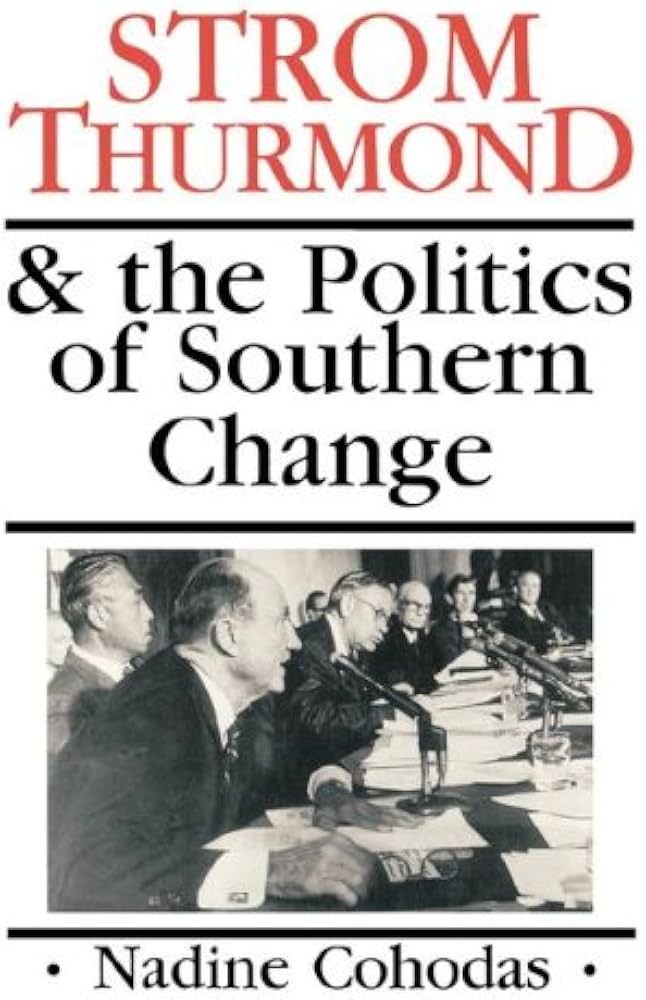
This essay relies heavily on the excellent book by Nadine Cohades titled Strom Thurmond and The Politics of Southern Change
‘Anybody who had a chance to be elected,’ Thurmond would say later in his career, ‘had to stand with the thinking of his people, or couldn’t vary too far from it’.” (1994).
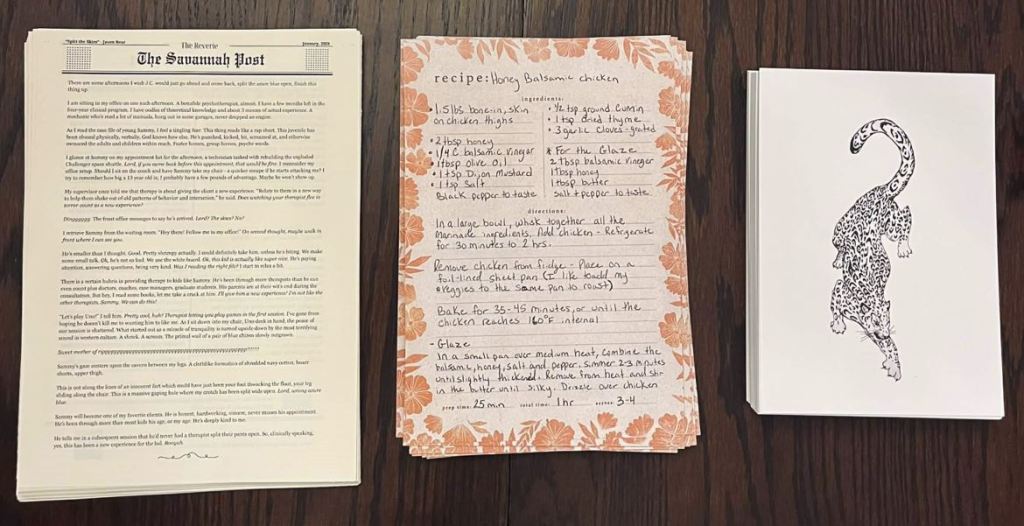
The following short essay is from the January edition of our monthly publication The Savannah Post. Subscribers to The Savannah Post received it in an envelope in their physical mailbox at the end of January. Also included were: a piece of artwork by an artist friend, a recipe we love, as well as a response by Javen and Aleisha to questions in our advice column! If you’d like to ask about getting on our mailing list, see details at bottom of page. It’s $10 per month.
Split the Skies
There are some afternoons I wish J.C. would just go ahead and come back, split the azure blue open, finish this thing up.
I am sitting in my office on one such afternoon. A bonafide psychotherapist, almost. I have a few months left in the four-year clinical program. I have oodles of theoretical knowledge and about 3 ounces of actual experience. A mechanic who’s read a lot of manuals, hung out in some garages, never dropped an engine.
As I read the case file of young Sammy, I feel a tingling fear. This thing reads like a rap sheet. This juvenile has been abused physically, verbally, God knows how else. He’s punched, kicked, bit, screamed at, and otherwise menaced the adults and children within reach. Foster homes, group homes, psyche wards.
I glance at Sammy on my appointment list for the afternoon, a technician tasked with rebuilding the exploded Challenger space shuttle. Lord, if you came back before this appointment, that would be fine. I reconsider my office setup. Should I sit on the couch and have Sammy take my chair – a quicker escape if he starts attacking me? I try to remember how big a 13 year old is; I probably have a few pounds of advantage. Maybe he won’t show up.
My supervisor once told me that therapy is about giving the client a new experience. “Relate to them in a new way to help them shake out of old patterns of behavior and interaction.” he said. Does watching your therapist flee in terror count as a new experience?
Dingggggg. The front office messages to say he’s arrived. Lord? The skies? No?
I retrieve Sammy from the waiting room. “Hey there! Follow me to my office!” On second thought, maybe walk in front where I can see you.
He’s smaller than I thought. Good. Pretty shrimpy actually. I could definitely take him, unless he’s biting. We make some small talk. Ok, he’s not so bad. We use the white board. Ok, this kid is actually like super nice. He’s paying attention, answering questions, being very kind. Was I reading the right file? I start to relax a bit.
There is a certain hubris in providing therapy to kids like Sammy. He’s been through more therapists than he can even count plus doctors, coaches, case managers, graduate students. His parents are at their wit’s end during the consultation. But hey, I read some books, let me take a crack at him. I’ll give him a new experience! I’m not like the other therapists, Sammy. We can do this!
“Let’s play Uno!” I tell him. Pretty cool, huh? Therapist letting you play games in the first session. I’ve gone from hoping he doesn’t kill me to wanting him to like me. As I sit down into my chair, Uno deck in hand, the peace of our session is shattered. What started out as a miracle of tranquility is turned upside down by the most terrifying sound in western culture. A shriek. A scream. The primal wail of a pair of blue chinos slowly outgrown.
Sweet mother of ripppppppppppppppppppppppppppppppppppppppppppppppp!!!!!!!
Sammy’s gaze centers upon the cavern between my legs. A clothlike formation of shredded navy cotton, boxer shorts, upper thigh.
This is not along the lines of an innocent fart which could have just been your foot thwacking the floot, your leg sliding along the chair. This is a massive gaping hole where my crotch has been split wide open. Lord, wrong azure blue.
Sammy will become one of my favorite clients. He is honest, hardworking, sincere, never misses his appointment. He’s been through more than most kids his age, or my age. He’s deeply kind to me.
He tells me in a subsequent session that he’d never had a therapist split their pants open. So, clinically speaking, yes, this has been a new experience for the lad. Booyah.
If you’d like to join our mailing list, we would love to put something in your mailbox each month. Please send me an email at javenbear@gmail.com to get on the list and receive The Savannah Post. You can read more about the project by clicking here.
As of January 30th, 2026 our little family has moved to Savannah, Georgia (more on that below)! One of the downsides of moving to a new city is the loss of connection with those you leave behind. So we are starting something called The Savannah Post. It is a monthly piece of mail which will we’ll send containing four separate, special items.
a piece of art (“The Relic”)
an advice column written by Aleisha and I (“The Relay”)
a short essay about real life from your friendly neighborhood therapist (“The Reverie”)
a seasonal recipe crafted by Aleisha (“The Recipe”)
So far, we have a lot of interest in this project! 50+ people have signed up to get something in their mailbox each month. If you are one of these people, thank you! If not, you could be!
A Leap of Faith
We’re going to take two months to work out the kinks, during which time there is no cost to readers. After this time, The Savannah Post will be $10 per month.
As we move to Savannah, we are taking a bit of a leap of faith. We will have a housing cost which will be about 63% of our current projected income. We will also be working to build a local community of friends from nearly zero. These are big challenges to meet. We have this dream that The Savannah Post could be a sort of bridge, helping us stay relationally connected, and helping us pay our mortgage!
Feedback
If you received the first edition of the Savannah Post, we would love to hear feedback through this Google form. There are just a few questions. https://forms.gle/2XSZcaMqWZZWz64x8. The Savannah Post also has an Instagram page. Consider following us there.
moving day!
Savannah!
A lot of friends have asked us this question over the past few months: why Savannah? We lived in Phoenix for about five years. We truly loved it there. Our church, our house, our friends, our work – it really felt like home. The downside was that we were a couple thousand miles away from our families. When we moved to Phoenix, we were coming so I (Javen) could do grad school to become a therapist and so Aleisha could take a job at Aim Right Ministries. We felt that both those purposes were well accomplished, and that it was time to be closer to our people on the east coast.
Aleisha and I both love the beach. It’s been our dream to live and raise our daughter by the coast. We visited Charleston, SC and Savannah, GA in the spring of 2025, and we decided that Savannah was a better fit. We moved back to SC with my family for the end of 2026 and began to look for a house and a job. It has been a winding road to get those things nailed down, to say the least. But as of this week, it seems that both are in place! Thank the Lord. We are moved into the house, and I will begin working as a therapist at a local agency later this month.
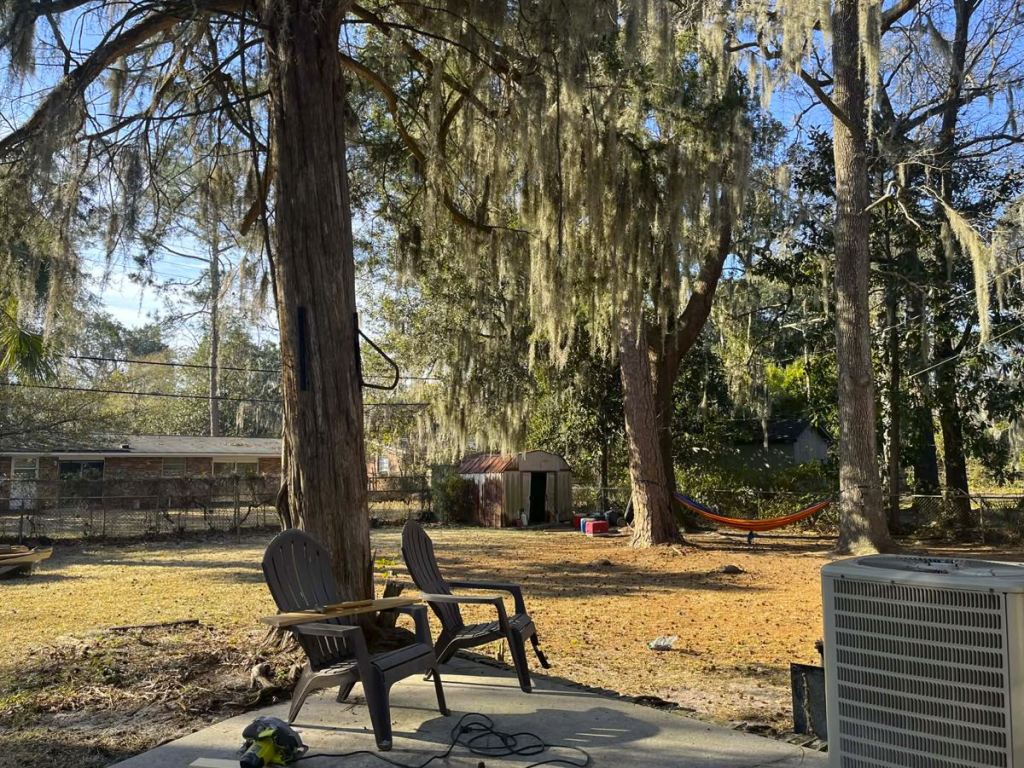
Our house is on the southside, 17 minutes from downtown Savannah. It is old! The panel box alone is enough to keep me a prayerful person. We think it will be a place we can make our own and really love. We also hope to keep in touch with you, Savannah Post reader, as we make our life here.
Cheers.
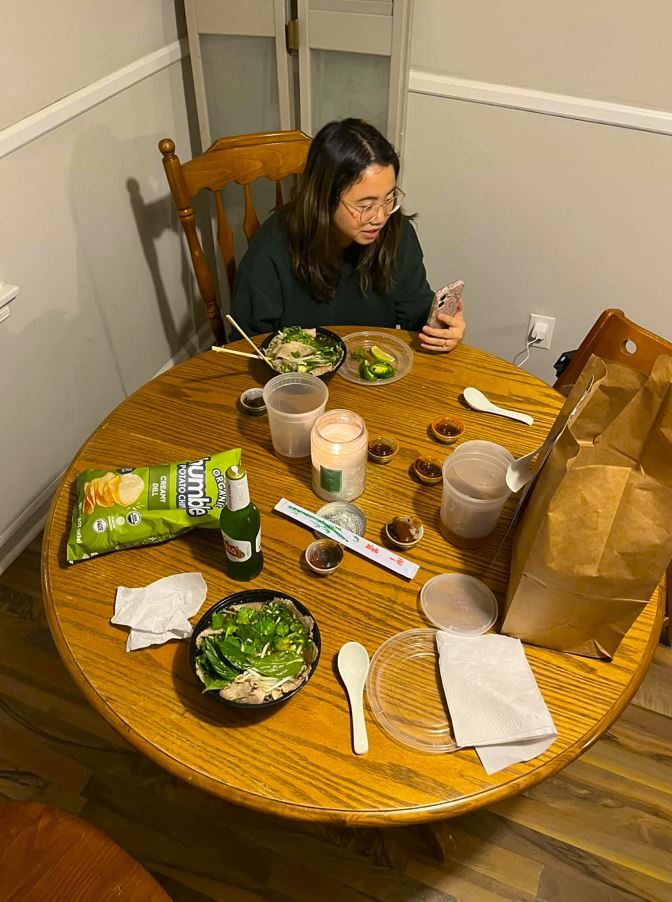
our housewe have live oak trees!celebratory meal of phothe panel boxcocina
This piece touches on current, politically charged events. Many of my readers may disagree with me – that is fine. My purpose here is not mainly to convince. Rather, I enjoy writing, and I think it is of great importance to bear witness in real time the best we know how. So reader, now or in twenty years, this is what I see.
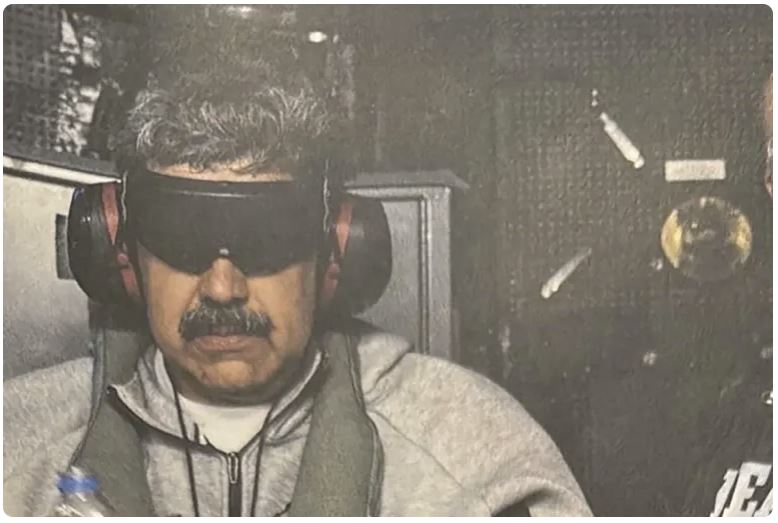
Two days ago, January 3, the US struck Venezuela. They sent more than one hundred aircraft, used bombs and other heavy fire, and descended on President Maduro’s residence in Caracas. They arrested him and flew him out of the country to face charges in the US. This military operation killed around 80 people, many of them civilians. This was not an unplanned attack – it’s pretty clear the US government has been ramping up for this for the last year. This PBS timeline demonstrates it well, and this from the The Daily (NYT Podcast) reports the US operatives had built a replica of Maduro’s residence which they trained on for quite some time.
When I first learned of the attack, I was surprised and disappointed. Since September, the US has been gunning down boats under the pretext that they are running drugs to the US. Many of these killings (at least 115 people) have raised concern and been decried as illegal.
After the attack on Venezuela, Trump did not seek to hide the reason for the US action. It was oil, plain and simple. Trump also did not seek to pretend that this is about promoting democracy. When asked who is running and who will run the country, he replied “we are going to run the country.” At whatever point the US government decides to allow the Venezuelan people to run their government, that person will be staring down a fleet of US ships just off the coast ensuring US interests are protected.
“Trump issued a threat against [vice president] Rodríguez on Sunday, saying in an interview with The Atlantic, ‘If she doesn’t do what’s right, she is going to pay a very big price, probably bigger than Maduro.'” – (Liptak)
Do what’s right is easily translated give us your oil.
In days gone by, the US government has gotten involved in a lot, and I mean a lot, of foreign governments to ensure its own interests are protected. Time after time after time, the US has interfered in elections or propped up new regimes across the globe to ensure our access to their resources (the list of countries more than can be easily listed. Here is a good starting point). Usually, the US at least pretends that it’s about democracy or human rights or something noble. This time, the façade isn’t even there. Trump said it plainly, this is about US oil companies going in and taking the oil we want.
While secretary of state, Marco Rubio, tried to spin the operation as merely “law enforcement operation,” President Trump said exactly the opposite calling it “an extraordinary military operation.” said, “Under—well, first of all, what’s gonna happen here is that we have a quarantine on their oil. That means their economy will not be able to move forward until the conditions that are in the national interest of the United States and the interests of Venezuelan people are met. And that’s what we intend to do.” This comes after Rubio’s November briefing to members of congress stating the US would not strike land targets in Venezuela – which they just did and were ramping up for.
Why Venezuela? Why not any of the other countless countries across the globe where people are being crushed under oppressive regimes?
This is a country leader (Trump) deciding to fly by night into another sovereign country’s capital city and kidnap their leader. And this is done without the approval of the US congress. The reason? The leader with the stronger military wants the oil underneath the feat of the weaker leader.
“We’re going to have our very large United States oil companies…go in…and start making money for the country, and we are ready to stage a second and much larger attack if we need to do so”
Why now?
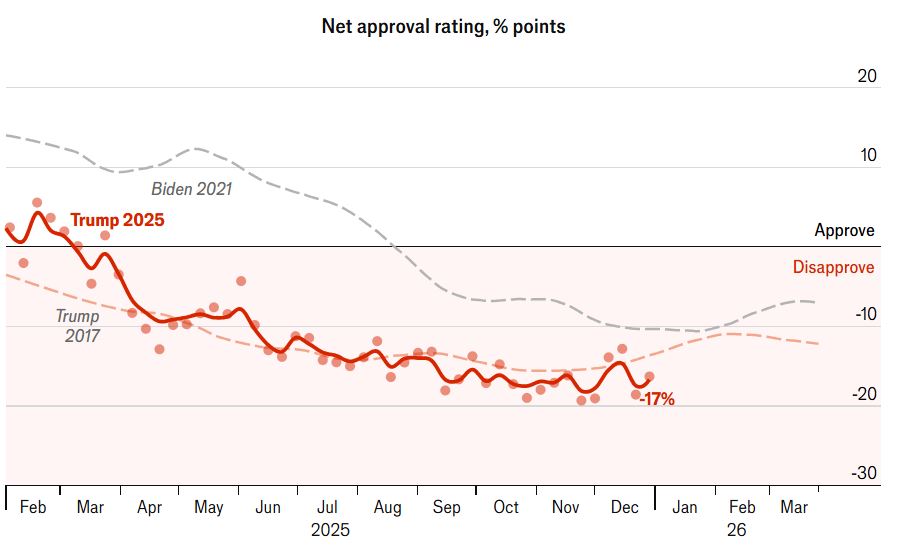
President Trump’s approval ratings are in the toilet. The deadline for the Epstein files is passed, and the Department of Justice hasn’t released them. A good military incursion might be just the thing to spark a little life. On the other hand, it is in direct opposition to the promises Trump made to his base about staying out of global conflicts to get himself elected.
Time Magazine published a January 3 article titled “Donald Trump Is Risking His MAGA Base on Venezuela.” It will be interesting to see the continued reaction to this aggression from Trump’s supporters. Each time I think that he has gone too far, become too insane, violated too many laws we all agree on – and each time his base seems to mostly come along behind him. I don’t think this will be the straw that breaks the camel’s back. Still, I do sense a shifting in the last few months. I don’t think folks are excited about Trump anymore – maybe you can only do shock and awe, break the law for so long before it gets a bit old, the lies start to catch up.
Maduro is a narco-terrorist and he was oppressive to his people, who are now rejoicing that he is gone.
This is the pre-text of the argument of those who cheer Trump’s military incursion. I don’t disagree with that statement. But I think what they mean after that, which is usually implied, is that since another nation has a bad leader, and since we are bigger than them and would like to have their oil, then it makes sense that we impose our will on them and take out their leader. Might makes right.
This was how we operated in the Cold War era. Nice government you have there, be a real shame if your opposition leader suddenly overthrew youwith US support, aid, and armsin exchange for your resources.
I’m saying we have a congress for a reason. International law exists for a reason. What does the US have to say to China if/when it invades Taiwan and takes it over for economic purposes? What does the US have to say to Putin as he invades Ukraine and takes it over for economic purposes? I’m saying you don’t get to just upend the government of a sovereign nation because you have bigger guns and would very much like their natural resources. Where is the law and order of this?
According to Time Magazine, “This is what many in MAGA thought they voted to end,” said Rep. Marjorie Taylor Greene, a one-time Trump loyalist who is set to resign this week from her seat representing Georgia. “Boy were we wrong.”
This is a post about the change in our lives. Where we’ve been, are, and going. Phoenix, Westminster, Savannah.
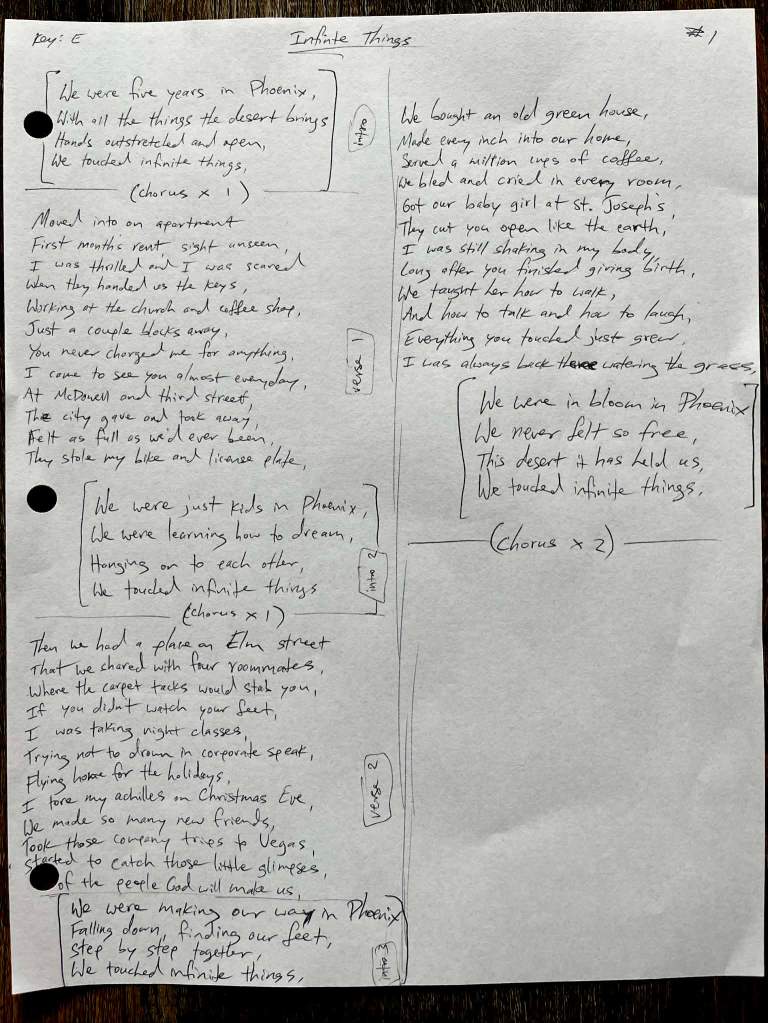
“Infinite Things” is the title of the collection of new songs I’m releasing in a few weeks. I look forward to sharing them.
*at the bottom of this post you can listen to one of the songs
Infinite Things
The phrase “infinite things” has been in my head since I heard pastor Gayle say it in her sermon on the one of the ten commandments – I don’t remember which one. We are in a time of saying goodbye to so much of our lives. We’ve decided to leave Phoenix after being here for almost five years and move back east. A few months ago, I sat across from a friend at lunch and he said kindly so…why are you leaving – it seems like things are good for you here? I told him that we want to be closer to our families, but yeah, I said, it feels weird leaving behind a life we really love, a life where we got to touch so many beautiful things and enjoy them with amazing people.
Our life here in Phoenix was full of firsts for us: first time in a corporate job, first team leaving a corporate job burnt-out, first time renting an apartment in the city, first time making friends all on our own, buying a house, having a kid, getting a dog, grad school, planting a yard, finding a church, and now the first time saying goodbye to all of that. All these things are ordinary. All of these also make up our life – they are part of us. They are regular and also transcendent in some way. Temporary, and also infinite. I remember sleeping the first night in our new house, just bare walls and a mattress on the floor. We filled it up and lived in it, and now it’s devolved again back to its emptiness – our things sold to neighbors and the rest hauled back to Goodwill from whence most of it came.
I sort of have hoarding tendencies. I constantly jab at Aleisha for getting rid of things and throwing out items I feel slightly attached to. She has evicting tendencies. Preparing to move has been a large exercise in choosing to let go. For me, just about everything has a little magic attached to it – some memory or meaning. Selling most of what we own for pittance at a yard sale, and to have neighbors haggle off another couple bucks, has not been easy for me. Who am I with all of this stripped away? But I think of it as an act of faith. I like all the things that filled up our life here – and we will find another life and more good things to fill it up with. At least I hope so.
Walking Away
One of my favorite places in the whole world is my office at the mental health clinic. Those few square feet with walls I painted green and a couch I found on Facebook are where I really started to believe that I could be a good therapist. Getting to work with the kids and families and adults who came each or every other week has been one of the greatest privileges of my life. I was tempted to take everything with me. The coffee table, the artwork, my pink chair, the lamps, my new dry erase markers! But in a great moment of trying to lean into acceptance and trusting that there will be enough again, I just walked out and left it all the way it was. I will put the pictures here so I can look back and remember. It was enough, I hope, to touch it – I don’t need to clinch my fist around it. I did cry when I turned the lamps out for the last time.
There’s a mirror in the hallway of an old church building where we’ve been going for years. It’s a youth center called Aim Right Ministries. I first went to Aim Right with my youth group around 2016. Aleisha was already a full time staff member at that time. While we were dating, we came out for the summer programs. Then we were married, and we came out for the summer again. Then after I graduated from college, we moved out to Phoenix, and Aleisha took a full time director position at Aim Right. While we waited for our lease to start we lived in an upstairs room at the church. We had our baby shower in the sanctuary. And we had our farewell party there the week we left.
I’ve walked by that mirror for the last nine years and saw my reflection. As a youth group kid on a mission trip, as a college student unsure of his place, as a summer intern, as a newly married young husband starting his first job out of college, and now as a dad and a therapist and whatever else I am while we’re leaving Phoenix. I was the last one to walk out of the building on the night of our farewell. I stopped for a second to see my reflection in that mirror one last time. I think I can say I’m really proud of us – I’m even really proud of me. We’ve come a long way in nine years. It’s the same kid looking back in my reflection, but it’s also kind of not.
A Month of Sundays
We decided to try to sell our home in the fall so that we could have two months back in our hometown to enjoy the holidays and rest from work before we move to Savannah. We had about twenty-two showings and exactly one offer, but the house sold right when we needed it to. Aleisha and Ava flew across the country, Phoenix to Westminster. Dad and I drove together, stopping in Oklahoma for the night. So now we are living with my parents and enjoying time together as a family – no job, no real schedule, not much of anything really. It is a gift.
Ava is loving the chance to spend time with her grandparents on both sides. Aleisha and I have started a membership at the YMCA, and she’s taken up beading. I’m applying to jobs in Savannah and finishing up work on recording this new collection of songs in my parents’ basement. If our lives are like a day, this time feels like a deep breath and a quick break after an intense hour of work. I am so thankful for it.
This piece will briefly overview the concept of re-enactments and then discuss how a concept of God could be understood in light of this phenomenon.
It is often perplexing to watch those around us place themselves repeatedly back into the same circumstances which have wounded them. And when we have the insight, so watch ourselves as well. For example: a girl who repeatedly finds herself in romantic relationships where she is mistreated. Or a man who seems to somehow move from job to job always fired or failing in predictable and seemingly preventable ways. Why do we tend to move towards situations where we will fail or be hurt in the ways that seem obvious and foreseeable to those around us?
One explanation is that we are creating re-enactments. We are unconsciously setting up a situation in which we will be in the same position as the one where we have been hurt. The man who was never accepted by his father finds himself in jobs where he will not live up to the employers’ expectations. A woman finds herself attracted to men who will use and leave her so that she is re-experiencing the way her own mother abused and abandoned her. The obvious question is why!? Why don’t we learn? If we’ve been hurt in this situation before, why do we return over and over? And not just “return” but often seem to go to great lengths to find these dynamics again. I don’t pretend to know, and certainly not everyone is the same. Still, two explanations that seem helpful in understanding re-enactments are:
If we are imprinted as children to know “love” as something that is violent and painful through parent figures use their authority in violent ways, then it may be that we seek out violent authorities later on as it feels familiar. In this way, the imprint of the trauma creates an attraction to a painful circumstance as it will resonate with our earliest experiences of being cared for. The man who was physically abused as a child may feel at home in a church where the leadership is overbearing and authoritarian. It’s painful, but it feels like “home.” He has learned that this is the shape of love, and he moves towards those shapes throughout life without realizing it.
2. Reworking
Another explanation for the question of why we so often set up re-enactments is that we are trying to achieve mastery over something which has hurt us, trying for a new result. A man who never connected with his mother as a child due to her coldness finds himself attracted to a romantic partner who will treat him the same way. Some parts of us seem to believe that if we can just get another chance and try harder this time, we’ll be able to resolve the disconnection and pain of our childhood. So the goal is to find a new “mother” and this time to figure out to get her to love. And in doing so to heal the pain of this rejected child. This man may unconsciously set up this re-enactment over and over, relationship and relationship hoping to rework the pain and resolve it. This often does not work, to say the least.
When we set it down in words, it seems obvious enough, silly even. But we all do this. In some ways I think it’s accurate to say that we often continue re-enacting unresolved pain for as long as remain unaware of it. This is the perspective of Freudian and psychodynamic theories, and I think it’s quite a helpful way of seeing. The goal then of therapy is to bring these unconscious processes and tendencies to our awareness so that we can choose to make new, better choices, and heal.
So what does any of this have to do with faith or God?
It has been occurring to me, slowly, for quite some time that our concept of God is deeply tied to our experience of our parents and caregivers. And this is true totally regardless of whether we want it to be or not – you don’t get to just “forget” or easily move past your earliest concepts. I think our faith, our view of how the world is set up, is inextricably linked to our experience of that world in early childhood. The earliest picture we were handed of how good/bad, nice/mean, dependable/unpredictable, kind/malicious, plentiful/scarce, merciful/vengeful, fair/arbitrary, accepting/judgmental, the universe and its players are is a picture we carry with us for a long long time.
1. Faith as Imprint
If we are raised by parents who used physical punishment (e.g. we got hit when we behaved badly), it is not a stretch to believe that God is the sort of force who would also cause physical harm as a response to bad behavior. If the physical punishment we got as children was harsh, as in getting hit by an angry parent or getting left alone by a parent who was very angry and used isolation as a punishment (emotional or spatial), it’s not a stretch then to think about a God who would do the that to people who disobey him. If we were young and experienced those whose responsibility it was to take care of us as harsh and quick to punish, it makes sense to me that we’d be set up to believe that version of God when it’s presented to us.
My examples here are somewhat drastic. Personally, I remember being in worship services which were performed very differently than how I was raised and feeling extremely disconnected and out of place. It’s hard to describe how odd it felt – one was in California at a conference and the other at Toccoa Falls College during a chapel. I had been given an image of a worship service which was pretty consistent from childhood on. Trying to participate in a setting with different sounds, size, motions, and vibe felt really really strange. It took a while before I got to a place where I could recognize it as a legitimate way of connecting to God. I had been imprinted with a very different expectation, not better or worse, just different. Seeing God approached and presented differently felt foreign and unwelcoming.
2. Faith as Reworking
Faith as a reworking of trauma could look many ways. One would be a woman who experiences neglect and disconnection from her mother to a high degree as an infant and young child. For this little girl, nothing she does is ever enough, no matter how loud she cries or how good she tries to behave. She does what nearly all children do, and she assumes the reason for her mother’s absence and neglect is the fault of her as the child. This is a way of hoping: if I’m the problem, if there’s something wrong with me that makes me unlovable, then I could someday fix that and Mother would love me. The other option is despair: Mother, my only chance at survival and my whole world as a child, is wounded and unfit to parent. There is something wrong in her which is why she doesn’t care for me. Children pretty much always choose option number one – there’s something wrong with me.
I must tell you That I should really like to think there’s something wrong with me — Because, if there isn’t, then there’s something wrong With the world itself — and that’s much more frightening! That would be terrible. So, I’d rather believe there’s something wrong with me, that could be put right. – T.S. Elliot (The Cocktail Party)
Children do not come out of childhood with great self-esteem and confidence because they realized their parents were the problem. Quite the opposite. They come out hating themselves and “acting out” the pain they believe is their own fault. For the child for whom this is the reality, what would it look like to get back into this situation again, this time with God, to try and rework the trauma to achieve a different outcome? Presumably, you would be drawn to a version of the most important person in the universe, this time “God” not “Mom” who is distant, vindictive, and who does not love you the way you are. This way, like the child, you will be able to believe the reason God hates you is your failure (your sins) and that by overcoming your sin you might one day feel the love of God.
Like Mother, who hit you when you didn’t do what she wanted and then locked you into a dark room, this God is one you believe will physically torment you in the darkness of hell if you do not say you are sorry for your misbehavior. It’s important to remember here that I am not arguing for any particular picture of God – I am wondering how the pictures we choose for God might be attempts to figure out our earliest life experiences.
What the woman has set up here by choosing a picture of God who has the emotional acumen and relational logic of her mother is a very clever way to try and rework the trauma of that early experience. Will it work? That’s a very hard question since we don’t know that happens in the afterlife. But will it work in this life? It seems fair to say it will work about as well as it worked for the child to try and earn her mother’s love by purging her bad behaviors. For that child, it’s clear she will only get a real emotional connection if her mother changes. For the woman it seems the same. She will only get a real connection if her God changes. And God doesn’t change – though certainly her picture of God could.
“We see the world through our own attachment strategies. What one person calls safe, another calls a threat. Where one person sees connection, someone else feels the need to protect. As we saw in the landscape chapters, we all approach God, and consequently our faith and church communities, from particular defaults. Those defaults are at play every time we approach God in prayer, sit down to read the Bible, set foot in a worship service, or participate in Christian community.” (Landscapes of the Soul“)
I want to conclude with a nod to a book which has just come out from Geoff and Cyd Holsclaw called Landscapes of the Soul. In it they explore how early experiences inform our faith from an attachment-focused perspective. I am about halfway through, and I really appreciate the pictures they carefully build of faith in the anxious jungle, the avoidant desert, the chaotic war zone, and the peaceful pasture. They argue that there are advantages and disadvantages to each of the first three “places,” and that they each produce a different vision of God and how to relate to God.
from “Landscapes of the Soul”
Whether we take a psychodynamic perspective which focuses on re-enactments or a more attachment focused perspective, it’s important to recognize that we do not come to faith as blank slates. We do not step into the study of scripture, relationship with God, or life in the church as scientists who have built a picture of God though facts. We were all children. We have all been wounded and had to figure out how to survive and keep going. I believe an authentic faith is one that acknowledges and embraces this truth about ourselves and others. I also believe that God is not surprised when our faith uses these lenses of struggle and survival and builds pictures of God that look like our early experiences. I believe God wants to love us like a good mother and a good father. We make God in our own images as a way of figuring out how to make our way in this world, and God loves us still.
I’m not sure where I got the idea that therapy was magical. I had never really seen a therapist before. If I had, I’d probably have given up that idea. As I went to school to become a therapist, the shine of that notion sort of began to wear off. But probably nothing wears it off quite like being the therapist and realizing there is nothing really magical about yourself.
Lately, I’ve felt another way of thinking about therapy and the sessions I get to have with clients coming up. It is that therapy is not a magical thing – it is the right thing(s). And I think what this means is that I have no special powers as a therapist. I’m a very regular guy who sits across from people and asks them questions and makes notes about the things they say and do.
Therapeutic interventions (the stuff happening in a therapy session) can be “right” if the client is met where they are and makes a space for them to get what they need. And what they need is often very regular stuff that regular people need. We need to be listened to. We need emotional safety. We need understanding. We need care. We need challenge. We need to connect with others. We need somebody to be present with us. We need to play. We need to rest. We need to work. These are all things which can be accomplished outside of therapy. And when life is going well, most times they are accomplished.
People don’t typically come see therapists because life is going super well. And when they do, what they need is not some dose of magic which only someone wearing a sweater and crossing their legs can sprinkle on them. They usually feel stuck, or overwhelmed, or confused. They usually don’t really know what they need. So then good therapy will be about being together and working to find out what it is they do need and figuring out how they could get it or move toward it. Sometimes it will seem magical. No kidding. Getting what you’ve needed and have been doing without can be a really really wonderful experience. Sometimes clients leave the room and there is almost a glow left behind. Wow, that was really something.
Those experiences are really fun to be there for. But other days, like today, it’s a lot of slow and regular-feeling work together. Some coloring pages. Some listening. Some questions. Some things on the whiteboard. Some laughs. Some Uno. Some tense moments. Working toward the right things, hoping for the right things.
One way of seeing things is that Jesus being crucified was a surprising event. That it was a real pity that the son of God should find himself rejected by the ones he came to. That this was a tragedy which could have been avoided if other, better people had been in charge when he showed up.
This view sees the Romans as really screwed up – they killed the guy they should have listened to. It supposes if Jesus came again, this time maybe to America, he’d be treated better He’d gain a following who would get it, and he wouldn’t be imprisoned by the government, humiliated, and even killed. After all, 62% of Americans say they already believe in Jesus!
You can sort of imagine a video game type scenario in which Jesus enters the world as a baby at various times in history and into various parts of the world. Rome in the first century, Brazil in 1962, Russia in 1993, Spain in 1493, USA in 1889. There is one way of seeing things in which some of these entrances go well. He’s accepted, the movement gains momentum, Christianity is adopted by everyone in the country, and even the government becomes Christian. Mission success!
There is another view, one espoused by Kierkegaard, in which Jesus is never accepted, always disgraced, and that he would be thrown out by every government across all times and places. This is summarized nicely by Immortal Technique in his song “Sign of the Times.”
Imagine the word of God without religious groupies,
Imagine a savior born in a Mexican hooptie,
Persecuted single mother in a modern manger,
You’d crucify him again like a f*****’ stranger,
The first time I remember considering this view was around 2020 – I remember where I was standing. Consider with me the words of Søren Kierkegaard writing in the mid 1800s from Denmark.
“The crowd is untruth. Therefore was Christ crucified, because he, even though he addressed himself to all, would not have to do with the crowd, because he would not in any way let a crowd help him, because he in this respect absolutely pushed away, would not found a party, or allow balloting, but would be what he was, the truth, which relates itself to the single individual.“
Kierkegaard suggests that Christ came to the world and “addressed himself to all,” and yet he wanted no part of becoming popular or winning favor with large groups of people. This view is a direct challenge to the one which sees Jesus as coming to preach as many good sermons as he could and build as big a following as he could so that one day everyone on earth would be a Christian as the movement spread bigger and bigger. Kierkegaard claims that Jesus “pushed away” and actively rejected attempts to make him a political figure who gained influence through being accepted. This runs totally counter to the modern evangelistic perspective that it was Jesus’ (and should be our) goal to convert as many souls as possible through clear teaching and persuasive words. Consider John’s account:
“On hearing it, many of his disciples said, “This is a hard teaching. Who can accept it?” Aware that his disciples were grumbling about this, Jesus said to them, “Does this offend you?…From this time many of his disciples turned back and no longer followed him. (John 6)
The gospel of Matthew records:
And the disciples came and said to Him, “Why do You speak to them in parables?” Jesus answered them, “To you it has been granted to know the mysteries of the kingdom of heaven, but to them it has not been granted. For whoever has, to him more shall be given, and he will have an abundance; but whoever does not have, even what he has shall be taken away from him. Therefore I speak to them in parables; because while seeing they do not see, and while hearing they do not hear, nor do they understand. (Matthew 13)
Jesus’ strategy is to speak in veiled ways, using parables and sometimes very confusing stories when speaking to crowds. His own disciples often don’t even understand what he’s saying. Jesus will then explain the meaning once the crowd is gone and he is alone with the twelve. If the idea is to spread the message and get the crowds on board, you’d think the son of God would have a better game plan. Kierkegaard claims that Jesus didn’t want the acceptance or help of the crowds, that he was doing this on purpose. The decision to accept the teaching therefore had to be an individual one, not one along with the crowd.
Søren Kierkegaard
There is a view of life which holds that where the crowd is, the truth is also, that it is a need in truth itself, that it must have the crowd on its side. There is another view of life; which holds that wherever the crowd is, there is untruth, so that, for a moment to carry the matter out to its farthest conclusion, even if every individual possessed the truth in private, yet if they came together into a crowd (so that “the crowd” received any decisive, voting, noisy, audible importance), untruth would at once be let in.
Here, Kierkegaard goes a step further. Not only is Jesus not interested in gaining approval from the crowd as his strategy, Kierkegaard says there is a “view of life” in which wherever the crowd is, there is untruth. This is to say that if you want a sure-fire way to get the “untruth,” hold yourself an election and see what the crowd decides. What is most popular is always the un-truth. The truth is that which is never collectively accepted.
Where the crowd is, therefore, or where a decisive importance is attached to the fact that there is a crowd, there no one is working, living, and striving for the highest end, but only for this or that earthly end; since the eternal, the decisive, can only be worked for where there is one; and to become this by oneself, which all can do, is to will to allow God to help you – “the crowd” is untruth.
I think the context in which Kierkegaard is writing, 19th century Denmark, makes his work all the more relevant to the modern American reader. Kierkegaard was writing to a society in which virtually everyone said they were Christian – even the government was Christian. Aaron Edwards describes Kierkegaard as a “missionary to Christendom” saying, “he came to re-emphasize precisely what this ‘Christian’ society was supposed to have known all along and yet did not seem to know at all.” In his thesis paper, Robert Jones describes Christianity in Kierkegaard’s Denmark saying “For most people at the time, becoming a Christian was not a matter of faith but more so a matter of being born to Christian parents, observing the religious rituals, and getting a feeling of solidarity from church attendance. This was especially true of the Protestant Lutheran churchgoers in Denmark, who were also required to be members of the State Church.” Kierkegaard became known as a vicious critic of this church which he viewed as stale, lifeless, and even predatory.
(AP Photo/Patrick Semansky)
To me, this seems deeply relevant considering the state of the American church and society. Our leaders constantly invoke Christian language. Consider the recent post made by the Department of Homeland Security which pairs scripture from Isaiah with images of soldiers in full battle rattle hunting down immigrants. The current presidential administration has declared they are “bringing religion back,” and while I have no idea what that means, it is indicative of a state that openly embraces Christian language. Doing so certainly gains them popularity points in a nation where 62% of people and 72% of 2024 Trump-Vance voters say they are Christian. This is certainly not new and US presidents have long invoked faith in God and scripture as they carry out their agendas. Particularly striking was the president’s recent faith-laced language while dropping bombs:
“And I want to just thank everybody, and in particular, God. I want to just say we love you, God, and we love our great military. Protect them.” (source). Trump’s tweets are often similarly laced with appeals to Christianity and faith and his speeches do so “at a higher rate than any president in the last 100 years.” He knows who he’s talking to.
“The crowd is untruth. There is therefore no one who has more contempt for what it is to be a human being than those who make it their profession to lead the crowd.“
It is perhaps no secret that I have no admiration for our current president. And I do not consider myself a part of the “Christian” he talks about. But more importantly for this conversation, I do not consider myself part of the “Christian” which could be proclaimed from the office of any nation’s president, liberal or conservative or in-between.
I think Kierkegaard is right – the crowd is untruth. The state, the government always rejects and tramples on the son of God. The light comes into the world, and it is always rejected by the masses. Not once way back when in a fluke, when backwards people missed it. No. The power of the gospel, the kingdom of the heavens, this is always rejected by those whom it does not serve – these are the rich, those in political power, the state. It is good news to a few, to a minority, to some outliers. We currently see the rich and powerful co-opting the words of scripture to try and appeal to the masses, the poor, and their voters. This is the untruth.
To take Jesus and his teaching seriously is not a good political strategy. It does not allow for the accumulation of political power, oppression of the poor, violent or coercive use of force, or really any of the things required to run a government. So when I hear the richest, most powerful, most armed-to-the-teeth government in the world clucking on about faith and God, it means nothing. To accept the kingdom of God and the way of Jesus would literally be their undoing.
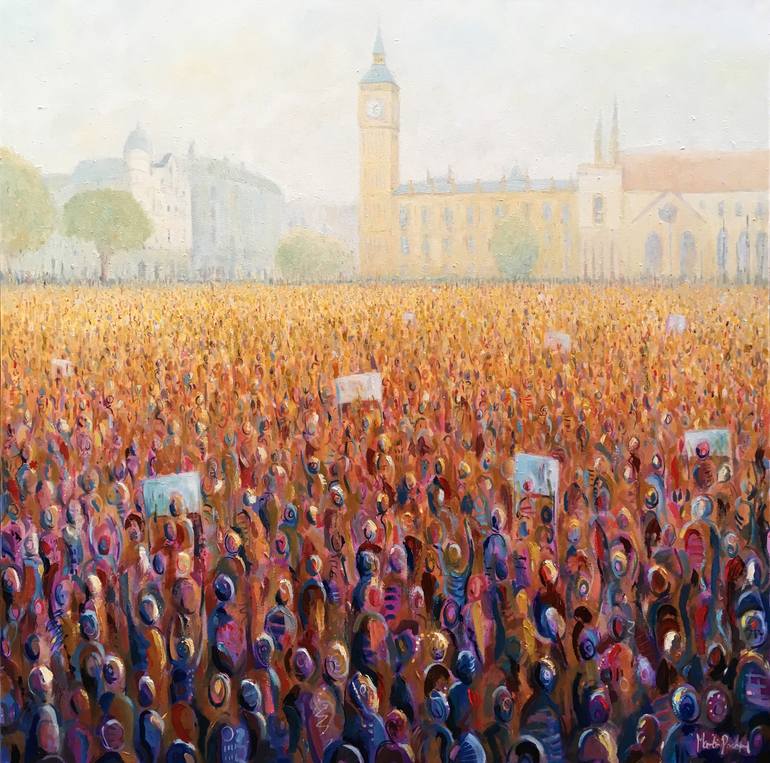
I was moved when I recently saw the below image from Everette Patterson titled “José y Maria.” He says it is “depicting Jesus’s parents in a modern setting.” Ours is a world where Jesus was given a sham trial and crucified by the mob. And ours is a world where our neighbors are being rounded up and brutally deported without even sham trials, where “Alligator Alcatraz” is a real prison camp, and where our tax dollars are spent on bombs to wipe out a brutalized, starving population in Gaza. Ours is a world where the crowd is the untruth and where the kingdom of the heavens is between the cracks, not on the billboards.
This post was written by Jackson Locke.Jackson and I both chose communication studies as our major at Toccoa Falls College – me a few years earlier. Reading some of his writing brings back a lot of my own memories of similar “shifts” which happened during the college season of my life.Jackson was kind enough to allow me to post some of his recent work here about changes – I hope you enjoy it.
Study Abroad Course Paper
I know for certain that the Jackson Locke, who came to Toccoa Falls College two years ago, would have judged this trip quite negatively. My thoughts probably would have consisted of something like, “You’re telling me a Christian college went on a two-week trip and didn’t evangelize? We didn’t spread the gospel? We didn’t have group Bible studies? None of that?”
When I arrived at TFC, I held tightly to a rigid sacred/secular divide. I even remember a conversation with Dr. Wanner where he said something positive about an R-rated movie, probably his favorite, The Godfather, and this fact made me uncomfortable, as the only R-rated movie I was willing to vouch for at the time was The Passion of the Christ. At the time, I was unable to view any other such-rated movie as something that could be beneficial to me or an artifact that could teach me something new.
I say all this to show that my views have changed. I no longer see the world as two separate streams, one sacred, one secular. In fact, in some ways, I struggle more now than I did then because it was easier when I could categorize the world: if something was sacred, I accepted it; if something was secular, I disregarded it or attempted to make it sacred. This way of seeing the world also shaped how I viewed people: they were either in or out, Christian or not, saved or damned, right or wrong. Again, that’s an easy way to view the world, which led me to view people as either part of my group or not. If they aren’t, they either need to be converted immediately or loved so that they can be converted.
Now, my perspective is more nuanced. I seek to find the good in all people, to see the imago Dei in everyone, and to understand the presence of common grace in all of creation and humanity. Do I think I now have a perfect epistemology? Absolutely not. But in a strange, and some might argue humble way, I think acknowledging that I don’t have all the answers is more faithful than holding to a rigid, two-kingdom approach. Will my thoughts continue to change in the future? I hope so. Sometimes I feel like I’m just swimming in wishful thinking and perhaps just what I want to be true, but right now, this is where I am.
All of this is to preface one part of the trip that I found especially meaningful: the table. We moved constantly on this trip, from place to place, landmark to landmark. We were always on the move. However, our shared meals gave us the chance to slow down, reflect, rest, get to know each other, and offer gratitude to God. Our meals served as a liturgy. Reading [a post made on this blog] I came across a post where [Javen] described a new coffee shop his family had opened. Reflecting on the coffee shop, Javen wrote:
“I don’t see this as a vehicle or a segue to something spiritual and sacred – it is in fact that thing. This is a table. This is a cup of cold water (and milk and syrup and espresso). This is to taste, to see, to touch. It is a communion. It is a liturgy. Certainly, not everyone who comes sees it that way, and they are just as extremely welcome as anyone else. To me, that’s really fun – I’m so grateful to get to be a part of this.”
The tables where we shared meals served as a meeting place, with ourselves, each other, and God. Javen said it best, I am so grateful to be a part of this indeed!
*Jackson was named the 2025 communication scholar of the year at Toccoa Falls College*
Things could be stranger but I don’t know how I’m going through changes now I’ve spent a lifetime trying to figure it out I’m going through changes now
And I’ve just begun Under a purple sun
There’s many reasons we are what we become I’m going through changes, ripping out pages I’m going through changes now











































 javen.bear.