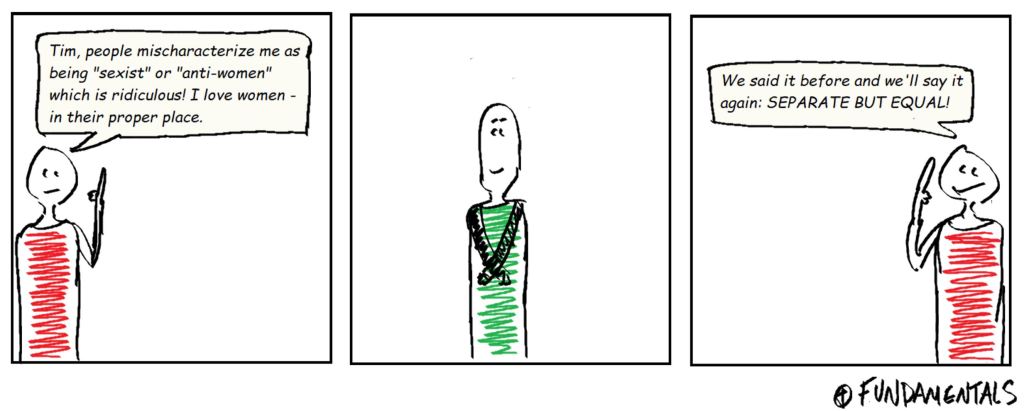
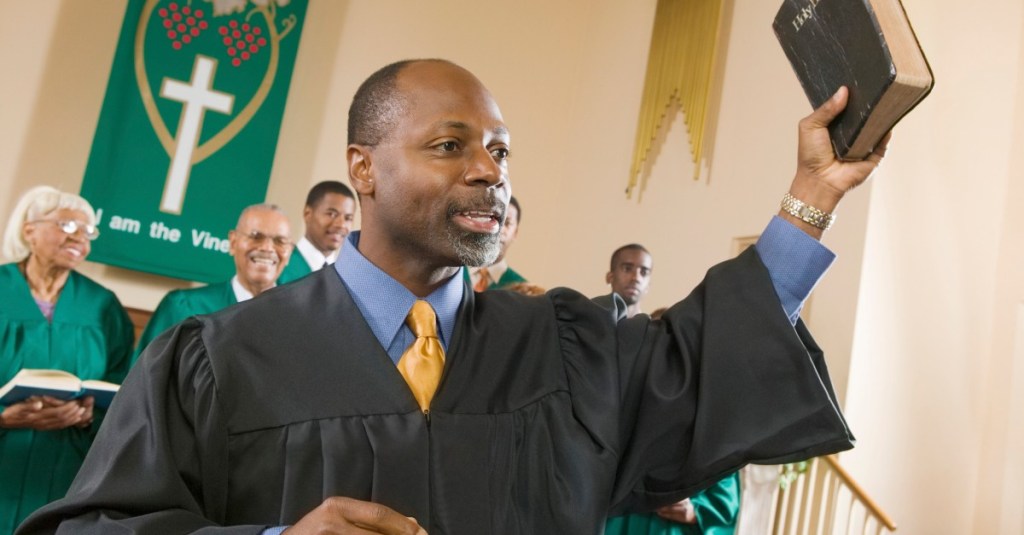
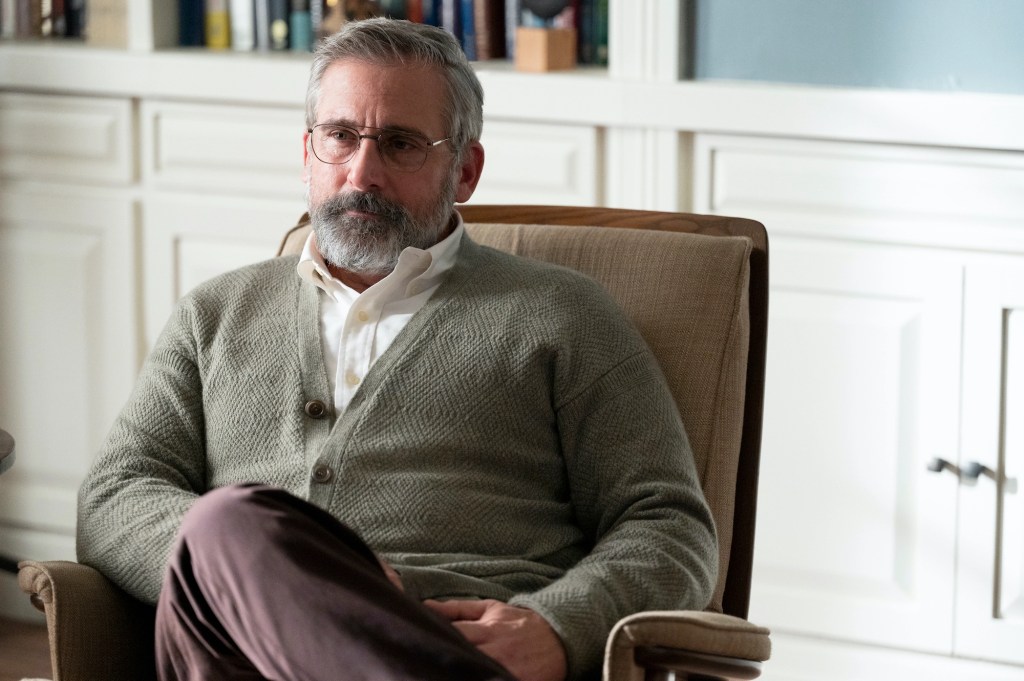
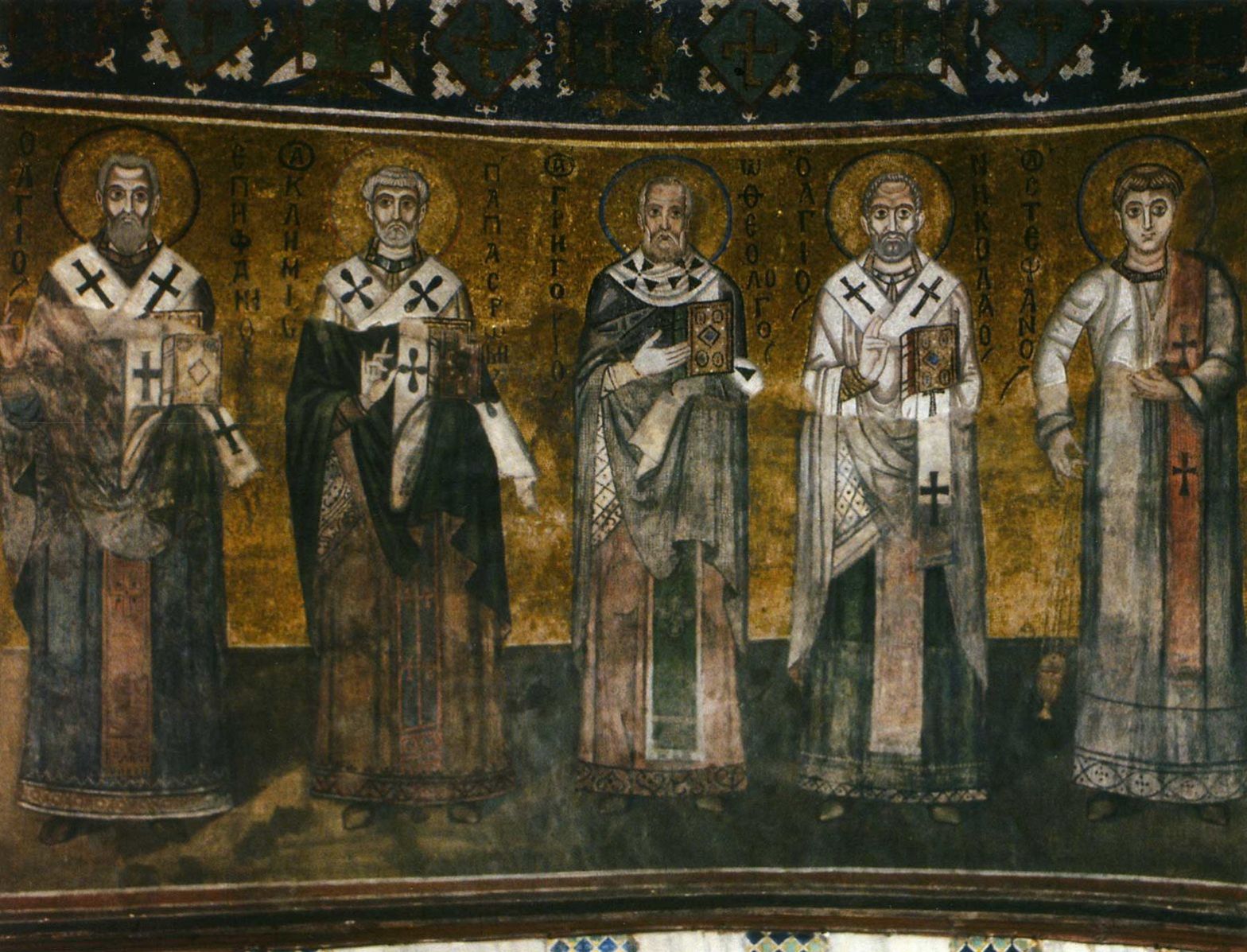
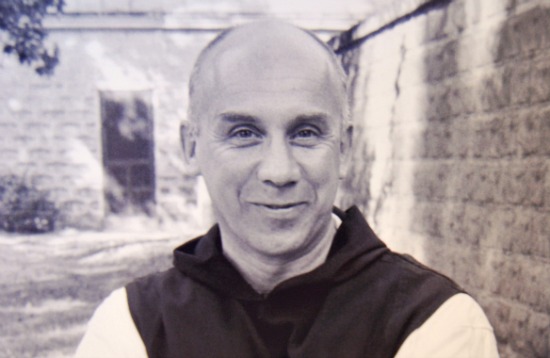
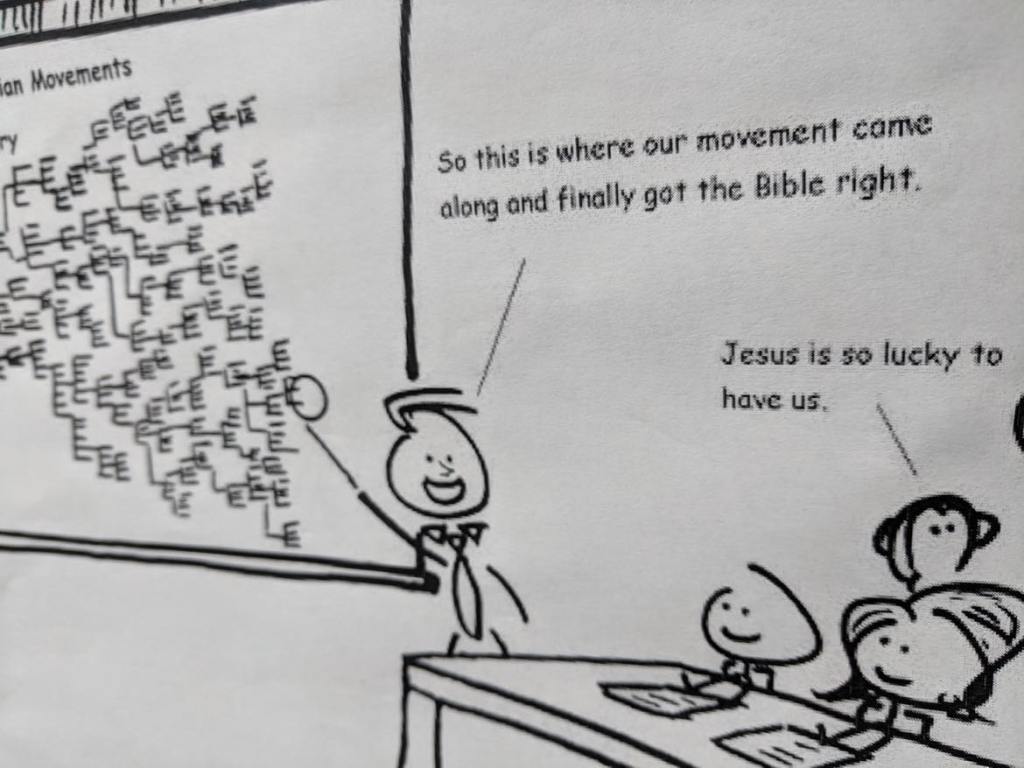
This is a condensed version of a piece I wrote one year ago yesterday. It was the conclusion of the 28 comicstrips I posted in February of 2022 called “Fundamentals” which can be read here.
Women are gifted by God (and who would say otherwise?!) But they must be allowed to fully exercise those gifts. As it stands in many church communities, only women with certain gifts are able to use them to worship freely. We should work toward an environment where women (married or not) are empowered to work, think, teach, lead, and follow as God has so called them. We should leave behind the days where women with the gifting to lead and teach are faced with the choice of stifling their calling or walking away from their local church family.
Some men will likely feel uncomfortable and threatened (pissed off even). In the Greco-Roman world where Jesus grew up, women were seen as impure, deformed males. Yet even here, a New Testament church emerges where women host church their homes, contribute from their businesses, teach, and prophecy. If this kind of freedom could exist among an oppressive and deeply sexist culture such as first century Rome, we in 21st century America have no excuse for operating as a church family in ways that keep women afraid of fulfilling their calling. I agree that some New Testament texts about women and their roles are difficult, and I don’t know what is meant at all places. Still, I don’t think there is any excuse for a church culture where women are afraid of fulfilling their potential because it will upset men of the church.
Many will agree with me here, but they will balk at action. They’ll take the stance of those who said in hushed tones that all people were equal but opposed integration because everyone else isn’t ready for it yet. I guess I’m tired of that kind of balking. I’m tired of women having to be afraid of upsetting men, of hesitantly asking permission to teach Sunday school or to say a few words between songs lest they step out of line.
(2.) We must share the load and the reward
I demonstrated at length in a piece how in conservative church communities there is often the desire to remain separate from secular culture in visible ways (like clothing). If a church sees this as a good goal, men and women must share in this together. What often happens is that men put this responsibility solely on women. While women wear clothes that distinguish them from “the world,” such as dresses, skirts, head coverings, etc., men enjoy the comfort of blending in. Men are permitted to dress exactly like those outside the church while women alone bear the responsibility of maintaining the difference. Either the goal of dressing to separate is abolished, or men must participate. In this way, I think the Amish community holds a better standard – men and women share the task. Men wear suspenders and straw hats so they too are separate from the world. I think the reason why we separate this task and give it to women is because of point number three below.
(3.) We must resist the sexualization of women’s bodies
The primary resistance to my position above will undoubtedly be “modesty.” In the name of modesty, women are asked to hide their bodies. Cape dresses are designed to de-form the female body. Why? So that it doesn’t serve as a temptation to men. It is because we have so sexualized the bodies of our sistersthat we require them to design special clothes to hide their form. I am not an expert in this area, but I could go on. Perhaps it’s sufficient to say we should learn from what we’ve done: by requiring women to go above and beyond to hide their bodies (never wear hair down, never wear legged pants, never show belly/back even when swimming), we have created the reality where these things are “sexy.”
Men of conservative churches often sexualize women’s bodies (and are taught to do so from a young age). Women are described as temptations to male purity and the satisfaction to men’s lust. Ironically, conservative Christianity often sexualizes women’s bodies even in ways secular culture does not. I have attended exactly three college/universities, and trust me when I say no one is blushing over seeing someone’s knees. Seeing a girl’s kneecaps or, God forbid, stomach is only perceived as “immodest” or “sexy” if we’ve created an environment where it’s forbidden. Hypermodesty creates the sexualization of women’s bodies. To get beyond this would require recognizing the female form as God-given and something that neither men nor women need to be ashamed of. The requirements imposed by so many churches have no scriptural basis, but they have huge implications about how boys are taught to view girls, and how women are told to view themselves.
(4.) Women must be invited into decision making spaces
While it may be argued from some scriptures that women are not permitted to serve as a lead pastor, there is no legitimate scriptural precedent for excluding women from committees, boards, or other gatherings of decision making. In churches where decisions are made by casting votes, women must be invited to participate in day to day decisions. Similarly, in deciding church will require, women must be part of the conversation. It is simply inexcusable that in many churches decisions about what women will do/wear do not even include women! The result is not husbands leading their wives in a familial setting. The result is men being more important than women. In conversations about finances, the vision of the church, ministry strategies, mission boards, church policy, teaching plans, etc., women must be invited to lend their gifts.
Listen, daughter and pay careful attention: Forget your people and your father’s house. Let the king be enthralled by your beauty; honor him, for he is your Lord. (Psalm 45: 10-11).
(5.) Women must be allowed to live as to the Lord and not to men.
For too long, to be faithful has meant to live up to the measuring rod laid out by men of the church. Women must be allowed to set their eyes higher, on pleasing their Lord. Their worth, their bodies, their gifts, their place – these do not belong to the men of the church. They are holy and to be offered to their true, good king.
Conclusion
After reading, some may say: He has a point, but I’m not ready to step on any toes.
It’s is an important issue, but we’ve got to go slow – we’ve got to avoid upsetting people.
This just isn’t a hill I’m willing to die on.
On the other hand, maybe you agree with me – this is a hill worth dying on. This is half the church we’re talking about. This is about who our sisters and daughters and mothers are told they’re supposed to be. For a long time, I was too afraid to say anything. I figured if this is the way things are, there must be a good reason. Or even if it isn’t ideal, it isn’t so bad. Or if it is bad, it isn’t that bad for me.
I guess I’m done with all those answers. This is not a tertiary issue. I’d say it’s a fundamental.
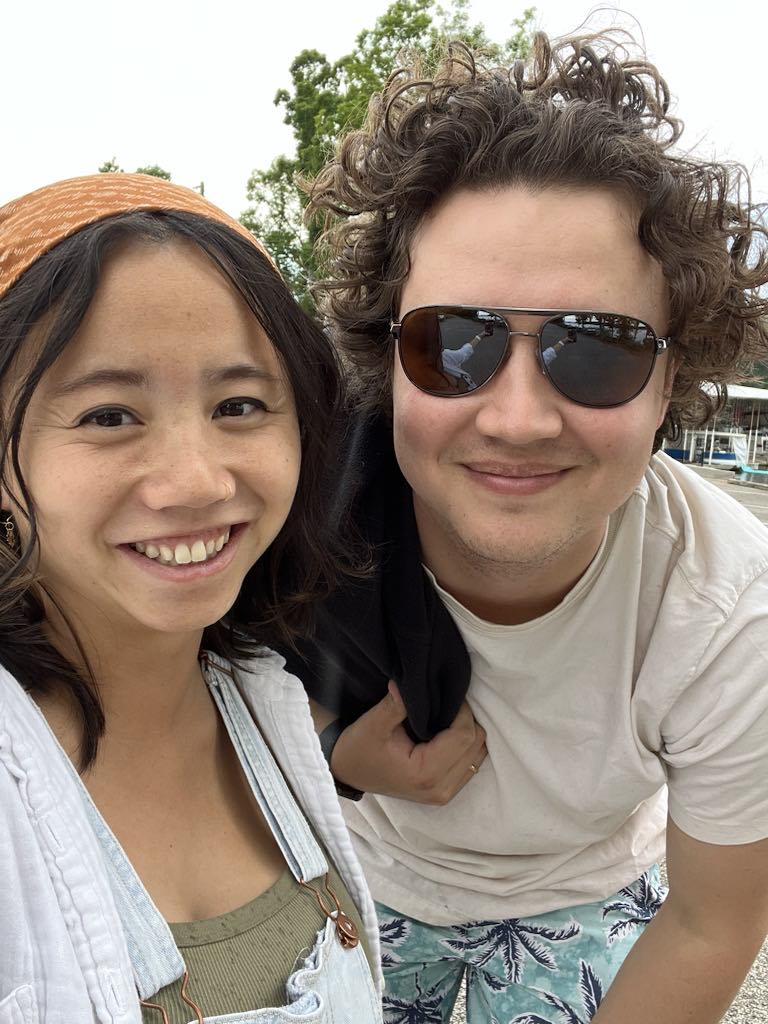
Once upon a time this site was used to post pictures of what was happening in my life and the places I was visiting. Today it is again – here are a bunch of photos of Aleisha and I. Phoenix is a long way from our hometown. So when we go back, we get to see what our friends are up to and the places where they live. But it’s a bit harder for them to see us. So here you go.
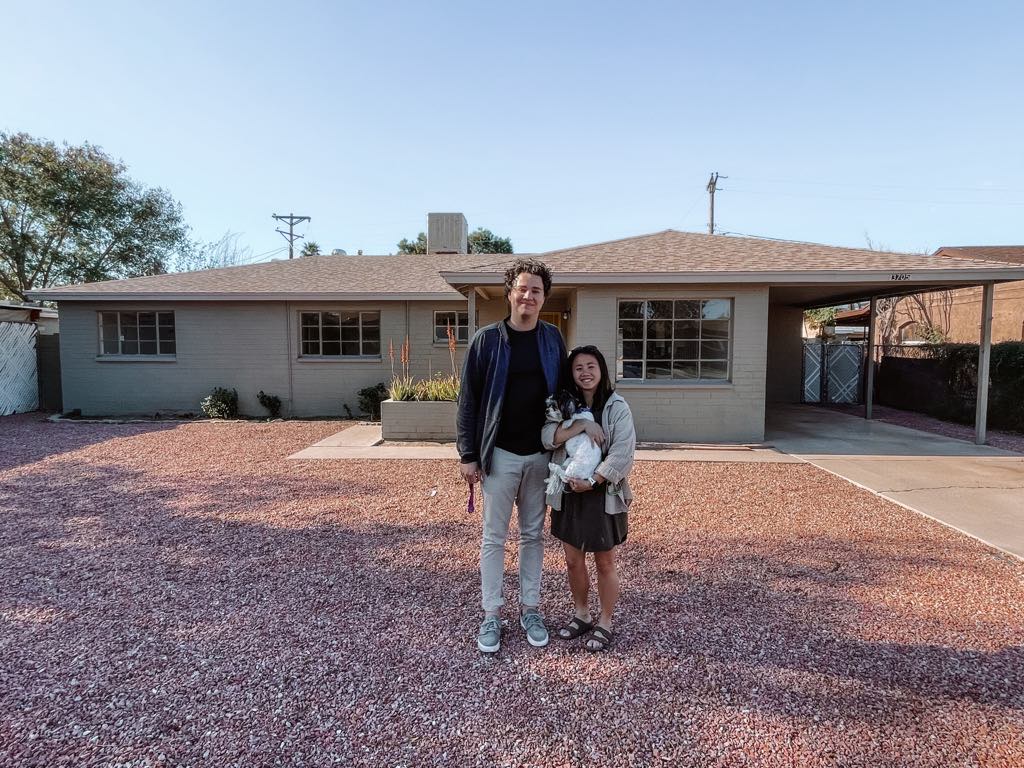
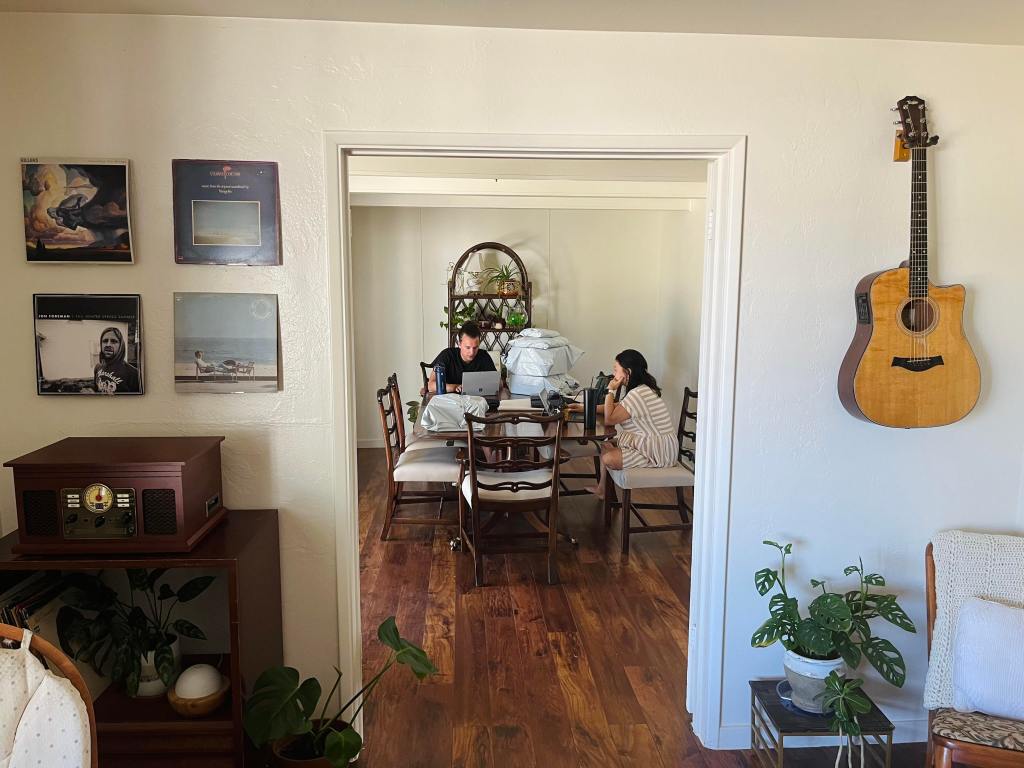
On March 13, we got the keys to our new house! It’s a three bedroom, two bathroom home built in the 1950s, and we absolutely love it. We’re about 15 minutes from downtown Phoenix where Aleisha works, and 3 blocks from where I work. Here are some photos of the place (swipe right to see more).
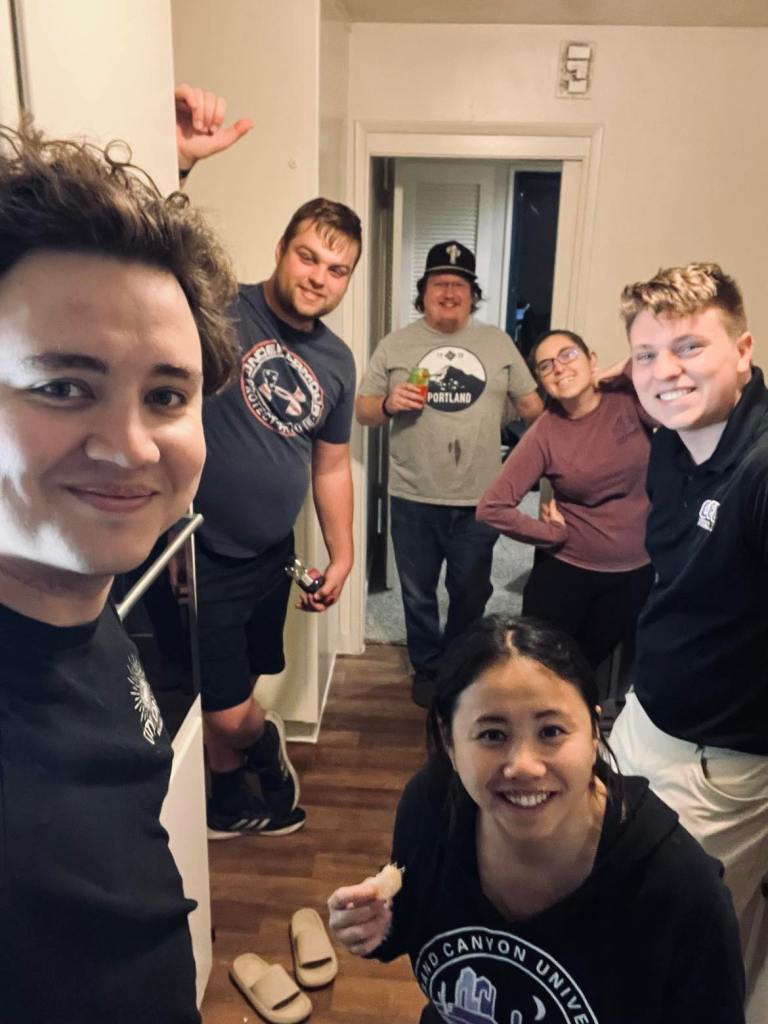
It was an incredibly busy time, but things are slowing a bit now. In a span of a few months I tore my achilles, we flew home, we bought a house, went to Africa, moved into our house, went to Ohio, and then came back to get settled in. We are so thankful for the friends who helped move us in.
Aleisha is the program and intern director at Aim Right Ministries, and she is also the manager for the Joy Store, a non-profit based in Rwanda. She excels at both jobs! Below is a photo of Aim Right as a video I got to make while we in Rwanda which shows how the baskets she sells are made.
I’m still working at Grand Canyon University as an admissions counselor for the college of theology and the seminary. Below are a few photos. Mostly I sit at a desk, but sometimes we do tabling events too.
I’m also about halfway through my masters degree which will allow me to get licensed as a therapist. It is a long program, but I get to do it while working full time. I go to class on Mondays from 5:30 – 9:30 p.m. with some really cool people (a few of whom I took a photo of).
I’m currently in CNL-530 (Human Sexuality and Issues of Aging)
And the most exciting news of all….we are excepting our first child, a girl, in August!
We’re also pretty thrilled to have Luke living with us. He just got here last week after making the trip in only two days unassisted. Very impressive. Still, we’ll kick him out of his room or put you in the office if you want to come see us.
This paper was written as coursework for GCU’s CNL-527: Principles of Psychopharmacology
Etiology of Addiction
This paper will explore the etiology of addiction and provide insight into different models which explain addiction development. The interplay between nature and nurture which often presents as genetics vs. environment is noteworthy in this discussion. Relevant research related to the disease and psychosocial models will be discussed. Ultimately, the environment in which the brain develops and the psychosocial model of addiction have been undervalued – a finding which this paper will present as a hopeful conclusion.
History and Evolution of Addiction Theory
The concept of addiction has been long observed, but the definition is debated. The word addiction was altogether removed from four consecutive editions the APA’s Diagnostic and Statistical Manual of Mental Disorders from 1980 to 2000. With so many and varying meanings, “it was considered a layman’s rather than a scientific term, pejorative, stigmatizing, and too difficult to define” (Rosenthal & Faris, 2019, p. 437). The debate about the etiology of addiction has often been centered on whether addictive behavior is a voluntary choice) or an involuntary disease and whether the addicted person is a criminal or a patient with an illness (ibid.). This unfortunate dichotomy misses the importance of how these components interplay, and more importantly, neglects the importance of the nurturing environment.
Evolution of the Term
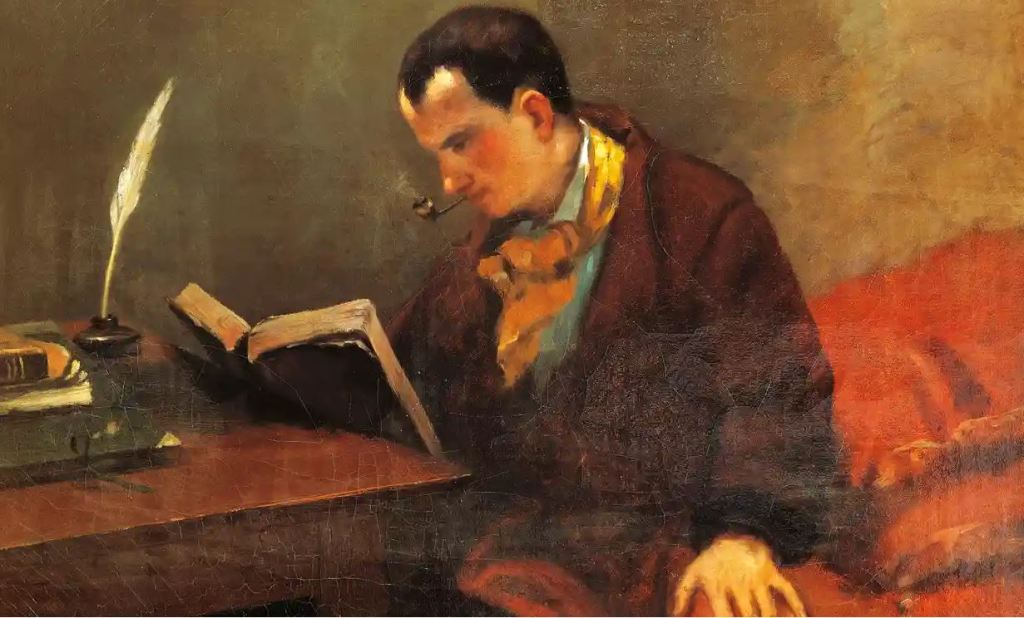
Around the 300 BCE, the Roman term addictus referred to the person who is given a judgement by the official in charge, the praetor urbanus. This pronouncement was a “binding spell…thought to embody the power of Jupiter” (ibid., p. 439). Moving into the 1600s, many Christian writers used the term addict “to discuss the danger of misguided attachments” such as witchcraft and magic (ibid., p. 443). Here, addiction itself is not a negative thing; the term was generally used in a positive manner, unless the object of attachment is misguided. One might addict herself to poetry reading in the sense of a habit or pursuit.
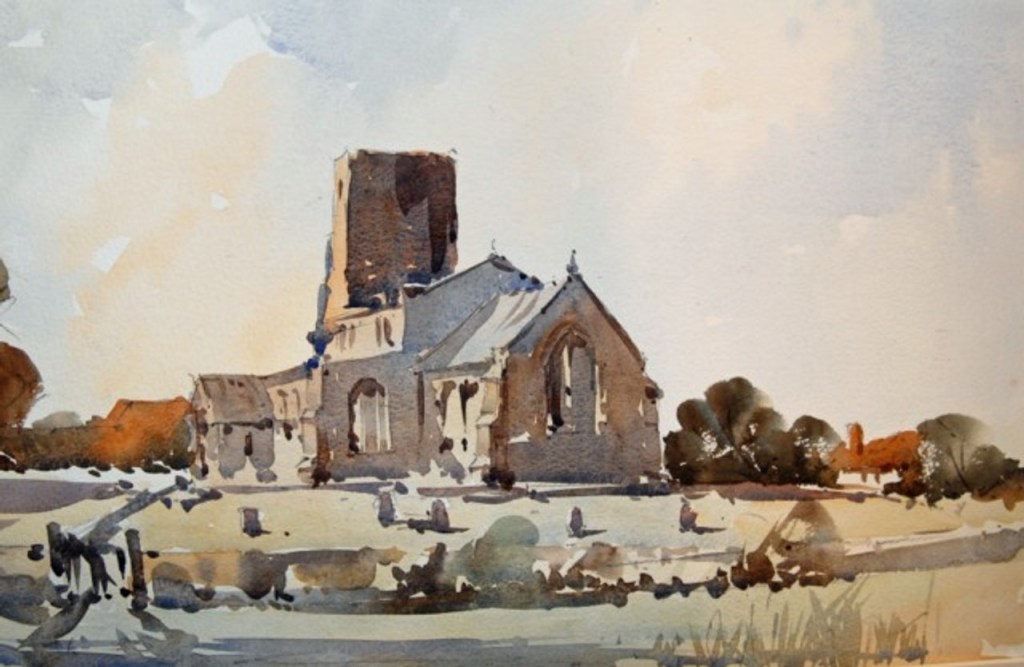
painting by Gustave Courbet (1847)
Early Modern Psychology Period
In 1804, the paradigm began to shift. Thomas Trotter published An Essay, Medical, Philosophical, and Chemical, on Drunkenness and Its Effects on the Human Body, and it became “generally accepted that heavy and persistent alcohol consumption was itself a disease in its own right, or at least a key symptom of some underlying disease” (Porter, 1988 as cited in Haldipur, 2018). In 1965, the American Medical Association “recognized alcoholism as a disease and declared it to be a medical disorder” (Bhatt, 2023). During this time, addiction was thought to stem from a personality disorder (ibid.).
Contemporary Views
More recently, change in definition over an eight-year span by the American Society of Addiction Medicine (ASAM) demonstrates some of the new insight researchers are gaining into the importance of environment on the development of addiction. In 2011, ASAM’s definition of addiction declared it “a primary, chronic disease of brain reward, motivation, memory and related circuitry. Dysfunction in these circuits leads to characteristic biological, psychological, social and spiritual manifestations…. (ibid.)” However, the 2019 definition reads, “Addiction is a treatable, chronic medical disease involving complex interactions among brain circuits, genetics, the environment, and an individual’s life experiences… (ibid.).” According to Bhatt, “It is clear that the 8-year gap in these definitions left room for experts to more thoroughly recognize the impact that environment and a person’s life experiences has on addiction” (ibid.).
Current Trends and Debates in Research
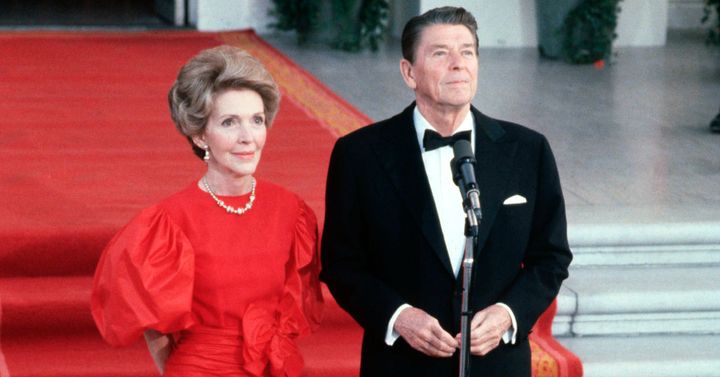
The War on Drugs, started by Richard Nixon and then championed by Ronald and Nancy Reagan, has cemented a victim-blaming mentality into the American psyche. The clinical world is moving further and further away from that paradigm. Movement away from moralistic judgement is overdue, however there is real risk of oversimplification if a purely disease model becomes primary (Gerra, et al., 2021). According to Hall et al., “Considerable scientific value exists in the research into the neurobiology and genetics of addiction, but this research does not justify the simplified [disease model] that dominates discourse about addiction in the USA and, increasingly, elsewhere” (Hall et al., 2015).
In the wake of the just say no campaign, the fields of psychotherapy and medicine are dominated by two overarching explanations for the development of addiction: the disease model of addiction and the psychosocial model. In 2020, a study surveying 1438 treatment providers found that American providers supported a disease model significantly more than their UK and Australian counterparts. It was also noted that personal experience with addiction and involvement with 12-step programs was linked to a support for the disease model as was older age (Barnett, et al., 2020).
Overview of Disease Model
According to the disease model, genetic and biological factors play the largest role in determining whether addiction will develop. The National Institute on Drug Abuse claims “genetic vulnerability accounts for about half of an individual’s risk for developing a SUD, which makes individuals 10 times more likely to develop a SUD if they have a first degree relative with a SUD” (Green et al., 2021 p. 1097). Vulnerability is said to be linked to neurochemistry as well as dopamine receptor density. “Individuals with fewer dopamine receptors are likely to experience the physiological rewards of a substance more strongly than those with sufficient dopamine receptor” (ibid.).
The National Institute on Drug Abuse has championed the disease model since 1997 when director Alan Leshner published a report arguing addiction was a “chronic, relapsing, brain disease” (Hall et al., 2015). Genetic research involving twins as well as animal studies in which drugs are self-administered are also cited as evidence for the disease model. Alcoholics Anonymous is an organization with lay-led recovery groups around the world which also champions the disease model and view addiction as a disease which can only be held at bay, never recovered from.
Overview of Psychosocial Model
In contrast with the disease model, the psychosocial model places a much stronger emphasis on the nurturing environment in which the developing brain’s reward pathways are developed as well as the environment in which the individual finds themselves when they use drugs. Brains which develop in chaotic environments are neurologically different in important ways than those nurtured in safe, secure environments. The psychosocial model views genetics as basic organizers which set the schedule of development (Maté, 2010, p. 189). “The expression of genetic potential is, for the most part, contingent on the environment” writes Gabor Maté, and this view is supported by the work of Dr. Jaak Panksepp author of the landmark work Affective Neuroscience.
Dr. Gabor Maté, author of In the Realm of Hungry Ghosts
Circuitry in Very Young Brains
Opiate circuitry development in young brains as well as the infant’s attachment to caregiver are both fundamental to understanding how and why addiction develops (Maté, 2010; Gerra 2021). The infant brain has billions of neurons in excess of what will be required by the child, so pruning has to happen as a part of what has been called neural Darwinism (Maté, 2010). The key factor in the development of key circuits (opioid circuitry of attachment reward, regulatory centers, dopamine circuitry) is the emotional environment (ibid.). And the dominant factor in this critical aspect of development is the nurturing adults, the caregivers. This is why attachment and the emotional experience of the infant are so tightly connected to the neurochemistry of the brain. This is the same brain which will later be at a much greater or much lesser risk for addiction depending on the environment in which it was nurtured.
Studies show links between a person having close relatives who abuse drugs and the likelihood that they will do the same. However, what is often not discussed is the environment in which the person was nurtured. It turns out that persons whose caregivers had substance use disorders may not be as likely to develop secure attachments. The three environmental conditions needed for optimal development are “nutrition, physical security, and consistent emotional nurturing” (ibid., p. 193). A study done at the University of Washington compared the brain wave patterns of infants whose mothers were suffering from post-partum depression with those whose mothers were in good spirits. Distinct differences were noted in the infants’ frontal lobes which is where the “centers for self-regulation and emotion are located” (Dawson & Fischer, n.d. as cited in ibid., p. 195).
Illustration by Daniel Hertzberg
Vietnam WarRemission Rates
If the disease and genetic models alone could account for addiction, one would expect exposure to a drug to lead to addiction. This was one of the driving narratives of the War on Drugs (ibid.). In the Vietnam War (1960s and 1970s), many American soldiers became heavy users of barbiturates and/or amphetamines along with heroin. 20 percent of those returning “met the criteria for the diagnoses of addiction while they were in Southeast Asia, whereas before they were shipped overseas fewer than 1 percent had been opiate addicts” (ibid., p. 142). However, after returning home, the remission rate was an incredible 95 percent. This does not seem to support a model suggesting once an addict, always an addict, and instead seems to support the importance of environment in the development of addiction.
Early Major Traumas Correlated to Addiction
Potentially traumatic life events are “negative situations that have the potential to cause an extraordinary amount of stress to an individual, overwhelming their ability to cope and leaving them in fear of death annihilation, or insanity” (Levin, 2021). In a study of 4,025 people who had experienced direct exposure to potentially traumatic events, “direct exposure was most highly associated with SUDs and behavioral addictions, being two times more prevalent among those exposed compared to the nonexposed” (ibid., p. 118). Those who experience sexual assault were 2.1 times as likely to have a substance use disorder. (ibid.).
Connection as the Healing Answer
It could be that substance abuse is an attempt to fill the users void of social connections. Bruce Alexander conducted a famous experiment termed Rat Park in which he raised the important question about the environment in which laboratory animals were being studied. He found that when placed in a larger, more comfortable, scenic, and socially connected environment, “morphine held little attraction…even after these rats were forced to consume morphine for weeks, to the point where they would develop distressing physical withdrawal symptoms if they didn’t use it” (Maté, 2010, p. 145-146). Alexander noted, “Nothing that we tried instilled a strong appetite for morphine” for the rats in this environment (ibid.). That the prerequisite for addiction may be a void of social connection often filled with substance abuse is a promising line of inquiry. Author Johann Hari sums up his research into addiction by saying “The opposite of addiction is not sobriety…it’s connection” (TED, 2015).
Conclusions and Implications for the Counseling Profession
While there is still much debate, the psychosocial model is the most compelling model of addiction development. With this etiology in view, the work of clinical counseling is paramount in recovery. Rather than being treated medically as specimens with diseases, clients should be viewed as wounded persons who are starving for the connection and nurture they never received. Clinicians should practice empathy, give support, and seek to help their clients understand how to reconnect with themselves and their surroundings in order to heal. This is not only a more compelling explanation etiologically, it is also a much more hopeful message for those with addiction. Rather than beset by a disease or cursed with faulty genetics, people can heal if they are nurtured and placed in environments where they can connect to themselves and others.
This paper has explored the etiology of addiction through the lens of two dominant theoretical frameworks: the disease model and the psychosocial model. The clinical field has moved away from a moral failure view and perhaps too far in the direction of a disease model. Current trends in research suggest a psychosocial model of addiction development is the best supported view. Future research should investigate treatment protocols operating from this more hopeful paradigm in which social connection and attention to the nurturing environment are explored and prioritized.
Haldipur, C. (2018). Addiction: A brief history of an idea. Psychological Medicine,48(8), 1395-1396. doi:10.1017/S0033291718000314
Hall, W., Carter, A., & Forlini, C. (2015). The brain disease model of addiction: is it supported by the evidence and has it delivered on its promises? Lancet Psychiatry. 2 105-10. 10.1016/S2215-0366(14)00126-6
“He (a young child) may express much concern about the welfare of another and genuinely do all he can for that other. But, as anyone knows who has had experience of being ministered to by a young child, the results were not always welcome. Where a child fails is not in his lack of will to benefit the recipient of his care but in his grasp of what would, from the recipient’s point of view, be beneficial.” ― John Bowlby (Attachment, pg. 354)
John Bowlby is one of the foremost thinkers on attachment theory
“We were all raised in what I’ll call the mono-mind belief system – the idea that you have one mind, out of which different thoughts and emotions and impulses and urges emanate. That’s the paradigm I believed in, too, until I kept encountering clients who taught me otherwise…you and everybody else is a multiple personality. And that is a good thing. I’m not suggesting that you have Multiple Personality Disorder (now called Dissociative Identity Disorder), but I do think that people with that diagnoses are not so different from everybody else. What are called alters in those people are the same as what I call parts in IFS [Internal Family Systems], and they exist in all of us.” ― Richard Schwartz (No Bad Parts, pg. 7)
Richard Schwartz is the founder of Internal Family Systems
Writing on Carl Jung’s analytic psychology, Kelland says, “Getting to know different or opposing parts of ourselves and the world was the way our personality grew “whole”. Psychic dynamic energy included the idea that we should listen to different points of view inside ourselves, and outside ourselves, because opposing views usually had some truth to them and were trying to form a larger “whole” and a larger “whole person”. The person who could listen to various points of view such as love and hate within themselves, and balance these out, was a well-developed individual. The person who was constantly turning against other points of view was likely to be imbalanced and unhappy.” ― Mark Kelland (Personality Theory in a Cultural Context)
“You must understand that in the afterlife, our personalities reflect an adult situation anyway, so we can say for sure that there will be no children in hell.” ― J.P. Moreland (cited from here)
In bringing together these ideas, of children not knowing – of the mind having parts rather than simply being a whole – of personality arising out of tensions within the self – of hell being an adult situation and not a place for children, it seems to me the following must be raised.
If hell is an “adult situation” (Moreland), and therefore not a place where children are sent, what might this mean in light of a view of the psyche which rejects the mono-mind (Schwartz)? That is the idea which holds we are many parts, many personalities, often even into our old age and to the end of our long lives. Many people have parts which are trapped in adolescence, which, often due to trauma, are still children (Schwartz).
Parts, like young children, often do not know how to handle situations or how to see things from a broad point of view. Like children, they may be incapable of seeing things empathetically, and if left in charge may completely fail to administer proper care/treatment despite their best efforts (Bowlby). So then, how are people judged in the end? What would it mean for a person to be taken to heaven or cast into hell? In heaven, would these parts continue to grow and develop? Would they be nurtured and finally get un-stuck, finally reconnected properly to what Schwartz calls the SELF? What is the prerequisite for this healing? Many will say it is to accept Christ and make a statement of faith. Still, what does it mean for a person composed of parts to make a profession, and what of those who, due to the trapped situation of their parts, are unable or unwilling to do so?
Contrastingly, in hell, are the trapped parts doomed to be forever isolated from self? Are they trapped in a childlike state for eternity and tortured further without hope of being freed of their burdens? Are those “children” taken into hell along with the evil adult ones? Or perhaps the psyche becomes further fragmented so the more mature parts may be in heaven and the trapped ones in hell? Are those “children” taken into hell along with the evil adult ones? Are they all taken to heaven in the end? Do they go to hell to just grow up or be purified (purgatory)?
It seems fairly clear to me that children do not go to hell. And I think most Christians would agree. Still, I don’t know what to make of the situation when we reject the mono-mind paradigm which we are steeped in. This paradigm holds that our mind, our psyche, is one complete thing. Still, the psychologists whom I respect the most seem certain this isn’t the case – we are not simply one whole thing. We are a multitude of parts. Schwartz even goes on to detail interactions with clients in which it seems that parts have parts – it’s quite complex. But alas, complex, isn’t exactly fertile ground for efficiently “saving souls,” so I digress.
This post is part 7 in a 7 part series of reflections as I turn 25 years old. I’m convinced that to be human is to struggle and to struggle with God. This series serves to honor the difficult questions. I don’t know if everyone has questions their mind continually turns over while they walk the dog, shower, drive to work, but these are mine. I’m hopeful that in 25 more years I’ll have more compelling, more faithful answers to them than I do now – or that I’ll have moved on to more interesting things altogether. Either way.
you’re using my name in vain, for your power and for your personal gain, for your advantage, for your wealth, and for your fame,
your public prayers i abhor in my ears they have become a strain, because you ignore the poor in their fears and the exiled in their pain because you adore and you defend the lustful pride, the bribes, and the lies of the arrogant,
you’ve joined that tribe and aligned your brand with the unkind in the land it’s not me you represent you’re using my name in vain for your rights and privilege, you trade prophetic witness for economy and prosperity, (Using My Name – Remedy Drive)
When I was about fifteen years old, I was sitting in church on Sunday morning at Foothills Fellowship, and someone was sharing from their seat about what they learned in Sunday school. And I remember him sharing this idea about what the third commandment meant, that thou shalt not take the name of the Lord thy God in vain.
He said maybe it wasn’t so much about not saying “Oh my God!” as an expression, which is what I always thought the commandment was forbidding, and more about attaching God’s name to things where it did not belong. My mind was blown; it still is.
Perhaps someday I’ll figure out why this is, but (murdering aside) I’ve got a stomach for witnessing most of the commandments listed in Exodus 20 being broken. But number three, using the Lord’s name in vain, it really feels different. This reality does not always lend itself to working at a Christian university.
On the enrollment side of the university, we have a weekly Zoom meeting to go over updates, discuss current issues, and hear from leadership. Each week, we formally begin with a prayer from an employee. I’m usually very uncomfortable here. The prayers often implore God to grant us special blessing in our bid to enroll students and “build the kingdom.” And here is where I think we violate, weekly, the third commandment. The implied narrative, which is sometimes explicitly stated, is that our institution’s growth, increase, and financial success is somehow God’s will. So then it’s a short step to asking God to bless us so we can serve him, grow bigger, and “build the kingdom.” I’m just not convinced the “kingdom” I get paid to advance has much at all to do with the kingdom of heaven.
I’m not writing here to bag on the company I work for. And it’s not that I expect a really robust theology from the admissions department. What I do wonder is what is an appropriate response and level of participation in these kinds of systems. More directly, to what extent can I be complicit and still be faithful? Bluntly, how much can my conscious take? In some ways I’d be more comfortable working at a secular institution where spirituality was an authentic, personal expression rather than a corporate agenda dressed up in pseudo-spiritual language. It’s a bit ironic I think: many Christians of generations prior fought so hard to keep Christianity firmly ensconced in the public sphere, wanted nothing more than to have prayers spoken in corporate meetings. Here I am, and it makes me sick to my stomach.
Truthfully, I think the proclamation of the gospel and the breaking in of the kingdom of heaven is pretty much the last thing any corporation with dollars in mind wants. I have to laugh a bit when I see the ways these two agendas, the gospel and money, are tragically melded together. I hear phrases like “doing business God’s way” and “conscious capitalism” and “faith and free markets.” The catch phrases of the gospel are more along the lines of “sell everything and give it to the poor” and “the person in last place will get the best deal” and “favored are the needy” and “lend money without interest” and “give to people who you know won’t repay you.” The executives get a bit less “kingdom focused” when you put it that way.
He has performed mighty deeds with his arm; he has scattered those who are proud in their inmost thoughts. He has brought down rulers from their thrones but has lifted up the humble. He has filled the hungry with good things but has sent the rich away empty. (Luke 1)
If we really put people and flourishing at the fore, maybe we wouldn’t build museums on campuses to businessmen and pay for huge lettering announcing that their millions were made “doing business God’s way.” Maybe we wouldn’t be hellbent on making more money every quarter and getting more consumers on board with our brand. In my opinion, if that’s what you’re after, that it totally fine – it’s normal. No shame in that. I do wish you’d leave “the gospel” out of it. And stop couching your visions of corporate gain in Jesus’ words. Stop assuming God wants you to get bigger. For God’s sake, stop violating the third commandment.
Until then, I will probably keep wincing during the corporation prayers and keep laughing when folks wax poetic about how much God is blessing us. And some folks think it’s irreverent to laugh a bit when people are praying, or to chuckle when executives talk about God’s will. But I think it’s the posture of God. When the biggest corporations in the country, education or otherwise, bow their digitally represented eyes, thank God for his blessing, and then continue to relentlessly chase money and growth – I’m pretty sure he’s laughing too.
I have to wonder though why I have such an aversion to this violating of the third commandment. Why don’t I feel the need to write articles about how stealing or committing adultery or not honoring parents? I’m reading a book called In the Realm of Hungry Ghosts in which Gabor Maté brilliantly delves into addiction and the mind of the addict. One of the points he makes is that our disdain of things we see in others is rooted in recognition of those things in ourselves.
“When I am sharply judgmental of another person, it’s because I sense or see reflected in them some aspect of myself that I don’t want to acknowledge.” – Gabor Maté (In the Realm of Hungry Ghosts, p. 266)
Maté goes on, “If, for example, I resent some person close to me as ‘controlling,’ it may be owing to my own inability to assert myself. Or I may react against another person because he or she has a trait that I myself have – and dislike – but don’t wish to acknowledge…Moral judgements, however, are never about the obvious: they always speak to the underlying similarities between the judge and the condemned.”
I used to dream of being a major league baseball player. I had a sort of unspoken deal with God that if he let me make it as a pitcher, I would use the platform to…whatever Christians with big platforms think they’re doing. So I wonder if my hypersensitivity to people using God’s name in connection with their own brands and commercial agendas has something to do with recognizing that tendency in myself. Or maybe I see people throwing God’s name around willy nilly, and it reminds me of how awkward I feel when spiritual conversations are raised, and so I try to avoid them for fear of seeming like a sham. It’s tough for me to reckon; I’m super annoyed when people attach God’s name where it doesn’t belong (for instance, claiming the USA is a Christian nation), but I also am not very good at leading authentic conversations around faith and spirituality in healthy ways myself. So maybe I selfishly just want everyone to avoid them.
I would like to leave the reader with two things. One is part of a short, funny poem I wrote in December of 2019. And the second is a song about using God’s name in vain that my friend Brock sent to me – it’s become one of my favorites.
“the prayer”
And Yahweh’s laughing out so hard, he’s busting out his sides,
Doubled over his holy throne, I think he’s starting to cry,
Then an angel came up curiously, and said Father what’s so funny,
He said, I don’t know who he’s thanking, me or the god of money,
Yeah, I don’t know who these prayers are for, me or the god of money,
This post is part 6 in a 7 part series of reflections as I turn 25 years old. I’m convinced that to be human is to struggle and to struggle with God. This series serves to honor the difficult questions. I don’t know if everyone has questions their mind continually turns over while they walk the dog, shower, drive to work, but these are mine. I’m hopeful that in 25 more years I’ll have more compelling, more faithful answers to them than I do now – or that I’ll have moved on to more interesting things altogether. Either way.
‘Our talent for division, for seeing the parts, is of staggering importance – second only to our capacity to transcend it, in order to see the whole’ – Iain McGilchrist
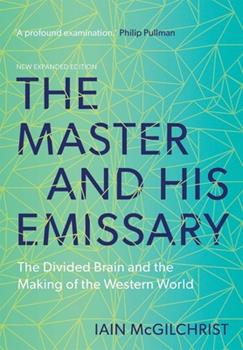
When I first heard Iain McGilchrist speak in an interview, I knew I had to get a hold of his work. And then this green covered, 588 page, beast of a book arrived in the mail, and I second guessed my decision. It took me about a year to read, but this book, this conception of how we construct, perceive, and enter into reality, is one of the most important things I’ve ever read.
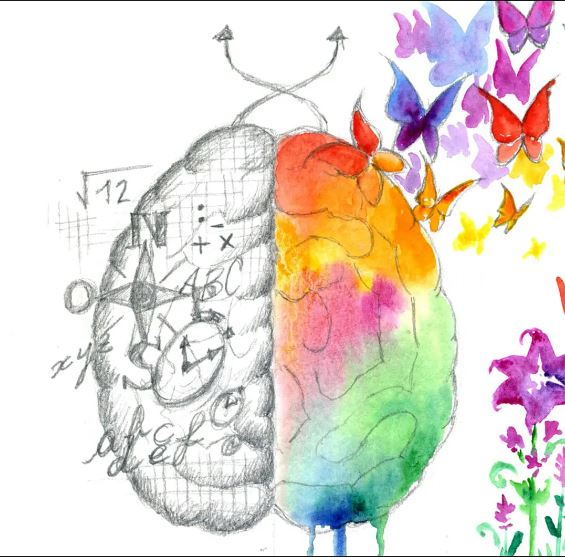
For me, the pearl of brilliance in this work is the idea that each person possesses a mind which is split into two parts: the right and the left. And these parts work together to build our conception of the world and to creatively interact with that world. However, they are not at all the same, the right and the left. The are not merely two parts on the same team. They have distinct personalities, trademarks, tendencies, preferences. There are hallmarks which define each, and they are vying for control.
The Master and His Emissary
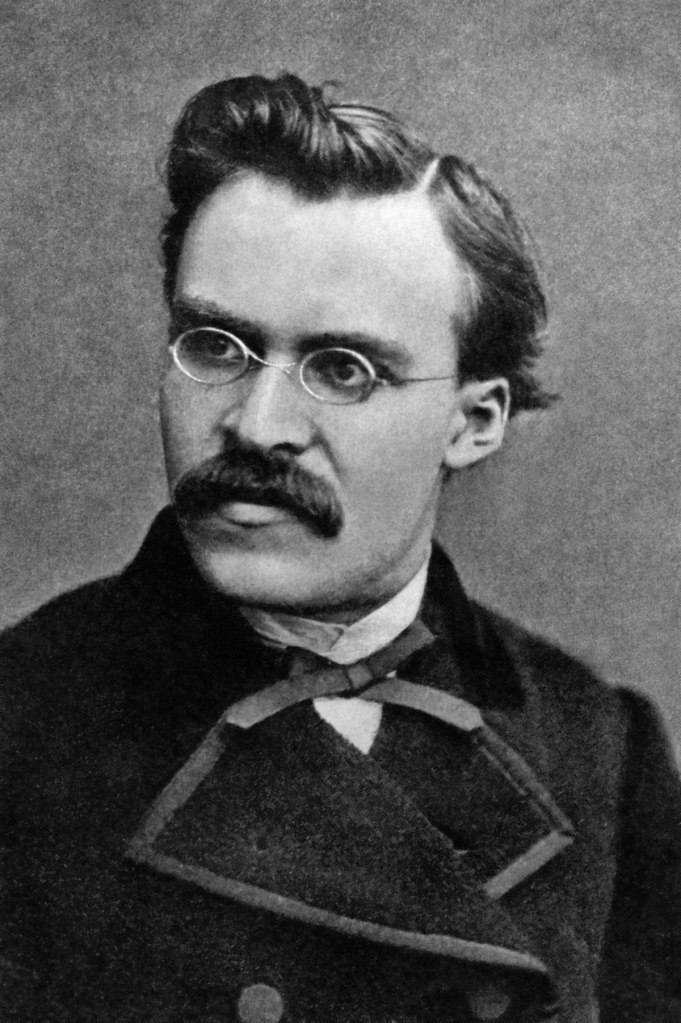
McGilchrist will go on in the second half of the book to explore ways in which these hallmarks, of the right and left hemisphere of the brain, are evident in cultures. A very plain example being something like: a culture driven by numerical information, data, and artificial intelligence bears the hallmark of the left hemisphere taking control. A culture which values personal connection, human interaction, and intuitive understanding bears the hallmark of the right hemisphere being in control. And this, McGilchrist argues, is the proper order of things. The title of the book, The Master and His Emissary, is taken from a story told by Frederick Nietzsche.
The story goes that there was a spiritual master of a small domain known for selfless devotion to his people. As the domain grew, he trained emissaries to help with the work. Eventually the most trusted emissary began to see himself as master and used his position to increase his own wealth and status. He became contemptuous of the master and hated him for his temperance and forbearance which he viewed as weakness, not wisdom. Eventually, he overtook the master and ruined him, duped the people, and the domain was overrun by tyranny and collapsed. (The Master and His Emissary, (paraphrased) p. 14)
McGilchrist argues the right hemisphere is, properly, the master. It ought to be in control and assisted by the left hemisphere. However, he believes our world has come to be dominated by the unruly emissary, the left hemisphere. Below, he outlines the characteristics of each.
Hallmarks of the Right and Left
“If one had to encapsulate the principal differences in the experience mediated by the two hemispheres, their two modes of being, one could put it like this. The world of the left hemisphere, [is] dependent on denotative language and abstraction, yields clarity and power to manipulate things that are known, fixed, static, isolated, decontextualized, explicit, disembodied, general in nature, but ultimately lifeless. The right hemisphere, by contrast, yields a world of individual, changing evolving, interconnected, implicit, incarnate, living beings within the context of the lived world, but in the nature of things never fully graspable, always imperfectly known – and to this world it exists in a relationship of care.
The knowledge that is mediated by the left hemisphere is knowledge within a closed system. It has the advantage of perfection, but such perfection is bought ultimately at the price of emptiness, of self reference. It can mediate knowledge only in terms of a mechanical arrangement of other things already known. It can never really ‘break out’ to know anything new, because its knowledge is of its own representations only. Where the thing itself is ‘present’ to the right hemisphere, it is only ‘re-presented’ by the left hemisphere, now become an idea of a thing. Where the right hemisphere is conscious of the Other, whatever it may be, the left hemisphere’s consciousness is of itself.” (p. 174)
The right hemisphere is what allows us to know through experience and intuition. The left prefers analytical, rationale, mechanistic means of knowing. The right hemisphere is able to appreciate the relationships between entities as well as concepts and paradoxes. The left hemisphere is powerful, but self contained, in its ability to know and use only what it is familiar with and the virtual world it creates (p. 93). The left hemisphere is immensely valuable in its ability to use language and develop systemic thought. That we can discriminate between parts and reason with rationality is largely thanks to the left hemisphere. McGilchrist will argue, however, these actions should be performed in service of “something else that only the right hemisphere can bring” (p. 93).
Cases of Damage to One Side
Some of the really helpful insights in this book are the case studies of people who have brain damage to one of their hemispheres. “An inability to recognise faces is called prosopagnosia, and follows right-hemisphere lesions” (p. 60). The left hemisphere see things in parts whereas the right hemisphere sees the whole. So when the right hemisphere is damaged, and the left is on its own, it tries to recognize a face part by part, the nose, the eyes, the shape of the chin, and struggles to recognize a face. The right sees the whole and has no trouble.
The right hemisphere has a closer physiological relationship with the body. McGilchrist notes that parents, going back thousands of years, tend to hold infants to the left side of their body – this puts them in the direct line of sight of the left eye which is connected to the right hemisphere. [This is a bit confusing: the right side of our body, including eyes, corresponds to our left brain hemisphere, and vice versa]. In patients with right hemisphere damage, such as a stroke, “there appears to be a removal of the normal integration of self with body: the body is reduced to a compendium of drives that are no longer integrated with the personality of the body’s ‘owner.’ This can result in a morbid and excessive appetite for sex or food, which is out of keeping with the nature of the individual involved” (p. 69).
In a remarkable experiment, split brain patients are shown two pictures projected to one or the other hemisphere (both hemispheres cannot see the same image in this experiment), and they are asked to pick a card associated with the scene. Each hemisphere has knowledge of only one image, and in each case it’s different. A picture of a snow is shown to the right hemisphere and a picture of a chicken is shown to the left. When the patient is asked to choose a card, his left hand (which corresponds to the right hemisphere) correctly chooses the shovel. When asked why he chose this, he uses his verbal left hemisphere to respond (it cannot know, because it only saw the chicken). He responds that of course it’s because you need a shovel to clean out the chicken shed.
“The really interesting finding here…is that without batting an eye the left hemisphere draws mistaken conclusions from the information available to it and lays down the law about what only the right hemisphere can know…and did so not as guessing but as statement of fact…in the presence of a right-sided lesion, the brain loses the contextual information that would help it make sense of experience; the left hemisphere…makes up a story, and…appears completely convinced by it” (p. 81).
Ways of Knowing
When it comes to truth, the right hemisphere is concerned with metaphor, the implicit, and relationship. The left hemisphere is bent toward abstraction, and explicit definition (something like objective truth). One of my favorite examples in this book is of the difference between grasping and drawing near. The left hemisphere wants to gain knowledge by grasping it, that is, by holding it tightly and obtaining it. This is the kind of ‘knowing’ in which we memorize facts and hold them as though that were the truth itself. The right hemisphere way of knowing the truth is to draw near to it, almost as if we were sitting near to a wise person and experiencing wisdom through proximity to it.
In Greek mythology, Tantalus was the son of Zeus, and he was cursed to “stand in a pool of water beneath a fruit tree with low branches, with the fruit ever eluding his grasp, and the water always receding before he could take a drink” (wiki). McGilchrist’s claim is that “grasping things…won’t get us as far as we would like, because the most important things in life refuse to be grasped…like Tantalus’ grapes they retreat from the reaching hand” (p. 179). Another good example is trying to look at a star in the night sky. Often, looking directly at the far off star will cause it to disappear from vision. However, looking near it will allow us to see it in our periphery. “The best things in life hide from the full glare of focused attention. They refuse our will” (p. 181). This is encapsulated in the folk wisdom we repeat to take life as it comes/don’t try to hard/don’t force it. McGilchrist cites the poet Donne:
The clarity and fixed nature of things is preferred by the left hemisphere and make up its conception of truth. “It is only in the case of the left hemisphere, not the right, that one can speak appropriately of a world ‘view’ at all…[which produces a] resulting illusion of clarity, the ability to know something ‘just as it is,’ as though everything about it were revealed through clear vision” (p. 181). This depth, awareness of relationship, context, and the betweenness of things is necessary from a right hemisphere perspective. In contrast, the left prefers the objective, Cartesian, two dimensional view of the world. It may be compared to getting to know someone by memorizing facts about them: where they were born, how tall they are, what shade their skin is as opposed to knowing someone by eating a meal with them: here, you experience their presence, depth, and gain intuitive insight.
“The right hemisphere presents an array of possible solutions, which remain live while alternatives are explored. The left hemisphere, by contrast, takes the single solution that seems best to fit what it already knows and latches onto it. V.S. Ramachandran’s studies of anosognosia [which impairs a person’s ability to understand and perceive his or her illness] reveal a tendency for the left hemisphere to deny discrepancies that do not fits its already generated schema of things. The right hemisphere, by contrast, is actively watching for discrepancies, more like a devil’s advocate. These approaches are both needed, but pull in opposite directions.” (p. 41)
Apollo and Dionysus
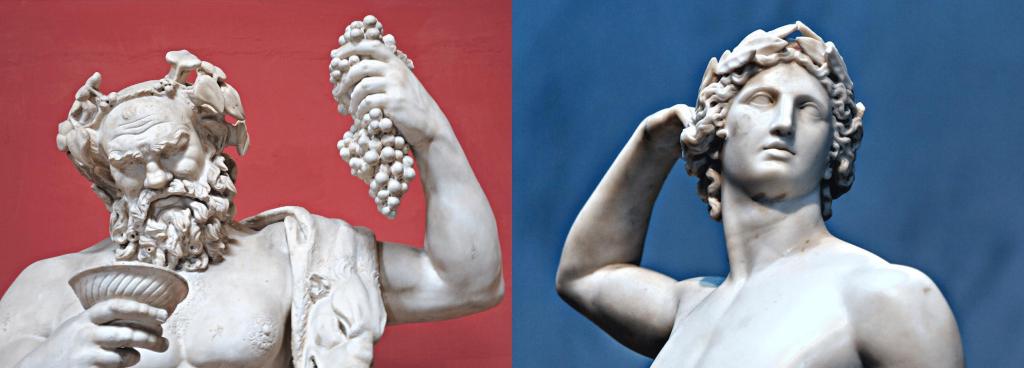
Apollo and Dionysus, “according to Nietzche, these two gods represented the two fundamentally opposed artistic drives: one (Apollo) towards order, rationality, clarity, the sort of beauty that comes with perfection, human control of nature, and the celebration of masks, representations or appearances” and the other (Dionysus) “intuition, the over-riding of all humanly contrived boundaries, a sense of oneness or wholeness, physical pleasure and pain, and the celebration of nature beyond human control, as she really is” (p. 199). McGilchrist claims these do not correspond exactly to the hemispheres, but I think it is a good representation of the tension between them and how the world we know is contrived from the push and pull of these fundamental differences.
If we think about our world today in which much of our experience is mediated by algorithms which are based on data and machine learning, it certainly seems like the left hemisphere and Apollo are winning the tug of war. New advances is artificial intelligence are making many tasks possible for computers to complete. A.I. released late in 2022 has the ability to write theologically coherent sermons, compose stylistically consistent poetry, and even write college homework papers extremely well. (Ezra Kline recently released a very helpful podcast episode on this.) In the therapy world, there is talk of and progress towards A.I. therapy in which a person is helped by a robot who talks back and administers treatment. On a more relatable level, in 2022, internet users were on pace to hit about 2.5 hours per day spend on social media according to Oberlo. When we’re scrolling, we are being served by machine learning as algorithms learn from what we ‘like’ and serve us what it thinks will be the most likely to keep us fixated or click on adds.
This is what McGilchrist terms the triumph of the left hemisphere. When this happens, the world is known and reality is built upon the precept of the left hemisphere – everything is according to this. “The existence of a system of though dependent on language automatically devalues whatever cannot be expressed in language; the process of reasoning discounts whatever cannot be reached by reasoning” (p. 229). What about the world according to image and screen (Instagram)? Surely it will discount anything which is not according to itself and those who adopt this view will seek to build the world according to it. “In our contemporary world, skills have been downgraded and subverted into algorithms: we are busy imitating machines” (p. 256).
There is a popular phrase which originated when people lost their jobs in coal mining and were coldly told by journalists “learn to code.” Essentially, we’ve built artificial machines to replace you – so you need to learn to build artificial machines if you want a job – it’s time to start imitating machines. This is the triumph of the left hemisphere.
Living with the Metaphor in Mind
Reading this book took me about a full year, but it has given me a new metaphor for understanding how we build and interact with the world as we know it. One of the fundamental insights is that the world as we perceive it does not exist apart from our perception. Our conception is always, in some way, an expression of who we are. Relationship and communication is never a one-way street. To encounter something means you change and it changes – we are not able to see things “objectively,” nor should be desire to.
“If what it is that exists comes into being for each one of us through its interaction with our brains and minds, the idea that we could have a knowledge of it that was not also an expression of ourselves, and dependent on what we brought to the relationship, is untenable” (McGhilchrist, p. 37)
I’m no neuroscientist, but even a rough understanding of the hallmarks of the right and left hemispheres has helped me to think differently about things I encounter. I’ve found it very helpful in identifying the values and desired outcomes of institutions (like churches), ways of relating to people (like methods of therapy), and businesses (like meat producers). For instance.
A church institution which is deeply concerned with counting the number of baptisms they are able to conduct or that views faithful living as a set of rules to follow and facts to live by or which builds services for production value and branding seems to me to be dominated by a left-hemisphere paradigm. A much easier to read book on this subject is The Other Half of Church: Christian Community, Brain Science, and Overcoming Spiritual Stagnation – Jim Wilder. In contrast, a church which values personal connection, sees people as whole lives rather than defined by isolated actions and checked boxes seems to me to have a healthier right-left balance.
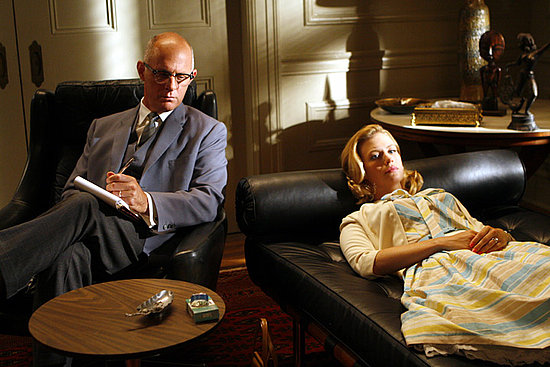
When psychotherapy originated, patients were asked to lie on a couch to be observed by a therapist who tried to objectively analyze them like a doctor with a scalpel. Later, Rogerian therapy was designed to place emphasis on personal connection and keep the counselor/client relationship at the forefront of therapy. Today, some therapists are using A.I. to treat clients without having to have any interpersonal connection, and this seems like a reversion to the left hemisphere dominance where therapy started.
Recently, I learned that the reason most of our grocery story meat is so cheap to buy is because the animals it comes from are treated as machines and basically no regard is given to their suffering so profits can be maintained. This is a gross domination of left hemisphere value, and it brings to mind the fact that psychopaths often have deficits in the right hemisphere which prohibit them from feeling any guilt, shame, or responsibility (p. 85). Meanwhile, I have friends who raise their own animals for meat and maintain a grounded connection to where their food comes from which seems much more sensible.
Right, Left, Right
It’s important to note that the left hemisphere is not bad. It is not something to be eliminated, or as McGilchrist says, we should not wish for everyone to experience a left brain stroke. The key is keeping the master in charge and the emissary under his direction. McGilchrist suggests the proper order is right – left – right. This is to say that primary experience of reality begins in the right hemisphere. From here, the left hemisphere is extremely useful in processing and reasoning from this experiential data. However, “it is essential that what the left hemisphere yields is returned to the realm of the right hemisphere where it can once again live” (p. 219).
He gives the example of a work of art or a body (perhaps in surgery) which is subjected to detached, analytic attention, we lose the sense of the thing itself, and its being in all its wholeness and otherness recedes. But the result of such attention, provided it is then relinquished, so that we stand in a state of openness and receptivity before the thing once again, may be a deeper and richer ‘presencing.’ The work of the left hemisphere done, the thing ‘returns’ to the right hemisphere positively enriched.” (p. 231).
The question I’m left with is what does it look like to make sure this sequence is allowed to operate properly. Extended metaphorically, could it mean that in church, the decision about the service is not left up to the production guys – they are there to serve the needs of the people who will be in the building? Could it mean that in companies which are data driven, like the one I work for, measures have to be put in place to make sure the data is used to serve values and not the other way around? How can we push back when the left hemisphere’s warriors (A.I./algorithms/machine learning) are hidden behind words like community and connection to disguise themselves? Ultimately, how do we keep the main thing the main thing? How do we keep the emissary from usurping the master and bringing the kingdom to tyranny and ruin?
This post is part 5 in a 7 part series of reflections as I turn 25 years old. I’m convinced that to be human is to struggle and to struggle with God. This series serves to honor the difficult questions. I don’t know if everyone has questions their mind continually turns over while they walk the dog, shower, drive to work, but these are mine. I’m hopeful that in 25 more years I’ll have more compelling, more faithful answers to them than I do now – or that I’ll have moved on to more interesting things altogether. Either way.
The algorithm is our god here in 2022, and God have mercy. A few days ago I was given an add for “Man Therapy.” At first I thought it was a real therapist account, and I was gobsmacked (see the video for yourself). After a bit of reading, it turns out it’s an add campaign put together by partners in the southwest to reach out to men. Southwestern men are apparently at high risk for suicide by firearm.
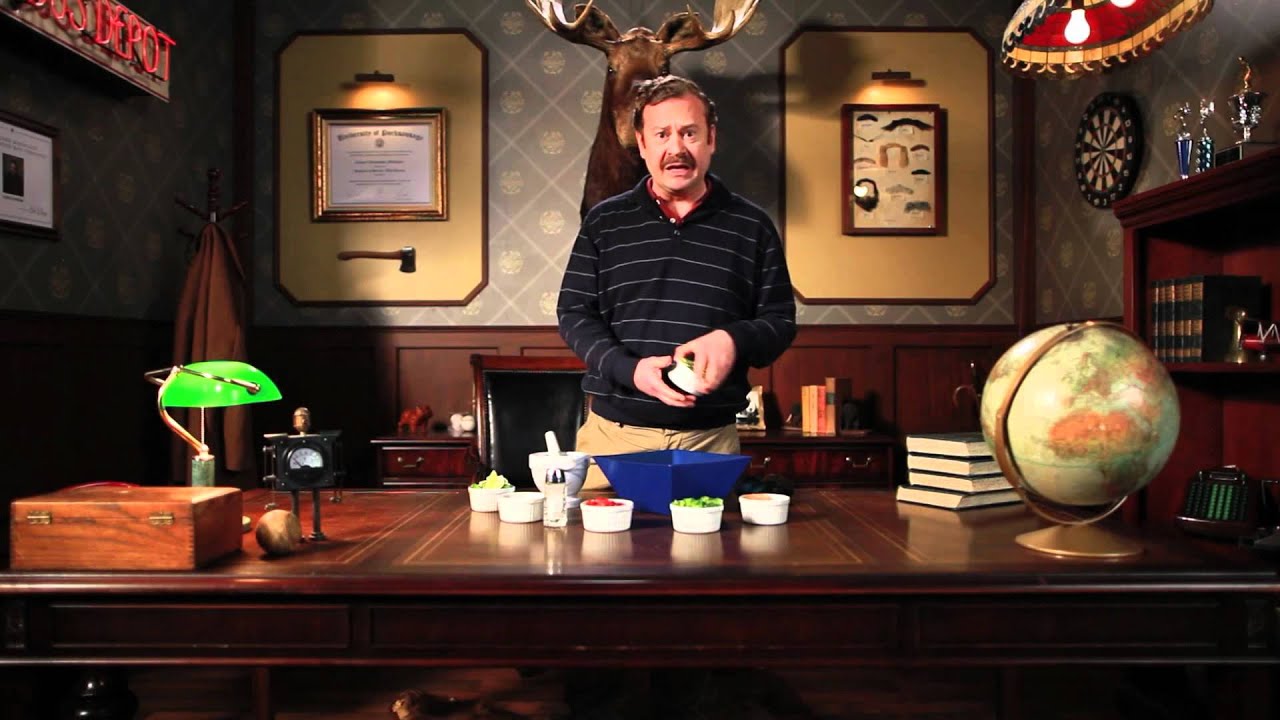
The ads star the character “Rich Mahogany,” a psychologist who spouts manly one liners about mental health from a chair beneath a taxidermied moose. He sports a mustache and relates everything about mental health to hunting, grilling, sports, beer, and other manly things.
The whole schtick is of course based on the reality that many men are unlikely to seek mental health services if these services don’t feel familiar or approachable. It’s a cliché that men aren’t good at talking about their feelings, but it’s cliché because it’s been true of many men for a very long time.
The point here is that it’s a broken frame, an unfortunate situation. The world where men are known as those incapable of talking about their feelings is not the version of the world we want to live in. A better story is one where men are capable and willing to communicate, and they do so without these ridiculous analogies. But in order to solve a problem, the problem that men can only be related to in a very stereotypical way, Man Therapy chooses to embrace this stereotyped vision of men and to try to help from inside the trope.
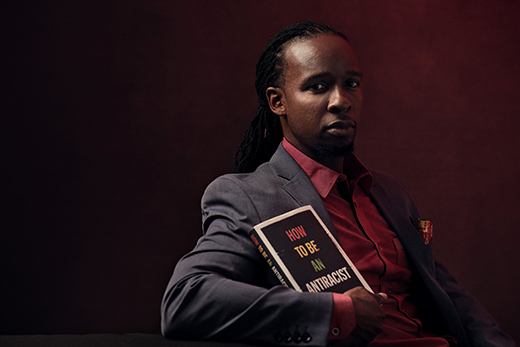
I make these observations because I think it’s an access point to the conversation around anti-racism and the ideology about how we understand the situation. Recently, I listened to Dr. Sheena Mason share about the theory of racelessness. This is the idea that race is totally a construct in ways that ethnicity, culture, and language are not. Dr. Mason critiques thinkers like Ibram X. Kendi who insist on an anti-racist movement which she claims really exacerbates the problems it tries to solve. Per Mason, according to Kendi, operating with race as central to identity is not ideal, but it’s what we have to do because of what has happened in the past. I take this point in some way. White folks set up a society in which skin color was everything – being black meant being a chattel slave, and being white meant being superior. That’s a reality which can’t just be undone with the snap of a finger.
And to be clear, I’ve not yet read Kendi. However, I’m fairly certain he’s a proponent of anti-racist training and a frame which highlights differences between races and juxtaposes these differences explicitly. This seems to me to blatantly center race, and this does not seem like the dream which Dr. King had at all. It seems Kendi and others hold that while this isn’t ideal, it’s necessary for now. It’s living inside the trope.
Here is the obvious parallel and the question: does Man Therapy and race-centered ideology for combatting racism put us in a better place? I want to ask this with caution – when I say we, it must be noted I’m a middle-class white person, so I lack the perspective many marginalized people bring to the table. For those who would answer “yes – that this does put us in a better place,” I think the question is how long must men be taken only to offices with taxidermy? When do they get de-stereotyped? Are wemoving toward that or are we reinforcing the trope? By centering race and the differences between races, are we only entrenching ourselves into a reality where people will never be judged by their actions by always by their race?
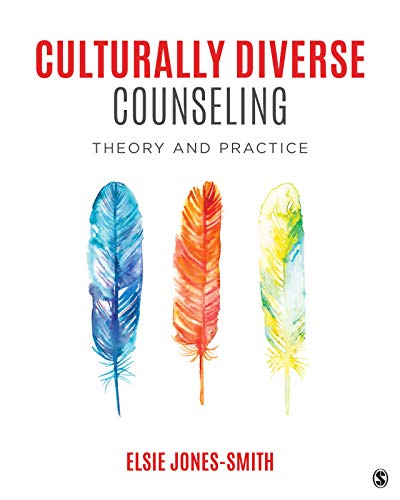
I’m not here to condemn Kendi or really even to disagree with him. I’m quite new to this conversation and haven’t read widely enough to know very much at all. I do find it interesting that the theory of racelessness seems to be growing. Currently, I’m taking a class on counseling culturally diverse populations, and the textbook we’re using holds to a theory of racelessness. I believe we must always be willing to adapt and offer what is called for by the time in which we find ourselves. And this is always tightly tied to the failed solutions and ideas of the time before us. I heard Iain McGilchrist say, “Today’s solutions are tomorrow’s problems.” We are living in a racialized world, and this is a problem our generation has inherited. This from Jones-Smith:
“Race is primarily a social construction created by the Western world…Skin color has been the primary biological marker to place people into “racial” groups…The early colonizers placed meaning into these physical markers…While colonists were creating the folk idea of race, naturalists in Europe were engaged in efforts to establish classifications of human groups in the 18th century. They had to rely on colonists’ descriptions of indigenous peoples for the most part, and their categories were replete with subjective comments about their appearances and behaviors. Ethnic chauvinism and a well-developed notion of the “savage” or “primitives” dictated that they classify native peoples as inferior forms of humans. Although there were earlier attempts to categorize all human groups, then known, Linnaeus and Blumenbach introduced classifications of the varieties of humankind that later became the established names for the races of the world. This notion, referred to by today’s scholars as racialized science, is based on an imprecise and distorted understanding of human differences and an agenda to empower White colonizers. (Jones-Smith, 2019)
Race is certainly different than ethnicity. Again from Jones-Smith: “Whereas the concept of race lacks a valid scientific basis, an ethnic group is based on two factors: genetic antecedents and cultural traditions. An ethnic group is a group of people who share a common history and culture, can be identified by similar physical features and values, and identify themselves as members of that group through social interactions. Further, a person becomes related to the ethnic group through emotional and symbolic ties. An ethnic group can be defined in terms of self-identification. From this viewpoint, an ethnic group may be described as a process of self and other ascription” (Jones-Smith, 2019). It is one thing hold to a theory of racelessness – it’s entirely another to say we’re all just the same and everyone needs to pull themselves up by their bootstraps or such idiocy as that.
I’m also not here in the slightest to say that racism is over or that it’s no longer a problem. Racism is a vice, and like greed and lust, it will always be around. It will adapt to whatever environment we create. Saying racism doesn’t exist because laws have been changed is like saying lust doesn’t exist because prostitution is illegal – it just doesn’t work like that at all. Racism, individually and systemically, is a serious problem, of that I have no doubt. What I’m not sure of is how to best frame the issue and work toward progress.
I’d like to see a day when Man Therapy and race-centered anti-racism and dialogues which lean into stereotypes aren’t needed. The question is whether they are currently moving us closer to that day or pushing it further off. And this question I must leave unanswered.
This post is part 4 in a 7 part series of reflections as I turn 25 years old. I’m convinced that to be human is to struggle and to struggle with God. This series serves to honor the difficult questions. I don’t know if everyone has questions their mind continually turns over while they walk the dog, shower, drive to work, but these are mine. I’m hopeful that in 25 more years I’ll have more compelling, more faithful answers to them than I do now – or that I’ll have moved on to more interesting things altogether. Either way.
The elements are the parts used in the Lord’s supper, the bread and wine. People argue about whether they’re symbolically or literally the body and blood of Christ. What does it mean to take them? What are they?
“Whoever eats my flesh and drinks my blood has eternal life, and I will raise them up at the last day. For my flesh is real food and my blood is real drink. Whoever eats my flesh and drinks my blood remains in me, and I in them. Just as the living Father sent me and I live because of the Father, so the one who feeds on me will live because of me. This is the bread that came down from heaven. Your ancestors ate manna and died, but whoever feeds on this bread will live forever.” He said this while teaching in the synagogue in Capernaum. On hearing it, many of his disciples said, “This is a hard teaching. Who can accept it?” (John 6)
The ending of this essay is a poem I started writing back in February. I’ve only just finished it. This essay is my way of exploring what the elements mean. It is an essay intertwined with a poem. It is a bit long, but I hope you might stay with it.
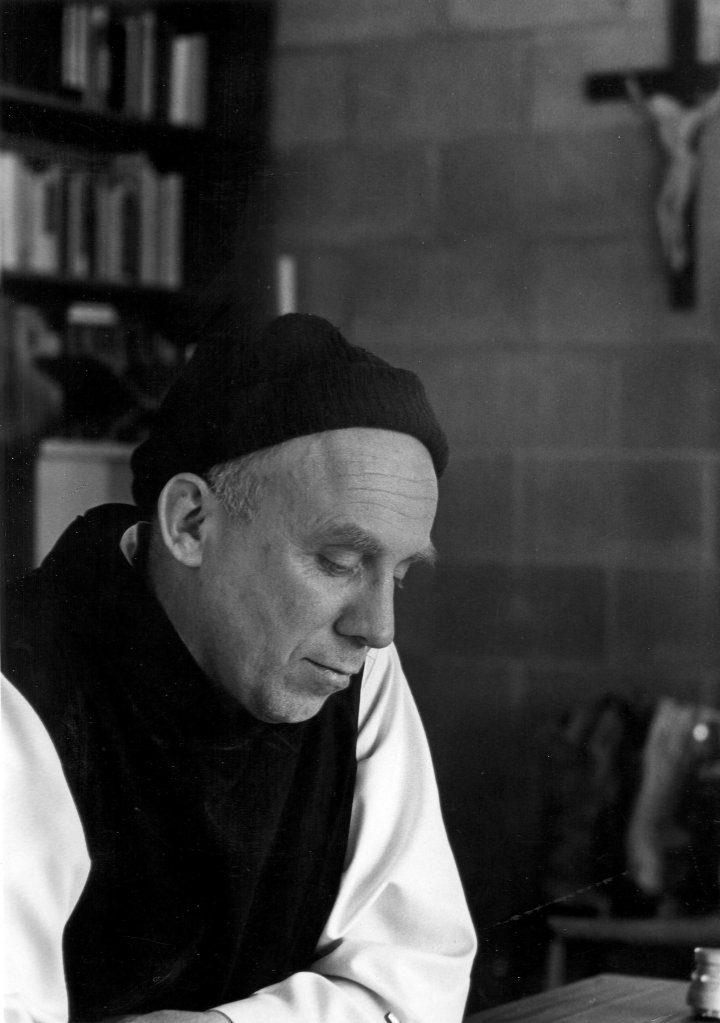
It is my own rule of thumb to smile and nod uneasily whenever anyone has a good grasp on what it means to be saved and on who is being saved and who isn’t. The shortest way to say what I will say below is what Thomas Merton has said.
That which is essential never imposes itself for love is always offered, it’s never imposed, and that which is unessential is constantly imposing itself.
I was born in the house of God,
Scraped my knees on the alter steps,
Cut my teeth on the bread and wine,
A child of the elements,
Jesus told us it is those who eat his flesh and drink his blood (take the elements) who have eternal life. If we believe our Father desires all to be saved, as he says he does, it seems to me he offers these sacraments, this flesh and blood, the place to believe and be changed, to all his children. He offers it to those born in the church, and those born outside – in what Marilynne Robinson (borrowing from Ezekiel) calls a “field of blood.” I think we’re are all born in a field of blood. There are a lot of fields of blood, and they look pretty different from each another.
And as for thy nativity, in the day thou wast born thy navel was not cut, neither wast thou washed in water to supple thee; thou wast not salted at all, nor swaddled at all. None eye pitied thee, to do any of these unto thee, to have compassion upon thee; but thou wast cast out in the open field, to the lothing of thy person, in the day that thou wast born. And when I passed by thee, and saw thee polluted in thine own blood, I said unto thee when thou wast in thy blood, Live; yea, I said unto thee when thou wast in thy blood, Live. (Ezekiel 16)
Some of us grew up going to church every Sunday. That doesn’t mean we’re not in a field of blood. What does it mean for us to recieve the elements – to take the bread and wine, the flesh and blood?This is a deep mystery. Thomas Merton once said, “The next time you receive the Eucharist, you should realize someone’s taking perfectly good care of you.” Well that’s not so hard to say for us who grew up in church and filed through a communion line every week, or at least a few times a year. What about those born outside?
—
You were born in a field of blood,
To bear the storm where the earth was bent,
Your mama drowned in a sea of pain,
A child of the elements,
When I was about 18, I read a book called “One Thousand Gifts” by Ann Voskamp. I really liked the challenge of listing out a thousand gifts, and I think I even made it to about three hundred and fifty. But I was deeply unsettled by some of the other things she said. Essentially, she claimed that all was gift. Whatever happened in life was a gift from God. She even told a story about a boy getting his fingers whacked off in a farming accident, and she searched for a way to see it as a gift from God. I found that a bit troubling, and I still do.
It seems she’s claiming that bad things are actually good things if we can be grateful for them. That seems a bit crude, a bit masochistic even, to me. Still there is the question: is God holding himself out to us in suffering? I’ve been listening to James Finely, a spiritual director who studied under Thomas Merton, and he says this.
As true as this is, and it is true, it is true, but it doesn’t mean when we’re suffering that we’re not really suffering. It doesn’t mean that the risks aren’t real. It doesn’t mean by human standards everybody makes it. As a matter of fact, many people don’t. And so, there’s the raw reality. See, there is a way we don’t transform trauma. There’s the brutality which trauma transforms us in really brutal ways. It’s like being burned alive, but it’s not just terrible, see? God writes straight with crooked lines. And out of the suffering deeply walked with patience, and courage, and the givens out of it, the miracle arises.
A few weeks ago, I was part of a small group playing a game where we were given cards which had prompts related to our faith on them. And a student was asked on his card if he believed in miracles, and he told us he was Catholic, so yes he did. He told us that he saw two miracles every week when he went to mass and took the Eucharist, when the blood and wine transformed into the literal body and blood of Christ.
And on his water bottle was the word “timshel.” I asked him about it, and he began explaining to me what the word meant. I replied that I knew what it meant, but I was curious why he had it. His preist, he said, had told him about the word and about the passage in Steinbeck. Remarkably, I reached down and pulled the very text, East of Eden, out of my bag. Timshel. I suppose it is timshel whether or not to choose to believe that very occurance was a miracle. Much like taking the eucharist I think.
The passage in Steinbeck is as follows: [‘Why is this word so important?‘ Lee’s hand shook as he filled the delicate cups. He drank his down in one gulp. ‘Don’t you see?’ He cried. ‘The American Standard translation orders men to triumph over sin, and you can call sin ignorance. The King James translation makes a promise in ‘Thou shalt,’ meaning that men will surely triumph over sin. But the Hebrew word, the word timshel – ‘thou mayest’ – that gives a choice. It might be the most important word in the world. That says the way is open. That throws it right back on a man. For if ‘thou mayest’ – it is also true that ‘Thou mayest not,’ Don’t you see?’…Now, there are many millions in their sects and churches who feel the order, ‘Do thou,’ and through their weight into obedience. And there are millions more who feel predestination in ‘Thou shalt.’ Nothing they may do can interfere with what will be. But ‘Thou mayest’! Why that makes a man great, that gives him stature with the gods, for in his weakness and his filth and his murder of his brother he has still the great choice. He can choose his course and fight it through and win.’ Lee’s voice was a chant of triumph.”] (Steinbeck, pg. 303).
And here is where I disagree with Ann Voskamp. The tradgedies which befall us, and the horrible sins we commit against each other, these are not gifts. Yet they do meld together with everything else to create our situation, and it is here we may choose to meet God. I think he is ever present, ever offering us the elements, if only we would receieve them and meet him at the table. What it means for me and for my neighbor to do so may look widly different.
When, long ago, a rather hard hearted people stumbled around in the desert turning their back on God, God gave them a miracle so they could receive the bread. It seems the Old Testament God always gets typed as the more stern God when we get down to it. And it seems to me that if God made it rain bread in the sand so a stiff-necked people whom he loved could receive the eucharist, there is little reason to suppose he cannot and would not and does not offer the bread to every other whom he loves. And does he not love us all?
“Which of you fathers, if your son asks for a fish, will give him a snake instead?Or if he asks for an egg, will give him a scorpion?If you then, though you are evil, know how to give good gifts to your children, how much more will your Father in heaven give the Holy Spirit to those who ask him!” (Luke 11)
The elements which he gives us – that we may recieve them and live – who is to say what they look like? Perhaps it is today and always timshel. Always, the bread is set before us. Always, we may choose to take it. Always, we may expect it. And never, never are we to know what form it may take – whether bread raining down into the sand, or unleaven bread baked and plated in tupperware, or plasticky wafers in small plastic cups, or the love of a stranger, or a cup of warm coffee, or a sunrise. Always. If only we would recieve it.
And these elements never impose themselves on us. Nor can we ever impose them on one another. When Christopher Columbus came to America and converted the natives to Christianity, killing most of them in his wake, that wasn’t God reaching out. That was a sinner imposing his religion. That which is essential never imposes itself.
—
Peace and wrath,
Storm and calm,
The field of blood,
The alter steps,
–
All of these,
The elements,
We shall take,
And resurrect,
Would you like to know what I find very odd? It is that at the same time we believe God loves all people, desires all to be saved, and yet we still believe folks have to follow our formula to receive eternal life. It really makes God into a rather stern old fellow who must only be bent on saving the folks like me; folks who take their body via wafer and blood via Welch’s.
We so often fall into believing that to be saved means to ask Jesus to come into your heart. And to do this, you naturally need to be in church and hear a plan of salvation and repeat a sinner’s prayer. And, if possible, it would be really good if you walked down an aisle and then wrote the date down in the front of a KJV Bible. But has it ever occured to us this isn’t really possible for most people who have ever lived on earth? For some, this compels them and their Christian brethren to get on with it! Start getting red carpet aisles built in China, and translate our sinner’s prayer into Hindu, teach every tribe and tongue how to do VBS!
Once I heard these very well meaning folks present at church about how they’d been courageously taking Christianity into an Asian country and come upon a city with a lot of Buddhist temples. After some prayer, they left the city. When returning later on, they were amazed that an earthquake, or something, had taken out much of the city and destroyed many of the temples. This they thought was a powerful act of God decimating the Buddists due to their Christian presence there! It’s a bit like that terrible children’s song: I’ve got the belief that will baffle the best of the Buddists down in the depths of my heart. I think there is a really strong possibility that isn’t what God is up to.
I wonder what if we actually believed the elements were already offered to all God’s children? That maybe they too were able to meet him outside the context of padded benches and ugly carpet. Could it be that Jesus loves the children of this country and all the other countries enough that he actually made a way they could reach out and find eternal life?
These to us are all familiar,
Tastes of life, the taste of death,
Not our first time, nor the last,
Children of the elements,
I was practically born in church. My first memory of communion is driving home from church with my grandparents and snacking on the leftover unleavened bread in a tupperware container. I remember being about 4 years old and giving powerful sermons from the pulpit to an imaginary congregation while my mom cleaned the church. It makes me shudder to think God loves me so much more than most of the other kids in the world that he put me in a church and put them in places where they don’t know they’re supposed to make unleavened bread and drink it with Welch’s.
I don’t exactly know what the elements mean. Does it become Christ’s blood and body in my mouth – is it just a symbol done in remembrance? Does it need to be plasticy wafers and juice? What about the kids whose parents make them live on their own? If we’re all born in a field of blood, and it’s up to the Lord to rescue us out, how come he only chooses the kids with churches in their neighborhoods? Or maybe that isn’t really what it means to be saved at all. Maybe we’re all children of the elements, maybe we meet Jesus in mysterious ways. He certainly didn’t come to us as anyone expected the first time – I don’t know why he would now.
“Elements”
This whole world is always changed,
Every time we draw a breath,
Coming up and out of dust,
We’re children of the elements,
–
I was born in the house of God,
Scraped my knees on the alter steps,
Cut my teeth on the bread and wine,
A child of the elements,
–
You were born in a field of blood,
To bear the storm where the earth was bent,
Your mama drowned in a sea of pain,
A child of the elements,
–
Peace and wrath,
Storm and calm,
The field of blood,
The alter steps,
–
All of these,
The elements,
We shall take,
And resurrect,
–
These to us are all familiar,
Tastes of life, the taste of death,
Not our first time, nor the last,
Children of the elements,
—
References:
East of Eden – John Steinbeck. 1952.
Lila – Marilynne Robinson. 2014.
Turning to the Mystics (Podcast) – James Finley. 2020.
This post is part 3 in a 7 part series of reflections as I turn 25 years old. I’m convinced that to be human is to struggle and to struggle with God. This series serves to honor the difficult questions. I don’t know if everyone has questions their mind continually turns over while they walk the dog, shower, drive to work, but these are mine. I’m hopeful that in 25 more years I’ll have more compelling, more faithful answers to them than I do now – or that I’ll have moved on to more interesting things altogether. Either way.
I’m convinced most of the great debates, which we first passionately take part in and then gradually learn to appreciate as expressions of different aspects of reality, are simply that – expressions of the complex nature of the cosmos. They also evidence our various ways of perception so that we can believe the Calvinist and the Armenian when we see the fire in their eyes and the earmarked pages in their Bibles. So it could be this question is of the same nature; if so, I just haven’t realized it yet.
Which is the start and which is the goal – which is the gateway to the other – which is primary? Theology or psychology? In graduate counselling classes, theological explanations are seen as second rate. They are viewed as moral arguments which may only point to psychological realities. Psychology is primary, though some try to access it by theology.
And in books such as The Cure which we’re reading as a group at Aim Right, “sin” is viewed as the primary explanation for unhealth. Things like attachment theory or even therapy are means of accessing and dealing with sin and its effects. This is to say that theology is primary, and psychology is an access point.
Perhaps psychology and theology aren’t the best terms here. But the questions seems to be rooted in how we relate and understand ourselves in context. Are we working to be reconciled to the divine or are we working to be made psychologically whole? Obviously, or perhaps not always obviously, but seemingly, the result is pretty similar (though the theologian may resist here). It is my view that what is called “God” very often an idol, something rather constructed, a “god.” In this case, I think psychology is accessed through religion, trite religion.
When “God” is understood differently, as in “the Tao which is the true Tao cannot be named,” I think theology is correctly and ultimately , primary. Psychology is a subset, a throughway, to theology, queen of the sciences. But I’m afraid this is a far cry from anything very much resembling Evangelicalism. This religion is, for most of human history, inaccessible to most of the world’s people. This is never true of a psychological understanding. I.E. if there are people, on islands or deep in Asia or whatever, who are said to be psychologically well but theologically damned, I don’t think this is a theology adequate to be primary.
This presents a bit of a quandary to ever affirming anyone’s viewpoint it seems. So many are certain that God damns those who don’t pray the prayer, walk the aisle, etc. In this case, I think their religion only points to something more ultimate – something like a psychological accounting. Even I don’t really know what I mean by “primary.” I don’t thing that’s the best way of putting it. Jung comes closest to what I sent sense here in my reading so far.
He tells the story of speaking to a primitive mountain tribe, the Elgonyi, whom he asks about their religious customs. They do not consider it a religious act, but they tell him of their tradition of every morning upon leaving their huts at sunrise they “spit on their hands, and hold them up to the sun” (Modern Man in Search of a Soul, pg. 150). Jung goes on to comment on the meaning of this ceremony:
“Clearly it is an offering to the sun which for these natives in mungu – that is mana, or divine – only at the moment of rising. If they have spittle on their hands, this is the substance which, according to primitive belief, contains the personal mana, the force that cures, conjures and sustains life. If they breathe upon their hands, breath is wind and spirit – it is roho, in Arabic ruch, in Hebrew ruach, and in Greek pneuma. The wordless, acted prayer, which could equally well be spoken: “Lord, into thy hands I commend my spirit.” Does this merely happen so, or was this though already incubated and purposed before man existed? I must leave this question unanswered” (Ibid, pg. 151).
Jung admits he doesn’t know which is primary. Earlier in the same chapter, he comments on baptism:
“Baptism endows the human being with a unique soul. I do not mean of course, the baptismal rite in itself as a magical act that is effective at one performance. I mean that the idea of baptism lifts a man out of his archaic identification with the world and changes him into a being who stands above it. The fact that mankind has risen to the level of this idea is baptism in the deepest sense, for it means the birth of spiritual man who transcends nature” (Ibid, pg. 145).
Jung poses the question, which I believe is something similar to what I’m trying to get at, this way:
“The question is nothing less than this: does the psychic in general – that is, the spirit, or the unconscious – arise in us; or is the psyche, in the early stages of consciousness actually outside us in the form of arbitrary powers with intentions of their own, and does it gradually take its place within us in the course of the psychic development” (Ibid, pg. 147-148).
Are we best aided in our troubles by the pastor or the therapist? It depends who you are of course. My sense is that whichever you are the most inclined to seek out, you may be better served by the other. Those who grew up in church, couples who’ve only ever heard sermons on marriage might ought to see a therapist. And those who’ve gone religiously to counselling an its books may be hungry for a spiritual food which a pastor could provide. Writing in 1933, Jung thought, “It is indeed high time for the clergyman and the psychotherapist to join forces to meet this great spiritual task” (Ibid, pg. 229).
Theology and psychology are each wonderful avenues into the greatest questions. I cannot yet, and perhaps never will, tell which one subsumes the other – whether “sin” is another way of getting at un-wholeness/imbalance/separation in the psyche, or whether these malfunctions or broken patters of behavior are something signalling a disunion with the divine (God).
Other ways of getting at the question might be in terms of prayer/meditation: do you pray because you believe communicating/communing with the divine reorders your being and your psyche – or do you pray because you believe that saying phrases falls on the ears of deity, and God acts as a result of your words?
Did Christ come so that humankind could learn a way of living which was peace with each other and in his teachings find a way of reordering ourselves and acting out our lives; or because a blood sacrifice was necessary to appease/propitiate the wrath of the deity so humankind could live in bliss for eternity and at peace on earth?
Is cocaine addiction the devil, or is the devil cocaine addiction. Is using cocaine (drugs, pornography, etc) falling victim to the predation of an active, real devil character – to be bludgeoned by the tools of darkness. Or is cocaine addiction a manifestation of evil which is just anthropomorphised?
It doesn’t ever seem to be only of the two. It must be both. Still I am not satisfied I understand. Kierkegaard seems to think it is the spirit which reconciles, or unifies, the psyche and the physical. So maybe it’s better this way. Rather than asking whether theology or psychology is primary, we could say the spiritual reconciles the psyche and the physical, it is something of a bridge. According to Kierkegaard, the human being is the synthesis of psyche and matter unified by spirit (The Concept of Anxiety). So it seems humanity is where these realities touch together.
I am certain I will someday have much more to say on these topics. But for today, I have many questions.
This post is part 2 in a 7 part series of reflections as I turn 25 years old. I’m convinced that to be human is to struggle and to struggle with God. This series serves to honor the difficult questions. I don’t know if everyone has questions their mind continually turns over while they walk the dog, shower, drive to work, but these are mine. I’m hopeful that in 25 more years I’ll have more compelling, more faithful answers to them than I do now – or that I’ll have moved on to more interesting things altogether. Either way.
Intro
In a recent counseling course, we surveyed the approaches to therapy, from Frued to Jung to Yalom and so on. There have been thousands of studies published trying to figure out the best ways to do therapy. Do we try to alter behavior, do we analyse subconscious thoughts, do we try to change thought patterns, etc?
The conclusions are a bit of a somber tale: no theory or method is a clear winner at all. Healing seems to have less to do with what is being done in therapy and more to do with the fact that therapy is happening. I’ve come to think of church in similar terms. Thomas Merton had this to say about the necessity of communing together.
“The Desert Fathers who ran spiritually amok in the third and fourth centuries did not fail in asceticism. Their fasts and their penances were almost incredible…Where, then, did they fail? In humility and charity. This failure was expressed in a contempt for mankind in general, for the other hermits, a contempt for the common prayer life of the Church and a conviction that they could do without Mass and the Sacraments.” – Thomas Merton (Bread in the Wilderness)
The Good
I grew up in a conservative (ish) Mennonite tradition, and that’s where I first learned theology and a lot of other things.There is so much to celebrate about the tradition I grew up in. I experienced transcendance there; I communed with the holy. Growing up, the moments when I felt closest to God, the times things really fell into place for a moment of clarity – many of those instances where in church.
There was a really strong focus on sharing our lives with each other. There were monthly meals which our congregation ate together. All the time folks were making announcements about someone needing practical help (a roof, a fundraiser, a baby, a music night) and people flocking to pitch in. There was a deep sense of being a collective whole that seemed so natural. It’s really only when I was away I realized how unique it was. Growing up there, it seemed like the best way to live. Why wouldn’t everyone pitch in for a monthly meal?
In that tradition, we also did everything we possible could in house. Everything from running sound equiptment to leading worship to building maintencance to actually preaching was done by people in the congregation. No one was every brought in from the outside to perform an important church function. This meant that for me it was really easy to be involved. I wanted to help with music, so I allowed to help play worship and trained on the soundboard. And like we all do, I thought we had things pretty ironed out.
photo taken from TFC bulletin board
The Rest
I remember driving to church one Sunday and feeling a deep and uneasy pity for man mowing his yard – a heathen working on the Sabbath. Whether that was my own idea or what was being preached isn’t really the point. This man fell outside the lines of our tradition, and it was clear to me he was wrong.
I think there’s a tendency to grow up thinking our parents and our pastor and our friends have it nailed down. Our people get it. And then you grow up and start to realize there are lots of other folks holding the same Bible in their hands, singing songs to the same God, and it’s looking a whole lot different. This seems to be going on at a much accelerated pace in the last years. Millenials and Gen Z seem to be deconstructing from the traditions we were raised in.
I’m convinced much of this is a good thing. And it’s not happening because we’re particularly brilliant or care more about God; no, I think it has a lot more to do with having exposure to other Christians and ideas through digital technology.
It’s almost funny to listen to us talk about church. So many of us say the same thing – well we’re going to a non-denominational church now. I sense a real break away from tradition, a need to get out from under what we’ve perceived to be wrong with church. I say we because I feel this so deeply. When I reflect on some of the things that passed for normal in church growing up, I almost wonder if memory is failing. But there is also a sort of unmooring that accompanies attending a church without a denominational background or long faith tradition, and this is where a lot of my generation find ourselves.
I have absolutely no qualms with the term deconstruction. There is so much ugliness which has been blended into American Evangelical Christianity – unbuilding is absolutely necessary. If you want to remodel your house, the walls with rot have got to come down. And this isn’t a new idea. Folks, like Rich Mullins, were saying these things in before 2000. The question is – where do we go from here? Once we’ve found the rot, what comes next?
A few months back I found myself in a church service where I just cringed for about an hour straight. I was there somewhat against my will, and what I heard was brutally distasteful and downright unchristian in the truest sense. Hearing God’s name plastered on blatantly false teaching made me physically sick to my stomach.
And then I looked over to my right and saw this young man having a deeply meaningful experience. I opened my eyes during the alter call, and there he was raising his hand in a sincere act of faith to recieve salvation. I was torn – clearly this service was garbage, and also clearly this other person had experienced something transcendent and apparently communed with God. Could both things be true at the same time? Can different people see the same thing and have very different experiences. It seems so.
I’ve had many conversations with friends, and I suppose I’ll have many more, about how to know if you should leave a church. There comes a time when you are uncomfortable because things are going wrong – whether that’s teaching or abuse of power or whatever. But I also know it to be true that the people who started the non-denominational churches all came from somewhere. I think “non-denominational” is attractive to many folks like me because it holds the promise of being free from the baggage we’re trying to get away from. But anytime you have people, those people came from somewhere, and doing something more than once births a tradition anyway.
Brian Zahnd recently Tweeted, “Without transcendence religion is just politics.” And I’ve been thinking about that ever since I read it.
How do we get out of “just politics?” A later post in this series aims to dig deeper here. But it’s clear to me there isn’t one way or one tradition. I’m also convinced that traditions, in their differences, are able to offer richness which is unique to them. Carl Jung thought the pysche operated based on balance and equilibrium. When one part was deficient, it’s opposite was stronger. If one part was shifted, it’s opposite was shifted to compensate. This strikes me as correct about church traditions.
There are ways in which the Catholic church, with its liturgical focus and proper vibe, is unable to provide the same fellowshipo as the Mennonite church I grew up in. And my Mennonite church, with its insistance on doing everything in house, created a culture where formal theological education was viewed with suspicion. The Southern Bapists have an incredible emphasis on spreading the gospel to other countries, and God help them, their denomination does some terrible things to native peoples in the name of Jesus. Just as there cannot be one “right” person on any subject or any one “perfect” player in any sport, there can’t be one right church tradition. Our strengths are also our weaknesses in some sense.
The way forward is, to me, not clear. But I am certain in involves giving up our obsession with positivism – this is the obessession with grasping the objective truth. Thinking there must be one right answer, that only one way can be right, is what led many of those before us to think their tradition had it figured out and everyone else was stupid. We must go beyond that. Quite frankly, it means we stop using the Bible as a textbook of answers about things it wasn’t written to answer.The positivist temptation is certainty.
We must become aware of the values and dispositions of our own tradition, as well as the flaws, without just becoming disembodied, amorphous blobs. We have to belong to somewhere. But this should lead to an openness, a willingness to celebrate other traditions, a desire to integrate more fully. This would make many shudder who are adamant our goal is to remain as separate as possible.
Many of my generation and the ones after me are trying to figure out what it means to move faithfully out of dogmatism. Where do we go from here? I don’t think there is a clear answer, and I have so much to learn. I’m confident there is a whole lot that is good about where I came from. For me, there was enough reason to leave and look elsewhere for a church home.
I think that in church, like in counseling, most any “theory” can work, but not everything works for everyone, and not every place is conducive to healthy living. It has more to do with finding a place and a people where you can recieve the love of others and the love of Jesus and give it out too. And I for one and still figuring out what that means.