I recently published an article titled “Orange Man and the Juice.” Some of you may have read it here or maybe got an email in your inbox and read it there. Or maybe I decided to take it down before you even seen it.
A thoughtful reader reached out to me a few hours after I posted it, and they had a lot to say. Through a conversation, they made it clear that what I wrote seemed “backhanded” and condescending. They did not feel that I was being fair or charitable in what I had written. They said I was attacking and stirring dissention and hate. I appreciated the feedback, hard as it was to hear.
It’s probably fair to assume others read it and felt similarly. This is not what I had hoped for, and I’m disappointed that I caused this to happen. I am sorry I was uncharitable, and I regret that failed to achieve my intended purpose for writing it. I want to be someone who is willing to not only think out loud but to do so in a way that is respectful and invites the reader in. It seems like what I wrote felt disrespectful and pushed the reader away. I am sorry for that.
I have some big concerns around the church and church folks locking arms with Trump. I feel confused why there aren’t local voices speaking out – the silence is deafening. So I am not aiming to make those who have hidden Trump in their hearts feel warm and fuzzy – I am aiming for some conviction where there is political idolatry. It doesn’t seem like I achieved that though. It seems like my work in that post didn’t serve anyone (or very few), and it didn’t convey what I hoped it would. So again, if you read it and felt I was being insulting or condescending, please hear me say I apologize.
I’m fascinated by black light. When you turn off the everyday overhead light sources and turn on an ultraviolet, you see things you had know idea were there.
In my senior year of college, I was recording a weekly podcast with my best friend. I was taking a theology class called Critical Issues, and it covered three debated topics: the historical Adam, women in ministry, and homosexuality in the church. Since our podcast content was basically whatever we were paying attention to that week, we began discussing homosexuality in the church, and I began writing about it as we went. Our listenership was rather small. Occasionally, we’d boost engagement with a giveaway or a friend would comment they’d found an episode interesting. When we began discussing issues of sexuality, that changed rather quickly. People listened, many with deep concern.
The memory I have is this: I’m standing in my basement apartment and sending my parents a text before going to church on Sunday morning. I’m telling them that despite the horrific blowback we were getting – being called a heretic and a threat to the church, being sat down at a diner and begged to steer away from this issue – I was basically a good kid. Maybe a bit of a disgrace to them among the church folk, but still a Christian, still trying my best out here. Looking back, it’s a bit perplexing: the conversations we were having on the podcast were simply working to explain different views – we hadn’t even taken a position. It was still too much apparently. The span of those four episodes were one of the most anxiety ridden times of my life to that point. People got really worked up. I got really scared. I remember phoning a friend in Phoenix and telling him how disheartening it all was.
Memory number two: I’m sitting on a plane which will soon be in the air to Ohio. It’s January 2021, about a week after Trump lost the election and his supporters broke into the capitol in D.C. I have spent many hours over the course of several days working on a piece called “Three Lies We Believed” which outlines some ways Evangelicals had been deceived by Donald Trump. Fairly cognizant that this piece would generate some backlash but confident it was important to write anyway, I hit “publish” and vow not to check Facebook or anything else until our trip is over.
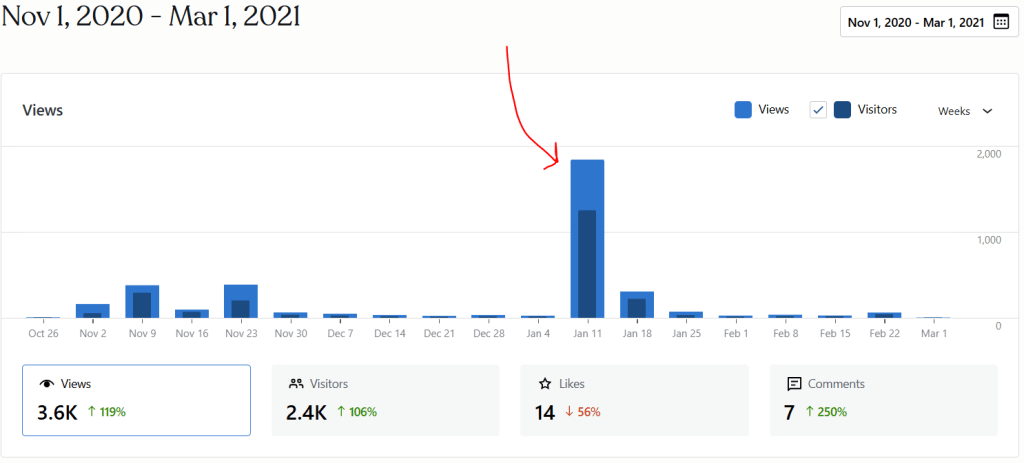
Like our podcast episodes, my writing generally floats into the void without much fanfare. A typical piece such as this one will be clicked on between 20 and 200 times. On our layover during the return trip I check in – readership is looking quite different. Within a few days, it’s been viewed over 1,200 times (more than 1,800 now). Strangers reach out to me. I’m lambasted by Facebook warriors from my church and local community coming to defend Trump as well as encouraged by others who appreciated the piece. Fearing the backlash, a friend who helped me write the piece chooses to keep their name off it.
Black Light
My current work is counseling. A prevalent fear for those of us who are beginning as therapists is what if I say the wrong thing in a session? What if I miss something really important? To this, seasoned therapists reply, don’t worry about it – if it’s really important, it will come back up with the client soon enough.
I’ve been writing on this site about many different things in the form of 196 posts for more than 8 years. For me, this has functioned as a sort of black light which I’ve shined over topics as varied as communication, theology, politics, gender and sexuality, addiction, the death penalty, therapy, brain science, the church, giving to the poor, work, and more. And this “black light” has revealed a certain invisible energy living inside of some of these things, an energy that keeps coming up. The hottest issues are sexuality and politics. But that’s no great revelation – a Thanksgiving get-together could have told you that! But why? Why would someone take the time to sit me down and beg me to stop writing and talking about sexuality and politics? Why would more than a thousand people read something I wrote about Trump?
I contend that both issues, sexuality/gender and politics, are largely about identity. If identity is at the core of these issues, then it makes sense why people get so fierce so fast when they come up. You’re not just talking about Biden or Trump or Kamala – you’re not just talking about being gay or straight or bi. No. You’re tapping into some of the deepest, most sensitive parts of those listening. You’re probing around in emotionally charged issues and likely triggering a lot of energy around wounds and confusion carried from the past.
In Evangelical spaces, the boundary line drawn to determine who is “in” and who is “outside” is usually extremely important. When churches split, sometimes over seemingly ridiculous disagreements, they’re working out what it means to be “in” – who will we accept and defend as our own, and who is “other.” The power of this is in the benefits and protection you get from being “in,” and there’s a certain purity necessary to achieve this. I think this is confusing for folks who’ve never been inside these circles. They say things like why do you have to hate gay people so much – can’t you just accept their existence even though you disagree? For so many, to do that would violate the purity of the group. It would alter the identity and shake them to their core. So it’s much better to never even have a serious conversation about the issues. This was well summarized by a member of a small group I attended who said with a smile: if they don’t like how we do things, they can just head on down the road.
Who Is God?
When we did the podcast episodes, we explored some of the various ways of reading key biblical texts on homosexuality. Turns out there are several ways of reading them. But to acknowledge that (that each passage can be read to mean different things) is a terrifying reality for many. There is a deep comfort in the concrete certainty that the way your denomination/group reads the Bible is the singularly correct way. I think it must be really scary for those convinced of this to consider there are actually many way to read most passages, and that scripture isn’t crystal clear, nor was it meant to be.
If you entertain the idea that there may be different ways to read a passage of scripture, you open yourself to a version of reality in which God might have to be ok with folks coming to different conclusions in good faith. If you are 100% convinced God is in the business of damning to hell those who don’t read the Bible the way you do, then it becomes pretty confounding when you hear about four, count them four, ways of reading a single passage. I mean shoot, how could you even be sure you’re not the one being damned to hell? The odds are now more like 25%.
And ultimately, what you may be forced to consider is a God who isn’t quite as hell-bent on damning. I think for a whole lot of folks, there is a certain comfort taken in knowing that those outside the camp will burn for eternity, punished in all the ways imaginable. If you are used to a church and society which is governed by clear rules to keep the right people in and the wrong people out, it’s very disorienting to consider a supreme being who doesn’t operate the same way. And maybe if you are “pastored” (or parented) in this punitive way, where you do what I say or you get disciplined, it will be very hard to imagine that God could be different.
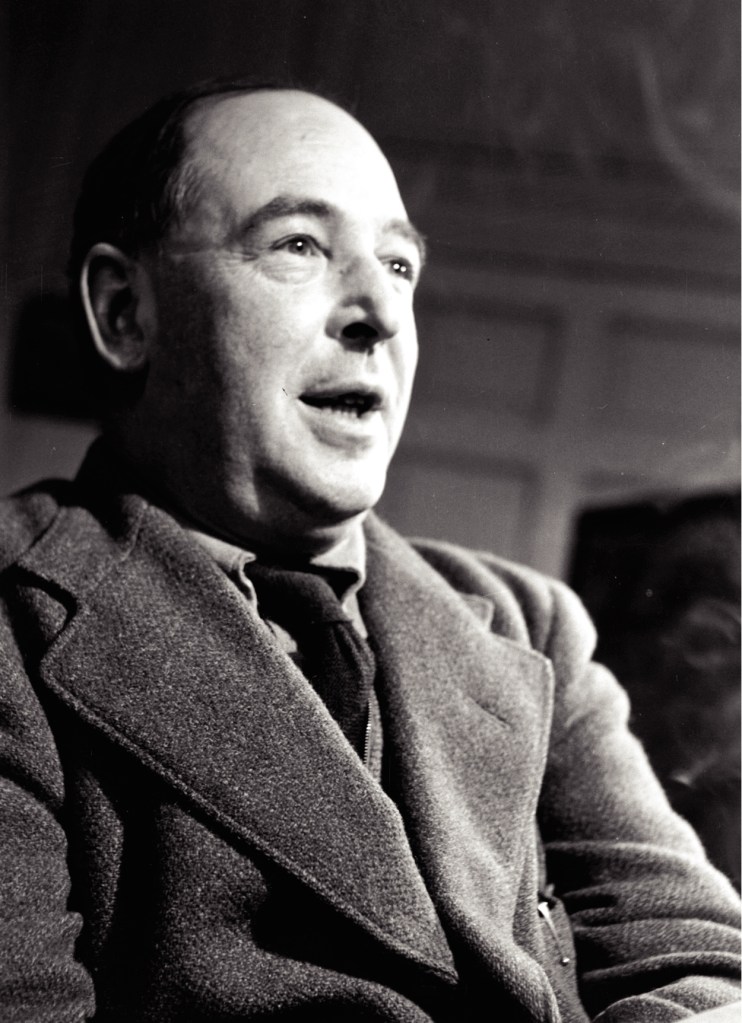
“My idea of God is not a divine idea. It has to be shattered time after time. And God will do the shattering.” – C.S. Lewis
Underneath
I don’t suppose that most people who are clickety-clacking on their Facebook keyboards or boiling in silent rage at Thanksgiving are very conscious of the above mentioned dynamics. They probably are not saying to themselves well, if I begin to consider this perspective, my view of my own identity and concept of God may become fuzzier. No. But this probably is what’s happening unconsciously. There is a realization, at some level, that this is freaking dangerous – and I if were to accept any part of this, it would shake me to the core. I would no longer be able to make sense of the world in the same way. My categories for who is “us” and who is “them” wouldn’t work anymore. And possibly, I would no longer be “in.” And maybe even God would hate me.
So I want to try to keep this all in mind when I’m talking or writing about such topics as sexuality and politics. I am in fact asking people to confront with me the fundamental pieces of their identity. And I’m possibly even asking them to re-evaluate their concept of God. These are not easy things to do – though I believe they are some of the most crucial, worthwhile and God-loving things we may take part in.
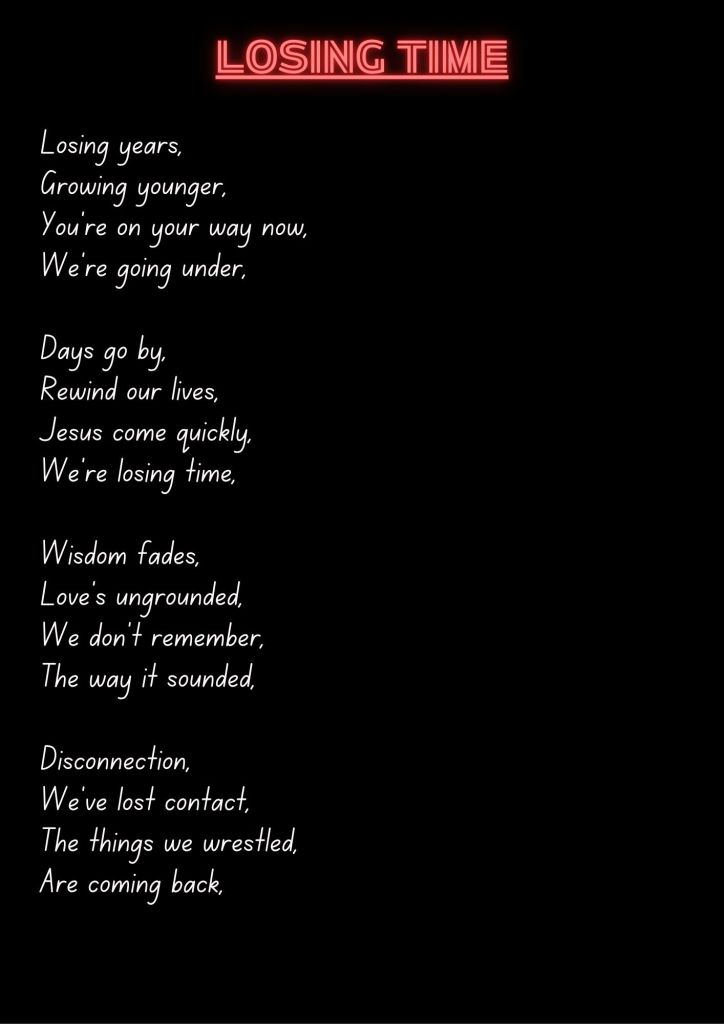
One morning in September, I found myself sitting in a swivel chair on the fourth floor with about twenty people. A mandatory training given by our newly appointed “leader.” From my seat, I could see the ground outside where people walked who were not trapped inside that cacophony of jabbering, belittling nonsense. I wanted to be anywhere else, hear anything else. I spent most of that meeting writing this poem – then the next few months figuring out how to leave, which I am next week. It was a moment of resolve.
I wanted to write a post tonight, and my thoughts are a little scattered. So I will, and it will be about what’s happening in my life, some reflection on books I’m reading, and a few photos.
What is happening
There are only snapshots of my life where I have not been in school. A few years in the beginning, mostly before I have any memories. Then a couple years after high school. And then the year we moved to Phoenix. The last two and half years have been towards a master’s in counseling. So the fact that I have finished all 18 of the courses feels like a really big accomplishment! I still have a ten month internship to do, but it feels like I am finally getting to work on what I’ve been studying for so long. I have joined the staff of Phoenix Counseling Collective and will begin seeing clients as a therapist in the next few weeks. I am so excited!
My GCU cohortbuilding 18 where we studied together each Monday nightlast day of classThe Phoenix Counseling Collective531 E Lynwood St, Phoenix, AZ 85004623.295.9448
Ava Li
Avi Li turned one this month, and we had a very sweet celebration for her. Mom and Dad flew out from SC, and a lot of our good friends came as well. Being a dad to her and a parent with Aleisha is so fun, and hard, and fun. Ava loves to read her books, she loves all animals, she loves to watch for birds, run through the sprinkler, tease Ted (our dog), throw things in the trash, and try any drink she sees. She has four teeth trying to gouge their way through and hair that’s falling into her dark eyes. She is absolutely the cutest little girl I have ever seen.
Aleisha is still working two part time jobs. I am inspired and kind of shocked watching her teach Ava how to be a little person. She includes Ava in almost everything she does. Weekly, Ava learns some new thing that Aleisha taught her. The latest is how to close her eyes, which she will only do for three quarters of a second because she always wants to see what’s going on. I did teach her how to say “ahhhhhhh” after taking a drink – which is pretty cool too.
Friends and Greenhouse
We’ve lived in Phoenix now for about three and half years. One of the best parts of it has been making friends. We have a group of friends that feels a little like the show “Friends.” Last night, they were at our place for a birthday party – in the morning, we went to watch college football at the Peach’s, saw Abbi working her booth at the farmer’s market, and then ate dinner at the Garasha’s because our power went out. We have also started hosting Greenhouse again how that school is back in session – this is the coffee shop in our home. This is a great way for us to meet new people who like to just hang out talk about their life.
Someone asked me recently if we are able to use Greenhouse as a vehicle for getting to spiritual conversations – as an avenue to get to talk about God things. I’ve thought about that for a while, and I think, joyfully, the answer is no. For much of my life, I’ve heard that the fun stuff is just a sort of funnel to get people in so that you can artfully lay “the gospel” on them. I don’t see this as a vehicle or a segue to something spiritual and sacred – it is in fact that thing. This is a table. This is a cup of cold water (and milk and syrup and espresso). This is to taste, to see, to touch. It is a communion. It is a liturgy. Certainly not everyone who comes sees it that way, and they are just as extremely welcome as anyone else. To me that’s really fun – I’m so grateful to get to be a part of this.
Barista!Greenhouse folksthe guys, discussing how much we love our corporate jobs…or something
Jung is very interesting, insightful, odd, and spiritual. I found it strange to read of his intense inner reflection, which seemed to consume most of his time, of his building a castle for himself, of his romping around Africa and India for months on end, etc. And all this while he had a wife and several children. A quick internet search one night confirmed my inclination; he was a terrible father and maybe an even worse husband. It seems he very much neglected the emotional lives of his family while hyperfixating on the abstract and fantastical nature of his own. Certainly he discovered some wonderful insights, but his key motif of integration seems totally missing in perhaps the most obvious and fundamental arena of his life – his own family! So I now have a much less romanticized view of him.
It does seem to me after having read a couple books on Freud that Jung is the patriarch of the therapeutic tradition(s) which I’m the most interested in. He took seriously the fragmented (parts) nature of the psyche which would be expressed more concretely in later models, such as Schwartz’s Internal Family Systems. He also rejected some of the stranger aspects of Freud which I view as a helpful correction – while also not taking the view of the behaviorists. Jung views the spiritual aspect of the person as primary and integral which I find helpful.
“A Change of Heart” – Thomas Oden
I picked up A Change of Heart at the advice of a newsletter (maybe it was Michael Byrd?). He is a theological intellectual whose change of heart is centered around his early liberal fanaticism and activism and then his turn towards the patristics and classical Christianity, especially the early church fathers in Africa (especially Augustine and Athanasius). I thought reading this might be helpful in light of my own experience of having swung pretty far to the left of my upbringing and early church experience. While I have enjoyed the book, I have also been disappointed for a few reasons.
First, I find him more charming before his “change of heart.” Even when he describes it from the vantage point of the changed man in late years, he sounds more amiable and interesting while a flaming socialist than after. It could also be that his change coincides with his rising into the elite of academia (when he, like Jung, gets to go romping around the world meeting with anyone and at any place he fancies). He writes of himself after the change as an outcast among liberal feminist faculty at a very progressive seminary. While his documentation of the ideological shifts are helpful and interesting, it just doesn’t strike me quite right how he narrates his role and interactions. I have also picked up a book he wrote before the change of heart called Kergyma and Counselingwhich is his attempt to reconcile the keyrgmatic theology of Karl Barth (which emphasizes the unchangeable truth of the message over against the changing demands of the situation) with the humanistic, person centered psychology of Carl Rodgers (which emphasizes the ability of the person to heal when they receive empathy and connect with their own inner resources). I’m only about 40 pages in, but it is fascinating so far.
Second, like Jung, his work is so hyperfocused on his work! The death of Oden’s wife, his life-long companion, is recorded in about a page and a half with other brief mentions of what a great mother she was and how she was moving with him to his newest faculty appointment. His children receive brief mentions as well but usually in the context of their education or achievements. Altogether, the work is mostly void of any relational or emotional reflection between him and those physically closest. Still he writes at great length about his kinship with literally scores (maybe hundreds) of intellectuals – one of which includes communion with the pope! (Oddly, he refused to actually take the communion, which I find extremely strange for someone who describes themself over and over as “ecumenical”).
So then both these men, Jung and Oden, who rose to the pinnacle of intellectual achievement, seem to leave totally absent from their autobiographical accounts their own families. They seem totally unable to reckon with their own emotional lives with regard to their families. In my view, this is essential, and the absence signals a real shallowness which exists alongside a great depth. Perhaps a compensation.
My new project is out now – I’m so excited to share it with you. You can hear the full album using the links below, and you can read more about the project here. Many thanks to those who helped and to those who listen along.
The easiest way to listen is to scroll down to “Tracks” and play within the YouTube windows.
I am excited to be releasing a new collection of songs later this month *hopefully*. If you are a subscriber, you’ll get an email with these songs – if not, you can become one with button below.
About the Album
This is my fourth collection of songs, and it’s called Fourth Time’s the Charm.
All my albums have been recorded in upstairs rooms, in Oregon, South Carolina, and now Arizona. When we recorded these songs, my friend Adam Beachy was a student at The Conservatory of Recording Arts and Sciences. When I sat with Adam in his upstairs bedroom at Aim Right in Phoenix, I told him I wanted this album to represent this time of my life – so that when I listen back, it would be a snapshot of where I was at. And I wanted it to sound like sitting across from me and listening. I’m really happy with how Adam was able to achieve that in the simplicity and texture of these recordings. We did as few takes as possible: I did my best, and he made it work. It was a real pleasure to work with Adam on this project.
For me, it’s always a vulnerable act to put out music. I am not by any means a stellar musician, so first and foremost, these songs are for me. But there is something important for me in sharing them as well. I would be honored if you choose to spend some time with them.
The major themes I think about in these songs are realization and acceptance, loss and confusion, and faith. My favorite song is track 3, “Where Are We” which I wrote while in college around 2020.
For better or worse, I feel confident no one else could have written these songs. They are distinctly my own, expression of my own experience and perspective.
Fourth Time’s the Charm (track list)
Fourth Time’s the Charm
About Us
Where Are We
Take Away (This Eclipse)
More than Ready
Losing Time
Epiphany
Lyrics/Vocals/Guitars: Javen Bear
Recording/Engineering/Mixing/Mastering: Adam Beachy
“There’s only two things that human beings are ever saying: please and thank you.”
That line is from Marshall Rosenberg in one of his trainings on nonviolent communication. I have become very interested in his method, and I decided I would try to review here what I learned from reading his book. In this method of speaking and living, there are 4 components: observations, feelings, needs, requests. And there is a process for communicating with these 4 pieces:
Observing: the concrete actions we observe that affect our well-being
Feeling: how we feel in relation to what we observe
Needing: The needs, values, desires, etc. that create our feelings
Requesting: The concrete actions we request in order to enrich our lives.
The first thing I’ll say is that i have found this to be hard! One of the central tenets of the Anabaptist/Mennonite faith I was raised in is non-violence. Reading this work caused me to realize just how shot through with violence my life is, from actions and speech to perceptions of myself and others.
Nonviolent Communication
Observations
“The first component of NVC entails the separation of observation from evaluation” (p. 26). To observe means to state what we witness without “mixing in any evaluation.” A key piece of this is remaining within our own perspective and not assuming the view, thoughts, feelings, ect. of others. This is so hard, but I’ve really noticed how it changes the way I relate to people in conversation. Marshall gives the following example of a sentence which mixes evaluation in: Janice works too much. This is not an observation but a judgement. An observation might look like: Janice has worked past 5 p.m. each day this week. I’ve really noticed as well how often I put “positive” judgement in my statements. For instance, “You did a really good job on the painting!” This sort of statement still moves me, the speaker, into a position of judgement above the other person and their effort with the authority to say whether it was good or not.
The reader might wonder, so who cares then? Why shouldn’t I make judgments if they are positive? If our relationships to others (and our children) is built on something stronger than positive evaluations, I think we have a much better chance at genuine connection. Marshall writes, “When we combine observation with evaluation, others are apt to hear criticism and resist what we are saying” (p. 32). One way to observe without judgment is to connect our observations to our feelings.
Feelings
I’ve noticed we quite often begin sentences with “I feel like…” For instance, I feel like those colors don’t match or I feel that this restaurant would have good food. While there are certainly feelings involved in these statements – we aren’t stating feelings at all. These are beliefs, thoughts, opinions, etc. NVC helps us to look beneath thinking into feeling. A good rule of thumb is that anytime the word “that” comes after “I feel,” an opinion rather than a feeling is being shared. While it is popular in many circles to lament how touchy-feely our society is or how everyone is always concerned about their emotions these days – I think exactly the opposite is true.
We are not trained to know or express what we’re feeling. We are in fact trained as children to produce behavior based on what we think other people want from us. We learn how to gain positive feedback from teachers, parents, and friends by performing the actions that they want – we are not taught to honor what we’re feeling. This is a fundamentally disconnected way of being that produces adults who act out of overwhelm from feelings they don’t know how to express or communicate and who live to solicit feel-good reactions from other people.
Marshall writes, “In NVC, we distinguish between words that express actual feelings and those that describe what we think we are” (p. 42). He gives these examples:
Description of what we think we are: “I feel inadequate as a guitar player.” Similarly, when we talk about how others are feeling or doing, we aren’t really expressing our own feelings. For instance, “I feel ignored” and “I feel unimportant” – these aren’t feelings I have, but rather it is my interpretation of other peoples’ actions or feelings toward me. Descriptions of what we think about other people also aren’t feelings: “I feel like you’re being an idiot.” An expression of actual feelings would be: “I feel disappointed in myself as a guitar player.” or “I feel impatient…” or “I feel frustrated…” “I’m angry.” “I am feeling grateful for your hard work.” “I’m feeling worried as I listen to you speak.”
A key concept of NVC is that no one but me is responsible for my feelings. And no one can make me feel anything. Marshall writes, “what others say and do may be the stimulus, but never the cause, of our feelings. We see that our feelings result from how we choose to receive what others say and do, as well as from our particular needs and expectations in that moment” (p. 49). He goes on to describe 4 options we have when we hear negative messages, such as someone saying “you’re the most selfish person I’ve ever met.”
Option 1: Blame myself. Here we accept the other person’s judgment and might say something like, “Oh, I’m so sorry! I should’ve been more sensitive!”
Option 2: Blame the other person. Here we reject the judgment and blame the other person by saying something like, “You have no right to say that! I am always considering your needs” (p. 50).
Option 3: Sense our own feelings. A reply could sound like, “When I hear you say that I am the most self-centered person you’ve ever met, I feel hurt, because I need some recognition of my efforts to be considerate towards you” (p. 50).
Option 4: Sense the other person’s feelings. A reply in this vein could sound like, “Are you feeling hurt because you need more consideration for your preferences?”
Needs
The claim that needs are universal, that they are common to each of us, is my favorite insight from non-violent communication. According to NVC, needs are what gives rise to feelings. Marshall writes, “If a wife says, you’ve been working late every night this week; you love your work more than you love me, she is saying that her need for intimacy is not being met” (pp. 52-53). However, it may be rare that we (and others) actually state our needs; often, they are encoded in our complaining or judgements. I find it a real comfort to know that even those people whom I understand the least, with whom I am very uncomfortable, have the same needs I do underneath their feelings. They just don’t know how to get them met. The sorts of needs we all have are things like: autonomy, integrity, celebration, play, emotional safety, respect, trust, connection, air, food, rest, appreciation, etc.
I really resonate with Marshall’s observations that many of us have not been taught now to express our own needs or how to ask for others to help meet those needs. Stating my needs can be really hard at times. It’s a lot easier to sulk, be short with someone, or just be quiet than to figure out what I’m feeling > what need is behind it > and ask if the other person would be willing to meet that need.
In taking responsibility for our own needs, Marshall notes 3 stages, and I must note that I find myself quite at the beginning here. First, emotional slavery. In this first stage we believe that we are responsible for other people’s needs – we feel responsible when others aren’t happy. We haven’t learned to differentiate their needs from our own. We take on the responsibility and blame for others’ discomfort. Second, the obnoxious stage. Here, we have become aware that there are very high costs for taking on the feelings and pain of others, and so we can be quite offputting in our effort to remain free from the burden of responsibility. We may also express our needs in ways which are rigid and don’t help others to connect with what we need. Third, emotional liberation. “We respond to the needs of others out of compassion, never out of fear, guilt, or shame. Our actions are therefore fulfilling to us, as well as to those who receive our efforts” (p. 60). We are able to take on full responsibility for our own needs and to communicate them clearly while also being “equally concerned that the needs of others are fulfilled” (p. 60).
Requests
The final component of NVC is making requests. In the event that our needs are not being met, Marshall writes, we first observe, then we state our feelings and need, and finally, we make a request. A key here is to use positive, rather than negative, language. That is – don’t say what you don’t want someone to do; say what you do want. And when we make a request in NVC, it is specific and concrete rather than vague and ambiguous. “Often, the use of vague and abstract language can mask oppressive interpersonal games.”
Maybe the most important thing to differentiate in this fourth piece of NVC, is requests vs. demands. Requests let the other person know what we are feeling and needing and what action we would like. Demands happen when consequences will result if the other person doesn’t do what we ask. This can be tricky because the past is very important. If in the past we have guilt tripped, blamed, or otherwise punished those around us for not doing what we wanted them to, then it is likely they will hear a demand in any request we make. Marshall writes, “to tell if it’s a demand or a request, observe what the speaker does if the request is not complied with” (p. 79). And when the listener hears a demand, they are left with only two options: submit to the demand or rebel against it. In a true request, we are able to extend empathy and compassion even when the other person doesn’t comply.
“My belief is that, whenever we same something to another person, we are requesting something in return. It may simply be an empathetic connection – a verbal or nonverbal acknowledgement…Or we may be requesting honesty: we wish to know the listener’s honest reaction to our words. Or we may be requesting an action that we hope would fulfill our needs. The clearer we are on what we want back from the other person, the more likely it is that our needs will be met.” (p. 74)
In listening to interviews with Marshall and watching his trainings on YouTube, it is clear he viewed NVC as the best way to communicate and that everyone would be better off using it. I’ve been giving that a lot of thought. I think NVC’s primary tenet is that needs, which it sees as intrinsic to each person and universal, produce feelings. And connection to those feelings as well as explicit communication about them are the best way through life and relationships.
On a podcast episode, I recently heard Danny Cohen, a nonviolent communication expert, refer to this method as a societal update. That is, sort of an evolutionary movement in communication which advances those who adopt it, though society on the whole is rather behind it. I’ve been weighing whether NVC is for everyone in their current time and place. I think the answer is no, sort of. I think our mode and method of communication produce the reality in which we participate, and NVC works to produce a reality in which feelings and needs are elevated to importance, named, and shared.
I’m not exactly sure what I’m meaning yet. It’s not just a matter of going up on the triangle of needs – one could argue it’s easier or more effective to satisfy basic physical needs when we’re communicating with NVC. But I think it has more to do with the elevation of emotional reality. I think this is a fairly recent phenomenon. NVC produces and maintains a milieu in which emotional needs and states are primary and explicit. It seems to me that, without training or a rule of life, very often emotional reality is not explicitly primary when physical needs are going unmet or threatened by scarcity.
I recently visited Tony, my mechanic, who runs a great shop staffed mostly by himself and a few other older gentlemen. One of the first things Tony said to me on my last visit was “Get your foot off the f@&%in’ chair!” And after very helpfully performing an $80 inspection on a vehicle I was thinking of purchasing, he the performed a touching act of care and generosity when he didn’t charge me at all. In delivering that gift, the last thing he said as I moved to pay was, “Ahhh get the f^$% outta here!” Because I know Tony a bit, I was able to easily receive the messages underneath his language which I heard as
Hey, I know you well enough to joke with you – and also, I have a need for order and cleanliness, and would you please take your foot off of the office chair?
I can see you are trying to make a hard decision about purchasing this car. I feel grateful to be a part of this decision, and I would like you to know that I support you as friend and won’t be charging you today.
I think Tony could really benefit from learning NVC, no doubt. And I hope he does. However, it would also create a new reality for him, a new dynamic for his co-workers. I’m not sure he would like the feel of it to be honest. So, in keeping with the first tenet of the NVC process [observation without moralistic judgment], I can observe that Tony might benefit from NVC, but I don’t blame him for employing a very sharp and profanity laced speech. For me, it is very important that my speech makes room to explore my own feelings and needs in a way that others can connect with – and also that it helps others be comfortable doing the same. So Tony’s way of speaking wouldn’t serve me very well.
If it is true that NVC is an “update,” then as we move “forward” (which I’m still debating about…) our emotions become a more explicitly acknowledged piece of our reality. Some people go through their entire lives and very rarely stop to examine or connect with what they are feeling. I would contend though that feelings are still a really vital part of their life. People who refuse to discuss their feelings still feel anger, pain, shame, guilt, etc. They still have the needs that produce those feelings. Whether or not you talk about them has little to do with their presence. I would compare it do my home’s attic. Until recently I’d never got up there and crawled around. It was hot, dark, and very hard to navigate. But whether I ever took time to look or not, the insulation up there (or lack thereof) really affects our home’s temperature. I think crawling into the attic is necessary to advance in my ability to maintain my home. I think explicit acknowledgement of feelings and needs are necessary to grow in my relationships.
I’m not prepared to say NVC is “better” than Tony’s method or anyone else’s. But NVC does contribute to the creation of a world which aligns with my values. I also think this is the kind of world being envisioned in scripture and Christian teaching which I also value. The question is: does your communication produce a reality you want to inhabit – a world where you want to live? If the answer is no (I don’t like how my communication works and what it creates), then it may be time to explore a new way of being and communicating.
I love the idea that all anyone is ever saying is please or thank you. I want to learn to listen for the please, the needs and feelings and pain encoded into even the most harsh words of judgement and complaining I hear. And I want to be able to lean deeper into the celebration and thank you that others are extending to me in all their wonderful ways.
I set a goal of publishing on this site as least once each month. But I’m not within a few hours of finishing the post I’m working on. So instead, before April winds down, here is a paper from 2019 which I wrote on indirect communication and came across today and thought was rather nice.
Indirect Communication
Indirect communication entrusts the receiver with some of the work. Soren Kierkegaard attempted to live his life, at least in some manner, to this end. Like Don Knotts as Barney Fife, he played the fool for the sake of the viewer, hoping they might get some use out of his foolishness. We do not take Barney Fife very seriously, but he is no doubt a very serious man. He is blind to his vices, and this works within the viewer the feeling of seeing beyond the veil, glimpsing something which the character cannot. Of course, that is the whole point. This is why Pat McManus, the outdoor humor writer, was so profoundly hilarious. In his wild stories, he portrays himself as the fool, leaving the reader to do the work. This indirect approach to communication leaves much of the responsibility with the receiver.
Kierkegaard speaks about the direct/indirect communication dichotomy in terms of illocutionary and perlocutionary acts. In his paper Kierkegaard and Indirect Communication, Poul Lubcke describes illocutionary acts as “giving orders, to beg and beseech, to threaten and to warn someone.” This contrasts with perlocutionary acts which he describes as “the enterprise of trying to move somebody’s heart or to persuade him” (Lubcke, 34). This latter is an attempt to “bring a listener to the point of decision [and] is in the indirect mode.” (Lubcke, 34) According to Lubcke, Kierkegaard equates perlocutionary acts with indirect communication.
At the end of his paper, Lubcke clarifies
“It is a necessary condition for all kinds of indirect language that we already have a knowledge of the possibilities about which we are going to decide . . . in my opinion many of the philosophical distinctions that Kierkegaard took for granted, e.g. the distinction between direct and indirect communication…no longer (if ever) belongs to our cultural horizon. It is, therefore…a task to reintroduce them” (Lubcke, 38).
The Gospel as Indirect Communication
We can define orthodoxy and go to great lengths and great volumes to do so. But orthodoxy is only an indication, not a description, of Christianity. The gospel is about an individual’s life, relationships, and way of being in the world. Using broad terminology, I can describe aspects of the gospel; the gospel is about liberation for captives and healing for the broken, but I cannot define what the gospel will look like in the life of another – nor should I wish to. The gospel allows space for healing, for grace to be received and given, and for personhood to develop in the process of becoming. And this gospel is at work all over the earth; it cannot be defined by words on a page. For “Christ plays in ten thousand places / Lovely in limbs, and lovely in eyes not his / To the Father, through the features of men’s faces” (Hopkins, As Kingfishers Catch Fire).
Kierkegaard suggests, “The most one can do is make it more difficult for someone else not to choose” (Lubke, 33). When the church frames the question as conform or be banished, there is not an authentic choice being presented. In that situation the outcome of each path is quite apparent. Kierkegaard wishes for a manner of choice in with the outcomes are not certain, where we are free to choose and faith is required. He wishes for all men to be like Abraham on the mountain, where a leap of faith is required. For Kierkegaard, it is better that we look the authentic choice in the eye and make the wrong one than to blindly do the right thing. As discussed in class, we ought to present the gospel in hope that each man might interpret his existence in light of the work of Christ.
Communicating the Gospel
Christian community ought to serve as a fortification for believers but must not negate choice. There exists within some communities a culture which compels participants to adhere to a certain mode of being: wear certain clothes, speak in a certain manner, i.e. play the game. Often, there are clear identity markers indicating who is in and who is out. In this kind of environment, the choices about someone’s life have been made long before they have arrived at them. The choices left to be made are rather small and deal only with how to live within a predetermined way of being. This is not authentic choice. Kierkegaard is adamant “one person cannot choose for another” (Lubcke, 33).
Christmas is an annual celebration of indirect communication. Christ could have come riding on the clouds and compelled every person to believe in him in an instant. Still Christ came into the world in the manner in which every person comes into the world. So it was with his life and death. He worked as a carpenter and died the death of a savage. Scripture points to instances when his glory became visible, such as raising the dead, calming a storm, or knocking men to the ground with only a spoken word. But Christ did not reveal himself to the point of negating faith. He often spoke in riddles, teaching in parables and then escaping before people could catch him. Christ performed perlocutionary acts which presented a choice to those around him.
Perhaps we must come to terms with our own faith before we are in a position to present the gospel to others via indirect communication. It takes much discipline and restraint to care for a person while allowing them to make their own choice. The easier thing is to enter into an argument, to try and outmaneuver the other. Much discernment is required as well. How can parents allow their children to develop as persons while also guarding them from encounters which will corrupt their being? How can pastors shepherd without controlling? It is a good thing, Christ said, for him to leave us so that the Spirit could come. And it is this Spirit which enables us to reckon with these looming questions, to become even as he leads us through the dark.
Over the last few months, I’ve become interested in the reality that we have two needs as humans which are very central: the need for attachment and the need for authenticity. I think most of our pain and what makes life so difficult is that one must often be sacrificed for the other. At the best of times and in the best of places, we have them both. Let’s take a look.
Two Core Needs
Attachment: “a drive for closeness – proximity to others, in not only the physical but emotional sense as well.” The primary purpose is to facilitate either caretaking or being taken care of (Mate, p. 105)
It’s well known that baby ducks will follow around the first thing they see after they hatch. If it happens to be the pet dog they see, they’ll waddle after him. They’re wired for attachment. Babies also come into the world wired for attachment. They are built to need their parents and to develop a special bond with their caregivers. Toddlers too have a natural need to be attached – they need adult attention, love, and constant care. Our attachment need never disappears as we grow into children, adolescents, and adults. Kids want and need to be loved by their parents, friends, teachers, etc. and to form close relationships. Throughout our whole lives we go to great lengths to behave in ways that protect and nurture attachments. This is good – we’re created to do this.
Authenticity: “Knowing our gut feelings when they arise and honoring them…the quality of being true to oneself” (Mate, p. 106). Similarly, “the lack of authenticity makes itself known through tension or anxiety, irritability or regret, depression or fatigue” (Mate, p. 376). When we’re not authentic, we can ask “what fears, rationalizations, or familiar narratives kept me from being myself? Do I even know what my own values are?” (p. 376) This is not a “striving for some idealized self-image…[rather] being authentically who one is” (p. 375).
As the early Bebo Norman puts it, authenticity is “myself when I am real.” We are made in such a way that we experience feelings and sensations in our bodies as we move through life. I note here that I think this concept is unfortunately much much more difficult to work with if (like me) you grew up in a highly religious environment. If we bristle at the notion of having a need for authenticity, that’s likely tied to a suspicion we’ve inherited around any talk of authentic self or honoring how we are made. But whether or not we’re comfortable with it, God gave us bodies with gut reactions, and to live in a healthy manner is to honor that, to practice authenticity. It’s a core need we all share.
The Trouble
The trouble is that these two needs, attachment and authenticity, are sometimes put at odds by our life situations. Think about a girl who really loves football but knows that if she honors that feeling, she will face ridicule from her friends who have other expectations. Or a boy who is terrified of riding a bike whose father dreams he’ll be a professional cyclist. In order to save the attachment, the authenticity gets sacrificed. Gabor Mate says it this way, “This clash is ground zero for the most widespread form of trauma in our society: namely ‘small-t’ trauma expressed in a disconnection from the self even in the absence of abuse or overwhelming threat.”
In the early stages of life, attachment will almost always win. It has to. If the child is to survive, they have to have the attachment relationship. I remember paging through a Dr. Dobson parenting book and reading a story in which he recounts the manipulation of a child into obedience by putting them outside and shutting the door. Only when the child’s attitude had changed were they permitted to come back into the house. That’s the sort of situation that will remove every ounce of authenticity. If it’s a choice between expressing my true feelings or being put out of the home on my own, cut off from my attachment, I’ll just erase how I’m feeling to make my caregiver happy. In our early years, attachment usually has to win out when there’s a conflict.
“The seed of woe does not lie in our having these two needs, but in the fact that life too often orchestrates a face-off between them. The dilemma is this: what happens if our needs for attachment are imperiled by our authenticity, our connection to what we truly feel?” (Gabor Mate)
If we were put in terrible situations like this as a child, it’s natural that we’ll develop a habit of always burying our own feelings and needs whenever they conflict with someone else’s. This can make us into really “nice” and “helpful” and “selfless” people who are totally disconnected from our selves. We might lose touch with our values – what do I want in this situation – if our default has been programmed to making sure everyone else is happy so w can stay close to them.
There’s a scene in the movie Inside Out where Riley is deeply sad and starts to cry because her family has moved across the country and left all her friends in Minnesota behind. It’s a beautiful example of a child being given the “ok” to express her sadness.
Riley: I know you don’t want me to, but I miss home. I miss Minnesota. You need me to be happy, but I want my old friends and my hockey team. I want to go home. Please don’t be mad.
Dad: We’re not mad. You know what? I miss Minnesota too. I miss the woods when we took hikes.
Mom: And the backyard where you used to play.
Dad: Spring lake where you learned to skate. Come here [family hug].
This scene could be completely different! The parents could say, Aww, Riley, don’t be sad. There’s so much to be excited about! Don’t you know how much work we’ve done to give you a good life here? Why are you so ungrateful – you have it good! Back in my day my parents….
The Environment of Clash
Gabor Mate’s book from which I quote heavily here is called The Myth of Normal. The idea is that when you have 70% of people on a medication, when we are this anxious and depressed and lonely, when we need this much distraction to cope, this is no longer normal. Normal, medically speaking, is considered within the range of healthy function. The outcomes we’re seeing are evident that the place and the way we’re living, our environment, is no longer normal. However, these are the “normal” outcomes you would expect of an extremely toxic environment. Dr. Mate gives the example of a laboratory petri dish: if you studied specimens in a lab, and 70% of them became sick, it would be a pretty natural conclusion that something toxic was in the dish.
According to the New York Times, “In 2019, the Centers for Disease Control and Prevention estimated that 15.8 percent of American adults took prescription pills for mental health.” It goes without saying that many more people would qualify for prescription medication if they chose to seek a diagnosis. In 2024, this number is higher, and by all account, we are more anxious, depressed, and mentally unwell then we’ve ever been. One could write stacks of papers on the societal factors producing a toxic environment.
“Nearly 70 percent of Americans are on at least one prescription drug; more than half take two. In Canada, every fifth person has high blood pressure. In Europe, hypertension is diagnosed in more than 30 percent of the population. And everywhere, adolescent mental illness is on the rise. So what is really ‘normal’ when it comes to health?” (from The Myth of Normal – Gabor Mate)
And we adults who parent these sensitive, expectant infants do so in a world where we are constantly bombarded with advertisement crafted to make us buy products which promise an easier, less stressful life. Watch a 10 minute clip on YouTube and you’ll be interrupted at least several times and implored to buy something. We work to try and afford housing that many of us come home to and scroll on our phones for hours (4.8 hours per day for teens and around 2 hours for adults), a distraction and an escape, this too fraught with advertisements of a less stressful life. Suffice to say, the environment most of us live in is not one which encourages interpersonal connection, attunement, and meaningful interaction. What we know of up and coming generations suggests they aren’t faring very well either in terms of stress, anxiety, and loneliness.
photo by Huizeng Hu
What does it mean to foster healthy attachment, to our children and to each other, in a society which seems built for the opposite – which seems built for loneliness and distraction? And how are we to live authentically, to honor the feelings and warning signs in our body, when cultural and financial success often demand we devote our time and energy to feeding the corporate machine or getting other people to buy our stress-reducing or status elevating product?
The Particularly Predisposed
When I think about these two core needs of attachment and authenticity, I feel like modern life makes it hard for everyone, and yet there are some I see as being especially set up to fail.
First, I think about my friends who aren’t straight. They’re either gay, lesbian, or bi-sexual in the cases of people I know personally. What’s both hilarious and maddening to me is the folks who think they aren’t straight because of some choice they made to be this way. Far be it from me to pretend to be an LGBTQ spokesperson – I don’t know very much. But I watch friends and acquaintances who struggle with accepting who they are for years, and who may even deny it themselves for a long time, may even hope it will change, before acknowledging the fact they aren’t straight and telling other people. And then they brace themselves for how they’ll be treated. Attachment vs authenticity.
If this person hopes to keep their old friendships and continue to be accepted by their family, they may feel the need to deny or block out the truth about who they really are, what sexual attraction they really have. They keep acceptance only through rejecting authenticity. Or on the other hand, they choose to acknowledge the truth of who they are knowing they will be cut off from their friends and family – they’ll lose their attachment. For many, it’s an impossible situation that’s going to result in a lot of pain either way.
And I know (I absolutely know) there are folks reading this whose blood pressure will rise when they read those two paragraphs. They think that somehow gay people (which means someone attracted to the same sex) are an affront to the Bible and are making some immoral choice for this attraction. If this is you, I would ask you to consider: when did you make a conscious choice about which sex you are attracted to? How hard would it be for you to switch your attraction from what it is now to the other sex? Say you even wanted to do that so people would accept you, and you couldn’t – what would you want from your friends and your community? Wouldn’t you want a chance to be authentic and to keep your attachments? I certainly would.
I also think of people with conservative values who find themselves in very progressive environments (such as a liberal business or a church). It’s a bad feeling to know that to honestly express your values (to be authentic) will result in being cut off or judged. It’s also a bad feeling to pretend like you don’t have values which run against the grain to stay in the favor of those around you (to be attached). For some, there is mobility and the option to leave. For others, they’ll have to choose between attachment and authenticity, and the result may be loneliness or constant anxiety, both of which are great predictors of physical health problems later on.
Personality
“It is sobering to realize that many of the personality traits we have come to believe are us, and perhaps even take pride in, actually bear the scars of where we lost connection to ourselves way back when” – Gabor Mate
The Enneagram is a way of understanding personality which highlights a core fear and a core desire of nine different types of personalities (think archetype). I personally find the type 5 to be very resonate. The core fear is being depleted, being helpless or incompetent, and generally not having enoughto survive. I can think of some key times in my youth when I felt like I didn’t have enough, or wouldn’t have enough, of whatever was required to succeed. I now have a tendency to compensate by trying to be extremely prepared by hoarding information, resources, etc.
It seems to me the Enneagram is a map of personality which is born out of pain. I’ve found it really helpful, but I also don’t want to be content to live my life perpetually driven by unhealed wounds and memories of being incompetent. And I wonder how much of my personality is an authentic expression of who I am and how much is a compensation, a survival mechanism I learned and now accept as normal. Of course, it’s not one or the other, but how might my personality change if I were to heal the wounds which taught me these behaviors and values. In They Myth of Normal Mate lists some other common ways which deprivation may manifest in personality traits.
Lack of unconditional attention > obsession with physical appearance
Lack of unconditional loveable > charming, funny, overly likeable
Lack of value and recognition > appetite for status and wealth
Lack of feeling important > compulsive helpers
Chris Madden / Getty Images
In these ways and many others, life has a way of forcing us to compensate for a lack by adding something elsewhere. Personality functions as a survival mechanism as we do what we have to in order to get our needs met in the situations we face. Unfortunately, this may lead to disconnection from the self, lack of authenticity, and the suppression of our own values. And it’s not a question of if this has happened in each of our lives – it has of course. The question at hand is whether we can work to begin healing – whether we can find an environment (or work to build one) which allows for both our attachment and authenticity needs to get met.
Healing
I’m encouraged to know that healing isn’t a zero sum game. We are not “ill” or “healed” but rather on a path and experiencing these conditions to various degrees. And we don’t need to wait for special circumstances or professionals or snake oil before we decide to start healing. I think it begins with a curiosity toward oneself. It begins with compassion.
I think healing means listening to our bodies. When we feel anxious, are we able to ask why and listen for what our body is telling us? A few months ago I was driving towards a building where I spent many many hours as a teenager, and as I got closer, I felt more and more anxious. Even though I knew nothing bad would happen to me, it made me realize I probably have some work to do in listening and understanding why my body was signaling danger.
There is no shortage of research linking health conditions such as high blood pressure, obesity, inflammation, auto-immune diseases, and many many more to psychological anguish. When we ignore our bodies and our emotions, we’re fooling ourselves. They will get our our attention eventually as what begins as emotional discomfort often manifests in physical symptoms, diseases, and disorders. There is an alignment between the inner and outer world. I think that you can’t heal one without the other also moving just as you can’t suppress one and leave the other unaffected.
For modern Americans, how can we make sure there is a place for attachment and authenticity for us, our children, our neighbors? How do we resist the toxic norms of 21st century culture to create connected and healthy lives? How do we honor our bodies and respond when they tell us enough is enough? I think the answers to these questions are the way through the malaise and this myth of normal.