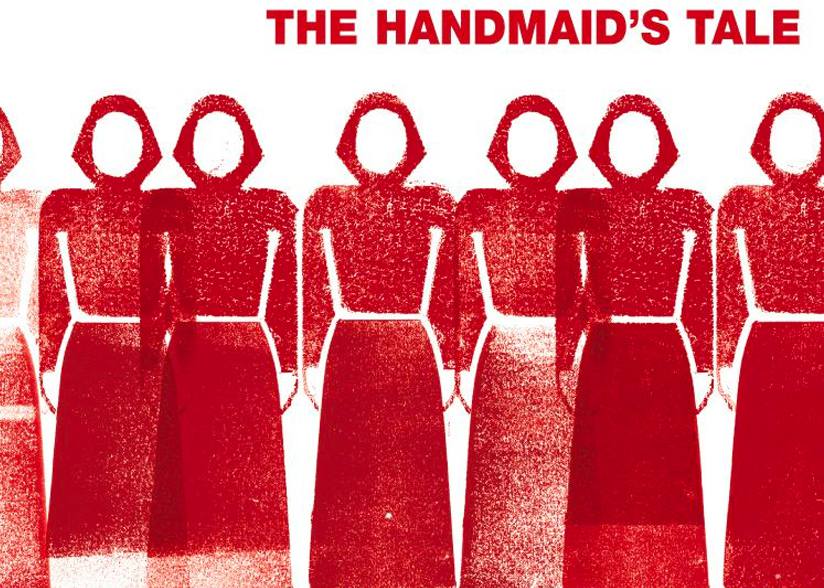
The Handmaid’s Tale: A Book Review

This is an essay I wrote in Ms. Blank’s English 102 last semester on a book assigned to the class: The Handmaid’s Tale.


tht

The Handmaid’s Tale: A Dysfunctional Dystopia (3/29/18)

Margaret Atwood wrote The Handmaid’s Tale with considerably limiting self-imposed constraints in place. In the book’s introduction, she says she feared that the story would have a “lack of plausibility”, so she purposed not to “put any events into the book that had not already happened […] nor any technology already available. No imaginary gizmos, no imaginary laws, no imaginary atrocities” (Atwood XIV). Because of the restrictions Margaret Atwood imposed on herself, such as only implicating language, events, and technology which were already familiar, The Handmaid’s Tale proves an unimaginative dystopia with a warning dissident to the author’s intent.

In the introduction of the book, Atwood explicitly cites the intended purpose of her story. She says, “The book is not anti-religion. It is against the use of religion as a front for tyranny; which is a different thing altogether” (Atwood XVIII). It is apparent that she is not attempting to predict the direction of the United States but to warn against its becoming totalitarian upon the back of religion. The context of Atwood’s tale is widespread disaster, and her warning concerns what Americans will lean on to move forward in the aftermath.

In an article written as a critique of The Handmaid’s Tale, Mary McCarthy expounds on why the limitations Atwood imposed on herself hinder the literary power of Gilead. She writes that, “[…] the most conspicuous lack, in comparison with the classics of the fearsome-future genre, is the inability to imagine a language to match the changed face of common life.” In most prominent dystopian stories, there are characters and language as fantastic and imaginative as their society is bleak and twisted. In The Hunger Games, Susanne Collins writes resilient characters to stand up under the wicked oppressors using language suited to a futuristic tragedy. Far from rendering it implausible, this approach strengthens the story.

Louis Lowry uses a premise similar to that of Atwood in her Newberry Medal winning dystopian novel The Giver. Lowry however is not afraid to write her dystopia imaginatively. It is a setting far less familiar than Atwood’s, yet it is certainly plausible and much more compelling. In the dystopian society of The Giver, the tyrants have gone so far as to eliminate the changing of the seasons, to render the world colorless, and to form a society which holds no memory of the days before them. The Giver invites readers to use their imaginations and welcomes them into a dynamic world where a story is happening. This opposed to the storyline of The Handmaid’s Tale which is told in a rather cryptic fashion. Atwood has determined that her story be the remnants of a bygone society stumbled upon by historians of the future. According to Atwood, the whole text is a transcription of tape recordings done in secret (Atwood 301). She also makes use of a disillusioned narrator who is trying to hold onto her sanity. Atwood makes these literary choices in the name of plausibility. What she ends up with is a story which is neither inviting nor compelling, one that sends a warning other than she intended.

In a letter to James Warren in 1779, Samuel Adams wrote, “While the people are virtuous they cannot be subdued; but when once they lose their virtue they will be ready to surrender their liberties to the first external or internal invader […] If virtue and knowledge are diffused among the people, they will never be enslaved” (Adams). Margaret Atwood wrote the story of Gilead with the intent to warn against the use of religion as a front for tyranny. The real warning reflected through the pages is one contrary to that intent. The effective admonition is not that American government could be overthrown by tyrants fronting an excuse for Christianity. And a poor excuse at that, for any claim to Christianity which makes captives, oppresses the lowly, or shrouds in darkness is entirely other than its true purpose. The scathing warning of The Handmaid’s Tale is one of a loss of virtue, the same virtue hoped of this nation’s citizens by Samuel Adams.

The story of Gilead would have been more poignant had it been told by a better suited narrator, one with the presence of mind to speak to the things Atwood intended the reader to pick up on. Offred does have at least a nominal understanding of Christianity, yet only makes passing remarks as to its being used as a political weapon. Her voice though the story is one of a kitten lulled into the hands of strangers: she laments for a while, and then relinquishes all hope. Towards the end of her narration, Offred’s death of spirit becomes painfully clear. After being caught for her secret meetings with Nick, she says, “I feel serene, at peace, pervaded with indifference. Don’t let the bastards grind you down. I repeat this to myself [sic] but it conveys nothing. You might as well say, Don’t let there be air; or, Don’t be” (Atwood 291) And then, sitting alone in her room contemplating suicide, she says, “That is what gets you in the end. Faith is only a word, embroidered” (Atwood 292). This language of an unwillingness to even acknowledge hope or a cause greater than herself is evidence of The Handmaid’s Tale’s truer warning: this local lulling to sleep and not the awakening of a foreign monster is “fatal to a free society” (McCarthy).

Atwood intended her novel to warn against tyrants using false religion. But because of a dystopia lacking imaginative quality and an unfortunate choice of narrator, the warning of The Handmaid’s Tale is one about civic virtue. The rise of the district of Gilead warns that the enemy should come when a nation is asleep, lacking good conscious and spirit. The horror is that they are caught without a single Joan of Arc, Spartacus, Churchill, or Benjamin Franklin in their company and are made willing slaves to a barbaric ideology.


All told, if you’re looking for dystopian fiction, just read The Giver or Lord of the Flies or something. In my opinion, this is a ‘classic’ best left on the shelf.

Sights and Sounds of Summer

As of this morning at about nine o’clock when I walked up the giant hill into the doors of Oconee Hall at Tri-County, summer is over.

These are the (more notable) things I watched, read, and listened to all summer long. I’d love to know what you picked up and why I should see/read it too.

–[[[ T.V. Shows ]]]–


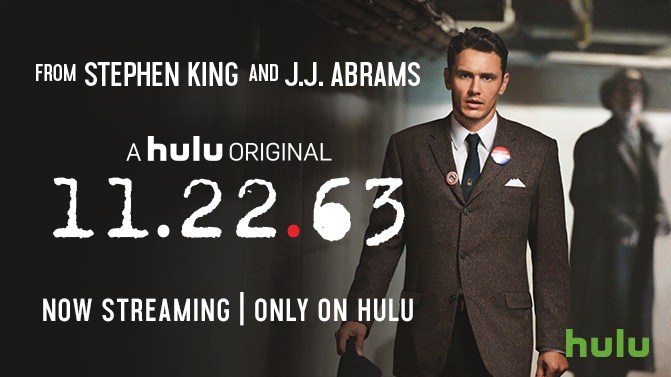
11.22.63. (trailer)

112

This is the one and only thing I’ve ever found to watch on Hulu. It’s about an English teacher who time travels in order stop the assassination of J.F.K. The show is based off the novel written by Stephen King. I mostly love it because of the way it speaks about the butterfly effect, something which is really really cool. And the last scene is golden.

*this show has a lot of language, it’s kind of scary, and a lot of people get killed. Read the parents guide before watching.

We did not ask for this room or this music. We were invited in. Therefore, because the dark surrounds us, let us turn our faces to the light. Let us endure hardship to be grateful for plenty. We have been given pain to be astounded by joy. We have been given life to deny death. We did not ask for this room or this music. But because we are here, let us dance.” – Stephen King


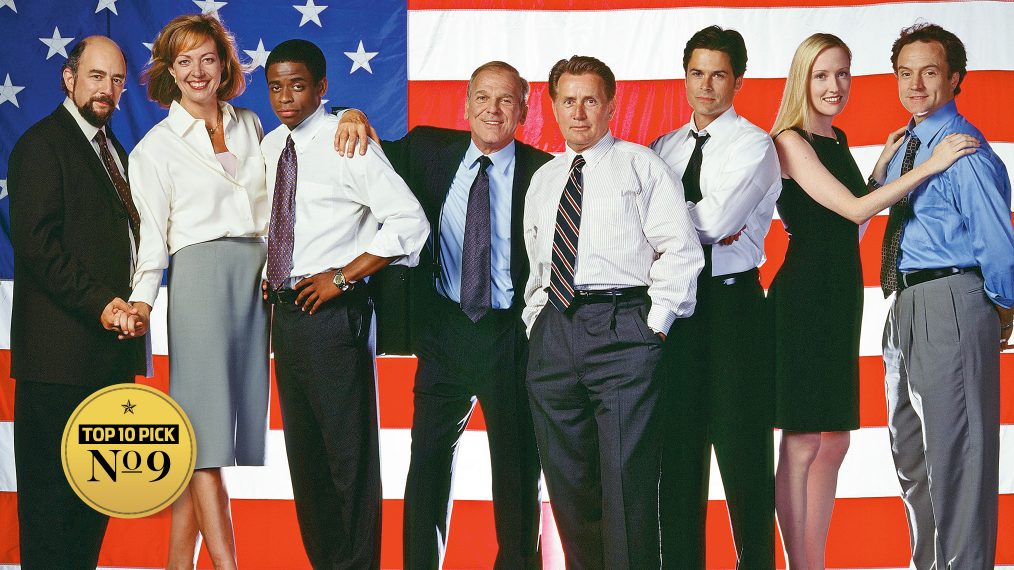
The West Wing (trailer)

west wing

I think I feel the same way about The West Wing that a lot of my friends feel about The Office. It’s set in the white house and tells the story of America from the point of view of the people in power. This is a show that you walk away from feeling smarter than when you sat down.


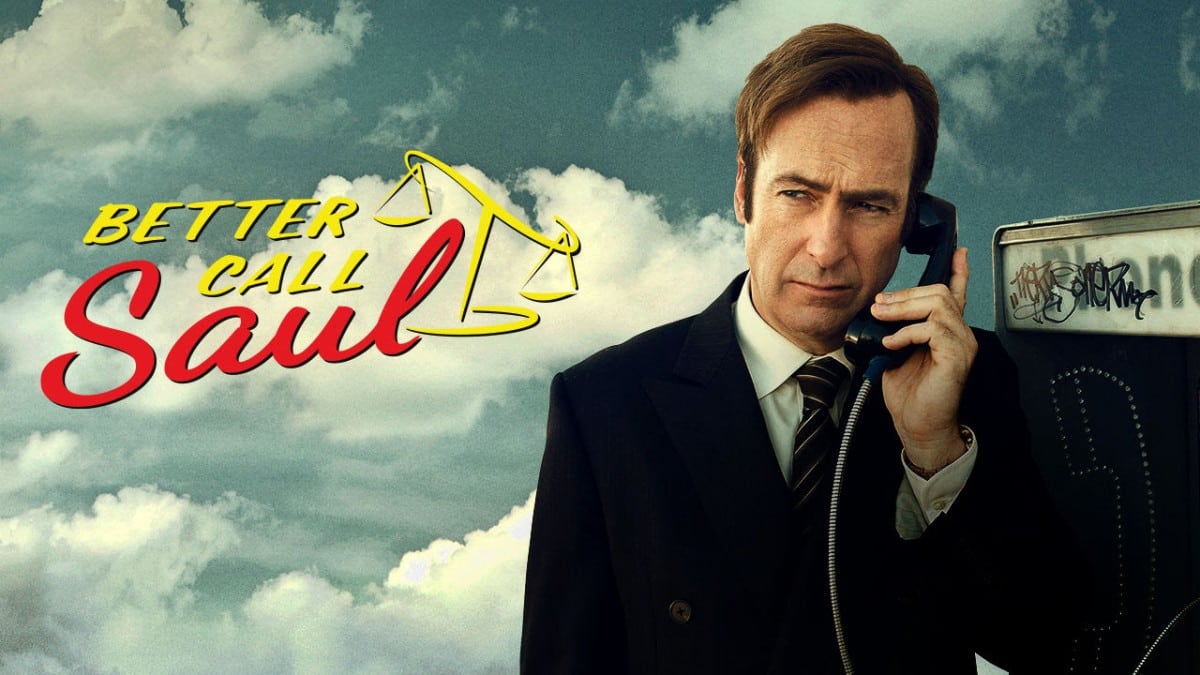
Better Call Saul (trailer)

better call saul

I can’t really remember how I started watching this one. But it has become my favorite show of the summer. Better Call Saul is about a lawyer named Jimmy McGill who lives and practices in Albuquerque. It’s wonderful.


–[[[ Films ]]]


Almost Famous (trailer)

a

I think this is my favorite movie. It’s about journalism, rock and roll, living on the road, and wanting to be cool. It’s got Elton John all over the soundtrack…it’s a great movie.

“The only true currency in this bankrupt world is what you share with someone else when you’re uncool.” – Lester Bangs (Almost Famous)


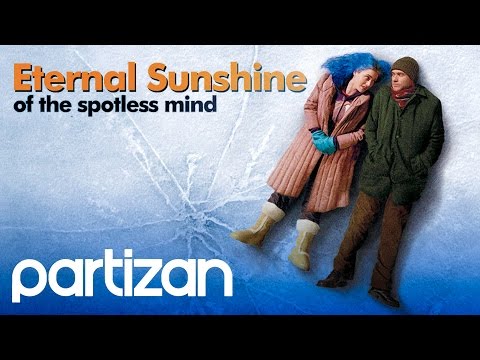
Eternal Sunshine of the Spotless Mind (trailer)

eternal sunshine of the spotless mind

I’d been waiting to see this movie…and then it finally came on Netflix! It’s Jim Carrey (but not in the Dumb and Dumber fashion). This is a love story about two strange people told backwards – it’s good.


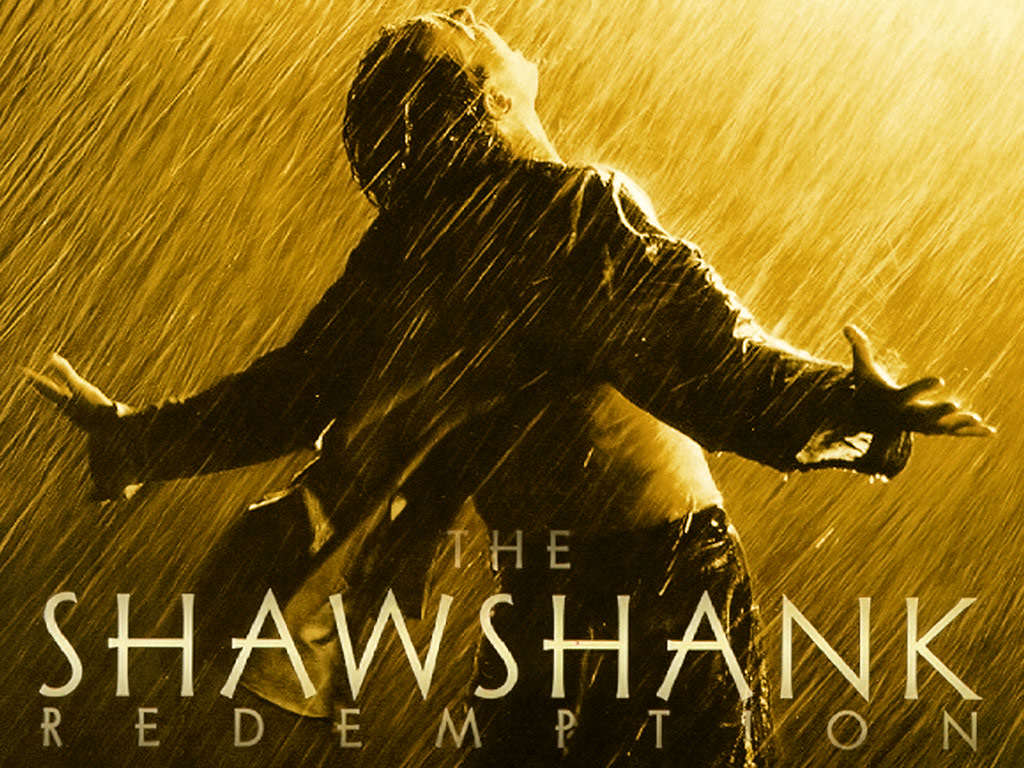
The Shawshank Redemption (trailer)

The-Shawshank-Redemption1.jpg

This is a story about the triumph of the human spirit. One of the best movies I’ve ever seen. *once again, read the parents guide…it’s set in prison.


–[[[Books ]]]


Bridge to Terabithia

BTT

I re-read this one to make sure it was still my favorite book – and it still is. This is, hands down, my favorite story in the world.


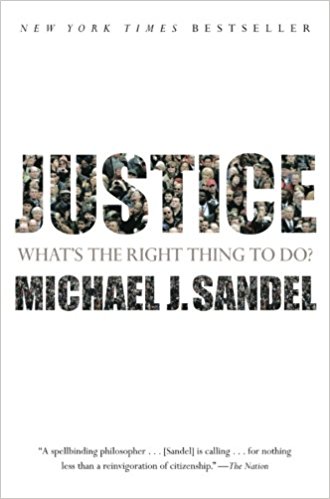
Justice: what’s the right thing to do

jstice

This book was written by a Harvard Professor, and I think everyone should read it. It’s not so much that it teaches you about the world as it shows you what you believe and what that actually means for society. You will walk away more informed and thankful that you read it; I certainly did.


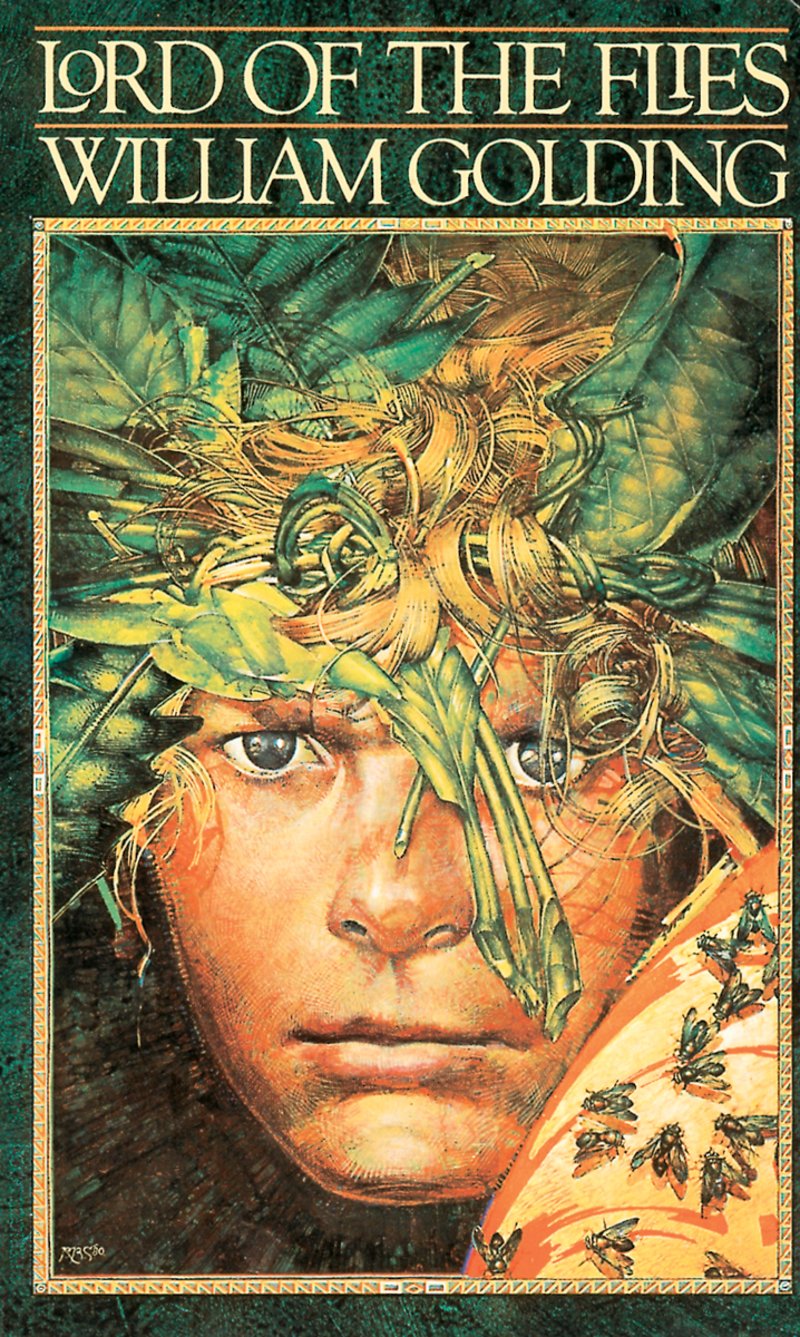
Lord of the Flies

lrdl of the fliesl

This is a book that critiques humanity by placing a group of young boys on an island and showing you what unfolds. I really enjoyed this book and would recommend it.


The Glass Castle

the glass castle

My mom was on me for a long time to read this book, saying that it’s one everyone ought to read. And she was right – it only took me a few days to read this story. It’s a true story about the childhood of Jeanette Walls, and it is wonderful. You’ve never heard of a family who lived the way these people did: always on the move (or the run) and with a worldview that’s simply astounding. They prioritized self expression and love of nature and experiencing culture to the point of living in dire poverty. The Walls’s value structure didn’t really work in a capitalist society, but it made for one heck of a childhood for four siblings.


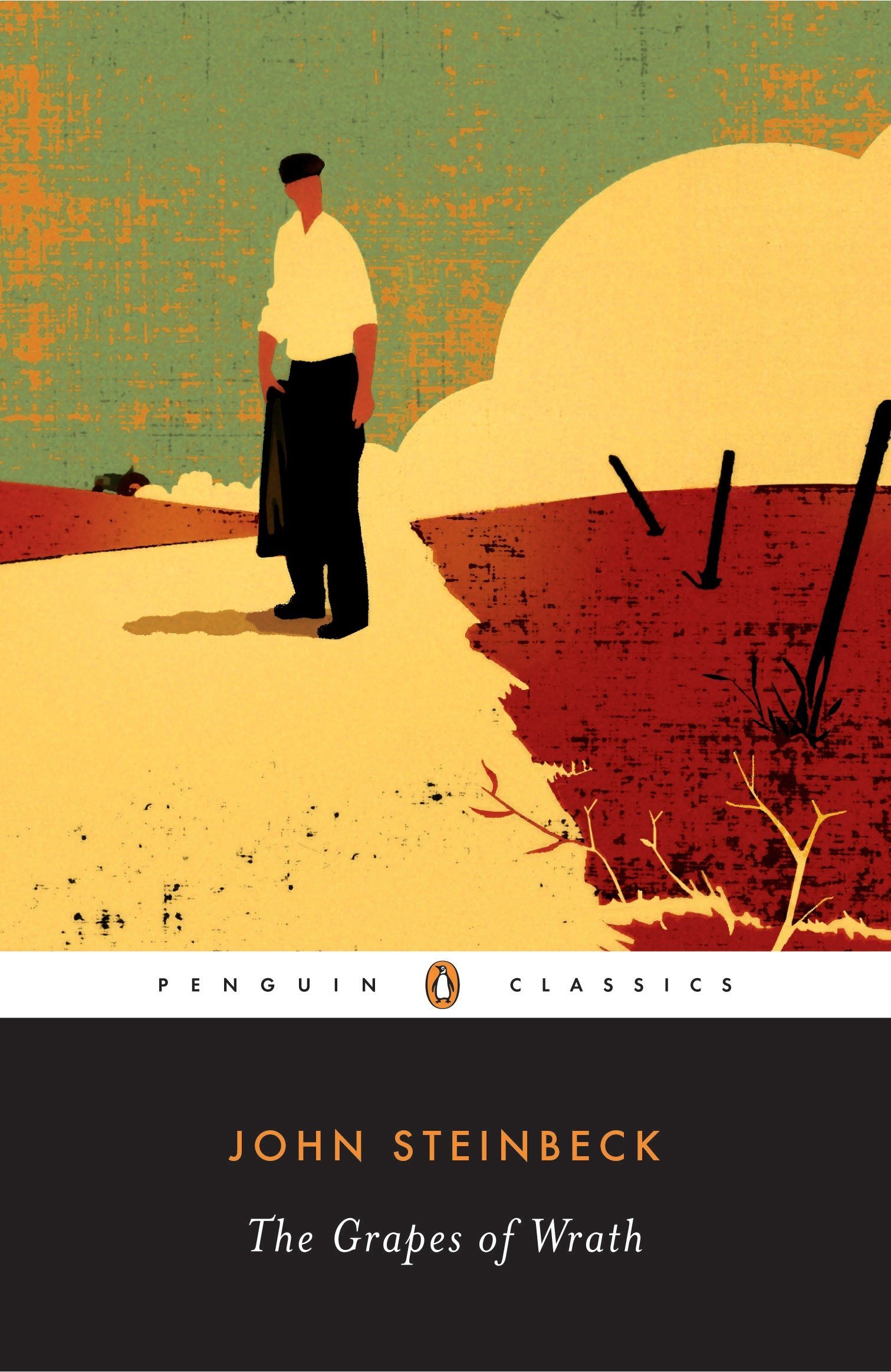
The Grapes of Wrath

greaps of warth.jpg

This book isn’t one you just breeze through, at least I didn’t. But it was definitely worth my time. If you read the book, and then listen to Springsteen’s song, The Ghost of Tom Joad written from it, it’s really something.


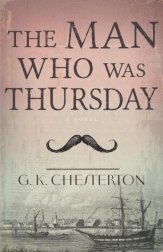
The Man Who Was Thursday

man thwo was hturday

I also re-read this one to see if I still loved it…and I still do. This is a story about the loneliness and fear everyone trying to do the right things finds in themself. It’s about a detective trying to thwart a ring of anarchists. What unfolds is really quite hopeful. Currently, this is my second favorite book.


And that, my friends, is what I’ve consumed this summer.

Cheers.

For the Sleeper

This is a song about traveling the world. It was about 3 months between the time I started writing and when I finished recording.

cheers.


For the Sleeper

Goodnight sleeper when you sleep, I’ll be standing guard in the streets,

Over everything, and everyone,

Goodnight sleeper when you wake, I’ll have been around the world,

Tell you bout the friends I made, tonight,

I’m gonna go around the world,

I’m gonna sail through the sea,

I’m gonna ride on a desert train,

I wanna know what’s there for me,

So don’t you wait up for me,

Just lay your pretty head down and dream,

Goodnight dreamer when you dream, I’ll be dancin’ round in the rain,

Of another sea, another place,

Goodnight dreamer with the sunrise, I’ll be back again,

Tell you bout the land outside, tonight,

I’m gonna go around the world,

I’m gonna sail through the sea,

I’m gonna ride on a desert train,

I wanna hear them call my name,

So don’t you wait up for me,

Just lay your pretty head down and dream,


130 Reasons to Ride with Me

About a week ago Luke and one of his friends decided to make a list of their top 100 songs. I thought I’d do the same…and then didn’t have the heart to round out the last few dozen. So…130. It’s in the Rolling Stone’s top 500 format, sectioned off and ascending (the best are at the bottom).

I’ve hyperlinked songs throughout (the blue/underlined ones) that maybe you haven’t heard and mabye you should.

* = favorite song at some point.


[130 – 108]

  • Superman – Five for Fighting
  • Better Days – The Goo Goo Dolls
  • Africa – Toto
  • Give It All Away – Aaron Shust
  • Moving All the While – Sidewalk Prophets
  • All of God’s Children – Jon Foreman
  • Lord, I Need You – Matt Maher
  • The Man in Black – Johnny Cash
  • Roam With You – Ross King
  • To Find my Way to You – Bebo Norman
  • Come Back Soon – Andrew Peterson
  • Nuisance – Jon Ruben ( ft. Matt Thiessen)
  • A New Law – Derek Webb
  • Head Over Heels – Switchfoot
  • Lucky Denver Mint – Jimmy Eat World
  • Everything’ll Be Alright – Time for Three
  • Timshel – Mumford and Sons
  • Vice Verses – Switchfoot
  • Have You Ever Seen the Rain – John Fogerty
  • Ghost Machine – Jon Foreman
  • Colder Weather – Zac Brown Band

[107 – 84]

  • All Things New – Andrew Peterson
  • The Man Comes Around – Johnny Cash
  • Betrayal – Fiction Family
  • That’s How I Got to Memphis – Tom T. Hall
  • Now We Are Free – The Lyndhurst Orchestra
  • My Saviour My God – Aaron Shust
  • All I Need – Caedmon’s Call
  • You and Me – Lifehouse
  • More Like Love – Ben Rector
  • Walking in Memphis – Marc Cohn
  • Learning to Breathe – Switchfoot
  • Bloodshot Eyes – The Choir
  • Gone – Switchfoot
  • Nebraska – Bruce Springsteen
  • Sloop John B – The Beach Boys
  • In My Arms – Jon Foreman
  • In the Hands of God – Newsboys
  • Brother – Needtobreathe
  • The Reckoning – Andrew Peterson
  • What’s a Boy to Do – Mat Kearney
  • Don’t Stop Believin’ – Journey
  • Funny the Way It Is – The Dave Matthews Band
  • 100 Years – Five for Fighting
  • Hard to Get – Rich Mullins

[83 – 54]

  • Old Girl – Fernando Ortega
  • She Must and Shall Go Free – Derek Webb
  • From the Heart – (Air Bud’s Theme)
  • Equally Skilled – Jon Foreman
  • Rainbow Connection – The Muppets*
  • Rochester – Mat Kearney
  • Sometimes by Step – Rich Mullins
  • Mother India – Caedmon’s Call
  • Might as Well Have a Good Time – Crosby, Stills, and Nash
  • Hear You Me – Jimmy Eat World
  • Go Your Own Way – Fleetwood Mac
  • Walking the Wire – Imagine Dragons
  • Love Is Different – Caedmon’s Call
  • All Along – Remedy Drive
  • Eyes on the Prize – Sara Groves
  • Hey Jude – The Beatles
  • Take Me to Church – Sinead O’Connor
  • This Is Your Life – Switchfoot
  • After the Last Tear Falls – Andrew Peterson
  • Tears in Heaven – Eric Clapton
  • California Stars – Wilco (Woody Guthrie)
  • Take Me Home, Country Roads – John Denver
  • Shasta – Mat Kearney
  • I Still Haven’t Found What I’m Looking For – U2
  • Wonderful Tonight – Eric Clapton
  • Faithfully – Journey
  • Army of One – Coldplay
  • The Fields Of Athenry – Paddy Reilly & the Dubliners
  • The Rising – Bruce Springsteen
  • I Won’t Back Down – Johnny Cash (Tom Petty)

[53 – 23]

  • More Heart Less Attack – Needtobreathe
  • The High School Band – Andrew Osenga
  • Who’s Gonna Ride Your Wild Horses – U2
  • Dance – Caedmon’s Call
  • Where the Streets Have no Name – U2
  • Shots – Imagine Dragons
  • Twenty-four – Switchfoot
  • Down – Mat Kearney
  • Life’s for the Living – Passenger
  • Winning Streak – Glen Hansard
  • Lucky Stars – Beverly Staunton
  • Someday We’ll Know – Mandy Moore (Jon Foreman)
  • Only Hope (Switchfoot)
  • Get Out of Your Own Way – U2
  • Hell of a Ride – Marc Jordan
  • Against the Voices – Switchfoot*
  • Blowin’ in the Wind – Peter, Paul, and Mary (Bob Dylan)
  • Where I Belong – Switchfoot
  • My Love Is my Love – Peter Bradley Adams
  • Hold the Light – Caedmon’s Call*
  • Enough to Let Me Go – Switchfoot
  • Fields of Gold – Sting
  • In the Middle – Mat Kearney
  • Dare You to Move – Switchfoot
  • Something Beautiful – Newsboys
  • Rosa Dear – Ruth*
  • Your Love Is a Song – Switchfoot
  • The Blues – Switchfoot
  • My Deliverer – Rich Mullins
  • Viva la Vida – Coldplay
  • Titles – Vangelis (Chariots of Fire)

[22 – 2 ]

  • Love Isn’t Made – Jon Foreman*
  • The Shadow Proves the Sunshine – Switchfoot
  • Tears of Hercules – Marc Jordan
  • Iris – The Goo Goo Dolls
  • On Fire – Switchfoot
  • Racing in the Street – Bruce Springsteen*
  • Marigold – Relient K
  • She Said – Jon Foreman
  • Son of Man – Phil Collins*
  • The Ghost of Tom Joad – Bruce Springsteen
  • Lover – Derek Webb*
  • Hallelujah – Leonard Cohen (Theory of a Deadman)
  • Demons – Imagine Dragons
  • Fast Car – Tracy Chapman
  • Song for Someone – U2
  • Fix You – Coldplay
  • If I Had a Dollar – Tattletale Saints*
  • In the Blood – John Mayer*
  • The Sounds of Silence – Simon and Garfunkel
  • Up&Up – Coldplay
  • Ames – A Firm Handshake*
  • Sunday Morning Coming Down – Kris Kristofferson*

#1. Brothers in Arms – Dire Straits

These mist covered mountains
Are a home now for me
But my home is the lowlands
And always will be
Someday you’ll return to
Your valleys and your farms
And you’ll no longer burn to be
Brothers in arms
Through these fields of destruction
Baptisms of fire
I’ve witnessed your suffering
As the battle raged higher
And though they did hurt me so bad
In the fear and alarm
You did not desert me
My brothers in arms
There’s so many different worlds
So many different suns
And we have just one world
But we live in different ones
Now the sun’s gone to hell and
The moon’s riding high
Let me bid you farewell
Every man has to die
But it’s written in the starlight
And every line in your palm
We are fools to make war
On our brothers in arms

On Spotify:

Run

It was about a year ago that three of us young dudes headed west.

3

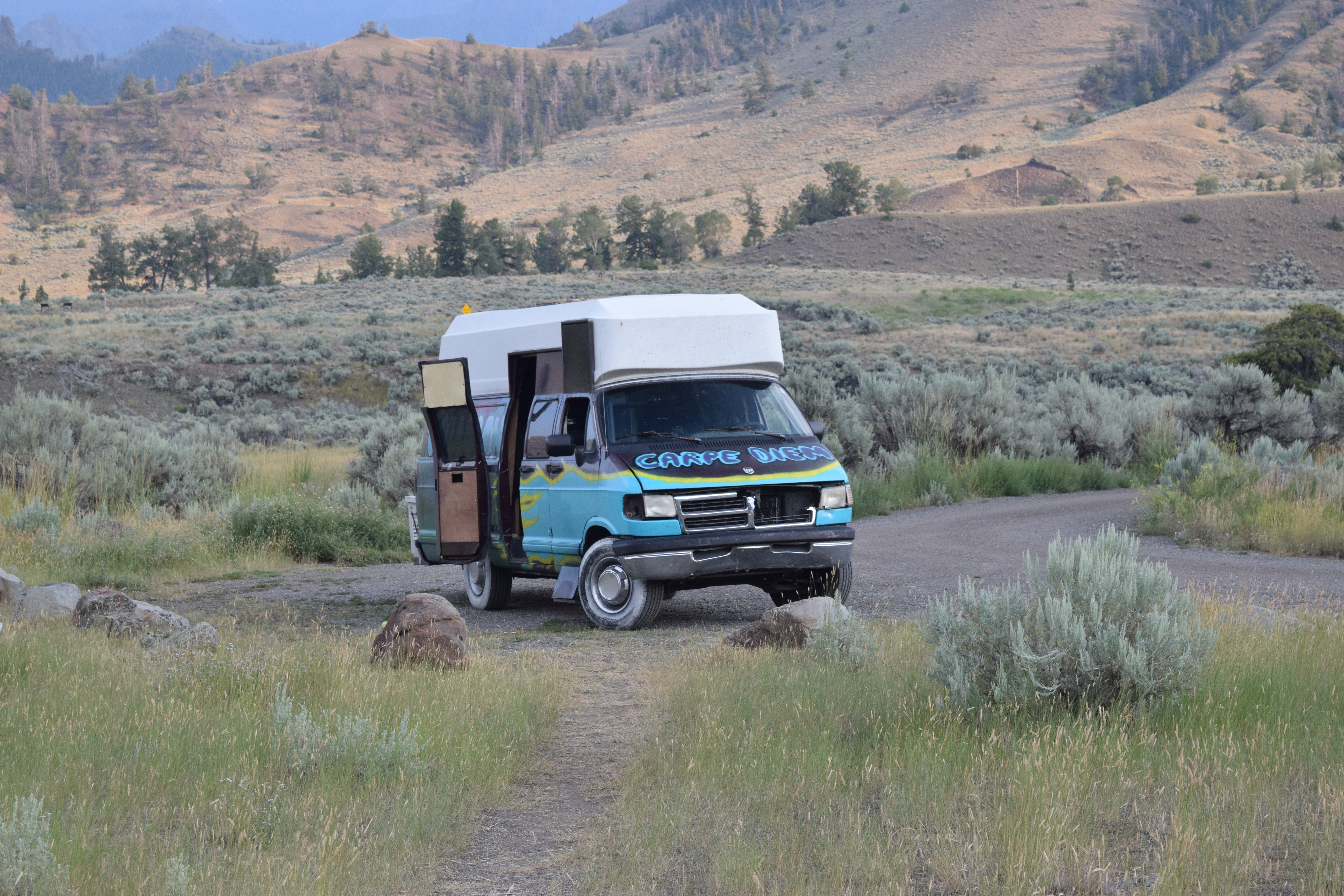
We had bought and prepared a 1997 Dodge Wagon, a beast of a carriage. It was hideous, so we painted flames and flowers and ‘carpe diem‘ on it. It was un-homely, so we built beds in the back and threw down carpet. It was sure to break down, so dear Jesus we prayed.

vannnnigan
camel

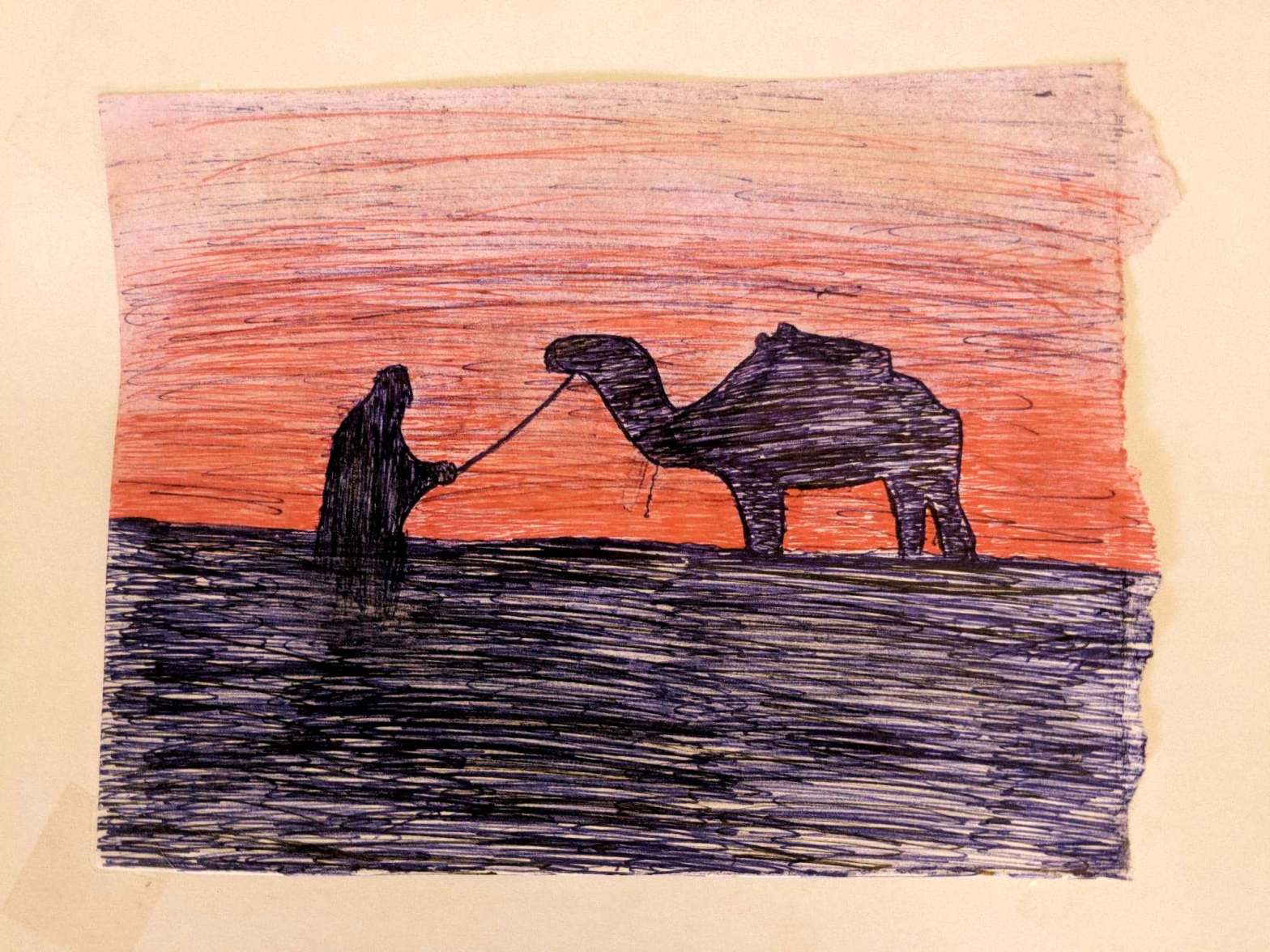
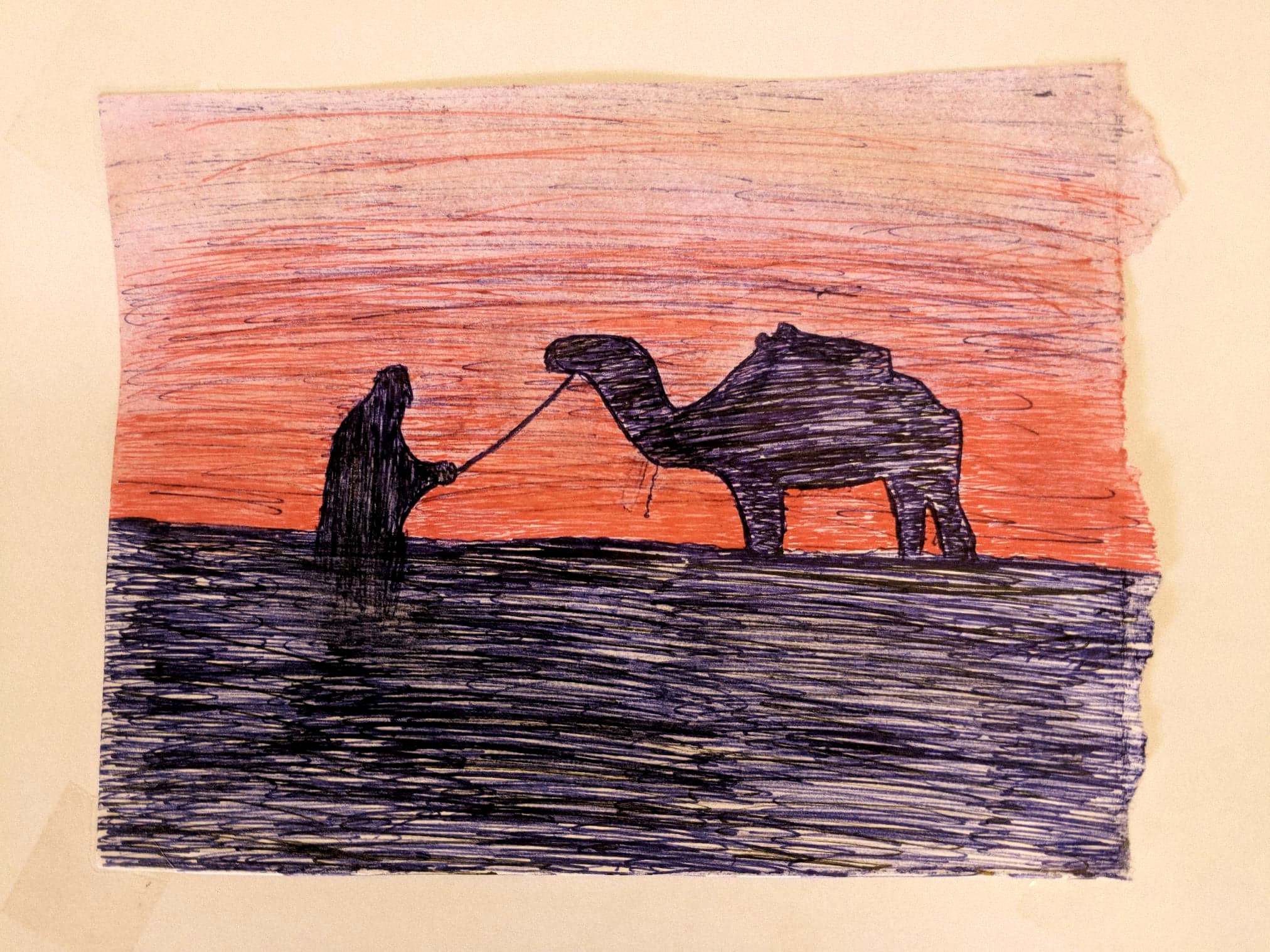
She was an American made metal camel – sometimes willfully carrying, sometimes having to be dragged across the desert. But we all made it through, east to west and back again. ‘‘Fading West’‘ was something of a last hurrah before college and real jobs and stuff to tie us down.


I’ve been a fan of Springsteen for a while. And this was an attempt at a song of his style from last August recorded on a Galaxy Note 5.

Run

We were rollin’ with fire in our eyes and down the sides of a hippie van,

Into the wild west where dreams waltz up and take you by the hand,

We were runnin’ like a prophet said the end times was near,

Like a deal with the devil gone bad and was runnin’ for the clear,

And it’s any man’s guess, how far we’ve come,

It’s every man’s dream, to run like we run, 

Run boy run,

Someday the strong tie of a family’s gonna hold me down,

And someday my name is gonna mean somethin’ in this here town,

Someday a whole lotta folks will depend on and look up to me,

But today is not that day, today I am free,

And it’s any man’s guess, how far I’ll go,

It’s every man’s dream to roam like I roam,

Go boy go,

Through the red-rock mesas that run through the desert sands,

The razor blade highways that cut through the badlands,

The California coastline, Montana big sky,

And between the lines, till you get back home,

Keep her between the lines till you get back home,


This too Is America

But if you want to know what I don’t think, I’ll tell you. I don’t think what you think. I don’t think, and I never shall think, that the mass of ordinary men are a pack of dirty modern thinkers. No, sir… I may be mad, but humanity isn’t.” Dr. Bull (The Man Who Was Thursday – G.K. Chesterton)

The following shall be my attempt to persuade you to leave yourself at the mercy of thieves and robbers and neighbors. I should think it’s well worth the effort.

photo credit: April Troyer

DSC_0206_20180715010357311

It’s sometimes said that the south is some years behind the rest of the country. In light of some of our societal navigating, I’m quite thankful for that. This came to mind one day while I was watching a T.V. show called 11.22.63. A man walks through a dark closet in the back of a diner and falls through a time portal back to 1960. During an intense scene towards the end, he desperately needs a vehicle. So he runs down the street trying car doors, finds one unlocked, and speeds away to prevent the assassination of John F. Kennedy. Quite riveting. Unfortunately, had our hero not traveled back in time, he would not have found an unlocked car, and the president of our fathers would’ve been shot right on schedule. Unless of course he’d of tried my car.

I do not lock my car doors for what my dad would say is a matter of principle. I don’t endure brutally hot Julys, grassless lawns, and snowless winters for nothing. I believe my ability to do this lies in two places: youthful ignorance and, more importantly, my perception of ‘them’.

There is in our vocabulary of prepositions one quite curious. It is ‘they’. And by ‘they’ we mean the public at large. Everyone has their own deep-seated opinion of they, them rather. Some people move about with sneaking suspicions. “Strangers are thieves waiting for an opportunity.” “That one there, he’s a crook, don’t let him fool you.” “Hitchhikers are axe murderers, let em walk.”

Personally, I refuse to take that stance. When I park my car at a coffee shop or boiled peanut shack, I leave my keys inside, doors unlocked, and take pride in my corner of the world. I am not in Detroit or Atlanta or Russia or Haiti. I am in the deep south. And this is the important part: I am a law abiding citizen, not an anarchist, and by the grace of God, am standing far in the majority. To confidently leave yourself vulnerable, in any way, is to trust your neighbor.

When you build fences, don’t talk to strangers, and live your life under lock and key, you dwell in a place where, to some extent, citizenship has fallen and anarchy has risen. And if you are blessed as I am to live in a place in this world where people sell vegetables on the honor system and volunteer to be firefighters and cannot drive more than ten miles without passing a church, it is an unfortunate and unnecessary position to take.

Will I ever get burned? Probably. Probably at some point a person of the minority will steal my guitar out of my backseat or my backpack out of the floorboards. And then someone will say, “Ah ha! We tried to tell you – people can’t be trusted.” And for a single day they will be right. Out of 5,000 days I could only trust civility for 4,999. I happen to think it might be worth it. I live among a people of decency – and that’s a gift I don’t want to waste. If we’re a few years behind the rest of our nation, maybe we ought to keep stomping the brakes. And this too, Mr. Gambino, is America.

I may be mad, but humanity isn’t.


You start to look like what you believe
You float through time like a stream
If the waters of time are made up by you and I
If you change the world for you, you change it for me

Is this the world you want?
You’re making it
Every day you’re alive

– Jon Foreman

bw

Concerning Hobbits and Presidents

Several weeks ago one of my friends, who recently taught a short period of high school literature, said she was going do the essay she’d assigned her students and asked if I’d do it too. This is what came of that. And below is a political cartoon I sketched today.


6/28/18

Three Things Concerning Hobbits

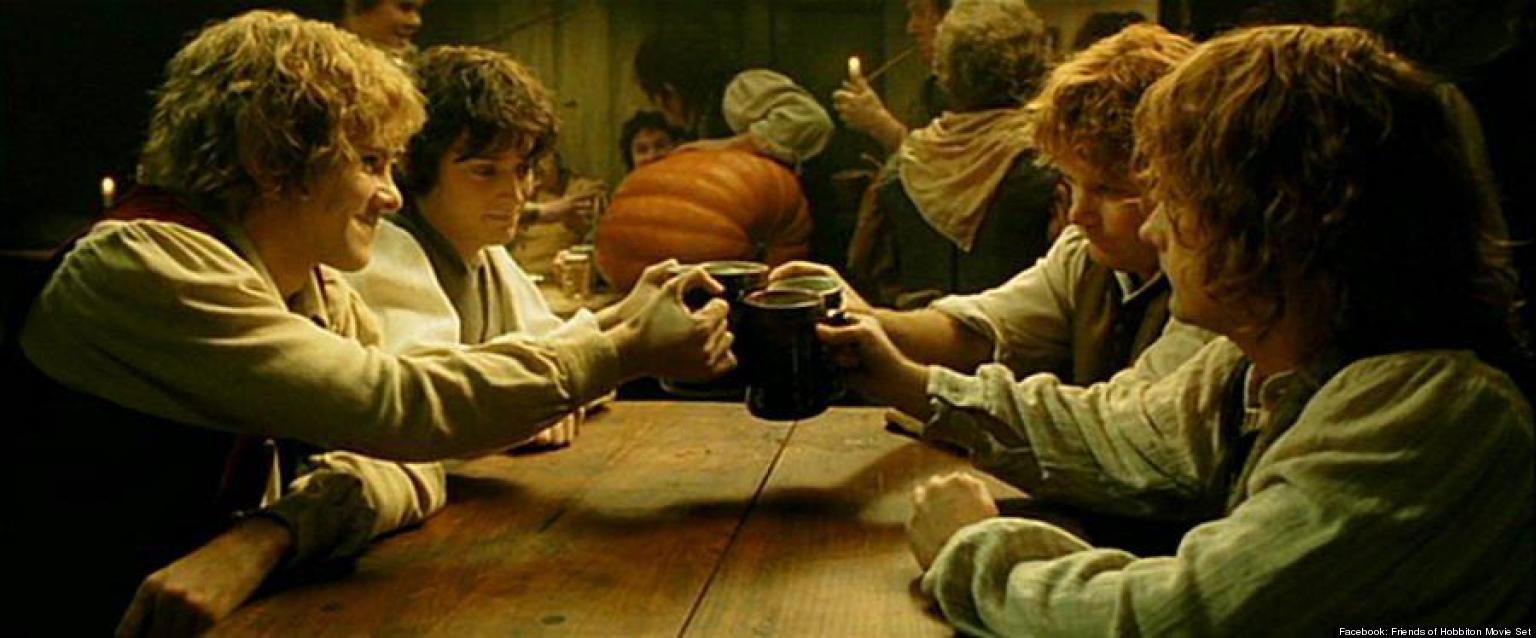
The story of the hobbits in Tolkien’s The Lord of the Rings is beautiful for three reasons. It illustrates telos gone right. The hobbits are given a purpose in middle earth, and they carry out that purpose well. The story illustrates the paradox concerning how limitations broaden potential and create opportunity. Because the hobbits are such small creatures, their task is an especially great one in the context of their weakness. And thirdly, the story is beautiful because of the faithfulness of Frodo and his fellow hobbits. The task of carrying a magic ring across the expanse of the earth and into a mountain of fire is unlike anything any hobbit has ever been asked to do – yet Frodo does not shrink back.

Socrates was once challenged to a beauty contest by a fellow philosopher named Critobulous. Socrates, a man famous for his ugliness and bad hygiene, accepted the outrageous challenge and made his case in front of the audience.

Socrates: “Do you hold, then, that beauty is to be found only in man, or is it also in other objects?”

Critobulous: “In faith, my opinion is that beauty is to be found quite as well in a horse or an ox or in any number of inanimate things. I know, at any rate, that a shield may be beautiful, or a sword, or a spear.”

Socrates: “How can it be that all these things are beautiful when they are entirely dissimilar?”

“Why, they are beautiful and fine,” answered Critobulus, “if they are well made for the respective functions for which we obtain them, or if they are naturally well constituted to serve our needs.”

Socrates: “Do you know the reason why we need eyes?”

Critobulous. “Obviously to see with.”

Socrates: “In that case, it would appear without further ado that my eyes are finer ones than yours.”

Critobulous: “How so?”

Soctates: “Because, while yours see only straight ahead, mine, by bulging out as they do, see also to the sides.” (West)

Socrates ended up losing the contest, but he pointed out that the beauty of a thing lies in its ability to serve its intended purpose, its telos. On some level, Tolkien’s “The Lord of the Rings” is an epic rehashing of Socrates’s argument. Instead of bulging eyes, we are shown shrunken hobbits. The intended purpose of Frodo and his friends was to make a long journey across mountains and into hells they’d never dreamed of, and still they consented to see it through. These hobbits recognized their purpose and forged ahead even while the end was uncertain and doom seemed imminent.

To the modern standard of beauty, hobbits are supremely obtuse. They are of small stature, live in mounds of earth, and walk about on large, hairy feet. However Tolkien chose hobbits to carry the ring of power not in spite of their limitations but because of them.

Sometimes limitations expand potential. Any sport, basketball a prime example, is entertaining simply because of the limitations placed on the players. You cannot move the ball without bouncing it. You must shoot within the given time frame. You cannot go outside a certain area and so on. Without these limitations to give context to the actions being performed, basketball would be meaningless. Tolkien wrote hobbits with great limitations in order to expand the meaning and implications of the story. The limitations of hobbits created a need for community, or as the story goes, the fellowship. The hobbits were not very strong – so they leaned on Aragorn. They were not very wise – so they followed Legolas. They lacked courage – so they looked to Gimly. The limitations of the hobbits make the story beautiful.

The beauty of The Lord of the Rings lies also in the faithfulness of the hobbits to the tasks handed them. For a long long time, these tasks were little more than growing food and throwing birthday bashes. But when once they were whisked away on mission that would draw all the realms of middle earth to a final battle, they did what only they could do. They bore what only a hobbit in his innocence could carry. And they walked into the mountain of fire where only their small hairy feet could go. Like Socrates’s deep set, ugly eyes, the hobbits served their true purpose to the good fortune of a million years. When the whole of middle earth was hanging in the balance, it looked itself over for something noble and true. And there, waiting in the wings, was a hobbit.

Works Cited

West, Stephen. “Episode 3 Transcript.” Philosophize This!, Philosophize This!, 24 Nov. 2016, philosophizethis.org/socrates-sophists-episode-3-transcript/. Accessed 25 June 2018


trump 2

Cheers.

Spin Us Round

“Shall I tell you the secret of the whole world? It is that we have only known the back of the world. We see everything from behind, and it looks brutal. That is not a tree, but the back of a tree. That is not a cloud, but the back of a cloud. Cannot you see that everything is stooping and hiding a face? If we could only get round in front.”  – G.K. Chesterton

 “For now we see through a glass darkly; but then face to face: now I know in part; but then shall I know even as also I am known.” – I Corinthians 13:12

“Then Elisha prayed, “O LORD, open his eyes and let him see!” The LORD opened the young man’s eyes, and when he looked up, he saw that the hillside around Elisha was filled with horses and chariots of fire.”– II Kings 6:17

I wondered why we cannot see things the same way –

then I wondered why we cannot see the same things at all.


We agree on next to nothing. Politics, music, church doctrines, what it means to be a good citizen, whether or not the pitcher should have to bat. The only thing left to do is agree to disagree as they say. The ancients did it for fun; Plato’s Republic is just a bunch of guys sitting around arguing about ideas for hours and hours. I admire good debaters, but I wonder how much the differing of our worldviews has to do with interpretation, and how much sheerly with witnessing different things.

No one chooses the perspective from which they stand to view the world, not completely. In the movie, “The Soloist”, that poor musician didn’t choose to hear voices screaming in his head. Will Byers, the young boy in “Stanger Things”, couldn’t understand why he must be the one constantly getting dragged into another dimension where monsters chase him into the woods. Why do some people have panic attacks or lay in bed all day chained up by depression? For some reason higher than mortal men, these things come upon us. And while they may be considered abnormal, we can hardly say they are false, fictional, smoke and mirrors. To some maybe. But to others the voices and the darkness are more real than anything else. The group’s fortunate inability to see or hear something, does not discount its existence.

Then I saw all that God has done. No one can comprehend what goes on under the sun, despite all his efforts to search it out, man cannot discover its meaning. Even if a wise man claims he knows, he cannot really comprehend it. – Ecclesiastes 8:17

We see and know so little, but I think sometimes we get glimpses. For fleeting moments we feel a little of the powers and realms that must exist out there somewhere. Good things. Bad things. Nice things. Sad things. A funeral or a wedding. A friend walking away. Falling in love. Summitting a mountain. A movie or a concert. There’s a weighted motion coming down on you, and you know, you know, that it’s far beyond the dust you’re made from. There are a thousand people sitting in this room, am I the only one seeing this? And when it passes, it hasn’t become untrue. You simply turned your head around the tree to see that it wasn’t a tree at all – only the back hiding something. Maybe heaven is the gathering of all the eyes and ears – the stories from all of us about what was really out there.

I think this phenomenon, that different people see the same world and a different world altogether, accounts for more than we realize. I scream and shout during debate to validate what I’ve seen – trying to convince my neighbor that I’m right. I know what I’ve seen. But he objects, he was there too; we all were. And he seen a demon where the angel is said to have stood.

But it’s more than just hearing voices and being plagued by depression. Why do some people feel so strongly, insist so intently, about certain ideas? Why do people hate rock and roll or only drive black cars or drive no cars at all? We’re living on the same planet, but somehow we’re seeing things from different angels – and different things altogether. The difficult thing to discern is when to trust my neighbor and his account and when to oppose him. I love the practice of philosophy. It fascinates me that people used to sit around for hours and hours just to debate each other, to convince each other of ideas. But to look someone in the eye and say, “Alright, I trust you. I don’t see what you see, but I love you anyway.” It’s not an easy thing.

I don’t know why some people see the demons. Why do only some witness the horror and panic? Why are some eyes blinded and some eyes opened? And for how much longer must we stand on the back side of everything?

Come Lord Jesus, spin this world on its heels, that we might look it in the eyes and smile back.

use this one.png

“Chase This Light” – Jimmy Eat World

Because tonight the world turned in me,

Because right now I don’t dare breathe,

Oh babe I know, it’s alive,

And somewhere for us to find tonight,

Chase this light with me,

Saturday

Today I sit down with my grandpa and grandma and ask them what it was like starting a community almost forty years ago. These two people are definitely heroes of mine. And, odds are, if you live in Oconee County, it’s due in part to them.

Today we’re giving away That Printer of Udells – Harold Bell Wright as well as the Tarzan Soundtrack – Phil Collins.

that pirntr
tarzan

*Shoutout to Esther Kauffman for sponsoring all the books we gave away. It was very kind of her.


Congratulations to Friday’s winners: Roshona Beachy (That Printer of Udellsand Aleisha Boley (Tarzan Soundtrack).

*odds of winning were 1 in 44.

Cheers.

Friday

My friends, it’s Friday. Look how far we’ve come.

Today my friend Trina Beachy and I drink French press coffee and ponder why it’s important that we read books. We also talk about The Hiding Place, The Lord of the Flies, and other cool stuff.

Today we’re giving away All Over but the Shoutin’ – Rick Bragg as well as Anything Worth Saying – Aaron Shust.

all over but te shouting
anytiung worth saying

Congratulations to Thursday’s winners: Maria Mullet (The Man Who Was Thursdayand Mike Dienner (The Gathering).

*odds of winning were 1 in 44.

Cheers.