I am excited to be releasing a new collection of songs later this month *hopefully*. If you are a subscriber, you’ll get an email with these songs – if not, you can become one with button below.
About the Album
This is my fourth collection of songs, and it’s called Fourth Time’s the Charm.
All my albums have been recorded in upstairs rooms, in Oregon, South Carolina, and now Arizona. When we recorded these songs, my friend Adam Beachy was a student at The Conservatory of Recording Arts and Sciences. When I sat with Adam in his upstairs bedroom at Aim Right in Phoenix, I told him I wanted this album to represent this time of my life – so that when I listen back, it would be a snapshot of where I was at. And I wanted it to sound like sitting across from me and listening. I’m really happy with how Adam was able to achieve that in the simplicity and texture of these recordings. We did as few takes as possible: I did my best, and he made it work. It was a real pleasure to work with Adam on this project.
For me, it’s always a vulnerable act to put out music. I am not by any means a stellar musician, so first and foremost, these songs are for me. But there is something important for me in sharing them as well. I would be honored if you choose to spend some time with them.
The major themes I think about in these songs are realization and acceptance, loss and confusion, and faith. My favorite song is track 3, “Where Are We” which I wrote while in college around 2020.
For better or worse, I feel confident no one else could have written these songs. They are distinctly my own, expression of my own experience and perspective.
Fourth Time’s the Charm (track list)
Fourth Time’s the Charm
About Us
Where Are We
Take Away (This Eclipse)
More than Ready
Losing Time
Epiphany
Lyrics/Vocals/Guitars: Javen Bear
Recording/Engineering/Mixing/Mastering: Adam Beachy
“There’s only two things that human beings are ever saying: please and thank you.”
That line is from Marshall Rosenberg in one of his trainings on nonviolent communication. I have become very interested in his method, and I decided I would try to review here what I learned from reading his book. In this method of speaking and living, there are 4 components: observations, feelings, needs, requests. And there is a process for communicating with these 4 pieces:
Observing: the concrete actions we observe that affect our well-being
Feeling: how we feel in relation to what we observe
Needing: The needs, values, desires, etc. that create our feelings
Requesting: The concrete actions we request in order to enrich our lives.
The first thing I’ll say is that i have found this to be hard! One of the central tenets of the Anabaptist/Mennonite faith I was raised in is non-violence. Reading this work caused me to realize just how shot through with violence my life is, from actions and speech to perceptions of myself and others.
Nonviolent Communication
Observations
“The first component of NVC entails the separation of observation from evaluation” (p. 26). To observe means to state what we witness without “mixing in any evaluation.” A key piece of this is remaining within our own perspective and not assuming the view, thoughts, feelings, ect. of others. This is so hard, but I’ve really noticed how it changes the way I relate to people in conversation. Marshall gives the following example of a sentence which mixes evaluation in: Janice works too much. This is not an observation but a judgement. An observation might look like: Janice has worked past 5 p.m. each day this week. I’ve really noticed as well how often I put “positive” judgement in my statements. For instance, “You did a really good job on the painting!” This sort of statement still moves me, the speaker, into a position of judgement above the other person and their effort with the authority to say whether it was good or not.
The reader might wonder, so who cares then? Why shouldn’t I make judgments if they are positive? If our relationships to others (and our children) is built on something stronger than positive evaluations, I think we have a much better chance at genuine connection. Marshall writes, “When we combine observation with evaluation, others are apt to hear criticism and resist what we are saying” (p. 32). One way to observe without judgment is to connect our observations to our feelings.
Feelings
I’ve noticed we quite often begin sentences with “I feel like…” For instance, I feel like those colors don’t match or I feel that this restaurant would have good food. While there are certainly feelings involved in these statements – we aren’t stating feelings at all. These are beliefs, thoughts, opinions, etc. NVC helps us to look beneath thinking into feeling. A good rule of thumb is that anytime the word “that” comes after “I feel,” an opinion rather than a feeling is being shared. While it is popular in many circles to lament how touchy-feely our society is or how everyone is always concerned about their emotions these days – I think exactly the opposite is true.
We are not trained to know or express what we’re feeling. We are in fact trained as children to produce behavior based on what we think other people want from us. We learn how to gain positive feedback from teachers, parents, and friends by performing the actions that they want – we are not taught to honor what we’re feeling. This is a fundamentally disconnected way of being that produces adults who act out of overwhelm from feelings they don’t know how to express or communicate and who live to solicit feel-good reactions from other people.
Marshall writes, “In NVC, we distinguish between words that express actual feelings and those that describe what we think we are” (p. 42). He gives these examples:
Description of what we think we are: “I feel inadequate as a guitar player.” Similarly, when we talk about how others are feeling or doing, we aren’t really expressing our own feelings. For instance, “I feel ignored” and “I feel unimportant” – these aren’t feelings I have, but rather it is my interpretation of other peoples’ actions or feelings toward me. Descriptions of what we think about other people also aren’t feelings: “I feel like you’re being an idiot.” An expression of actual feelings would be: “I feel disappointed in myself as a guitar player.” or “I feel impatient…” or “I feel frustrated…” “I’m angry.” “I am feeling grateful for your hard work.” “I’m feeling worried as I listen to you speak.”
A key concept of NVC is that no one but me is responsible for my feelings. And no one can make me feel anything. Marshall writes, “what others say and do may be the stimulus, but never the cause, of our feelings. We see that our feelings result from how we choose to receive what others say and do, as well as from our particular needs and expectations in that moment” (p. 49). He goes on to describe 4 options we have when we hear negative messages, such as someone saying “you’re the most selfish person I’ve ever met.”
Option 1: Blame myself. Here we accept the other person’s judgment and might say something like, “Oh, I’m so sorry! I should’ve been more sensitive!”
Option 2: Blame the other person. Here we reject the judgment and blame the other person by saying something like, “You have no right to say that! I am always considering your needs” (p. 50).
Option 3: Sense our own feelings. A reply could sound like, “When I hear you say that I am the most self-centered person you’ve ever met, I feel hurt, because I need some recognition of my efforts to be considerate towards you” (p. 50).
Option 4: Sense the other person’s feelings. A reply in this vein could sound like, “Are you feeling hurt because you need more consideration for your preferences?”
Needs
The claim that needs are universal, that they are common to each of us, is my favorite insight from non-violent communication. According to NVC, needs are what gives rise to feelings. Marshall writes, “If a wife says, you’ve been working late every night this week; you love your work more than you love me, she is saying that her need for intimacy is not being met” (pp. 52-53). However, it may be rare that we (and others) actually state our needs; often, they are encoded in our complaining or judgements. I find it a real comfort to know that even those people whom I understand the least, with whom I am very uncomfortable, have the same needs I do underneath their feelings. They just don’t know how to get them met. The sorts of needs we all have are things like: autonomy, integrity, celebration, play, emotional safety, respect, trust, connection, air, food, rest, appreciation, etc.
I really resonate with Marshall’s observations that many of us have not been taught now to express our own needs or how to ask for others to help meet those needs. Stating my needs can be really hard at times. It’s a lot easier to sulk, be short with someone, or just be quiet than to figure out what I’m feeling > what need is behind it > and ask if the other person would be willing to meet that need.
In taking responsibility for our own needs, Marshall notes 3 stages, and I must note that I find myself quite at the beginning here. First, emotional slavery. In this first stage we believe that we are responsible for other people’s needs – we feel responsible when others aren’t happy. We haven’t learned to differentiate their needs from our own. We take on the responsibility and blame for others’ discomfort. Second, the obnoxious stage. Here, we have become aware that there are very high costs for taking on the feelings and pain of others, and so we can be quite offputting in our effort to remain free from the burden of responsibility. We may also express our needs in ways which are rigid and don’t help others to connect with what we need. Third, emotional liberation. “We respond to the needs of others out of compassion, never out of fear, guilt, or shame. Our actions are therefore fulfilling to us, as well as to those who receive our efforts” (p. 60). We are able to take on full responsibility for our own needs and to communicate them clearly while also being “equally concerned that the needs of others are fulfilled” (p. 60).
Requests
The final component of NVC is making requests. In the event that our needs are not being met, Marshall writes, we first observe, then we state our feelings and need, and finally, we make a request. A key here is to use positive, rather than negative, language. That is – don’t say what you don’t want someone to do; say what you do want. And when we make a request in NVC, it is specific and concrete rather than vague and ambiguous. “Often, the use of vague and abstract language can mask oppressive interpersonal games.”
Maybe the most important thing to differentiate in this fourth piece of NVC, is requests vs. demands. Requests let the other person know what we are feeling and needing and what action we would like. Demands happen when consequences will result if the other person doesn’t do what we ask. This can be tricky because the past is very important. If in the past we have guilt tripped, blamed, or otherwise punished those around us for not doing what we wanted them to, then it is likely they will hear a demand in any request we make. Marshall writes, “to tell if it’s a demand or a request, observe what the speaker does if the request is not complied with” (p. 79). And when the listener hears a demand, they are left with only two options: submit to the demand or rebel against it. In a true request, we are able to extend empathy and compassion even when the other person doesn’t comply.
“My belief is that, whenever we same something to another person, we are requesting something in return. It may simply be an empathetic connection – a verbal or nonverbal acknowledgement…Or we may be requesting honesty: we wish to know the listener’s honest reaction to our words. Or we may be requesting an action that we hope would fulfill our needs. The clearer we are on what we want back from the other person, the more likely it is that our needs will be met.” (p. 74)
In listening to interviews with Marshall and watching his trainings on YouTube, it is clear he viewed NVC as the best way to communicate and that everyone would be better off using it. I’ve been giving that a lot of thought. I think NVC’s primary tenet is that needs, which it sees as intrinsic to each person and universal, produce feelings. And connection to those feelings as well as explicit communication about them are the best way through life and relationships.
On a podcast episode, I recently heard Danny Cohen, a nonviolent communication expert, refer to this method as a societal update. That is, sort of an evolutionary movement in communication which advances those who adopt it, though society on the whole is rather behind it. I’ve been weighing whether NVC is for everyone in their current time and place. I think the answer is no, sort of. I think our mode and method of communication produce the reality in which we participate, and NVC works to produce a reality in which feelings and needs are elevated to importance, named, and shared.
I’m not exactly sure what I’m meaning yet. It’s not just a matter of going up on the triangle of needs – one could argue it’s easier or more effective to satisfy basic physical needs when we’re communicating with NVC. But I think it has more to do with the elevation of emotional reality. I think this is a fairly recent phenomenon. NVC produces and maintains a milieu in which emotional needs and states are primary and explicit. It seems to me that, without training or a rule of life, very often emotional reality is not explicitly primary when physical needs are going unmet or threatened by scarcity.
I recently visited Tony, my mechanic, who runs a great shop staffed mostly by himself and a few other older gentlemen. One of the first things Tony said to me on my last visit was “Get your foot off the f@&%in’ chair!” And after very helpfully performing an $80 inspection on a vehicle I was thinking of purchasing, he the performed a touching act of care and generosity when he didn’t charge me at all. In delivering that gift, the last thing he said as I moved to pay was, “Ahhh get the f^$% outta here!” Because I know Tony a bit, I was able to easily receive the messages underneath his language which I heard as
Hey, I know you well enough to joke with you – and also, I have a need for order and cleanliness, and would you please take your foot off of the office chair?
I can see you are trying to make a hard decision about purchasing this car. I feel grateful to be a part of this decision, and I would like you to know that I support you as friend and won’t be charging you today.
I think Tony could really benefit from learning NVC, no doubt. And I hope he does. However, it would also create a new reality for him, a new dynamic for his co-workers. I’m not sure he would like the feel of it to be honest. So, in keeping with the first tenet of the NVC process [observation without moralistic judgment], I can observe that Tony might benefit from NVC, but I don’t blame him for employing a very sharp and profanity laced speech. For me, it is very important that my speech makes room to explore my own feelings and needs in a way that others can connect with – and also that it helps others be comfortable doing the same. So Tony’s way of speaking wouldn’t serve me very well.
If it is true that NVC is an “update,” then as we move “forward” (which I’m still debating about…) our emotions become a more explicitly acknowledged piece of our reality. Some people go through their entire lives and very rarely stop to examine or connect with what they are feeling. I would contend though that feelings are still a really vital part of their life. People who refuse to discuss their feelings still feel anger, pain, shame, guilt, etc. They still have the needs that produce those feelings. Whether or not you talk about them has little to do with their presence. I would compare it do my home’s attic. Until recently I’d never got up there and crawled around. It was hot, dark, and very hard to navigate. But whether I ever took time to look or not, the insulation up there (or lack thereof) really affects our home’s temperature. I think crawling into the attic is necessary to advance in my ability to maintain my home. I think explicit acknowledgement of feelings and needs are necessary to grow in my relationships.
I’m not prepared to say NVC is “better” than Tony’s method or anyone else’s. But NVC does contribute to the creation of a world which aligns with my values. I also think this is the kind of world being envisioned in scripture and Christian teaching which I also value. The question is: does your communication produce a reality you want to inhabit – a world where you want to live? If the answer is no (I don’t like how my communication works and what it creates), then it may be time to explore a new way of being and communicating.
I love the idea that all anyone is ever saying is please or thank you. I want to learn to listen for the please, the needs and feelings and pain encoded into even the most harsh words of judgement and complaining I hear. And I want to be able to lean deeper into the celebration and thank you that others are extending to me in all their wonderful ways.
I set a goal of publishing on this site as least once each month. But I’m not within a few hours of finishing the post I’m working on. So instead, before April winds down, here is a paper from 2019 which I wrote on indirect communication and came across today and thought was rather nice.
Indirect Communication
Indirect communication entrusts the receiver with some of the work. Soren Kierkegaard attempted to live his life, at least in some manner, to this end. Like Don Knotts as Barney Fife, he played the fool for the sake of the viewer, hoping they might get some use out of his foolishness. We do not take Barney Fife very seriously, but he is no doubt a very serious man. He is blind to his vices, and this works within the viewer the feeling of seeing beyond the veil, glimpsing something which the character cannot. Of course, that is the whole point. This is why Pat McManus, the outdoor humor writer, was so profoundly hilarious. In his wild stories, he portrays himself as the fool, leaving the reader to do the work. This indirect approach to communication leaves much of the responsibility with the receiver.
Kierkegaard speaks about the direct/indirect communication dichotomy in terms of illocutionary and perlocutionary acts. In his paper Kierkegaard and Indirect Communication, Poul Lubcke describes illocutionary acts as “giving orders, to beg and beseech, to threaten and to warn someone.” This contrasts with perlocutionary acts which he describes as “the enterprise of trying to move somebody’s heart or to persuade him” (Lubcke, 34). This latter is an attempt to “bring a listener to the point of decision [and] is in the indirect mode.” (Lubcke, 34) According to Lubcke, Kierkegaard equates perlocutionary acts with indirect communication.
At the end of his paper, Lubcke clarifies
“It is a necessary condition for all kinds of indirect language that we already have a knowledge of the possibilities about which we are going to decide . . . in my opinion many of the philosophical distinctions that Kierkegaard took for granted, e.g. the distinction between direct and indirect communication…no longer (if ever) belongs to our cultural horizon. It is, therefore…a task to reintroduce them” (Lubcke, 38).
The Gospel as Indirect Communication
We can define orthodoxy and go to great lengths and great volumes to do so. But orthodoxy is only an indication, not a description, of Christianity. The gospel is about an individual’s life, relationships, and way of being in the world. Using broad terminology, I can describe aspects of the gospel; the gospel is about liberation for captives and healing for the broken, but I cannot define what the gospel will look like in the life of another – nor should I wish to. The gospel allows space for healing, for grace to be received and given, and for personhood to develop in the process of becoming. And this gospel is at work all over the earth; it cannot be defined by words on a page. For “Christ plays in ten thousand places / Lovely in limbs, and lovely in eyes not his / To the Father, through the features of men’s faces” (Hopkins, As Kingfishers Catch Fire).
Kierkegaard suggests, “The most one can do is make it more difficult for someone else not to choose” (Lubke, 33). When the church frames the question as conform or be banished, there is not an authentic choice being presented. In that situation the outcome of each path is quite apparent. Kierkegaard wishes for a manner of choice in with the outcomes are not certain, where we are free to choose and faith is required. He wishes for all men to be like Abraham on the mountain, where a leap of faith is required. For Kierkegaard, it is better that we look the authentic choice in the eye and make the wrong one than to blindly do the right thing. As discussed in class, we ought to present the gospel in hope that each man might interpret his existence in light of the work of Christ.
Communicating the Gospel
Christian community ought to serve as a fortification for believers but must not negate choice. There exists within some communities a culture which compels participants to adhere to a certain mode of being: wear certain clothes, speak in a certain manner, i.e. play the game. Often, there are clear identity markers indicating who is in and who is out. In this kind of environment, the choices about someone’s life have been made long before they have arrived at them. The choices left to be made are rather small and deal only with how to live within a predetermined way of being. This is not authentic choice. Kierkegaard is adamant “one person cannot choose for another” (Lubcke, 33).
Christmas is an annual celebration of indirect communication. Christ could have come riding on the clouds and compelled every person to believe in him in an instant. Still Christ came into the world in the manner in which every person comes into the world. So it was with his life and death. He worked as a carpenter and died the death of a savage. Scripture points to instances when his glory became visible, such as raising the dead, calming a storm, or knocking men to the ground with only a spoken word. But Christ did not reveal himself to the point of negating faith. He often spoke in riddles, teaching in parables and then escaping before people could catch him. Christ performed perlocutionary acts which presented a choice to those around him.
Perhaps we must come to terms with our own faith before we are in a position to present the gospel to others via indirect communication. It takes much discipline and restraint to care for a person while allowing them to make their own choice. The easier thing is to enter into an argument, to try and outmaneuver the other. Much discernment is required as well. How can parents allow their children to develop as persons while also guarding them from encounters which will corrupt their being? How can pastors shepherd without controlling? It is a good thing, Christ said, for him to leave us so that the Spirit could come. And it is this Spirit which enables us to reckon with these looming questions, to become even as he leads us through the dark.
Over the last few months, I’ve become interested in the reality that we have two needs as humans which are very central: the need for attachment and the need for authenticity. I think most of our pain and what makes life so difficult is that one must often be sacrificed for the other. At the best of times and in the best of places, we have them both. Let’s take a look.
Two Core Needs
Attachment: “a drive for closeness – proximity to others, in not only the physical but emotional sense as well.” The primary purpose is to facilitate either caretaking or being taken care of (Mate, p. 105)
It’s well known that baby ducks will follow around the first thing they see after they hatch. If it happens to be the pet dog they see, they’ll waddle after him. They’re wired for attachment. Babies also come into the world wired for attachment. They are built to need their parents and to develop a special bond with their caregivers. Toddlers too have a natural need to be attached – they need adult attention, love, and constant care. Our attachment need never disappears as we grow into children, adolescents, and adults. Kids want and need to be loved by their parents, friends, teachers, etc. and to form close relationships. Throughout our whole lives we go to great lengths to behave in ways that protect and nurture attachments. This is good – we’re created to do this.
Authenticity: “Knowing our gut feelings when they arise and honoring them…the quality of being true to oneself” (Mate, p. 106). Similarly, “the lack of authenticity makes itself known through tension or anxiety, irritability or regret, depression or fatigue” (Mate, p. 376). When we’re not authentic, we can ask “what fears, rationalizations, or familiar narratives kept me from being myself? Do I even know what my own values are?” (p. 376) This is not a “striving for some idealized self-image…[rather] being authentically who one is” (p. 375).
As the early Bebo Norman puts it, authenticity is “myself when I am real.” We are made in such a way that we experience feelings and sensations in our bodies as we move through life. I note here that I think this concept is unfortunately much much more difficult to work with if (like me) you grew up in a highly religious environment. If we bristle at the notion of having a need for authenticity, that’s likely tied to a suspicion we’ve inherited around any talk of authentic self or honoring how we are made. But whether or not we’re comfortable with it, God gave us bodies with gut reactions, and to live in a healthy manner is to honor that, to practice authenticity. It’s a core need we all share.
The Trouble
The trouble is that these two needs, attachment and authenticity, are sometimes put at odds by our life situations. Think about a girl who really loves football but knows that if she honors that feeling, she will face ridicule from her friends who have other expectations. Or a boy who is terrified of riding a bike whose father dreams he’ll be a professional cyclist. In order to save the attachment, the authenticity gets sacrificed. Gabor Mate says it this way, “This clash is ground zero for the most widespread form of trauma in our society: namely ‘small-t’ trauma expressed in a disconnection from the self even in the absence of abuse or overwhelming threat.”
In the early stages of life, attachment will almost always win. It has to. If the child is to survive, they have to have the attachment relationship. I remember paging through a Dr. Dobson parenting book and reading a story in which he recounts the manipulation of a child into obedience by putting them outside and shutting the door. Only when the child’s attitude had changed were they permitted to come back into the house. That’s the sort of situation that will remove every ounce of authenticity. If it’s a choice between expressing my true feelings or being put out of the home on my own, cut off from my attachment, I’ll just erase how I’m feeling to make my caregiver happy. In our early years, attachment usually has to win out when there’s a conflict.
“The seed of woe does not lie in our having these two needs, but in the fact that life too often orchestrates a face-off between them. The dilemma is this: what happens if our needs for attachment are imperiled by our authenticity, our connection to what we truly feel?” (Gabor Mate)
If we were put in terrible situations like this as a child, it’s natural that we’ll develop a habit of always burying our own feelings and needs whenever they conflict with someone else’s. This can make us into really “nice” and “helpful” and “selfless” people who are totally disconnected from our selves. We might lose touch with our values – what do I want in this situation – if our default has been programmed to making sure everyone else is happy so w can stay close to them.
There’s a scene in the movie Inside Out where Riley is deeply sad and starts to cry because her family has moved across the country and left all her friends in Minnesota behind. It’s a beautiful example of a child being given the “ok” to express her sadness.
Riley: I know you don’t want me to, but I miss home. I miss Minnesota. You need me to be happy, but I want my old friends and my hockey team. I want to go home. Please don’t be mad.
Dad: We’re not mad. You know what? I miss Minnesota too. I miss the woods when we took hikes.
Mom: And the backyard where you used to play.
Dad: Spring lake where you learned to skate. Come here [family hug].
This scene could be completely different! The parents could say, Aww, Riley, don’t be sad. There’s so much to be excited about! Don’t you know how much work we’ve done to give you a good life here? Why are you so ungrateful – you have it good! Back in my day my parents….
The Environment of Clash
Gabor Mate’s book from which I quote heavily here is called The Myth of Normal. The idea is that when you have 70% of people on a medication, when we are this anxious and depressed and lonely, when we need this much distraction to cope, this is no longer normal. Normal, medically speaking, is considered within the range of healthy function. The outcomes we’re seeing are evident that the place and the way we’re living, our environment, is no longer normal. However, these are the “normal” outcomes you would expect of an extremely toxic environment. Dr. Mate gives the example of a laboratory petri dish: if you studied specimens in a lab, and 70% of them became sick, it would be a pretty natural conclusion that something toxic was in the dish.
According to the New York Times, “In 2019, the Centers for Disease Control and Prevention estimated that 15.8 percent of American adults took prescription pills for mental health.” It goes without saying that many more people would qualify for prescription medication if they chose to seek a diagnosis. In 2024, this number is higher, and by all account, we are more anxious, depressed, and mentally unwell then we’ve ever been. One could write stacks of papers on the societal factors producing a toxic environment.
“Nearly 70 percent of Americans are on at least one prescription drug; more than half take two. In Canada, every fifth person has high blood pressure. In Europe, hypertension is diagnosed in more than 30 percent of the population. And everywhere, adolescent mental illness is on the rise. So what is really ‘normal’ when it comes to health?” (from The Myth of Normal – Gabor Mate)
And we adults who parent these sensitive, expectant infants do so in a world where we are constantly bombarded with advertisement crafted to make us buy products which promise an easier, less stressful life. Watch a 10 minute clip on YouTube and you’ll be interrupted at least several times and implored to buy something. We work to try and afford housing that many of us come home to and scroll on our phones for hours (4.8 hours per day for teens and around 2 hours for adults), a distraction and an escape, this too fraught with advertisements of a less stressful life. Suffice to say, the environment most of us live in is not one which encourages interpersonal connection, attunement, and meaningful interaction. What we know of up and coming generations suggests they aren’t faring very well either in terms of stress, anxiety, and loneliness.
photo by Huizeng Hu
What does it mean to foster healthy attachment, to our children and to each other, in a society which seems built for the opposite – which seems built for loneliness and distraction? And how are we to live authentically, to honor the feelings and warning signs in our body, when cultural and financial success often demand we devote our time and energy to feeding the corporate machine or getting other people to buy our stress-reducing or status elevating product?
The Particularly Predisposed
When I think about these two core needs of attachment and authenticity, I feel like modern life makes it hard for everyone, and yet there are some I see as being especially set up to fail.
First, I think about my friends who aren’t straight. They’re either gay, lesbian, or bi-sexual in the cases of people I know personally. What’s both hilarious and maddening to me is the folks who think they aren’t straight because of some choice they made to be this way. Far be it from me to pretend to be an LGBTQ spokesperson – I don’t know very much. But I watch friends and acquaintances who struggle with accepting who they are for years, and who may even deny it themselves for a long time, may even hope it will change, before acknowledging the fact they aren’t straight and telling other people. And then they brace themselves for how they’ll be treated. Attachment vs authenticity.
If this person hopes to keep their old friendships and continue to be accepted by their family, they may feel the need to deny or block out the truth about who they really are, what sexual attraction they really have. They keep acceptance only through rejecting authenticity. Or on the other hand, they choose to acknowledge the truth of who they are knowing they will be cut off from their friends and family – they’ll lose their attachment. For many, it’s an impossible situation that’s going to result in a lot of pain either way.
And I know (I absolutely know) there are folks reading this whose blood pressure will rise when they read those two paragraphs. They think that somehow gay people (which means someone attracted to the same sex) are an affront to the Bible and are making some immoral choice for this attraction. If this is you, I would ask you to consider: when did you make a conscious choice about which sex you are attracted to? How hard would it be for you to switch your attraction from what it is now to the other sex? Say you even wanted to do that so people would accept you, and you couldn’t – what would you want from your friends and your community? Wouldn’t you want a chance to be authentic and to keep your attachments? I certainly would.
I also think of people with conservative values who find themselves in very progressive environments (such as a liberal business or a church). It’s a bad feeling to know that to honestly express your values (to be authentic) will result in being cut off or judged. It’s also a bad feeling to pretend like you don’t have values which run against the grain to stay in the favor of those around you (to be attached). For some, there is mobility and the option to leave. For others, they’ll have to choose between attachment and authenticity, and the result may be loneliness or constant anxiety, both of which are great predictors of physical health problems later on.
Personality
“It is sobering to realize that many of the personality traits we have come to believe are us, and perhaps even take pride in, actually bear the scars of where we lost connection to ourselves way back when” – Gabor Mate
The Enneagram is a way of understanding personality which highlights a core fear and a core desire of nine different types of personalities (think archetype). I personally find the type 5 to be very resonate. The core fear is being depleted, being helpless or incompetent, and generally not having enoughto survive. I can think of some key times in my youth when I felt like I didn’t have enough, or wouldn’t have enough, of whatever was required to succeed. I now have a tendency to compensate by trying to be extremely prepared by hoarding information, resources, etc.
It seems to me the Enneagram is a map of personality which is born out of pain. I’ve found it really helpful, but I also don’t want to be content to live my life perpetually driven by unhealed wounds and memories of being incompetent. And I wonder how much of my personality is an authentic expression of who I am and how much is a compensation, a survival mechanism I learned and now accept as normal. Of course, it’s not one or the other, but how might my personality change if I were to heal the wounds which taught me these behaviors and values. In They Myth of Normal Mate lists some other common ways which deprivation may manifest in personality traits.
Lack of unconditional attention > obsession with physical appearance
Lack of unconditional loveable > charming, funny, overly likeable
Lack of value and recognition > appetite for status and wealth
Lack of feeling important > compulsive helpers
Chris Madden / Getty Images
In these ways and many others, life has a way of forcing us to compensate for a lack by adding something elsewhere. Personality functions as a survival mechanism as we do what we have to in order to get our needs met in the situations we face. Unfortunately, this may lead to disconnection from the self, lack of authenticity, and the suppression of our own values. And it’s not a question of if this has happened in each of our lives – it has of course. The question at hand is whether we can work to begin healing – whether we can find an environment (or work to build one) which allows for both our attachment and authenticity needs to get met.
Healing
I’m encouraged to know that healing isn’t a zero sum game. We are not “ill” or “healed” but rather on a path and experiencing these conditions to various degrees. And we don’t need to wait for special circumstances or professionals or snake oil before we decide to start healing. I think it begins with a curiosity toward oneself. It begins with compassion.
I think healing means listening to our bodies. When we feel anxious, are we able to ask why and listen for what our body is telling us? A few months ago I was driving towards a building where I spent many many hours as a teenager, and as I got closer, I felt more and more anxious. Even though I knew nothing bad would happen to me, it made me realize I probably have some work to do in listening and understanding why my body was signaling danger.
There is no shortage of research linking health conditions such as high blood pressure, obesity, inflammation, auto-immune diseases, and many many more to psychological anguish. When we ignore our bodies and our emotions, we’re fooling ourselves. They will get our our attention eventually as what begins as emotional discomfort often manifests in physical symptoms, diseases, and disorders. There is an alignment between the inner and outer world. I think that you can’t heal one without the other also moving just as you can’t suppress one and leave the other unaffected.
For modern Americans, how can we make sure there is a place for attachment and authenticity for us, our children, our neighbors? How do we resist the toxic norms of 21st century culture to create connected and healthy lives? How do we honor our bodies and respond when they tell us enough is enough? I think the answers to these questions are the way through the malaise and this myth of normal.
I am very excited for this new year. I’ve begun cataloging posts by year as well as by topic (see below), and it’s remarkable to realize I’ve been writing on this website for about 8 years. Most of what I write falls into the essays and articles category, and probably not enough goes in the life category. Today, I want to reflect on our life, share some plans for the new year, and show some photos.
I have a suspicion that in 8 more years when I look back, I’ll care more about seeing a photo of that old friend, or drone footage of our house, or reminiscing about the time I got a year’s supply of Buffalo Wild Wings (yeah!) than about reading my musings and cultural observations – as fascinating as those are!
So here is a quick video of our place.
The People
In our house is me, Aleisha, Ava, Luke, and our dog, Teddy. Ava is almost six months now, and she is getting baptized at Midtown Presbyterian next Sunday where we attend. We really love our church family, and being a part of a community group that meets to share a meal every other Sunday afternoon is really special. The church is a small group of people (maybe 60) that meets in Hope Women’s Center.
Midtown Pres.
One of the hard things about moving away from where you grew up is that you have to make new friends. But it’s also really special because the people you get to know are the ones you found (or who found you). My good friend Collin and I started a book club that meets about once a month via Zoom. It’s not as good as in person, but it’s a great way to keep up with old friends and stay reading.
The Jobs
I have worked at Grand Canyon University for almost three years in the admissions department. My job has evolved quite a bit, and I now work solely with theology students. I work on a small team that enrolls both undergraduate students and seminary students. I work from home some days and some days on campus which is just a few blocks from our house. On occasion (such as below photo), we also travel to churches or other colleges to present. In this role I interact regularly with the college of theology and seminary faculty which is a fun, and I’ve gotten to travel to quite a few states. We also get discounted season basketball tickets which is great.
Avery, me, and Ryan at an event
Aleisha has two jobs. She works for Aim Right Ministries as the program director. She’s been involved with Aim Right in some way for about eight years, from an intern to coming out for summer programming to moving to Phoenix for a position. She spends two or three nights a week there. She also works for City of Joy, a non-profit based in Rwanda that does a lot. Mainly it’s a school located in a rural community. Her role involves helping to coordinate and sell the baskets which local women weave to make an income (I also made a video about the amazing process). In March of last year, we got to visit the school and meet the basket weavers as well as the school staff.
The Neighborhood
Phoenix is laid out like a very large grid. We live at 37th Avenue and Missouri which is about 6 miles from downtown Phoenix. We love our neighborhood and are getting to know our neighbors. They are very kind and we’ve exchanged some gifts, and I’ve borrowed tools. It feels safe to walk around, though there are stray dogs that run through the alleys. Our goal is to throw a neighborhood block party this spring to get to meet more people.
Growing up, I did a lot of construction work. And, largely because I was so unskilled, I came to really disdain it. Now my workweek consists of working inside at a computer in an office (or at home). With this change, I’ve also noticed I really enjoy working outside and taking up home improvement projects, so long as I get to do them at my leisure and pace. So in the nine months we’ve lived in our 1950s house, I’ve made countless treks to Home Depot, and feel really proud of some of the things we’ve done. We got grass to grow in our back yard, added a small fence in the front, replaced the fence in the back, added plants, painted the windows…things like that.
We’ve also started Greenhouse, a concept based on the fact that our house is green(ish), that we have an espresso machine, and that we love to have people over. We got the idea from mutual friends who do the the J and R coffee bar in Colorado. About two Saturdays a month we open our house and serve coffee and some sort of breakfast. It’s been really great – we’ve met some new friends, and we have some regulars who come each weekend. Last week, Luke had insider info from a GCU classmate about a Buffalo Wild Wings Go grand opening. The first 50 people in line would get free wings for a year. Several of the Greenhouse faithful have secured this insane prize, and we went for a free round of wings for lunch yesterday.
some of the cool people who came out this weekend for coffee
Feb. menu
The Goals
I have some goals for the upcoming year. Tomorrow I am meeting to finalize my internship site. My master’s in mental health counseling program requires a 9 month internship after I complete coursework (around October). So I’ll get to start that in October assuming I successfully finish my six remaining courses. During this time I also plan to get therapy myself.
Our car is great, sort of. I would like to find a vehicle for our family that gets better gas mileage and is in a bit better, more reliable shape – and which shifts from second to third gear without lurching.
I have a goal of writing here on this site at least monthly. In the past, that’s been pretty attainable, and I’d like to keep that up.
And my strange new year’s resolution is to be more calm and steady while talking and maintaining eye contact. I am pretty good at listening to people, but sometimes I get really uncomfortable when I’m speaking for fear the other person is bored. I would like to learn to be a bit more present and steady when speaking face to face.
my fence + LED light stripya!ava and me as a baby…zzzzzzzzzzzz….Ryan took me to world series game 5ava lila casarainbow on the salt riverclass
On this Christmas evening, I am reflecting a bit on the church. Anyone who’s read much of anything I’ve written may now sigh at the inevitable forthcoming gloom, surly observations, vexation etc. But no! It is Christmas, and this is more cheerful.
My last article was about the roles and nature of the pastor and the psychotherapist. It occurs to me that while the two are in many ways similar, which I highlighted, there are key pieces I said nothing about. First, the church body, the congregation! This togetherness is a probably a much more powerful healing agent than the pastor sitting in an office across from a troubled congregant. Much of the point of being a pastor is in the facilitation of a collective. This is not so much the case with the psychotherapist. With the exception of group work, the psychotherapist does not have a congregational context within which to view and work with the individual. The pastor does. A second important difference is the length of the relationship. Most counseling clients are seen for something like 6 -20 sessions. I’ve known some of my childhood pastors for 15 years.
It is remarkable that a group of more or less likeminded folk gathers together in the same place each week to sing, be taught, speak with, see one another, and perform various other rituals such as communion, confession, and prayer. I would like to name and reflect some of the key ways I’ve experienced joy and healing through the gathered church.
*The church pictured above I attended until age 10, and the one below from then until I got married.
The Singing
I grew up in a conservative Mennonite church, and congregational singing was always a part of our services. This way of singing emphasizes harmony. So each person who is able is expected to sing one of four parts (bass, tenor, alto, soprano – or in my case just the lead melody since harmony never really clicked for me). This singing gets almost every person in the room on their feet and using their body to perform a joint expression of song. It’s very interactive and not much like the contemporary worship service which is more a listening exercise in which you cannot hear anyone except those on stage. And in which case you may not even be able to see those next to you.
In our church the lights stayed up, and the volume was an expression of the congregants. So you heard, seen, felt, and joined the whole group there in the room. I still cannot sing harmony parts except for a few random songs, but the singing was a good, collective experience of expression.
The Eating
My church only practiced communion taking a few times a year, technically. But for many years, we ate a meal together once a month on Sunday evening. Looking back, this eating in the gym seems more like the Lord’s supper than the somber sipping of grape juice we did in the fellowship hall. It was always a lovely time. Every family brought something – meatballs, salads, sandwiches, roll-up pinwheels, more sandwiches, deviled eggs, lasagna. Usually the first letter of your last name dictated whether you brought a main or a dessert. You never knew you you might sit across from or whose afternoon creation you’d find on your styrofoam plate. It was a sacred time set apart to share a meal, talk, laugh, and generally shake off the seriousness of our often melancholy spirituality. This eating together was a great joy for me.
The Playing
In my childhood, Sunday was the definitive social day. Everyone was there, and we went to church twice most Sundays. Not until late in high school did I have a significant amount of non-church friends. There would be a sermon and Sunday school to get through, but then we would get what we came for. I have core memories of playing after church. Football in the gym, on a concrete floor and using a volleyball. Prisoner’s base. Knockout. And one rather strange game called Runaway. In this game everyone grouped under the carport while one kid would flee into the darkness (evening services only). Then the group would go wandering through the parking lot, field, and woods to find them. Once found, the round had only begun, and it wasn’t over until they were physically dragged back to the carport. Bigger kids could sometimes break free and fend off the inevitable dragging for quite some time.
We did all kinds of stuff – I wonder if kids still do these things. We threw sticks at each other in the dark, spied on people, kicked field goals through the hoop’s roof supports, and just generally got sweaty until we had to go home. I loved the play I got to do at church.
The Teaching
When I took Bible classes in college, I was a bit surprised to notice that very rarely was a scripture read or cited that I didn’t recognize. I think there were two reasons. First, my dad read us stories before bed from a large, red Bible. Second, our church never had child care. From the time I could discern spoken words I was hearing sermons on scriptures every Sunday. The value here, I think, was largely in the vocabulary and repetition of the content. I learned the names of Bible characters, theological terms, scriptural storylines, and the order of the books of the Bible. On Sunday mornings Sunday school was geared more to our age level and was more interactive.
Through sermons I was shown a distinct way of hearing and applying scripture taught fairly consistently through hundreds of sermons. I’m pretty confident that at age 14 I could tell you where the church stood on any major theological issue. It’s a way I would (and continue to) come to grapple with and question, but this helped me understand how scripture could be used to form and perpetuate a way of life. I have benefited from the teaching in church.
The Serving
The church context where I grew up presented a unique opportunity to serve. Pretty much everything in a Mennonite church is done in-house. From members literally building the building, grading the parking lot, setting up A/V, cutting the grass, cleaning the sanctuary, running the church library, to even choosing from the congregation someone to be the pastor(s). Everything was done in house. And this means there is always a way to serve, at least there way for me as a young man.
I ran the microphone to raised hands for testimony, set up tables and chairs, showed up on work days (some of them anyway), swept the gym, learned how to run the sound board, and even led singing a few times. There were Sunday school skits performed for the congregation and Christmas plays to participate in. One of the great honors of my high school experience was being asked to share a paper I’d written for a class on a Sunday morning and being affirmed as a writer. I’ve since the re-read the paper, and it wasn’t particularly stunning, but they sure made me feel good. Figuring out what you’re gifted in and what you’re terrible at is one of the hardest parts of being a teenager. I’m thankful to have been able to navigate that in a place that encouraged me to service of many kinds.
Conclusion
There is probably no thing in my life which I have more mixed feelings about than the church where I grew up. There is so much I’m going to great lengths to make sure my daughter never experiences. And there is so much that I’ll be saddened if she misses out on. What I’ve described are just a fraction of the joy, good times, and blessing that came through my church family growing up. It’s where I found a solid mentor, my best friend, and my wife.
As a psychotherapist in training, I look back and see so much of what our society is starving for that was overflowing in my church: shared movement, eating together, free and safe play, instruction in a way of life, and a connection point where you could show up, plug in, and serve.
These are things therapists can encourage and promote or point out when they’re missing. But it’s pastors with their congregations who can make the space for people to experience a gathered community as a healing encounter. I’ve written at length, and will continue to, about where the church is unhelpful, incoherent, and damaging. And I do so (hopefully) out of the conviction that the church is an essential part of a healthy, meaningful existence for so many people. I’m deeply grateful for the gifts imparted to me through the local church – gifts we need now more than ever.
One night, near the end of our class time, the professor had a pastor speak to us about bereavement and end of life care. After she signed off, the class discussed the roles of mental health counselors in conjunctions with and opposed to pastors in providing care.
My classmate remarked that the church is becoming more aware of the limits of its abilities and is now more open to the fact that some situations require a mental health professional. Here, I agree. I think the church and society as a whole is becoming more aware of the benefit which can be provided by clinically trained counselors.
Yet it seems much of the mental health field is of the persuasion that the church treats one kind of problem, the spiritual one, while the therapist treats another sort of problem, a psychological one. I am at least very open to the idea that we are all working at the same problems, though we see, understand, and label them differently. It wasn’t very long ago that church folks went solely to pastors with the problems they needed to talk about. Today, it seems that’s changing and that a gap is has emerged.
The Gap
I think the present and growing need for the psychotherapist may fill the gap in a society where the religion has lost its healing power. When Evangelicalism has become a business model and a right wing voting block, the gap starts to widen. When the thrust is on converting people to avoid hell and the markers of who‘s in and who’s out are a matter of dressing a certain way, then identity becomes about who we’re not, where we won’t spend eternity, and who isn’t one of us. I think this produces a culture of anxiety and fear, and the sort of leaders who emerge and whom we choose have very little ability to sit with people in a healing manner. If those leaders perpetuate a culture of anxiety and fear, teach a theology of anxiety and fear, and serve a people of anxiety and fear, it doesn’t seem likely they’ll also be very helpful to folks trying to heal from the wounds they’ve gathered. It is perhaps only a therapist who will provide the care the person needs to heal.
If you have a disturbed client and give me a really good therapist and a really good pastor (assuming the client is of faith), I think in many cases the person might be genuinely helped be either. However, I think there is a gap created by theologies which promote fear and anxiety and which render the church powerless, and this is what I’d like to explore here in three examples.
Example 1: Parsing Greek
A few weeks ago, I was tabling for GCU at a missions conference. I met a somewhat well-known evangelical writer and theologian. He was interesting to speak with, and so we talked for quite a while. He mentioned that only in the last few years had he become an egalitarian, and I asked what had prompted the change.
For him, he said, the whole thing – whether or not half the population (women) could serve in church leadership – came down to one word in one verse in Paul’s letter to Timothy. The translation of that verse was what everything hinged on. I asked him if he was at all bothered by that, that such huge implications hinged on one Greek infinitive only accessible to PhD scholars. He said that he was not, and that he expected it would have to be that way. For him, this issue was decidedly based on rendering one word in one ancient letter. It didn’t have anything to do with contemporary discernment or the outcomes produced by one position or the other. Simply put, if he could be convinced intellectually that something was scriptural, then he would support it. A few days later he Tweeted the post below:
Example 2: We Won’t Be Formed By Feelings
About a year prior to the mission conference, I’m on a church music team, and we’re playing songs at a jam session. We played “Christ Be Magnified” which is a beautiful song except for one line in the bridge.
“I won’t be formed by feelings, I’ll hold fast to what is true.”
I made a comment in the session about loving the song except for this line and said that I don’t even know what it would mean to “not be formed by feelings.” How would one just annihilate the primary means which God has given us to interact with our environment? My fellow music team mostly disagreed with me and spoke in defense of the lyric which pits “truth” and “feelings” against each other. It’s a bit like asking a pilot to fly a plane using only a flight manual and none of the aircraft’s instruments instruments which take readings on altitude, direction, pressure, time, and speed. These are the primary means of knowing what’s happening – feelings are condensed information gathered from a person’s environment. Why would you not want that to be a key part of your formation and orientation?
There’s a great word for the state of being where you are not formed by feelings: numbness. And not coincidentally, this sort of posture, ignoring feelings and simply following ideology, produces exactly that: numbness. Years of burying emotion produces a disconnection from feeling and even bodily sensation to the point where authentic connection becomes almost impossible.
Example 3: Incongruent Theologies
Before Aleisha and I became part of the church community where we worship now, we visited several churches. There was one which was pretty great, but every Sunday I was there the sermon seemed to have the same theme – you are a vile, wretched sinner who deserves death and destruction. And God was so angry about how bad you are that he decided to kill Jesus instead of you, so you can live with him forever. Ta da! It wasn’t really good news, and that isn’t really the kind of God I’d like to spend eternity with. It’s a good example of incongruent theology which I think produces a ton of anxiety in those who come to believe it. It paints God as angry and out of control and people as vile and awful – yet somehow it still tries to teach that God is love and that people are in God’s image and made very good. It’s not the sort of mixed messaging I want my daughter growing up with, or myself.
Some theologies which I find incongruent are:
Preaching that each person is created in God’s image, with infinite value from conception > while also teaching that everyone is born a corrupted sinner who is wretched and depraved.
Telling women they are valuable, capable, and more than just warm bodies > while also telling them they may never teach a man since they are less trustworthy and that their place is at home.
Speaking of Christ’s passion as a beautiful love story > while also teaching that God was so angry with humankind that he needed to kill someone to calm himself down and that he killed Jesus to satisfy his wrath.
Telling each person that they are fearfully and wonderfully made > and then condemning gay people for the way they are made and ostracizing them from our communities.
I give these examples, they guy at the conference, the jam session, and incongruent theologies as instances of the paradigm I’m seeing. There are not an abundance of people, leadership included, who know how to sit with someone and help them heal. Instead, so much pastoral guidance is far removed from promoting awareness in the person, awareness of their feelings, emotions, bodily sensation, pain, stress, and distress. When the focus is on intellectual understanding of Greek infinitives as the final word, on pursuing “truth” at the cost of honoring the body’s intended function, and on teaching theology which claims to speak about God’s love but which is fundamentally anxiety producing, there is an almost total inability to help a hurting person and to be with them in a compassionate way.
And so here is the wide wide space which the psychotherapist is being asked to fill. And they are, and many being are being greatly helped. But my point is the work of therapists is not (or should not be) so different from the work of pastors. What I think our religious cultural moment cries out for is clergy and lay servants who are able to sit with people and help them reconnect, explore, release, and heal. It is a great spiritual task, and it’s one that will continue to be outsourced to clinicians and psychologists so long as the church remains dogmatic about issues such as keeping women subordinated, keeping feelings at odd with their conception of truth, and keeping incongruent theology flowing from the pulpit. Those who speak from these orientations may speak about love and healing, but they hold to their antithesis in posture and practice.
I suspect my generation and the ones coming after (who are leaving the church en masse) have been and will continue to key in on this theme. The church is slowly realizing we cannot inhabit a theology of oppression and come through unscathed. The science is crystal clear on this – living under stress and anxiety and burying rage and uncertainty will kill you, quite literally. And it presents in all manner of unexplained symptoms, pain, stomach and gut issues, ringing in the ears, depression, chronic illness, etc.
I think the mantra of this generation is “I may not be able to read Greek or do incredible exegetical work, but I can feel pain in my body.” Perhaps unlike previous generations, we no longer fear hell enough to tolerate outcomes of oppressive theologies – outcomes which will make us numb if we endure them long enough.
I’m really thankful to attend a church where I don’t have to stifle the anxiety of these sort of incongruent messages. And I am hopeful about some of the recent changes I’m seeing. Yet for many people these sorts of incongruencies (hearing one thing and living in a reality where it’s untrue) are everyday life. When and where this is true, it will be only the psychotherapist, who is trained to withhold judgement and give unconditional positive regard, rather than the pastor, who will be ready to facilitate healing and able to meet the great spiritual task described by Jung which is now as present as ever.
*the use of the cover art for this piece was generously permitted by John Kennedy: www jedika.com
A Funny Scene
There’s a funny scene I imagine sometimes in which I get to the afterlife and meet God after a life on earth.
And God tells me, “Sorry pal, you were wrong. I’m actually not quite as good as you thought I was. I’m a bit less merciful than you came to believe. And those folks who said I was a tad fussy were actually right. You overestimated me.”
That’s a funny little scene, but it’s one I’ve begun to try and come to terms with. Any god who turns out to be worse than I imagined is not a being I want to worship or spend eternity with. In the words of Brennan Manning,
“We make God in our own image and he winds up being as fussy, and rude, and narrow minded, judgmental and legalistic, and unloving and unforgiving as we are.”
Brennan Manning
A Sunday School
About seven years ago, I was part of a traveling group, and we played music in prisons. On Sundays we played at churches to raise support. One Sunday morning, I sat through a Sunday school class which made God out to be really petty and awful. After getting home from the trip, I spent thirty something dollars to mail a teaching series of CDs to the Sunday school superintendent which I felt would help correct the blaspheming – which is pretty hilarious when I think back to it. But right after that service was over, I wrote something which I’ll share part of – because I think I may have been wrong.
I will love and trust and you either way, But I hope to heaven you’re not the God They spoke of yesterday, A God to be appeased, Who died to save us from himself, There has to be a God whose love is untold fathoms, And more than all your graven dragons
Me, circa 2017
My instinct there was to “love and trust” either way – even if God turned out to be super petty and anal and looking like a pagan god who just wanted sacrifices. I’m not so sure that’s a good idea, because I have become more and more convinced that any conception which leaves me feeling hollow, which portrays God as annoying, ornery, and legalistic just isn’t worth any of our time.
A Film
There’s a scene in the film Women Talking where a group of women are deciding whether to stay in their extremely abusive conservative community or to leave. They are trying to figure out how it can be that God is good and also requiring of them the things the men of the church have commanded.
The monologue given by Salome (below) is a radical proclamation, and it reminds me of Daniel and his friends choosing to be burned alive rather than worship an idol. She is saying I will burn before I bow down to this idol they have given me and called God.
If God is a loving God then He will forgive us himself. If God is a vengeful God then He has created us in His image. If God is omnipotent, then why has He not protected the women and girls of this colony? I will destroy any living thing that harms my child. I will tear it limb from limb. I will desecrate its body and I will bury it alive. I will challenge God on the spot to strike me dead if I have sinned by protecting my child from evil, and by destroying that evil that it may not harm another! I will lie, I will hunt, I will kill. I will dance on graves and I will burn forever in hell before I allow another man to satisfy his violent urges with the body of my four-year-old child!
There is a certain courage required to doubt in this way – it is to doubt one thing because you have faith there must be something better. A few months ago in a conversation with a friend, the question came up: is it better to believe in or to totally reject a version of God which is false? I think we must reject it – to doubt it with everything we have as it stands as a barrier to real communion with God. There is no amount of doubting which is too much when it comes to false gods. It is impossible to doubt too strongly that which is not true. When we are given pictures of God which make God out to be petty and legalistic – we must have the courage to doubt them.
I think this is what’s embedded into much of the current trend of deconstruction among my generation. We are faced with the dilemma of being handed a small, pathetic, petty god who is made in the image of those who are misogynistic [against women], racist [discriminating], reactive [unthoughtful], xenophobic [against immigrants] , homophobic [against gay folks], disregarders of the interests of the poor…) and who are people who claim to speak on God’s behalf from the front of many churches. So we choose between trying to stay in these places, where God is painted in these ways, and we either have a little sketchbook on the side where we try to quietly paint something a bit better, or we leave. And I, for one, have a lot of compassion for those who leave.
A lot of conversations I hear about deconstruction say something like yeah well you need to calm down. You just need to weed out some bad facts and then carry on from there– it’s unhelpful to go too far. Certainly it won’t look the same for everyone, but again I have a lot of empathy for those who find that the threads of a small God are woven through everything, and they have to pull it until it comes out. I think of the Israelites who constantly encountered (and worshipped) idols and who were never commanded to just take off the top layer and build back on top. It was always more a razing to the ground situation (2 Kings 23; Deut. 12:2-3, 7:5; Isaiah 2:17-18).
A Grasping or a Communion
A few months ago I wrote about the opposed ways in which our right and left brain view knowing: “The left hemisphere wants to gain knowledge by grasping it, that is, by holding it tightly and obtaining it. This is the kind of ‘knowing’ in which we memorize facts and hold them as though that were the truth itself. The right hemisphere way of knowing the truth is to draw near to it, almost as if we were sitting near to a wise person and experiencing wisdom through proximity to it.”
“Grasping things…won’t get us as far as we would like, because the most important things in life refuse to be grasped.”
McGilchrist, 2019
In Luke 10, a expert in the law comes to Jesus and asked what he must do to inherit eternal life. The answer, which he correctly gives, is to love God and love neighbor. Then he asks, who is my neighbor? And Jesus tells the story of the good Samaritan which culminates in a question:
“Which of these three do you think was a neighbor to the man who fell into the hands of robbers?” The expert in the law replies, “The one who had mercy on him.”
And so I ask, in light of the discussion above, when we meet two people: one a Christian who is misogynistic, racist, reactive, xenophobic, homophobic, who disregards the interests of the poor – and a second person who has heard of this sort of God and rejected it altogether (an atheist or agnostic) who meets women and minorities and immigrants and LGBTQ folks and the poor and all their neighbors with kindness and compassion.
Who is neighborly? Who would Jesus commend today as he did the Samaritan? Who is a better picture of the good news? Who communes with Jesus? I don’t think it’s a hard question. It’s the one who has mercy, says Jesus.
The African bishop, St. Augustine, said,
“Si comprehendis non est Deus”
[If you understand God, what you understand is not God] or [If you think you have grasped him, it is not God you have grasped].
A Divorce
I believe there is power in the gospel of Jesus and that his people have the capacity to heal the world in a real sense. And in my next piece I want to explore this further and ask what negates and compromises that power. One way I’m convinced the power of the church and the Christian is compromised is described by Hans Boersma who writes how “divine decisions” (what is right and wrong) has been divorced from “eternal truth” as the modern conception of God departed from the sacramental one.
When this happens, we lose our connection to the truth in a way that causes us to mistrust our bodies, our intuition, and our own sense of the world in a terrible way. It makes so that we may see Christians treating LGBTQ people terribly, and we have to wonder well that seems terrible and all, but isn’t this what the pastor told us the Bible said? Or we hear an elder laying down the straight and narrow telling us what to wear and how to speak and what to drive and who’s in and who’s out and it seems ridiculous, but maybe I can’t trust myself and he somehow knows. This modern divorce of the eternal truth, which is something we are built to intuit as people in God’s image, and the will of God, which we’ve been told is only interpreted through reading scripture and because God has said so, is a tragic divorce indeed.
Boersma writes, “For Aquinas…divine decisions had always been in line with eternal truth. For example, when God condemned adultery, this was not an arbitrary divine decision, but it was in line with divine rationality…in line with the very truth of God’s character. [The modern approach] proffered a radical disjunction between goodness and truth…The consequences were close at hand: if something is good strictly because God wills it to be good, then couldn’t God declare anything, even the most horrible act, to be good?”
Nature, now separate from reason, became fundamentally unintelligible.
Hans Boersma, 2011, p. 79
A Funny Scene
In conclusion, I return to the funny scene in which I get to the afterlife and God turns out to be a bit of a disappointment. I really think that for my generation we are conflicted by the God we’ve been told about who is often constructed through certain narrow readings of scripture and thinly veiled attempts at gaining cultural power. And we are told this God can be grasped through an objective set of facts, propositions about ultimate truth, and certain interpretations of scripture. And we’ve felt in our bodies, in our soul, in our experience, in our watching, in our listening, that much of this is just an idol – a small God we’d be pretty bummed out to come face to face with in the great beyond. I fully expect to be shocked by God. God is without a doubt different than my conceptions. But God is better – always better.
It is my firm belief that I will not meet a God who is disappointing, and that as I meet God each day, he is not small or petty. And it is my commitment to doubt those small images of him wherever they appear and to do the work of deconstructing them. This is I think the work of my generation and of all who want to lay hold of the power of the gospel. If this seems too much, then perhaps you would at least be sympathetic and heed the words of St. Jude to “have mercy on those who doubt.”
It seems that increasingly the church is accepting and even promoting the idea of therapy. And it also seems the counseling field is quite open to the good which may take place for a person in church. While the two respect one another, I don’t get the sense they have good explanations of what is going on when the person leaves their own room – the church sanctuary or the therapy office. Here I would like to suggest a psychological explanation of the evangelical encounter typically termed “getting saved.” That is, what does clinician think is happening in the church sanctuary. This is not to suggest a psychological account of that encounter has any more merit than a theological explanation, but I find it helpful.
Carl Rodgers
There are many views in the world of psychology on what happens to create change and benefit the client in therapy. I will be using here the person-centered perspective of Carl Rodgers as a frame, It is one I very much like and recently have been reading. For Rodgers, the main point of therapy is to set the client up to experience being “received” that is accepted. Rodgers lists three key conditions which need to be present for positive change.
The therapist must be genuine (sincere) and congruent (not saying one thing while feeling another).
The therapist must accept the client and have a warm, positive attitude towards them.
The therapist must demonstrate empathetic understanding – this means the client’s feelings and personal meanings are perceived by the therapist
When these conditions are present, Rodgers says, change will certainly happen. He writes,
“As he finds someone else listening acceptingly to his feelings, he little by little becomes able to listen to himself…[and] becomes more acceptant of himself. As he expresses more and more of the hidden and awful aspects of himself he finds the therapist showing a consistent and unconditional positive regard for him and his feelings. Slowly he moves toward taking the same attitude toward himself, accepting himself as he is, and therefore ready to move forward in the process of becoming.
So the change depends on encountering someone, a therapist in this case, who is willing to engage and accept the person just the way they are. Though Rodgers points out this kind of relationship certainly happens between friends, spouses, and many other places than just in a therapist’s office. The acceptance is a catalyst for the person’s own acceptance of themself. This acceptance allows them to acknowledge and deal with previously buried parts of themself which they were afraid or unable to acknowledge. Opening this communication with the self and accepting the self is what causes healing. There is not a high emphasis on the person’s past – the crucial point is the relationship the counselor and client can establish from which healing can result.
Goals of Therapy
This is the person-centered perspective of Carl Rodgers, but most of the field seems to have a similar end in mind – even if very different ways of arriving there. Freud and the psychoanalysts work to raise the subconscious to the conscious level of awareness. Similarly Jung and those in his tradition work to get the person in touch with the repressed parts of the psyche, often this is through examining dream content – the goal in integration. Much of trauma therapy is about revisiting events which caused the person to become stuck, disintegrated, and out of touch with themself. The internal family systems perspective of Richard Schwartz works to help the person know and accept various parts of themself which they’ve locked away or repressed. Usually, across therapy models, the goal is to help the person care compassionately for themself and the parts of them which are hidden away. Rodgers states this can only happen if the person first experiences a love and acceptance from outside, from someone else.
And this sounds a whole lot like John 4:19 – we love because we were first loved.
Getting Saved
Getting saved in the evangelical sense is often characterized as “asking Jesus into your heart,” a phrase which I have not liked very much. Though recently, I’ve begun to wonder if this is just about the best way of saying it after all – more on that later. For me, there was a very distinct moment in time when I “got saved.” Kneeling beside my parents bed and praying the sinners’ prayer through sobs – it was a very charged and meaningful moment. Then about five years later my faith became awakened in a new way.
This awakening happened while reading a book called The Ragamuffin Gospel which is all about the idea that God loves and accepts us exactly for who we are, not for who we should be – portrayed nicely in this movie scene. I began to not only believe but also experience the reality that God loved me, and liked me, for the first time. The night I prayed the sinners’ prayer, I was terrified of hell. When I read The Ragamuffin Gospel, I was moved by the reality that I was ok, and loved, and accepted without changing at all – that I was first loved. That realization indeed sparked change in me.
With these observations as a preface, I will describe, psychologically, what I think is going on when someone “gets saved.” I will here reiterate this is not a better or more correct explanation that the theological one offered in church. It is a different frame.
The Process
There are some key tenets involved in getting saved in an evangelical sense. First, you must believe in your heart (the most sincere and important place) that Jesus is Lord. I see this as an explicit statement that the person who is being encountered is the single most powerful in existence. Second, you must confess that you are a sinner who needs salvation. And I see this as a statement of inner poverty – the person knows they are not being saved due to their own merit or worthiness. And finally, you must put your faith, the full force of your conscious power, into believing that your prayer for salvation is heard and your request granted.
A brief search revealed images claiming there are between 3 and 17 steps to salvation. A certain “sermon #365 (above) claims 5…
So what is committed through these things, in my view, are as follows. The person is in peril, a bad state. God is acknowledged as the most able, powerful, and perfect being to exist. And it is none other than this God who delights to enter in and love and accept the person just they way they are. This means that if the most holy being to exist is able to accept the person and live there inside them with everything that makes the person in peril and in need of being made clean, then perhaps the person can begin to view themself in this same accepting manner. If God almighty can accept and love you, it’s not a huge leap to you being able to accept and love you. and this acceptance of the self and willingness to examine (through a confession of sin) what was before repressed, denied, and hidden is the catalyst for positive change. Pyschologically speaking, the therapist and the higher power play similar roles. If they can receive the person in a non-judgmental fashion, then the person can begin to see themself in a new light, and from there they can change and grow.
There are countless stories of incredible change happening in the lives of those who have this spiritual experience of surrendering to Christ. Things like addictions disappearing or a cloud of depression lifting or a sense of purpose and meaning given. And very similar things are reported by clinicians who sit with people who begin to receive love and who experience these things.
Conclusion
Two more points. Asking Jesus into your heart is an expression which has become cliché. Still, what more succinctly sums it up? The person is appealing to the greatest good to come and dwell with their inner peril and accept them as they are in their desperation. That is no small thing. Secondly, I think many Christians would be disturbed at this account and deem a psychological account (such as I have written) to be dismissive of the encounter with God. I disagree. The mind must be part of the conversion process; Jehovah is not taking a literal hammer and chisel and carving flesh and brain matter. So change of perception and sense of self are occurring. This is an attempt to ponder what might be happening from a psychological perspective when a very theologically oriented event takes place. Both theology and psychology are but feeble attempts to understand ourselves and the divine – and so we grasp.






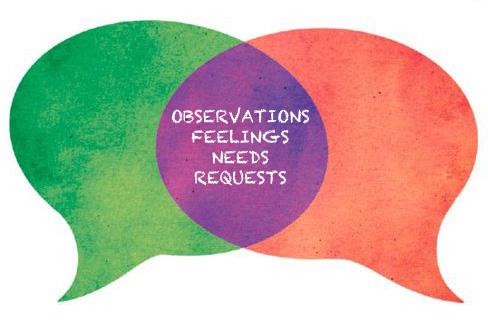







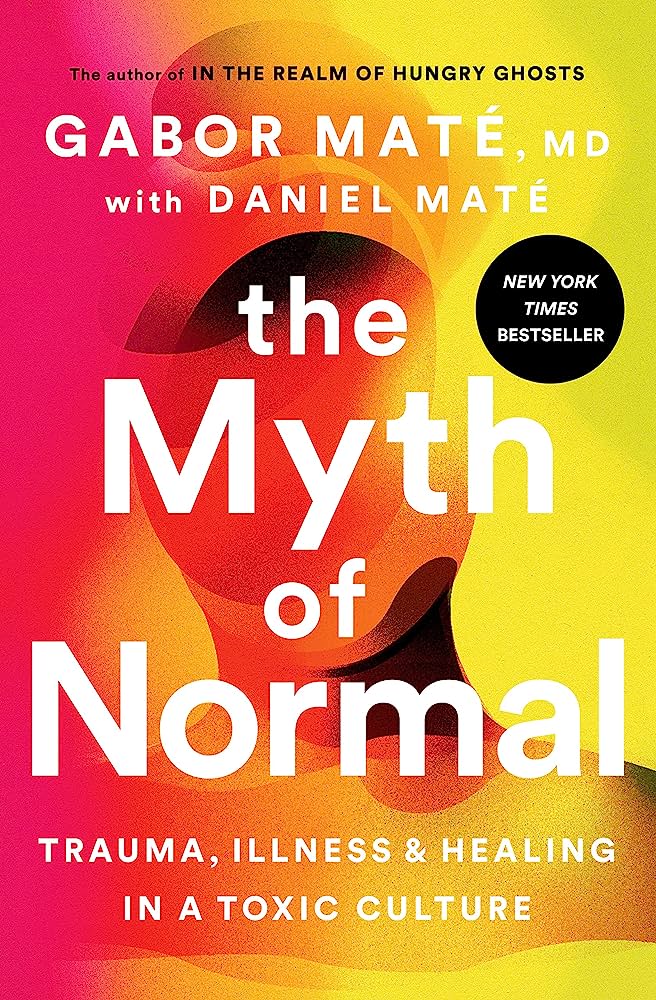











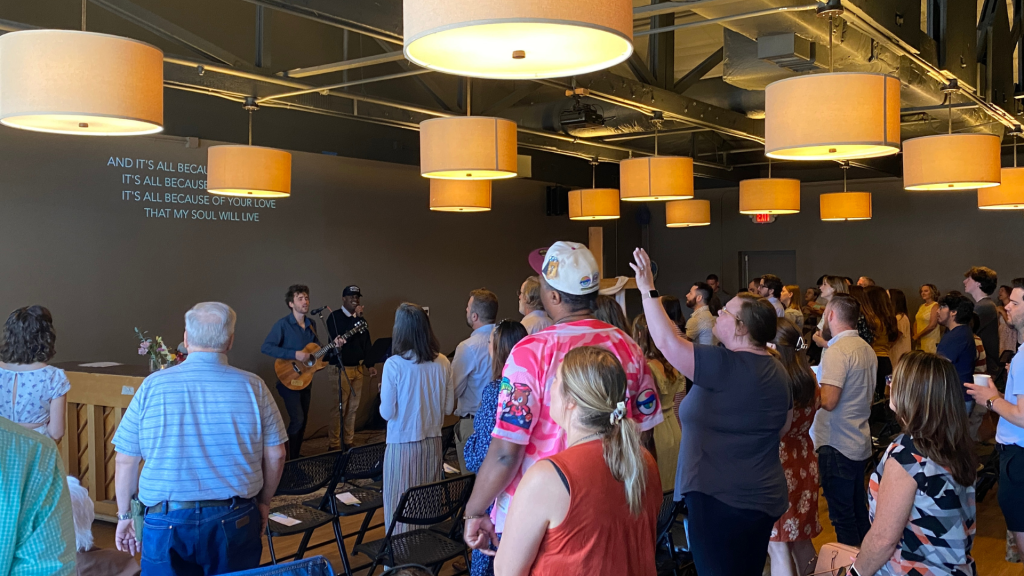














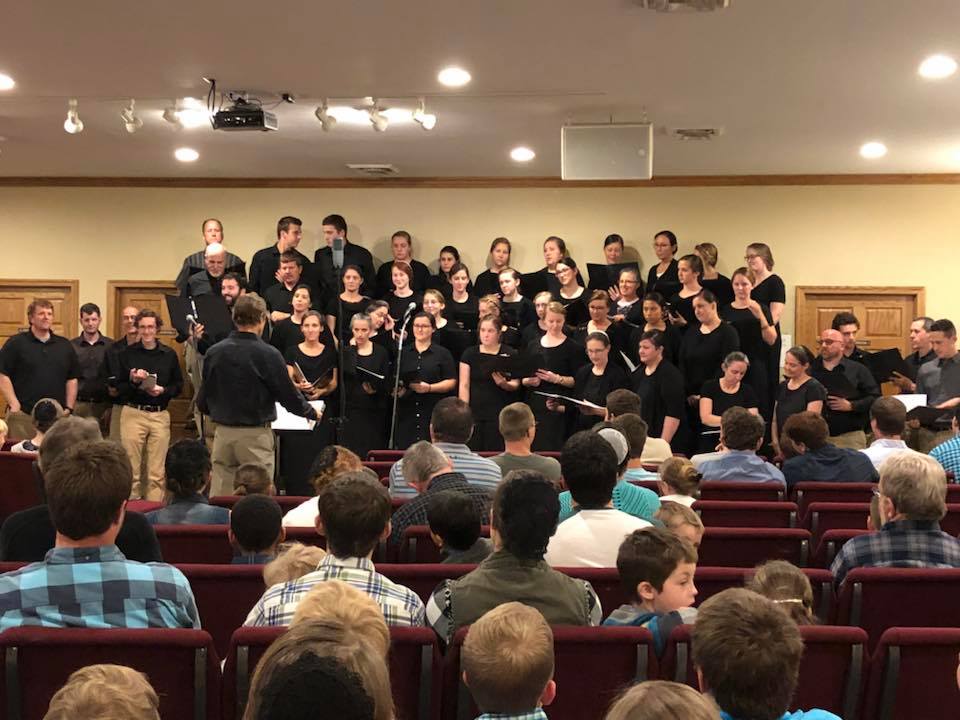










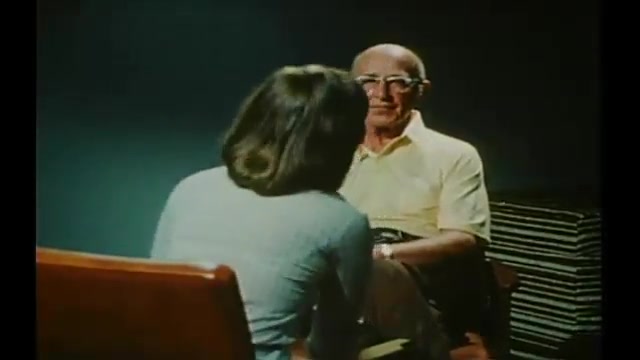


 javen.bear.