Title

I must study politics and war that my sons may have liberty to study mathematics, philosophy, and commerce in order to give their children a right to study painting, poetry, and music” – John Adams, Letter to Abigail Adams, May 12, 1780.

There is hardly anything I like more than music,

That’s why it’s almost hard to talk about.

While I scribble this, I glance to my left and see an electric guitar plugged into an amp. On the wall, two acoustics hang beside each other. Around behind me sits an old piano that three of my most loyal comrades helped me haul up a flight of stairs. Under this table there’s a record player and close by a microphone and two channel box for recording my own songs, written into notebooks strewn about the room. If you were to rip music out of my life, I’m not sure how much would remain.

But for some reason it’s really hard, feels strange, for me to tell you why I like a song. You could ask me why “Ames” or “Love Isn’t Made” are some of my favorites, but I’d be hard-pressed to tell you. It’s like I’m not good enough at the English language to show you why songs are good through my eyes. Maybe music is a language of its own – one more sacred than these words I’m writing.

I am persuaded that the Holy Spirit actively runs us into the things we need. Scripture that we happen to turn to on dark days, songs coming across your Pandora, dreams of things you thought you’d forgotten – I think He moves with us and uses what’s available for helping us. Books, movies, conversations. I’m saying that stumbling onto your favorite things might not be an accident. Maybe they’re pieces of a language more sacred, more holy, and better able to slip past your defenses than the language you speak. Maybe it’s the language of the spirit. This is why I find it asinine to stuff life into genres and categories. Christian, secular, rock, gospel, R-rated, it’s just not that helpful.

C.S. Lewis says that fiction is able to sneak past the watchful dragons of religion. It becomes more powerful to speak in poetry. The song goes straight to the heart while the numbers and the math of it will never be able to reach that” – Jon Foreman. More powerful indeed. More emotive – more real. But I reckon no easier to explain.

It’s a bit like trying to see a dim star out in the darkness. Looking directly at it certainly doesn’t help. In fact, if you try to focus on it, it entirely disappears. But if you resign to keep looking straight ahead, it’s there, always in the corners – shining just a little. Like a dream within a dream or a word you’ve heard but could never say.

Concerning Idols

This is a paper written for my Sociology 101 class after reading Francis Bacon’s essay The Four Idols. Bacon was a philosopher from the 16th century who became frustrated with the science of his day: namely how deduction was no longer contributing to anything new or interesting. My paper is a summary and conclusion concerning the idols which he proposed are blinding us from seeing the truth.


 The Four Idols

An idol is that which inhibits the ability to see clearly. Our idols distort our vision so that we cannot see clearly into and from the world. In his essay, The Four Idols, Francis Bacon says that idols “have most effect in disturbing the clearness of understanding”. At the end of the essay, Bacon likens the cleansing of oneself of idols for the purpose of seeing the things of the earth to the innocence of a child by which men may see the kingdom of heaven.

Idols of the Tribe

Bacon says that, “The idols of the tribe have their foundation in human nature itself, and in the tribe or race of men. For it is a false assertion that the sense of man is the measure of things.” To rid ourselves of the idols of the tribe we must realize the errancy of our sense perceptions of the world. The senses of the mind are “according to the measure of the individual and not according to the measure of the universe.” When our own sense experience shapes our understanding, we are prone to worship the idol of the tribe. A personal example of the idol of the tribe is my love of lemon. According to my senses, lemon makes everything better – lemon pepper, lemon juice, lemon slices, it is always an improvement on flavor. This tendency of mine to add lemon to any substance is noted by my family, and they get wary whenever I approach pots of food or gallons of tea with good intentions.

 Idols of the Cave

In the absence of the idols of the cave, “understanding may be rendered at once penetrating and comprehensive.” Yet the tendency is for a man to become obsessed with a few laws or properties of the universe and elevate those to the highest degree. Bacon criticizes the school of Leucippus and Democritus as being too busy with particles to give due diligence to the structure. Still he accuses other schools of being “so lost in admiration of the structure that they do not penetrate to the simplicity of nature.” The hope is that instead of eradicating those things and areas which we are biased towards, we can study them in turns – this way our understanding will be more complete. In my own experience, I have noticed that when handed a guitar I almost always tend towards the key of E. I find that the notes and chords there make the most sense to me. They sound the best. They are the best.

Idols of the Marketplace

Bacon terms the idols of the marketplace as “the most troublesome of all: idols which have crept into the understanding through the alliances of words and names.” We must realize that our language is not completely accurate in its attempts to explain. Bacon divides the idols of the marketplace into two kinds, the first being “names of things that do not exist.” There are things which remain unnamed for lack of observation or are ill-defined and based upon faulty theories and suppositions. The second kind is that which “springs out of a faulty and unskillful abstraction.” Bacon gives the example of the word “humid” which, depending on the circumstances and the speaker, could mean any number of different things. Different senses of the word infer different meanings – thus an idol which obstructs understanding. An example which I’ve noticed in my circles is the way we refer to the agendas of politicians. It isn’t uncommon to hear a candidate touted as good on education and healthcare. And it always leaves me wondering what it means to be good on something. It could mean the politician used to be a teacher and now wants better salaries for teachers, achieved by raising the budget for schools. Or maybe it means he or she recognizes wasteful spending within the system and wants to tighten the budget.

Idols of the Theatre

The idols of the theatre obscure our understanding by way of conventions. These have to do with the society we’re born into, the beliefs we’re brought up in, and the ideologies we buy into. The idols of the theatre beset us when we no longer bother to question or investigate established lines of logic. In the absence of the idols of the theatre, perhaps every generation would put on trial the accepted theories, beliefs, and customs that rule the day. Bacon says of these idols, “[They] are not innate, nor do they steal into the understanding secretly, but are plainly impressed and received int the mind from the play-books of philosophical systems and the perverted rules of demonstration.” We witness the idols of the theatre in the education of children. Whether a child grows up believing in the theory of evolution or the account written in Genesis will depend on the beliefs held by those who raise him.

Conclusion

One way to think of bias is that which we naturally tend towards. Our biases are often fundamental players in our erection of idols; yet they don’t have to be – the two things, bias and idol, are not twins. There is no question as to whether our idols cloud our vision and pervade our judgement. But the problem of idols is not our certain demise. Perhaps the cure to the problem of idols lies with the community. We need each other; to review our papers, critique our experiments, challenge our belief systems, run against our political candidates, to praise us for our faithfulness, and call us on our treachery. Almost nothing profitable is done in a vacuum. Often our biases stem from our love. And our love, of fields of study, of laws of nature, of worlds within the kingdom of men, is what enables us to be productive to society. But when bias turns to idol, we are no longer fit to look into any kingdom, that of heaven or of earth.

When the Man Comes Around

Written in blue ink: 9/3/18

Revised: 9/23/18


I’ve had the tale of Revelations, and Johnny Cash’s song, in my mind lately. Cash says it like this:


Whoever is unjust – let him be unjust still,

Whoever is righteous – let him be righteous still,

Whoever is filthy – let him be filthy still,

Listen to the words long written down,

When the Man comes around,


I hear sometimes about the absurdity of believing there’s a God. And some say that maybe there’s God and maybe there isn’t – but better to live like there is. And I hear people making a god of the scientific method and well-reviewed theories and tenured ideas. And tonight I reckoned that I’d like to be a writer for the Post one day, but I don’t feel like I have much to write. But I reckon I’ll go on writing anyway. And I have a lot of questions about Christianity and the things I’ve always held as true. But, regardless, I think I’ll just go on believing, having faith. They’re always changing minds about what the world needs: sometimes it needs Christians, sometimes we’re the idiots. So I reckon we ought to just go on believing whatever the case may be.

There’s a line from the Greeks that goes,

I would rather labor on earth in service to another,

to a man who is landless, with little to live on,

than be king over all the dead.”

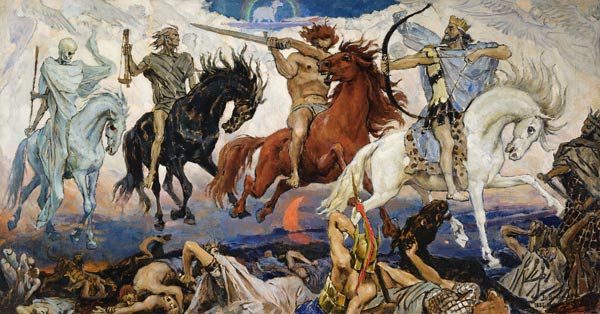
And I think Homer’s right. Perhaps it’s better to be a savage praying to a beetle and hoping for a miracle than a nihilist. Paul said that if we’re wrong about Christ rising from the dead, then we’re of all men most miserable. And I’ve never been able to come to grips with that. Isn’t it better to have hoped than to have believed in nothing, bowed down to chaos, and inaugurated the underworld?

Anyway, I think I’ll go on writing, though I’ve not much to say. And go on believing, even if I sometimes doubt. And I’ll go on hoping – what are we without hope? The one truly without hope, the nihilist who embraces despair, lives only in the darkness of the hallway, only in the dampness of the cave. He doesn’t know what it feels like to see a corner up ahead and wonder what’s around it, or why he’s walking towards a warm, bright pinhole of light. And I think I’ll go on loving, even though my love goes wrong. For after all of all have rotted away, been exposed, and cut down, love will remain. I suppose the only thing then will be to find out who it was that allowed us the pleasure, built the hallway, and poked the hole.

And I hear them – making love to the void,

But I suppose I’ll go on,

For the kings of the dead will be made low,

When the Man comes around,


Huck Finn – Just as They Come

I’ve been reading Huck Finn for English 202, and it’s a wonderful story, at least until Tom Sawyer gets involved. He’s aggravating and really drug the thing on longer than necessary. But since I’ve been reading a story through Huck’s voice and thought processes, I notice that I seem to think to myself sometimes with words he would use. It was the same way after watching a lot of Better Call Saul, I found I thought in the voice and likeness of ole Jimmy. Perhaps a dangerous activity. Twain anyway is sheerly a genius. He makes conversations like:


“I sha’n’t ever forget you, and I’ll think of you a many and a many a time, and I’ll pray for you too!” – and she was gone.

Pray for me! I reckoned if she knowed me she’d take a job that was more nearer her size. But I bet she done it, just the same – she was just that kind. She had the grit to pray for Judas if she took the notion – there warn’t no backdown to her I judge. You may say what you want to, but in my opinion she has more sand in her than any girl I ever see; in my opinion she was just full of sand. It sounds like flattery, but it ain’t no flattery. And when it comes to beauty – and goodness too – she lays over them all.


Anyway, the best scene in the whole book comes a little while later when Huck decides to do the “honorable thing” and write a letter back home to turn in his friend Jim, a runaway slave. He tries to pray away his guilt for harboring a slave.

Well, I tried the best I could to kinder soften it up somehow for myself, by saying I was brung up wicked, and so I warn’t so much to blame; but something inside of me kept saying, “There was Sunday school, you could a gone to it; and if you’d a done it they’d a learnt you that people that acts as I’d been acting about the nigger goes to everlasting fire.”

It made me shiver. And I about made up my mind to pray; and see if I couldn’t try to quit being the kind of boy I was, and be better. So I kneeled down. But the words wouldn’t come. Why wouldn’t they? It warn’t no use to try and hide it from Him. Nor from me, neither. I knowed very well why they wouldn’t come . . . It was because I was playing double. . . . I was trying to make my mouth say I would do the right thing and the clean thing, and go and write to that nigger’s owner and tell where he was; but deep down in me I knowed it was a lie – and He knowed it. You can’t pray a lie – I found that out.

So Huck writes the letter, and then his conscious is light as a feather. But then he gets to thinking about how Jim hasn’t ever done him any wrong, and how happy he’s always been for Huck’s help and company. So that it goes:

I happened to look around, and see that paper. It was a close place. I took it up, and held it in my hand. I was trembling, because I’d got to decide, forever, betwixt two things, and I knowed it. I studied a minute, a sort of holding my breath, and then says to myself: “Alright then, I’ll go to hell” – and tore it up.

Socrates thought that justice was really worth something if the just man developed a reputation for injustice – and kept on being just. When he did right, was viewed as wicked, and did right anyway. But I reckon even Socrates didn’t think to make a man consider himself unjust and still choose the right thing out of the justice in him. He’d of needed Huckleberry Finn for that.

Blood, Sweat, Tears, and Loose Change: the Essential Resources

In sociology we’re studying why some people groups are still sticking animals (and each other) with spears while others are putting men on the moon. One theory goes that it has absolutely everything to do with geographic blessedness. Simply, if you live in a place where you can grow and store crops, domesticate animals, and devote more time to developing better methods…you’ll be putting men on the moon in no time. In contrast, if you live in a place where you can’t grow stuff, have no animals to domesticate, and spend all your time spearing animals (and each other), you’ll get stuck there and not be able to move forward.

After a little contemplation, it has become apparent to me that I really have three essential resources with which to propel myself onward…and pay for college…and buy Chic-fil-a. My personal blessedness shall we say.

biotest clemson
  1. Blood.

The blood of Jesus saves me, but the blood from my elbow pays me.” That was my mantra this summer to the tune of about 400 bucks. There’s this place in Clemson called Biotest Plasma Center where they’ll actually pay you good money to sit in a chair and watch Netflix while they take your blood, filter out the plasma, and fill you back up with saline. It sounds too good to be true I know haha. Sometimes it’s a little painful if the needle stick goes wrong, and the saline is always ice cold in your veins. But as of now, I’ve got a card with enough money to buy gas (or Chic-fil-a) till Christmas at least. Blood – a wonderful resource.

truss
  1. Sweat

The curse of Adam: “by the sweat of you brow you will eat your food…” I had an office job this summer where I mostly answered phones and worked on a computer. So maybe sweat is a more general term here meaning work (although the A/C did quit for about a week). I’ve also started working a waiter job at a restaurant in town. So the ability to do labor in exchange for money to pay for college (or Chic-fil-a) – another great resource.

tears
money
  1. Tears and Spare Change

I’ve grouped these last two, perhaps most beautiful, resources together because of my recent use of them for a common purpose. I don’t know if anyone else has this experience, but I become something of a different person late at night. Getting wasted would not be what I’m talking about here. In the hours after everyone else is asleep, I find I feel differently than I do in the day – like happiness and sadness both mean more around midnight than they do at 3 p.m. Sometimes I’m not afraid to say and do things I otherwise couldn’t. And it’s mostly in these hours that I write songs or letters or whatever else I write. A while back I took some of those songs and sold them on CDs to my friends. I used some of that money to buy a brown felt fedora.

More recently I found out I had a lot more spare change than I’d ever realized. My brother Luke rolled it all up for me one night while he was rolling his own. All told, I had something like $150 worth of coinage sitting in a box on my piano. I reasoned that it’d be better to use it now than to keep on saving till I was older, a deeply sophisticated line of logic some people can’t follow. So I pooled the spare change with the leftover song (tears) money and bought a messenger bag made from the hide of a water buffalo. It’s from the Buffalo Jackson Trading Co.. I carry it to school everyday, and I love it. Tears and spare change – beautiful resources.

floor 1
floor 2
standing man

Blood, sweat, tears, and loose change – what more could a man need?


The Handmaid’s Tale: A Book Review

This is an essay I wrote in Ms. Blank’s English 102 last semester on a book assigned to the class: The Handmaid’s Tale.


tht

The Handmaid’s Tale: A Dysfunctional Dystopia (3/29/18)

Margaret Atwood wrote The Handmaid’s Tale with considerably limiting self-imposed constraints in place. In the book’s introduction, she says she feared that the story would have a “lack of plausibility”, so she purposed not to “put any events into the book that had not already happened […] nor any technology already available. No imaginary gizmos, no imaginary laws, no imaginary atrocities” (Atwood XIV). Because of the restrictions Margaret Atwood imposed on herself, such as only implicating language, events, and technology which were already familiar, The Handmaid’s Tale proves an unimaginative dystopia with a warning dissident to the author’s intent.

In the introduction of the book, Atwood explicitly cites the intended purpose of her story. She says, “The book is not anti-religion. It is against the use of religion as a front for tyranny; which is a different thing altogether” (Atwood XVIII). It is apparent that she is not attempting to predict the direction of the United States but to warn against its becoming totalitarian upon the back of religion. The context of Atwood’s tale is widespread disaster, and her warning concerns what Americans will lean on to move forward in the aftermath.

In an article written as a critique of The Handmaid’s Tale, Mary McCarthy expounds on why the limitations Atwood imposed on herself hinder the literary power of Gilead. She writes that, “[…] the most conspicuous lack, in comparison with the classics of the fearsome-future genre, is the inability to imagine a language to match the changed face of common life.” In most prominent dystopian stories, there are characters and language as fantastic and imaginative as their society is bleak and twisted. In The Hunger Games, Susanne Collins writes resilient characters to stand up under the wicked oppressors using language suited to a futuristic tragedy. Far from rendering it implausible, this approach strengthens the story.

Louis Lowry uses a premise similar to that of Atwood in her Newberry Medal winning dystopian novel The Giver. Lowry however is not afraid to write her dystopia imaginatively. It is a setting far less familiar than Atwood’s, yet it is certainly plausible and much more compelling. In the dystopian society of The Giver, the tyrants have gone so far as to eliminate the changing of the seasons, to render the world colorless, and to form a society which holds no memory of the days before them. The Giver invites readers to use their imaginations and welcomes them into a dynamic world where a story is happening. This opposed to the storyline of The Handmaid’s Tale which is told in a rather cryptic fashion. Atwood has determined that her story be the remnants of a bygone society stumbled upon by historians of the future. According to Atwood, the whole text is a transcription of tape recordings done in secret (Atwood 301). She also makes use of a disillusioned narrator who is trying to hold onto her sanity. Atwood makes these literary choices in the name of plausibility. What she ends up with is a story which is neither inviting nor compelling, one that sends a warning other than she intended.

In a letter to James Warren in 1779, Samuel Adams wrote, “While the people are virtuous they cannot be subdued; but when once they lose their virtue they will be ready to surrender their liberties to the first external or internal invader […] If virtue and knowledge are diffused among the people, they will never be enslaved” (Adams). Margaret Atwood wrote the story of Gilead with the intent to warn against the use of religion as a front for tyranny. The real warning reflected through the pages is one contrary to that intent. The effective admonition is not that American government could be overthrown by tyrants fronting an excuse for Christianity. And a poor excuse at that, for any claim to Christianity which makes captives, oppresses the lowly, or shrouds in darkness is entirely other than its true purpose. The scathing warning of The Handmaid’s Tale is one of a loss of virtue, the same virtue hoped of this nation’s citizens by Samuel Adams.

The story of Gilead would have been more poignant had it been told by a better suited narrator, one with the presence of mind to speak to the things Atwood intended the reader to pick up on. Offred does have at least a nominal understanding of Christianity, yet only makes passing remarks as to its being used as a political weapon. Her voice though the story is one of a kitten lulled into the hands of strangers: she laments for a while, and then relinquishes all hope. Towards the end of her narration, Offred’s death of spirit becomes painfully clear. After being caught for her secret meetings with Nick, she says, “I feel serene, at peace, pervaded with indifference. Don’t let the bastards grind you down. I repeat this to myself [sic] but it conveys nothing. You might as well say, Don’t let there be air; or, Don’t be” (Atwood 291) And then, sitting alone in her room contemplating suicide, she says, “That is what gets you in the end. Faith is only a word, embroidered” (Atwood 292). This language of an unwillingness to even acknowledge hope or a cause greater than herself is evidence of The Handmaid’s Tale’s truer warning: this local lulling to sleep and not the awakening of a foreign monster is “fatal to a free society” (McCarthy).

Atwood intended her novel to warn against tyrants using false religion. But because of a dystopia lacking imaginative quality and an unfortunate choice of narrator, the warning of The Handmaid’s Tale is one about civic virtue. The rise of the district of Gilead warns that the enemy should come when a nation is asleep, lacking good conscious and spirit. The horror is that they are caught without a single Joan of Arc, Spartacus, Churchill, or Benjamin Franklin in their company and are made willing slaves to a barbaric ideology.


All told, if you’re looking for dystopian fiction, just read The Giver or Lord of the Flies or something. In my opinion, this is a ‘classic’ best left on the shelf.

Sights and Sounds of Summer

As of this morning at about nine o’clock when I walked up the giant hill into the doors of Oconee Hall at Tri-County, summer is over.

These are the (more notable) things I watched, read, and listened to all summer long. I’d love to know what you picked up and why I should see/read it too.

–[[[ T.V. Shows ]]]–


11.22.63. (trailer)

112

This is the one and only thing I’ve ever found to watch on Hulu. It’s about an English teacher who time travels in order stop the assassination of J.F.K. The show is based off the novel written by Stephen King. I mostly love it because of the way it speaks about the butterfly effect, something which is really really cool. And the last scene is golden.

*this show has a lot of language, it’s kind of scary, and a lot of people get killed. Read the parents guide before watching.

We did not ask for this room or this music. We were invited in. Therefore, because the dark surrounds us, let us turn our faces to the light. Let us endure hardship to be grateful for plenty. We have been given pain to be astounded by joy. We have been given life to deny death. We did not ask for this room or this music. But because we are here, let us dance.” – Stephen King


The West Wing (trailer)

west wing

I think I feel the same way about The West Wing that a lot of my friends feel about The Office. It’s set in the white house and tells the story of America from the point of view of the people in power. This is a show that you walk away from feeling smarter than when you sat down.


Better Call Saul (trailer)

better call saul

I can’t really remember how I started watching this one. But it has become my favorite show of the summer. Better Call Saul is about a lawyer named Jimmy McGill who lives and practices in Albuquerque. It’s wonderful.


–[[[ Films ]]]


Almost Famous (trailer)

a

I think this is my favorite movie. It’s about journalism, rock and roll, living on the road, and wanting to be cool. It’s got Elton John all over the soundtrack…it’s a great movie.

“The only true currency in this bankrupt world is what you share with someone else when you’re uncool.” – Lester Bangs (Almost Famous)


Eternal Sunshine of the Spotless Mind (trailer)

eternal sunshine of the spotless mind

I’d been waiting to see this movie…and then it finally came on Netflix! It’s Jim Carrey (but not in the Dumb and Dumber fashion). This is a love story about two strange people told backwards – it’s good.


The Shawshank Redemption (trailer)

The-Shawshank-Redemption1.jpg

This is a story about the triumph of the human spirit. One of the best movies I’ve ever seen. *once again, read the parents guide…it’s set in prison.


–[[[Books ]]]


Bridge to Terabithia

BTT

I re-read this one to make sure it was still my favorite book – and it still is. This is, hands down, my favorite story in the world.


Justice: what’s the right thing to do

jstice

This book was written by a Harvard Professor, and I think everyone should read it. It’s not so much that it teaches you about the world as it shows you what you believe and what that actually means for society. You will walk away more informed and thankful that you read it; I certainly did.


Lord of the Flies

lrdl of the fliesl

This is a book that critiques humanity by placing a group of young boys on an island and showing you what unfolds. I really enjoyed this book and would recommend it.


The Glass Castle

the glass castle

My mom was on me for a long time to read this book, saying that it’s one everyone ought to read. And she was right – it only took me a few days to read this story. It’s a true story about the childhood of Jeanette Walls, and it is wonderful. You’ve never heard of a family who lived the way these people did: always on the move (or the run) and with a worldview that’s simply astounding. They prioritized self expression and love of nature and experiencing culture to the point of living in dire poverty. The Walls’s value structure didn’t really work in a capitalist society, but it made for one heck of a childhood for four siblings.


The Grapes of Wrath

greaps of warth.jpg

This book isn’t one you just breeze through, at least I didn’t. But it was definitely worth my time. If you read the book, and then listen to Springsteen’s song, The Ghost of Tom Joad written from it, it’s really something.


The Man Who Was Thursday

man thwo was hturday

I also re-read this one to see if I still loved it…and I still do. This is a story about the loneliness and fear everyone trying to do the right things finds in themself. It’s about a detective trying to thwart a ring of anarchists. What unfolds is really quite hopeful. Currently, this is my second favorite book.


And that, my friends, is what I’ve consumed this summer.

Cheers.

For the Sleeper

This is a song about traveling the world. It was about 3 months between the time I started writing and when I finished recording.

cheers.


For the Sleeper

Goodnight sleeper when you sleep, I’ll be standing guard in the streets,

Over everything, and everyone,

Goodnight sleeper when you wake, I’ll have been around the world,

Tell you bout the friends I made, tonight,

I’m gonna go around the world,

I’m gonna sail through the sea,

I’m gonna ride on a desert train,

I wanna know what’s there for me,

So don’t you wait up for me,

Just lay your pretty head down and dream,

Goodnight dreamer when you dream, I’ll be dancin’ round in the rain,

Of another sea, another place,

Goodnight dreamer with the sunrise, I’ll be back again,

Tell you bout the land outside, tonight,

I’m gonna go around the world,

I’m gonna sail through the sea,

I’m gonna ride on a desert train,

I wanna hear them call my name,

So don’t you wait up for me,

Just lay your pretty head down and dream,


130 Reasons to Ride with Me

About a week ago Luke and one of his friends decided to make a list of their top 100 songs. I thought I’d do the same…and then didn’t have the heart to round out the last few dozen. So…130. It’s in the Rolling Stone’s top 500 format, sectioned off and ascending (the best are at the bottom).

I’ve hyperlinked songs throughout (the blue/underlined ones) that maybe you haven’t heard and mabye you should.

* = favorite song at some point.


[130 – 108]

  • Superman – Five for Fighting
  • Better Days – The Goo Goo Dolls
  • Africa – Toto
  • Give It All Away – Aaron Shust
  • Moving All the While – Sidewalk Prophets
  • All of God’s Children – Jon Foreman
  • Lord, I Need You – Matt Maher
  • The Man in Black – Johnny Cash
  • Roam With You – Ross King
  • To Find my Way to You – Bebo Norman
  • Come Back Soon – Andrew Peterson
  • Nuisance – Jon Ruben ( ft. Matt Thiessen)
  • A New Law – Derek Webb
  • Head Over Heels – Switchfoot
  • Lucky Denver Mint – Jimmy Eat World
  • Everything’ll Be Alright – Time for Three
  • Timshel – Mumford and Sons
  • Vice Verses – Switchfoot
  • Have You Ever Seen the Rain – John Fogerty
  • Ghost Machine – Jon Foreman
  • Colder Weather – Zac Brown Band

[107 – 84]

  • All Things New – Andrew Peterson
  • The Man Comes Around – Johnny Cash
  • Betrayal – Fiction Family
  • That’s How I Got to Memphis – Tom T. Hall
  • Now We Are Free – The Lyndhurst Orchestra
  • My Saviour My God – Aaron Shust
  • All I Need – Caedmon’s Call
  • You and Me – Lifehouse
  • More Like Love – Ben Rector
  • Walking in Memphis – Marc Cohn
  • Learning to Breathe – Switchfoot
  • Bloodshot Eyes – The Choir
  • Gone – Switchfoot
  • Nebraska – Bruce Springsteen
  • Sloop John B – The Beach Boys
  • In My Arms – Jon Foreman
  • In the Hands of God – Newsboys
  • Brother – Needtobreathe
  • The Reckoning – Andrew Peterson
  • What’s a Boy to Do – Mat Kearney
  • Don’t Stop Believin’ – Journey
  • Funny the Way It Is – The Dave Matthews Band
  • 100 Years – Five for Fighting
  • Hard to Get – Rich Mullins

[83 – 54]

  • Old Girl – Fernando Ortega
  • She Must and Shall Go Free – Derek Webb
  • From the Heart – (Air Bud’s Theme)
  • Equally Skilled – Jon Foreman
  • Rainbow Connection – The Muppets*
  • Rochester – Mat Kearney
  • Sometimes by Step – Rich Mullins
  • Mother India – Caedmon’s Call
  • Might as Well Have a Good Time – Crosby, Stills, and Nash
  • Hear You Me – Jimmy Eat World
  • Go Your Own Way – Fleetwood Mac
  • Walking the Wire – Imagine Dragons
  • Love Is Different – Caedmon’s Call
  • All Along – Remedy Drive
  • Eyes on the Prize – Sara Groves
  • Hey Jude – The Beatles
  • Take Me to Church – Sinead O’Connor
  • This Is Your Life – Switchfoot
  • After the Last Tear Falls – Andrew Peterson
  • Tears in Heaven – Eric Clapton
  • California Stars – Wilco (Woody Guthrie)
  • Take Me Home, Country Roads – John Denver
  • Shasta – Mat Kearney
  • I Still Haven’t Found What I’m Looking For – U2
  • Wonderful Tonight – Eric Clapton
  • Faithfully – Journey
  • Army of One – Coldplay
  • The Fields Of Athenry – Paddy Reilly & the Dubliners
  • The Rising – Bruce Springsteen
  • I Won’t Back Down – Johnny Cash (Tom Petty)

[53 – 23]

  • More Heart Less Attack – Needtobreathe
  • The High School Band – Andrew Osenga
  • Who’s Gonna Ride Your Wild Horses – U2
  • Dance – Caedmon’s Call
  • Where the Streets Have no Name – U2
  • Shots – Imagine Dragons
  • Twenty-four – Switchfoot
  • Down – Mat Kearney
  • Life’s for the Living – Passenger
  • Winning Streak – Glen Hansard
  • Lucky Stars – Beverly Staunton
  • Someday We’ll Know – Mandy Moore (Jon Foreman)
  • Only Hope (Switchfoot)
  • Get Out of Your Own Way – U2
  • Hell of a Ride – Marc Jordan
  • Against the Voices – Switchfoot*
  • Blowin’ in the Wind – Peter, Paul, and Mary (Bob Dylan)
  • Where I Belong – Switchfoot
  • My Love Is my Love – Peter Bradley Adams
  • Hold the Light – Caedmon’s Call*
  • Enough to Let Me Go – Switchfoot
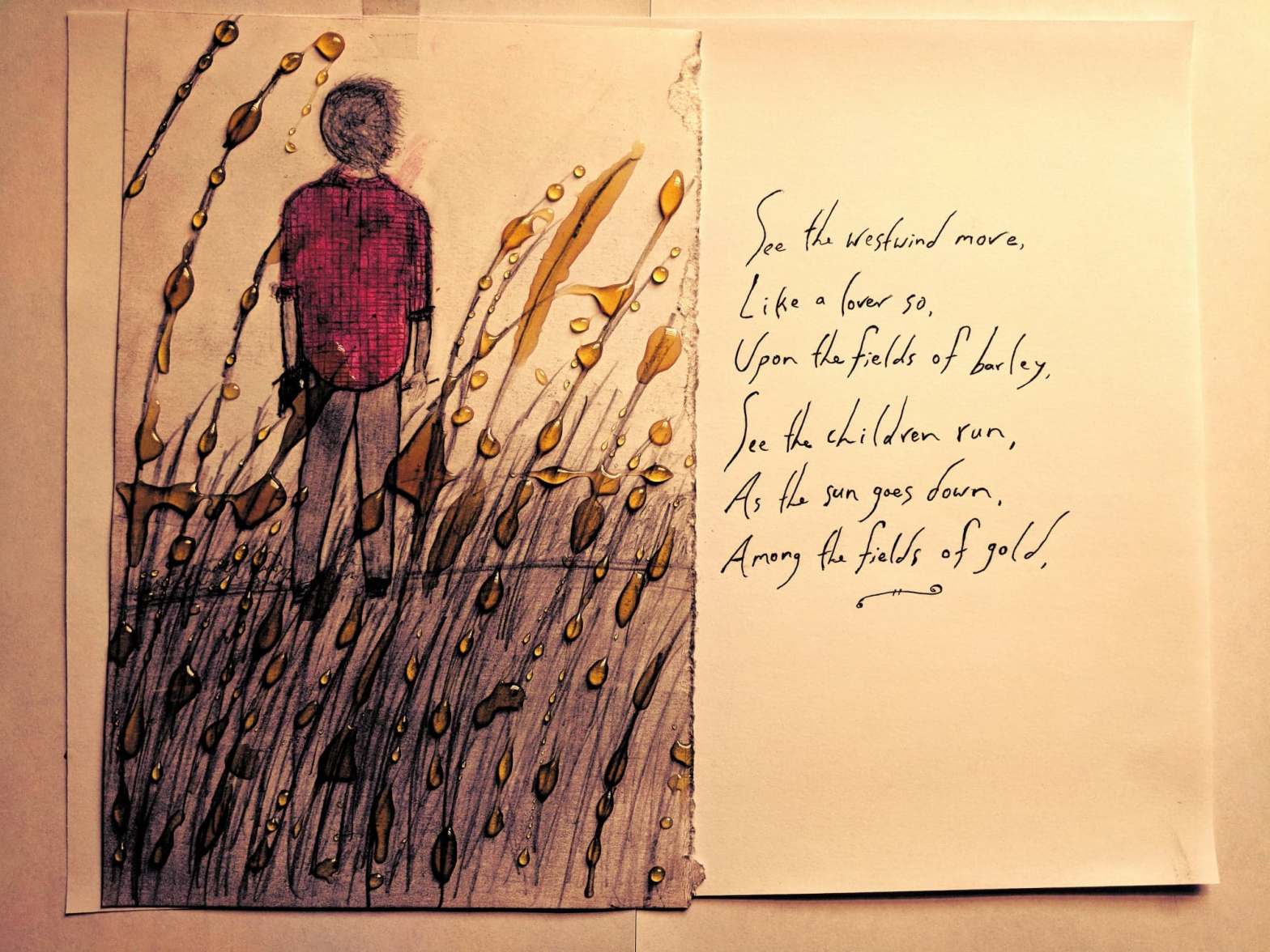
  • Fields of Gold – Sting
  • In the Middle – Mat Kearney
  • Dare You to Move – Switchfoot
  • Something Beautiful – Newsboys
  • Rosa Dear – Ruth*
  • Your Love Is a Song – Switchfoot
  • The Blues – Switchfoot
  • My Deliverer – Rich Mullins
  • Viva la Vida – Coldplay
  • Titles – Vangelis (Chariots of Fire)

[22 – 2 ]

  • Love Isn’t Made – Jon Foreman*
  • The Shadow Proves the Sunshine – Switchfoot
  • Tears of Hercules – Marc Jordan
  • Iris – The Goo Goo Dolls
  • On Fire – Switchfoot
  • Racing in the Street – Bruce Springsteen*
  • Marigold – Relient K
  • She Said – Jon Foreman
  • Son of Man – Phil Collins*
  • The Ghost of Tom Joad – Bruce Springsteen
  • Lover – Derek Webb*
  • Hallelujah – Leonard Cohen (Theory of a Deadman)
  • Demons – Imagine Dragons
  • Fast Car – Tracy Chapman
  • Song for Someone – U2
  • Fix You – Coldplay
  • If I Had a Dollar – Tattletale Saints*
  • In the Blood – John Mayer*
  • The Sounds of Silence – Simon and Garfunkel
  • Up&Up – Coldplay
  • Ames – A Firm Handshake*
  • Sunday Morning Coming Down – Kris Kristofferson*

#1. Brothers in Arms – Dire Straits

These mist covered mountains
Are a home now for me
But my home is the lowlands
And always will be
Someday you’ll return to
Your valleys and your farms
And you’ll no longer burn to be
Brothers in arms
Through these fields of destruction
Baptisms of fire
I’ve witnessed your suffering
As the battle raged higher
And though they did hurt me so bad
In the fear and alarm
You did not desert me
My brothers in arms
There’s so many different worlds
So many different suns
And we have just one world
But we live in different ones
Now the sun’s gone to hell and
The moon’s riding high
Let me bid you farewell
Every man has to die
But it’s written in the starlight
And every line in your palm
We are fools to make war
On our brothers in arms

On Spotify:

Run

It was about a year ago that three of us young dudes headed west.

3

We had bought and prepared a 1997 Dodge Wagon, a beast of a carriage. It was hideous, so we painted flames and flowers and ‘carpe diem‘ on it. It was un-homely, so we built beds in the back and threw down carpet. It was sure to break down, so dear Jesus we prayed.

vannnnigan
camel

She was an American made metal camel – sometimes willfully carrying, sometimes having to be dragged across the desert. But we all made it through, east to west and back again. ‘‘Fading West’‘ was something of a last hurrah before college and real jobs and stuff to tie us down.


I’ve been a fan of Springsteen for a while. And this was an attempt at a song of his style from last August recorded on a Galaxy Note 5.

Run

We were rollin’ with fire in our eyes and down the sides of a hippie van,

Into the wild west where dreams waltz up and take you by the hand,

We were runnin’ like a prophet said the end times was near,

Like a deal with the devil gone bad and was runnin’ for the clear,

And it’s any man’s guess, how far we’ve come,

It’s every man’s dream, to run like we run, 

Run boy run,

Someday the strong tie of a family’s gonna hold me down,

And someday my name is gonna mean somethin’ in this here town,

Someday a whole lotta folks will depend on and look up to me,

But today is not that day, today I am free,

And it’s any man’s guess, how far I’ll go,

It’s every man’s dream to roam like I roam,

Go boy go,

Through the red-rock mesas that run through the desert sands,

The razor blade highways that cut through the badlands,

The California coastline, Montana big sky,

And between the lines, till you get back home,

Keep her between the lines till you get back home,