All the Songs

This is the most complete collection of my songs ever collected! Most of them have been posted before (not all), but never all in one place. What follows are all my EPs with all their songs (click the links to listen) and a short synopsis for each album.


“Fourth Time’s the Charm” (July 2024)

The major themes I think about in these songs are realization and acceptance, loss and confusion, and faith. My favorite song is track 3, “Where Are We” which I wrote while in college around 2020. This is, by far, the most produced work I’ve ever released. Still, it contains the rawness and intimacy of the previous three projects.

Fourth Time’s the Charm

About Us

Where Are We

Take Away (This Eclipse)

More Than Ready

Losing Time

Epiphany


“A Wide Open Room” (August 2019)

a wide open room

These songs are about trying to find perspective and looking towards the future, which at the time looked like a wide open room. A couple friends helped me with some of the recordings and Aleisha helped with the cover photo. My favorite song is track 3, “In Your Arms.”

All I Know

Good Old Days

In Your Arms

To the Sea

With You


“Songs for the Springtime” (Feb. 2019)

songs for the springtime

This second collection of songs was written out of a pretty hard time – but with the hope of new life and resurrection in mind (springtime). The vibe of this collection is pretty mellow and raw, and I think that fits. I really like a lot of these tunes, “April” “Numb” and “Springtime” are my favorites.

April

God Bless Us All

For the Sleeper

Pull for You

Stay

The Sun Comes Up

Between My Hands

Clarity 

Numb

Springtime


“Rambling Anthems” (Jan. 2018)

stage of white and black 9999.jpg

*This is the first collection of songs I ever recorded. They are dear to me, and as I listen to them I think of Oregon and what it felt like to be eighteen and nineteen years old. They were (almost) all recorded with a borrowed mic and my Taylor guitar in an upstairs room. My favorite is track 4, “What Love Is” and track 2, “For Your Morning.”

Blessing Song

For Your Morning

Pilgrim

What Love Is

Patiently

Evergreen

Mountain Song

I Love You More

Others Too

Gethsemane

A Lot Like You

Lullaby

Gravity


Misc. Songs

Ryan’s Song (cover)

Run

Spanish Class


“Marriage Story” film review

trupet

In An Introduction to Film Genres, Friedman defines the genre of melodrama as, “Films centering on personal relationships…that seek to elicit spectator sympathy for the film’s protagonists and tell their story in a lighthearted style that may include spectacular effects, implausible coincidences, plot twists, and a clear dichotomy between good and evil” (Friedman, 85). Marriage Story certainly has some of these characteristics but shies away from anything unrealistic or implausible and also doesn’t draw neat distinctions between protagonist and antagonist. The two main characters antagonize each other, yet the story is told in a way that makes us root for both of them. Ultimately, the couple (together) is the hero. And in their separation, neither seems complete as the protagonist.

I watched this film one and a half times, and I’m sure I would pick up on new elements with subsequent viewings. The first time through, I walked away mostly thinking about the failed marriage, the relationship which was not able to hold. I loved the scene where Johansson and Driver have a prolonged screaming argument in the apartment – they insult and degrade each other full force, the raw pain and baggage finally being aired. Each compares the other to their parents, which is taken as a below-the-belt insult. It’s clear both characters have a lot of emotional baggage from their past. As I watched I thought, “If they could have had this conversation in act 1, they would’ve made it.” And at the end they end up in each other’s arms apologizing. Director Noah Baumbach says of the scene, “It’s a cruel, relentless duet of a scene — but ultimately offers relief” (Sollosi).

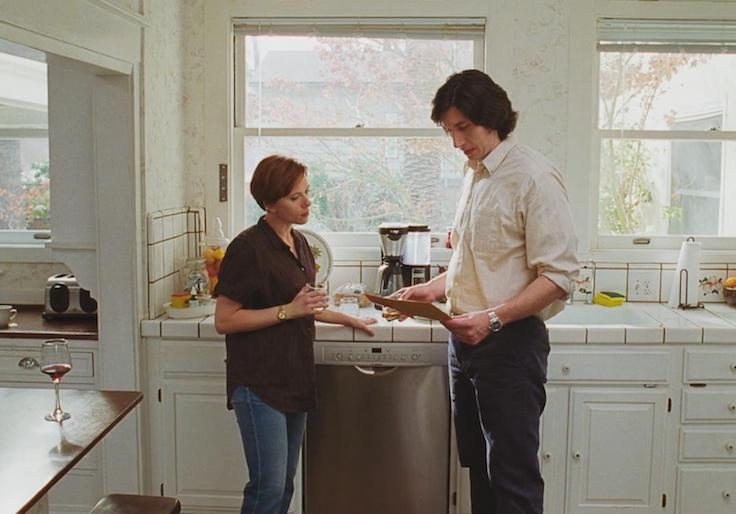
Marriage Story (screen grab) CR: Netflix

The second time through I noticed how much Johansson’s character (Nicole) was taken with Charlie, even though broke away from him. In the first meeting with her lawyer, she’s awkward and weak in her conversation (the high angles and long shots make her look really small). But once she starts talking about Charlie, her demeanor changes completely. She walks around and speaks comfortably, confidently. In another scene Charlie gives Nicole a “note,” a comment about her performance that night, and tells her she was too dramatic in her delivery. Later on, Nicole prefaces a remark to Charlie with, “I promise to say this as un-dramatically as possible.” It’s clear she still values his opinion and even wants his approval.

In the beginning of the film, this couple agrees they want to cut the cord, get the divorce and make a clean break. Ultimately, they are not able – the ties are to strong and too deep to sever with signatures on paper. I really liked how Marriage Story depicted the awkwardness of the characters figuring out how to live out a sudden, life altering decision. They think they can just break it off, but Nicole keeps calling Charlie “honey,” Charlie is the one she calls to come fix her entrance gate, Nicole has to order Charlie’s lunch at a settlement meeting because no one else (Charlie included) knows what he wants to eat, and in the final scene he stands there while she ties his shoe for him. It’s awkward to watch, and there are no clear winners.

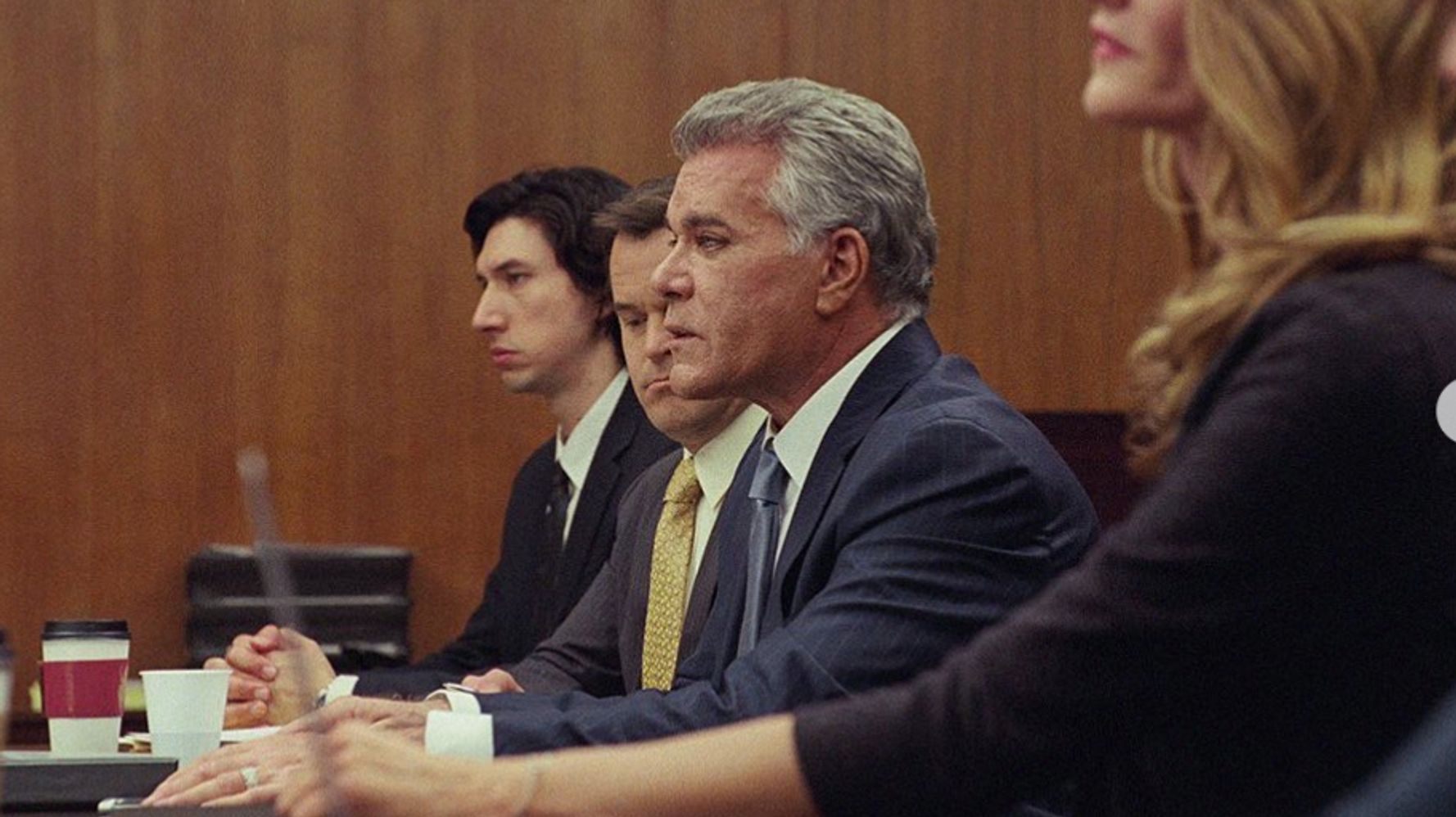
lawyer

Marriage Story depicts the tension between the legal and the emotional, bureaucracy and humanity. Both spouses drop thousands of dollars on lawyer fees and in a desperate attempt to get themselves clear of each other, but the past proves much too dense and meaning filled to easily get free from. It is painful to watch, but very powerful in a melodramatic way, how Charlie and Nicole must lay down their humanity as they fight each other in a legal battle. I thought the film did a great job of framing this as a key tension throughout the narrative. Winning in court against a spouse and retaining the humanity that bound you together seem almost mutually exclusive. Marriage Story is a beautiful film about breaking apart.

jtich

References

Sollosi, Mary, and Mary Sollosi. “Noah Baumbach Breaks down the Devastating ‘Marriage Story’ Fight Scene .” EW.com, 7 Dec. 2019, ew.com/movies/2019/12/07/marriage-story-noah-baumbach-fight-scene/.

Friedman, Lester et al. An Introduction to Film Genres. W. W. Norton & Company, 2014.

Impeachment Questions

I used to think of really smart people as walking encyclopedias. But I’ve come to believe that’s entirely wrong. Really brilliant people are more like very powerful calculators. They have the capacity to consider a question and produce a good answer. Instead of a huge collection of facts stored and waiting to be regurgitated, these people have minds which have been trained how to think, how to reckon with conundrums, how to articulate insightful conclusions to difficult matters. And this is a much nicer way of framing the situation; after all, who likes to memorize stuff?

It raises the question, what of those like me who don’t know very much about how to think. What of us who’s calculating ability is still rather small? If wisdom was rote memory, we’d just have to set out memorizing. Wisdom isn’t that easy. It stands to reason that, on the whole, the answers put froth by those who haven’t developed their ability to think will be mostly useless to anyone else.

And this is why we ought to be grateful for the impeachment, for new movies, for controversy, for the events transpiring daily. They provide us with new things to think about, new problems to be reckoned with, new space to articulate answers. The point of our answering is not that we’ll get it right – let’s be honest, who among us really knows anything about the impeachment? Have any of us formally studied constitutional law, been privy to the crucial conversations, read the academic literature? Almost certainly not. The point is that we enter in the conversational space and become something more for having been there. And if that’s the goal, to become more through communication, then I’d wager it’s not a waste of time (entirely) to be in the comment threads.

If the goal is to persuade the other to see the truth you are adamant you’ve attained, it’s probably a waste of time. When you come to the table looking to educate the other and “win him over,” treating him as an “it” instead of a “thou,” it’s doubtful you’ve become anything more for having been there.

Personally, the end of the impeachment hearings begs a reflection. What was gained or lost over the course of the hearings? And forget what it means for the country, forget what I think actually happened on a national scale. I can pretend to know, but I don’t. But I can observe what happened up close. My friends view me differently now than they did two weeks ago, what’s changed? Was I graceful? Winsome? Arrogant? Helpful? Honest? Humble? Have I become more through my interaction with current events? How have I treated the other? How did I react in victory? Defeat? Perhaps these sorts of questions are more worthwhile than some others I tend to dwell on.

Did I make the most of the impeachment hearings? Did my presence in the conversation glorify God? Was I neighborly across the channels? The proceedings are over, but the words I’ve written and spoken have shaped a new reality, for me and for others. Am I proud of my contributions to this newly constructed place, albeit a strange place: where presidents stand trial, it’s seventy degrees in February, where I’ve spoken more to that raging idiot on Facebook than some of my own family, where people like you read stuff like this, and where the young can speak freely. What a wonderful world.


“Since the will extends further than the intellect, I do not contain the will within the same boundaries; rather, I extend it to things I do not understand. Because the will is indifferent in regards to such matters, it easily turns away from the true and the good; and in this way I am deceived and I sin.”

– Rene Descartes (Meditations of First Philosophy, 58)

armchairs again

A few nights ago we were at Aleisha’s place for board games and food that never got taken to a cancelled Christmas party. The ten of us sharing in the warm company of friends and the cold cheer of hot chocolate poured seven or eight favorite songs ago.

We were scheming about Christmas, that good time when far-off friends come back home from far-off places, if only for a few days. And Colson brought to my attention that with Mike coming home, three of our group of four would be around, and that we should play Madden like we used to, or almost like we used to. Always the four of us – the “armchair ballers.”

All ten of us were around a rickety table playing a word game, and John Mayer had taken his position in the queue. He was singing Free Fallin’ while the hot chocolate got even colder. We talked and laughed at the memories – always the Kansas City Chiefs and blasted Tyreek Hill, that lighting bolt of a man I could never defend. Someone threw out a name, a possible replacement to pick up the controller and remake the foursome.

At the suggestion we kind of shrugged. Someone else said, “He’s alright, but he’s no Gabe.” And at that moment, I heard John Mayer in the last verse, clear as Christmas lights, cut through all the chatter, singing out,

I’m gonna leave this,

                                  World for a while,

Almost as if the first sentence was answered by a second. And from thinking about what was, my mind turned to what will be again. For it is written,

“I saw a new heaven and a new earth: for the first heaven and first earth were passed away; . . . ‘Behold, the tabernacle of God is with men, and he will dwell with them, and they shall be his people, and God himself shall be with them’ . . . And he that sat upon the throne said, ‘Behold, I make all things new.’”

and elsewhere,

“This calls for patient endurance on the part of the saints who obey God’s commandments and remain faithful to Jesus. Then I heard a voice from heaven say, write: ‘Blessed are the dead who die in the Lord from now on. ‘Yes’ says the Spirit, ‘they will rest from their labor, for their deeds will follow them.’” (Revelation 21 and 14)

And I refused to think for one minute that I will not sit again in great armchairs alongside my three brothers.


78553781_519477062112487_1263694135714381824_n

lead me from the wire

*image by Lisa Kew

In Communication Ethics, our final paper required us to evaluate a communication act within the church – I chose the mentoring relationship. I’m think this is the most time and energy I’ve ever put into a writing project.

As I spent countless hours researching and writing it, I would love for you to read the paper and tell me your thoughts (I’ve included the PDF). However, I would also like to offer some of these thoughts in shorter form.


tightrope

I think entering into communication with another is something like stepping out on a tight rope, a high wire.

In our communication, we offer ourselves in some way. And when you offer yourself, there is the potential to miss and be missed.(I hesitate to say “miscommunication” because I don’t really know what it means).

When I have a conversation with my best friend, I am can easily offer myself wholly, or at least mostly. I might make a fool of myself, but the stakes aren’t very high. You might say the wire isn’t very high off of the ground. If things go south, I can step off and tight rope and go on my way, not much the worse for wear.

But what about when there’s farther to fall? What about when I’m asked to speak in front of the whole class, or the whole church, or the whole city? The rope seems to have gotten higher – there is suddenly much farther to fall. And herein, I believe, lies the choice. Do I walk on out, or do I compromise the routine for my own safety? Do I use the balance bar to help me walk, or lower it to the ground for a walking stick to prop me up?

It seems to me the best communicators (speakers, mentors, pastors…) are those willing to keep walking out on the wire without looking down. They are faithful regardless of how high the tightrope gets and how far there is to fall. And fall they will. No one nails it every time. Why else would pop stars lip-sync?

Part of being a great communicator is to stop caring about what the audience thinks. You must love the audience while totally disregarding their opinion. If a speaker’s primary concern is a positive response from the listener, it is certain he will change his message to get the response he wants. He’ll say what he knows will get the amens, the applause, the adulation. And he has not loved his audience, he has loved what they can give him at the expense of the truth.

I have seen people who did not come to be patted on the back, applauded, or congratulated. They came to serve and to love, unwilling to distort their words to gain favor. It is a difficult thing to accept, that the worth of our work is not dependent on the yield. That is not the capitalist model. We are taught, from the time we are old enough to grasp a dollar bill, that if what we’re doing is producing good results, then it must be worthwhile. And it isn’t so.

Jesus told parables that confused both the crowds and the disciples (not by accident). “On hearing [the teaching], many of his disciples said, ‘This is a hard teaching. Who can accept it?’ . . . From this time many of his disciples turned back and no longer followed him.” (John 6) Jesus allowed people a choice, he did not manipulate or coerce them. He could have made a lot more converts by telling the stories more clearly, or just giving clear advice. But the point was to communicate the words given to him, to obey his father, not to get applause or trophies.

In the context of mentoring, or really leading in general, I think those who are mentoring or teaching must be willing to really make themselves vulnerable if they are to love those whom they are serving. It is not enough that they are older, or more popular, or have more experience. To be in relationship with people is to encounter them with your whole being, not a part of yourself. It is to realize that none of us are yet fully formed, completed.

It takes humility and courage to encounter each other truly, with our whole selves, to walk on the wire – but it’s what we need from each other.


asdfadsf

The full paper can be read here: Manifesting the City of God in Mentoring Relationships


you are not enough

The crucible ended on Wednesday, or maybe on Thursday when the professors had to have our grades finalized. And finals week was mercifully over.Over the course of finals, I kept thinking about a billboard I drive past sometimes. It says something like, “the task ahead of you is never greater than the strength within you.” And I’ve never been sure what to make of it. I tend to think it’s all wrong.

ccc64840ec8cfad0069b2dd71f14a63f

I’ve never been to boot camp, but I don’t think that’s the thought process going on. And I’ve never done a triathlon, but I don’t think the billboard works there either. And I have never played in the fourth quarter of an NBA finals game . . .

In all of these contexts, one must rise to the occasion. And if you come out alive, victorious, you leave with more than you started with – you have encountered something, overcome, and become more. You are pushed to the very edge of your ability, and then a little bit farther. Reached your limit, and then surpassed it. The strength within you may not be sufficient, but in the crucible, you might be stretched into more than you were. In the struggle, we can become.

I believe that’s the point of finals week, and really all of those other things too. If it wasn’t, why would we cram all those exams into two days? If it was just about getting information, we could just read some books over winter break. Perhaps we are given things which we are indeed not enough to face. And here, despite the promises of the billboard, we can grow. Perhaps this is the space for the Spirit to make us into that which we would become.

The Internet Shapes Mindset

How does the internet change the way you think and process things?

In the following six paragraph paper, I argue that as the context of our personal life changes, our behavior and goals will change as well. I also reflect on the why Instagram and posting on this blog are not altogether healthy.

*I send my posts via email. If you would like to join that list, please let me know.


The Internet Reshapes Context and Mindset

            We contextualize our lives more broadly than ever before. We have always seen ourselves as part of a communal mesh. In the past, this community consisted of those living in close proximity. The people with whom we had the most interaction were those living closest to us. In the twenty-first century, a large portion of our interaction is with those geographically far removed from us, perhaps people we have never met face to face. As internet users, the context in which we view our lives has broadened significantly. Our horizontal story line still only spans about a century, but its breadth has widened exponentially. Our potential for inhabited contextual space dwarfs that of our ancestors.

According to digitalinformationworld.com, internet users spend about two and a half hours per day on social media. If we are deeply immersed in social media, it follows that we will view ourselves within that landscape, as a character in that context. Abraham Maslow quipped, “It is tempting, if the only tool you have is a hammer, to treat everything as if it were a nail.” And if you hold an Instagram account, the whole world is a picture to be taken, edited, and captioned. The real power of social media is perhaps not the consumption of our time but the alteration of our mindset. It hones our focus on image and aesthetic, and it rewards us for achieving its goals. Rather, we reward each other with nods of approval, likes and upvotes.

I have found the internet affects the manner in which I write. Since I was about fourteen, I’ve written for pleasure. Yet I’ve noticed, especially lately, that I don’t write as freely as I used to. I compose with the awareness that if I like what I’ve written, I might save it to post on my blog. I find that the potential for an audience actually changes the way I write as well as the things I write about. Regarding the advent of the printing press, Elizabeth Eisenstein writes, “The increased recourse to silent publication undoubtedly altered the character of some spoken words. Exchanges between members of parliament, for example, were probably affected by the parliamentary debates.” The knowledge that our words have permanence, that they will not disappear after an echo, changes the way we speak and how we think about speech altogether.

While the internet broadens the scope of our acquaintances, it makes us less likely to speak with family and neighbors. Yesterday, the NCAA announced their decision to approve the compensation of college athletes for their name, image, and likeness. When I got this news, I wrote a post asking my social media community what they thought about it, as well as stating my own dismay concerning the decision. If not for the internet, I might have gone down to the living room and asked my dad what he thought about it – or called a friend to have a conversation with him about it. The internet increases the number of prospective contributors to our conversations but also moves the space of conversation to a place we cannot physically enter.

“Honor the world by observing it truly and writing about it with humility” writes Walter Wangerin (Beate not the Poore Desk). When we roam about, phone in hand, waiting for something to capture and caption, post and be complimented for, we are not observing the world truly. And when we sit down to compose with the hope of getting quantifiable affirmation, clicks and web traffic, we are not writing with humility. The internet puts within our grasp the power of Solomon who took for himself a thousand concubines. How many could he love faithfully?

The internet has made artists and writers and speakers and preachers of us all. But to whom has it made us neighborly? It tempts us to process our experiences through the eyes of another. It rewards us for caricaturing ourselves for approval. Neil Postman describes the Athenian idea of leisure saying, “a civilized person would naturally spend his time thinking and learning” (The Disappearance of Childhood). In American culture it seems the ones considered most civilized are those with the largest inhabited space. The internet has moved us from desiring power inside our own minds to presence in the minds of others.


elijah

the reason i write

I’ve written 85 WordPress blog posts over the course of about three years. And I’m finally starting to understand the point of it.

In class, we’ve been discussing different approaches to communication as laid out by a guy named John Peters, a longtime professor at the University of Iowa. He describes communication as happening from one of two frameworks: dialogue or dissemination.

Dialogue is what Socrates did. It’s very back and forth, but it demands a return. If I speak, I want to make sure that you get it. I want to make sure there’s a return for my investment in the conversation. Ideally, at the end, you’ll believe the same way that I believe. It’s like the parable of the workers in the vineyard who wanted everyone to be payed only for the amount they’d done. Successful communication happens when you respond favorably to what I tell you.

Dissemination is what Jesus did (especially when teaching the crowds). It’s not back and forth, and it doesn’t demand anything from the audience. When I speak, I am speaking as truthfully as I know how, but it’s not important that you get it. I am not trying to manipulate you into believing the same way I do. I don’t depend on your approval or your applause. I care deeply about you as a person, but not so much about what you think of my speech. I speak not because I have an answer to give you, but because I seek an answer. Successful communication happens when I speak in pursuit of the truth.

When I stared writing on WordPress, I did so mainly as a place to put pictures. Images are safe, people don’t look down at you for pictures (as much). And then I started moving toward more word based posts. And words are not as safe. Words are charged with opinions, beliefs, eloquence (or not so much), and style. It was intimidating. I was always asking myself, “Why are you writing? You don’t really have much to say..”

Lately, my perspective has shifted concerning why I write. And for that matter why I host a podcast or just speak to people in general. It is NOT first and foremost because I have something to say, not because I have knowledge that you need to have, not because you need to believe like I do. I write to articulate my own journey toward the truth. I write as an act of seeking, speak as an act of searching. My communication is my path towards truth.

And I think this is why it’s valuable to read blog posts, to listen to people tell you their story, to have breakfast face to face. It gives us a chance to flesh out our own stories, to articulate our steps forward. I first started to realize this when I began meeting with my mentor. We would have breakfast every other Thursday in the same restaurant booth. And he really never gave me that much advice – but he listened so well. He gave me a space to lay out my situation before another person and make the best sense of it I could. I always walked away feeling so refreshed.

Earlier tonight, I talked for about an hour with an old friend in a dark parking lot. And a few minutes ago I read a rather un-insightful blog post. I think that both were potentially worthwhile acts of communication. From the context of dissemination, communication is done as a pursuit of truth. And if people are blessed along the way, then it’s an even greater thing. The professor teaching the class I referenced says that he’s taught this material many many times, and the year he teaches it without learning anything will be the year he finds something else to do with his life. He teaches as an articulation of his own pursuit of truth.

We ought to listen to each other. And, 86 blog posts later, I thank you for affording me that kindness.